Sound Association Worksheets for Ages 6-7 - Page 2
26 filtered results
-
From - To
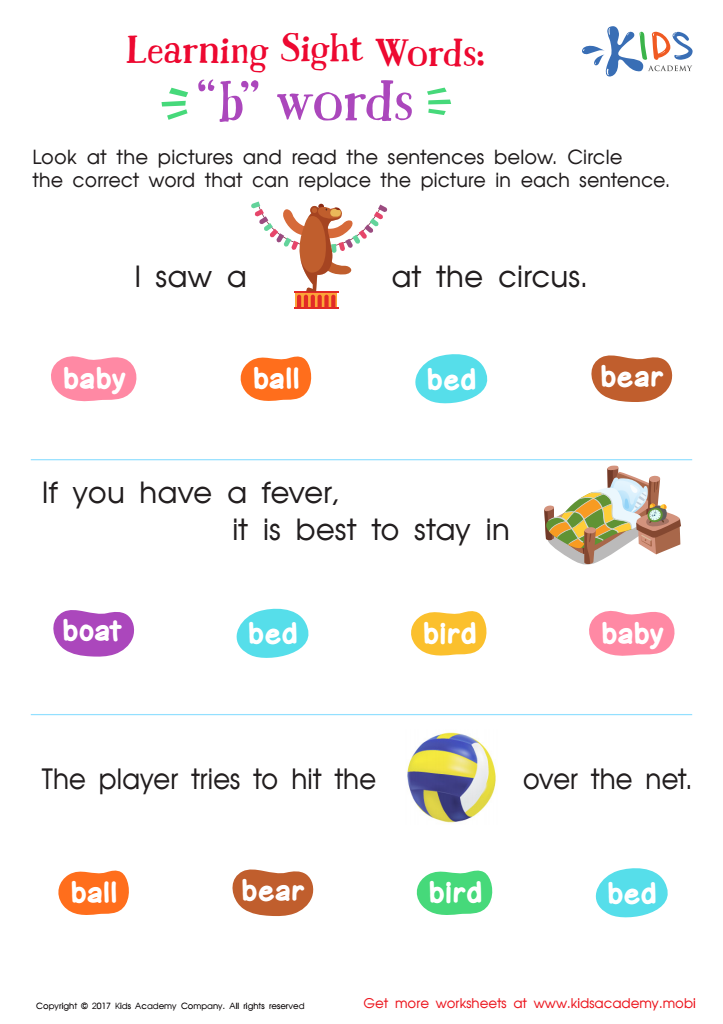
"B" Words Printable Sight Words Worksheet
 Assign to My Students
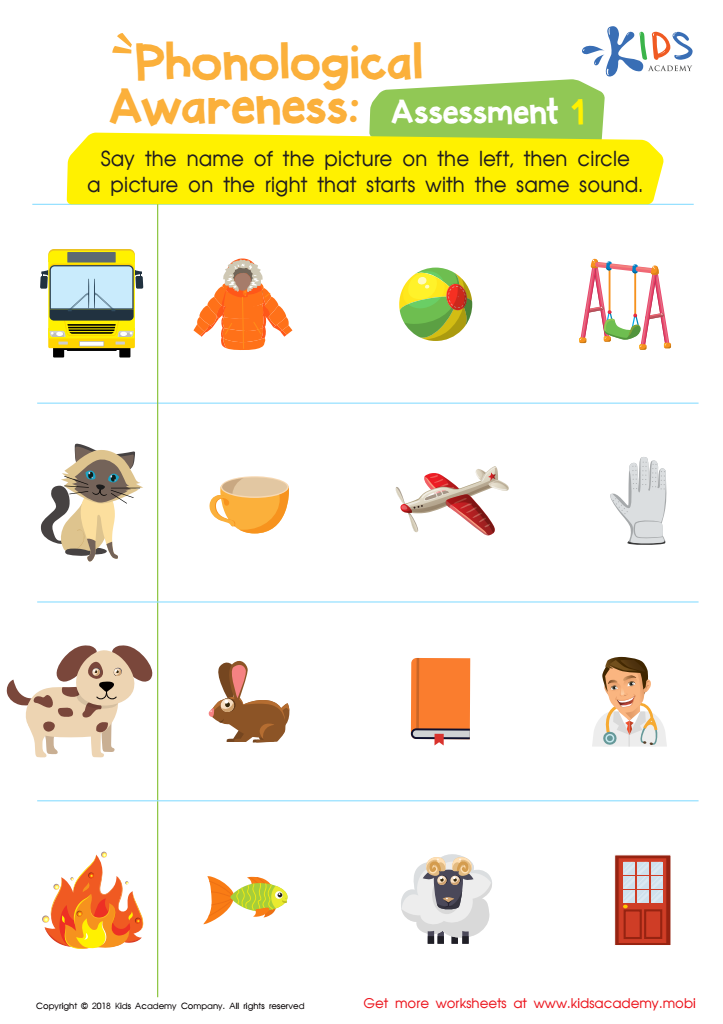
Phonological Awareness: Assessment 1 Worksheet








Sound association is a crucial aspect of early literacy development for children aged 6-7. At this age, learners are cementing their understanding of the relationship between sounds and letters, which forms the foundation for reading and writing. Parents and teachers should prioritize sound association because it directly influences a child's ability to decode words, expanding their vocabulary and comprehension.
When children grasp sound-letter relationships, they become more confident readers, leading to a positive cycle of engagement with texts. This confidence fosters a love for reading, which is essential for lifelong learning. Sound associations help children distinguish between different sounds and phonemes, enhancing their spelling skills and oral communication.
Moreover, understanding sound associations plays a role in tackling reading challenges. The National Reading Panel highlights its importance in early instruction; children with strong sound-letter connections are better equipped to overcome obstacles related to dyslexia and other reading difficulties.
By actively supporting sound association through phonics activities, games, and interactive reading, parents and teachers can give children a strong footing in literacy, paving the way for academic success and holistic development. Ultimately, fostering a love for letters and sounds equips children with the necessary tools to navigate their educational journeys confidently.








