
Sound differentiation Worksheets for Ages 6-7
3 filtered results
Difficulty Level
Grade
Age
-
From - To
Subject
Activity
Standards
Boost your child's phonemic awareness with our Sound Differentiation Worksheets, perfect for ages 6-7. These engaging, age-appropriate activities help young learners sharpen their listening skills by distinguishing between different sounds, phonemes, and syllables. Through interactive exercises, children will enhance their reading and spelling abilities, laying a strong foundation for literacy success. Our expertly designed worksheets offer fun yet challenging tasks that keep kids motivated and excited to learn. Ideal for use at home or in the classroom, these resources will support your child's language development journey with ease and enjoyment. Discover how effective sound differentiation can be!
Favorites
With answer key
Interactive
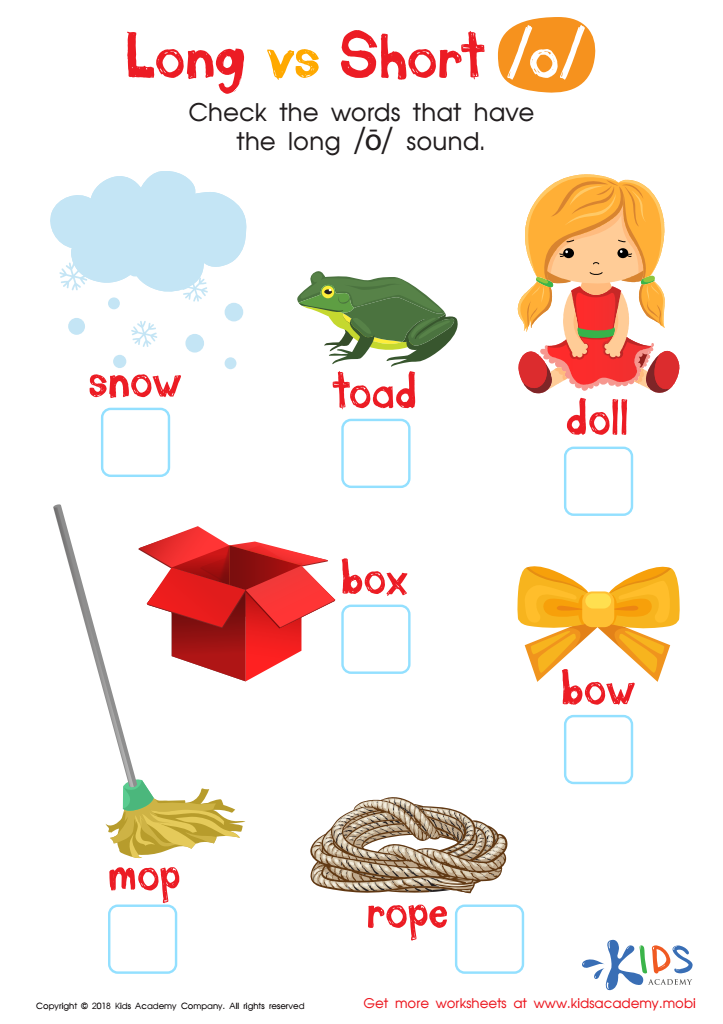
Long vs Short O Reading Worksheet
Help your child learn to identify the long and short «o» sound with this colourful worksheet. Guide them as they spot words with the long or short «o» sound. With practice, your child will find it easier to tell the difference between the two.
 Assign to My Students
Long vs Short O Reading Worksheet
Worksheet
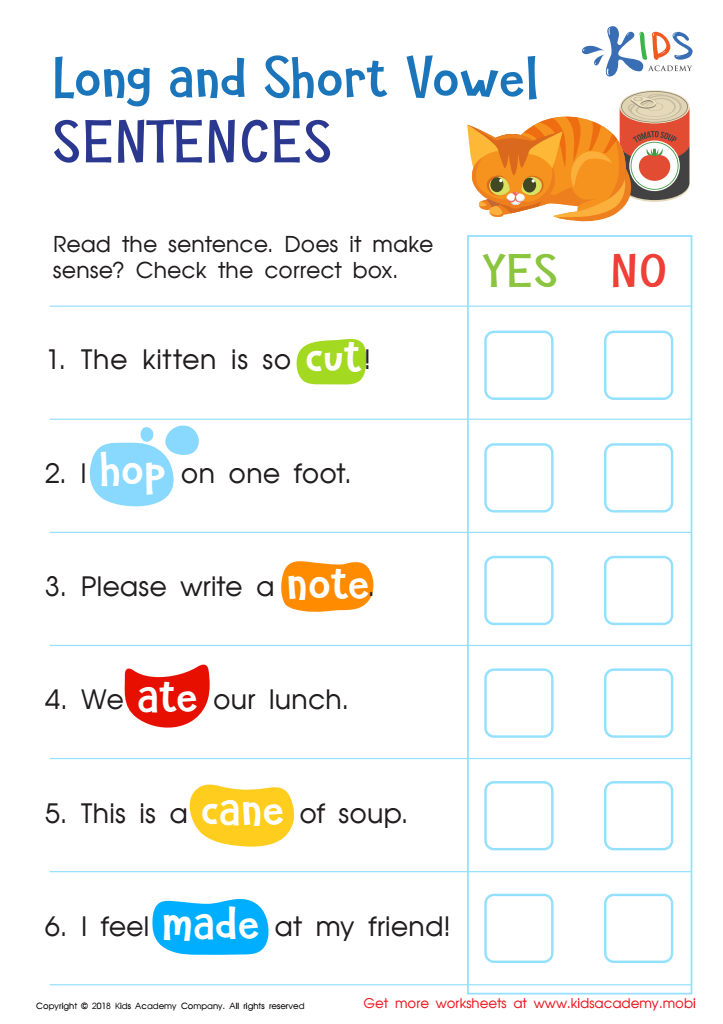
Long and Short Vowel Sentences: Assessment Worksheet
This printable worksheet helps kids practice differentiating between short and long vowel sounds. They'll use context clues to figure out which words make sense in simple sentences. A great way to build reading and writing skills!
Long and Short Vowel Sentences: Assessment Worksheet
Worksheet
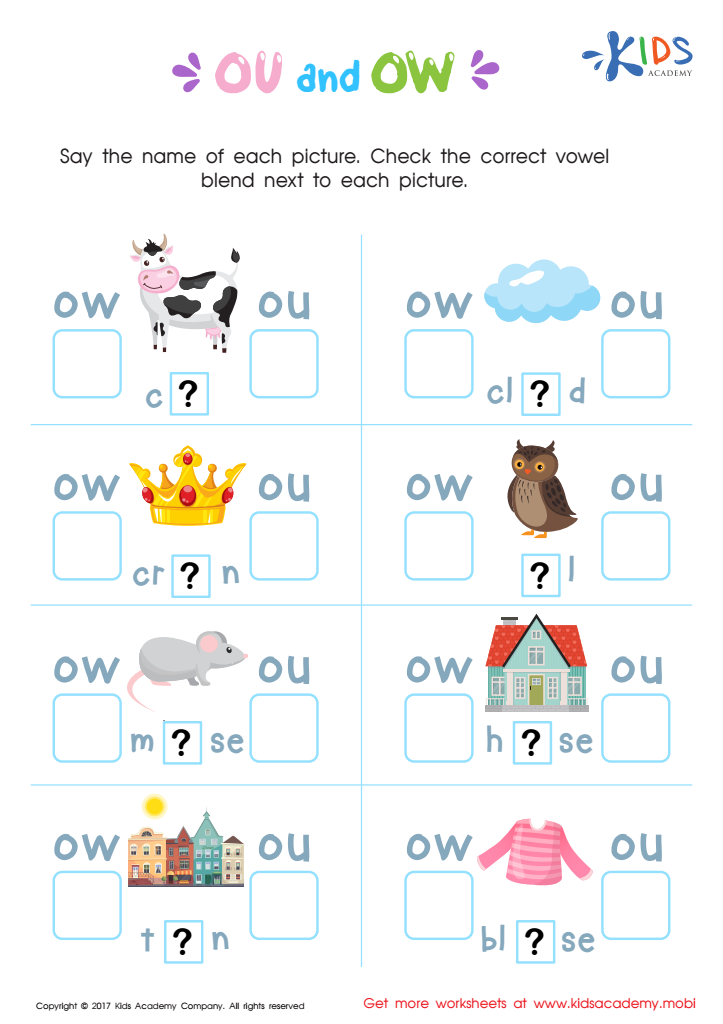
OU and OW Words Worksheet
Enhance your child's reading and spelling with this ou and ow words worksheet! Fun pictures and common words make mastering the diphthongs ou and ow easy and enjoyable.
OU and OW Words Worksheet
Worksheet
Join Kids Academy for Free
Who is primarily going to use this learning content?








Sound differentiation is crucial for children ages 6-7, as it directly impacts their language development, reading skills, and overall academic success. At this age, children are in the initial stages of learning to read and write, and the ability to distinguish between different sounds, or phonemes, is foundational to decoding words and understanding spoken and written language.
When children can accurately differentiate sounds, they are better equipped to map those sounds onto letters and letter combinations. This phonemic awareness is a key predictor of early reading abilities. Without this skill, children may struggle with word recognition, leading to difficulties in reading fluently and comprehending text.
Moreover, sound differentiation affects vocabulary acquisition. By recognizing subtle differences in sounds, children can more readily understand and produce new words. This enhanced vocabulary contributes to more effective communication, both orally and in writing.
From a socio-emotional perspective, mastering sound differentiation boosts children’s confidence and enthusiasm for learning. When they can successfully engage in reading and articulate their thoughts, they are more likely to participate actively in classroom activities and discussions.
For these reasons, parents and teachers should pay close attention to sound differentiation at ages 6-7. Supporting this skill through phonics instruction, listening activities, and reading practice can set the stage for a lifetime of academic achievement and effective communication.








