
Understanding cardinal directions Worksheets for Ages 6-7
3 filtered results
Difficulty Level
Grade
Age
-
From - To
Subject
Activity
Standards
Discover our engaging "Understanding Cardinal Directions Worksheets" designed for children ages 6-7! These worksheets provide a fun and interactive way for young learners to grasp the concepts of north, south, east, and west. Through a variety of exercises, including puzzles, illustrations, and real-world scenarios, kids will enhance their navigational skills and spatial awareness. Ideal for both classroom and home use, these resources encourage critical thinking while fostering an interest in geography. Empower your child to confidently explore their environment with our pedagogically crafted worksheets. Perfect for early education settings, our materials make learning intuitive and enjoyable—download today!
Favorites
With answer key
Interactive
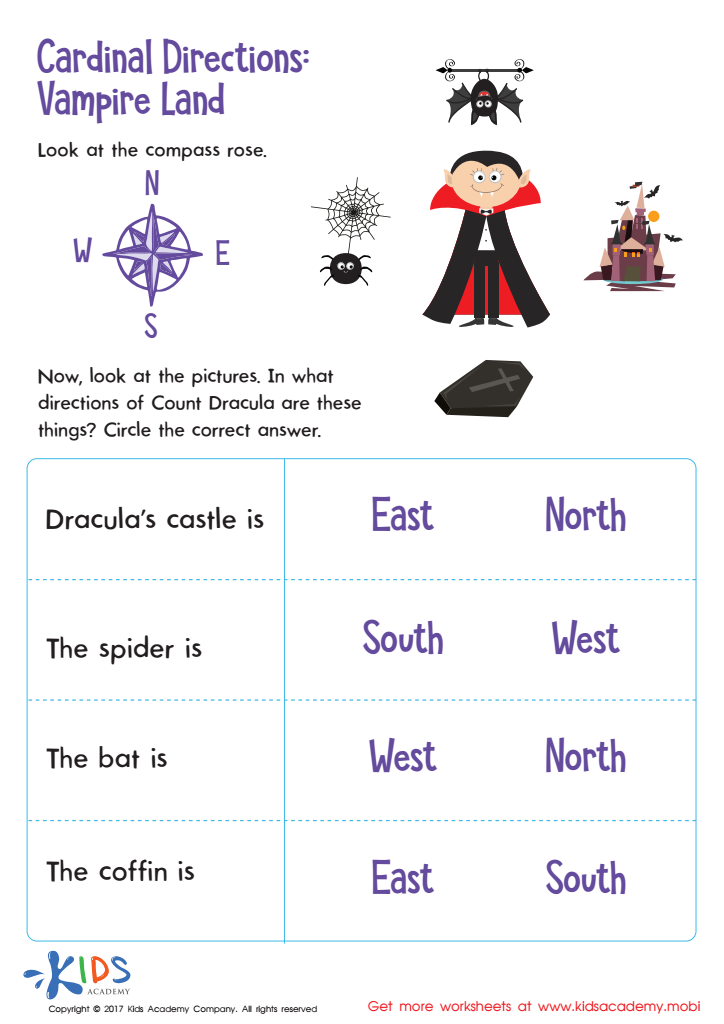
Cardinal Directions Printable
Perfect for fall, let's go to Transylvania with Count Dracula to learn cardinal directions. This printable worksheet introduces the compass rose and offers valuable practice. Kids will love the fun vampire theme! Get them motivated and help them discover the world with this spooky worksheet.
 Assign to My Students
Cardinal Directions Printable
Worksheet
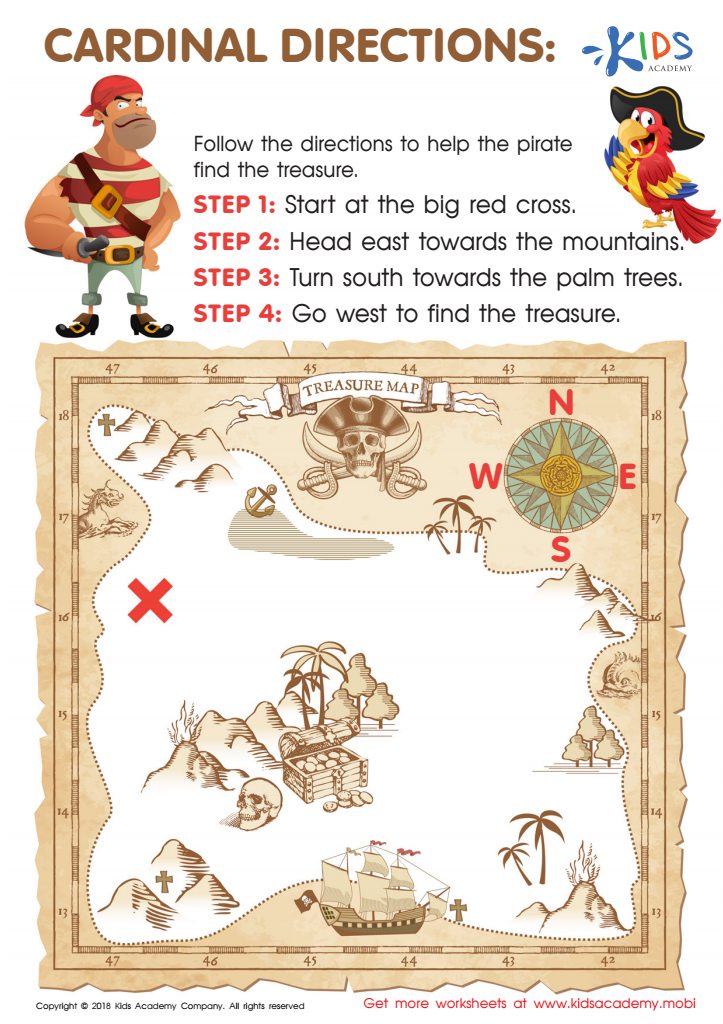
Cardinal Directions Treasure Map Maze Worksheet
Kids who love adventure will enjoy this fun activity! Read steps aloud and help your child follow the directions to help a pirate find treasure. There are four steps; with each one, your kid will be one step closer to the X that marks the spot! In the end, they'll have found the treasure if they've followed the instructions correctly.
Cardinal Directions Treasure Map Maze Worksheet
Worksheet
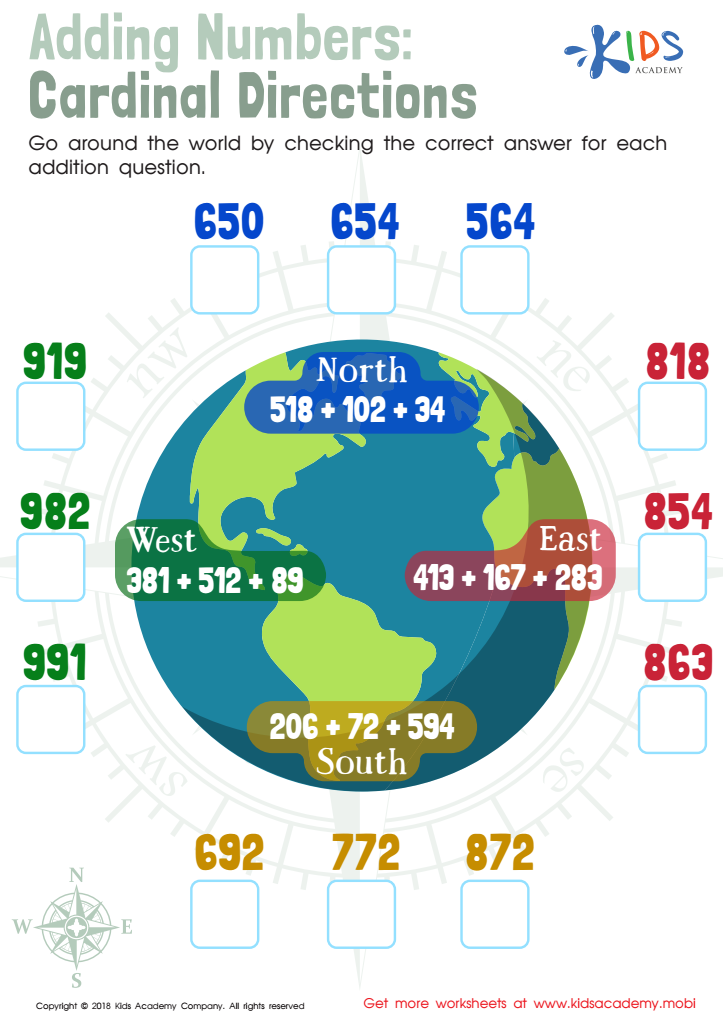
Adding Numbers: Cardinal Directions Worksheet
Are your students familiar with cardinal points? Teach them there are four: North, South, East, West. Used to navigate and mark places, use this worksheet to have your kids go round the world by checking the correct answer for each addition question in the pdf.
Adding Numbers: Cardinal Directions Worksheet
Worksheet
Join Kids Academy for Free
Who is primarily going to use this learning content?








Understanding cardinal directions—north, south, east, and west—at a young age is crucial for children aged 6-7 as it lays the foundation for spatial awareness and navigation skills. This knowledge is essential for various everyday activities, from following maps to understanding how to get to a friend's house or exploring a new environment during field trips.
When children grasp cardinal directions, they enhance their cognitive skills, including critical thinking and problem-solving. Educators and parents can weave these concepts into playful activities, encouraging curiosity about their surroundings. For instance, simple outdoor games that utilize directions can not only make learning fun but also promote teamwork and communication skills.
Cardinal directions also play a role in understanding geography, cultural contexts, and how to relate to the world at large. Awareness of directions helps children become more confident in expressing themselves as they can describe locations accurately.
Moreover, understanding directions encourages a sense of independence, equipping children to make informed choices about navigating their surroundings. Overall, fostering this knowledge through engaging learning experiences establishes a strong framework for future academic achievements and a lifelong understanding of spatial relationships.








