Understanding comparisons Worksheets for Ages 6-7
4 filtered results
-
From - To
Discover our expertly crafted "Understanding Comparisons Worksheets for Ages 6-7," designed to enhance critical thinking and analytic skills in young learners. These worksheets provide engaging activities that teach children how to compare and contrast objects, sizes, numbers, and more. Through fun exercises and colorful illustrations, kids will develop a deeper understanding of relationships and differences. Perfect for classroom and homeschool use, each worksheet is tailored to reinforce foundational concepts in a playful yet educational manner. Empower your child’s learning journey and build essential comparison skills with our easy-to-print resources.
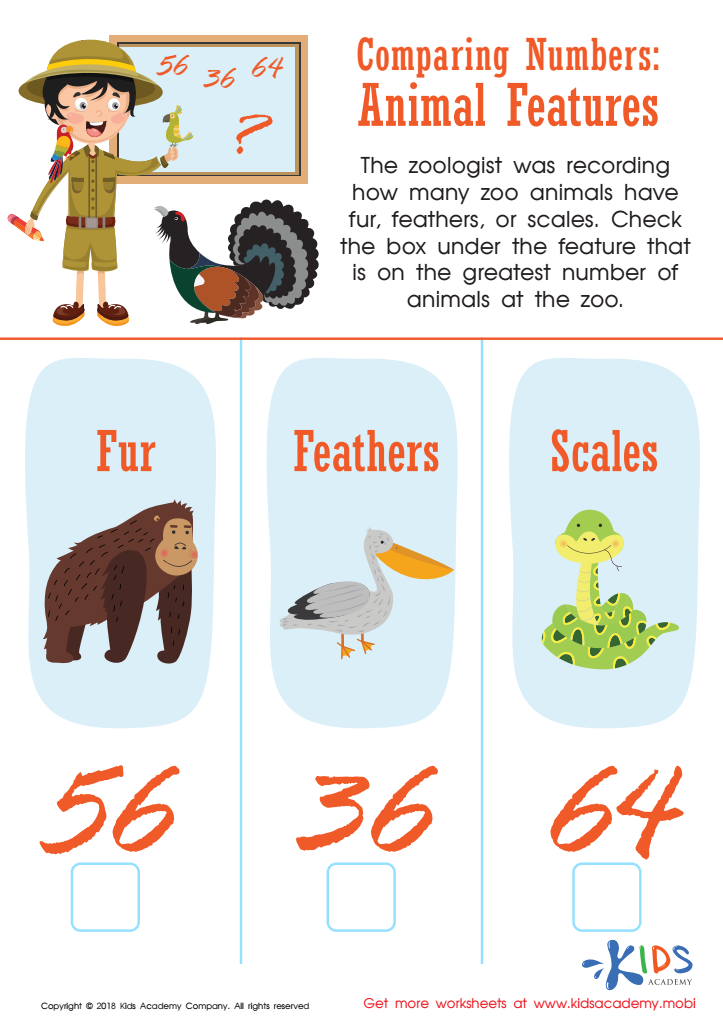
Animal Features Worksheet
 Assign to My Students
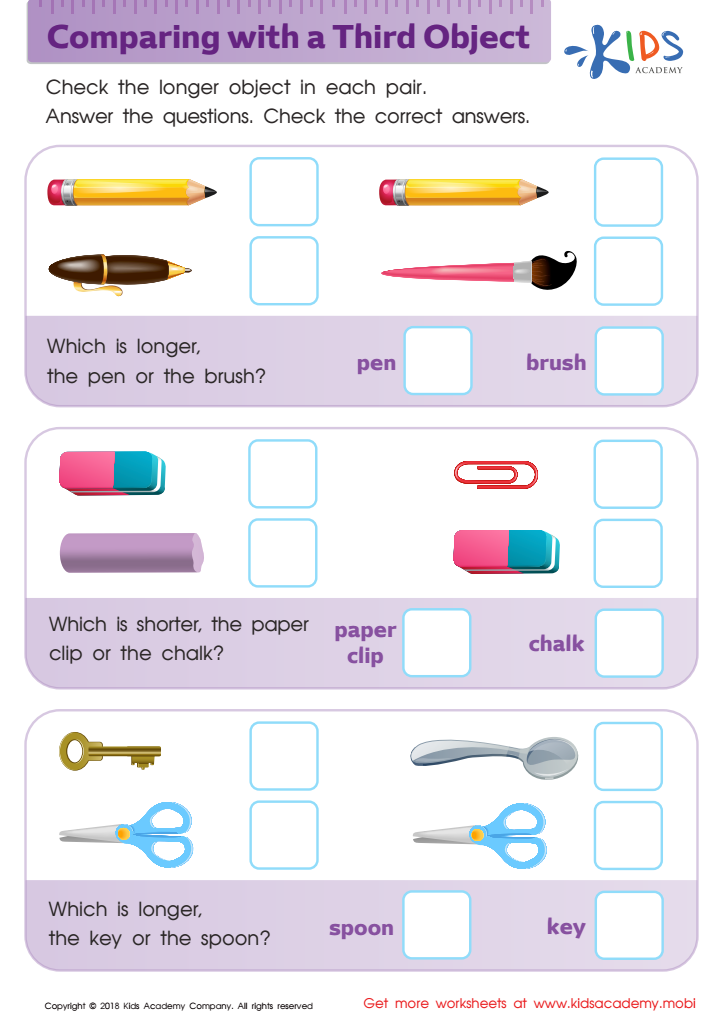
Comparing with a Third Object Worksheet
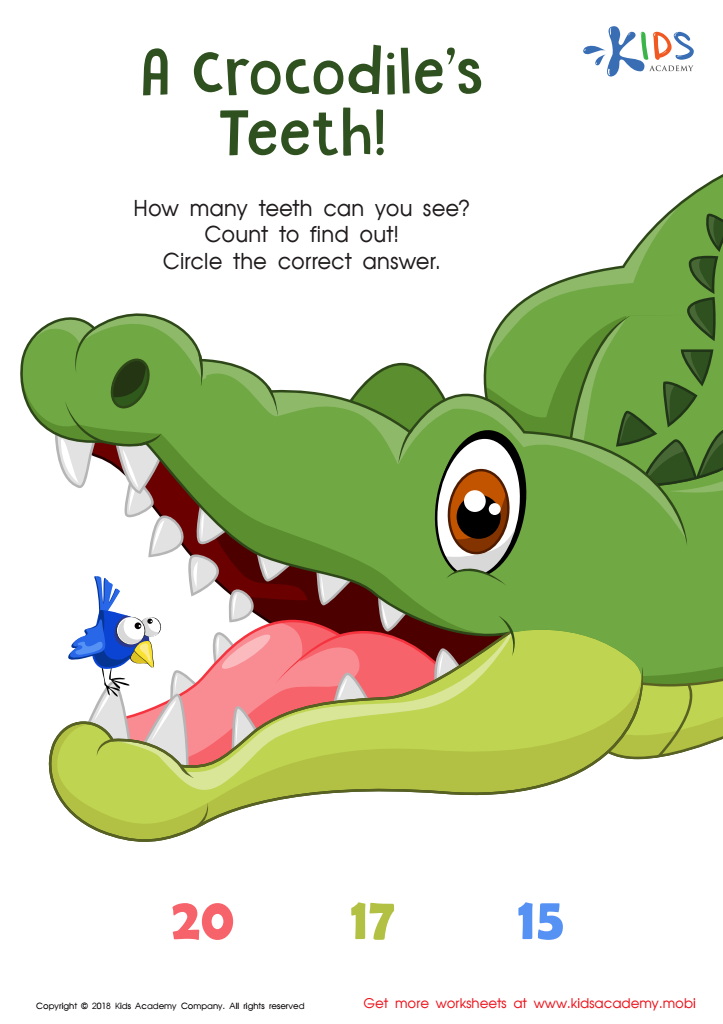
A Crocodile's Teeth Worksheet
Matching: Classifying Toys by Size Worksheet






Understanding comparisons is crucial for children ages 6-7 as it forms the foundation for more complex mathematical and critical thinking skills. At this age, children are beginning to grasp the concept of comparing quantities, sizes, and other attributes—which are essential for problem-solving and effective decision-making in everyday life.
For parents and teachers, fostering a child's ability to make comparisons can significantly impact their academic success and cognitive development. When children learn to compare numbers, lengths, weights, and other measurable attributes, they are practicing critical mathematical concepts like greater than, less than, or equal to. These concepts are foundational building blocks for addition, subtraction, and more advanced mathematical operations.
Moreover, comparisons extend beyond math. They enhance language skills by enriching vocabulary—words like "taller," "shorter," "more," and "less" are regularly used in everyday communication. This skill also encourages analytical thinking; children learn to observe details, identify patterns, and make judgments based on evidence.
Understanding comparisons also nurtures social skills. Children start to understand and articulate their preferences and make fair and reasoned choices. Hence, parents and teachers should prioritize teaching comparisons, as it equips children with the critical tools necessary for academic achievement and effective interpersonal interactions.








