Check out this FREE "Understanding fractions" Trial Lesson for age 6-7!

Making 11

Favorites
With answer key
Interactive
  • 6-7
  • Understanding fractions
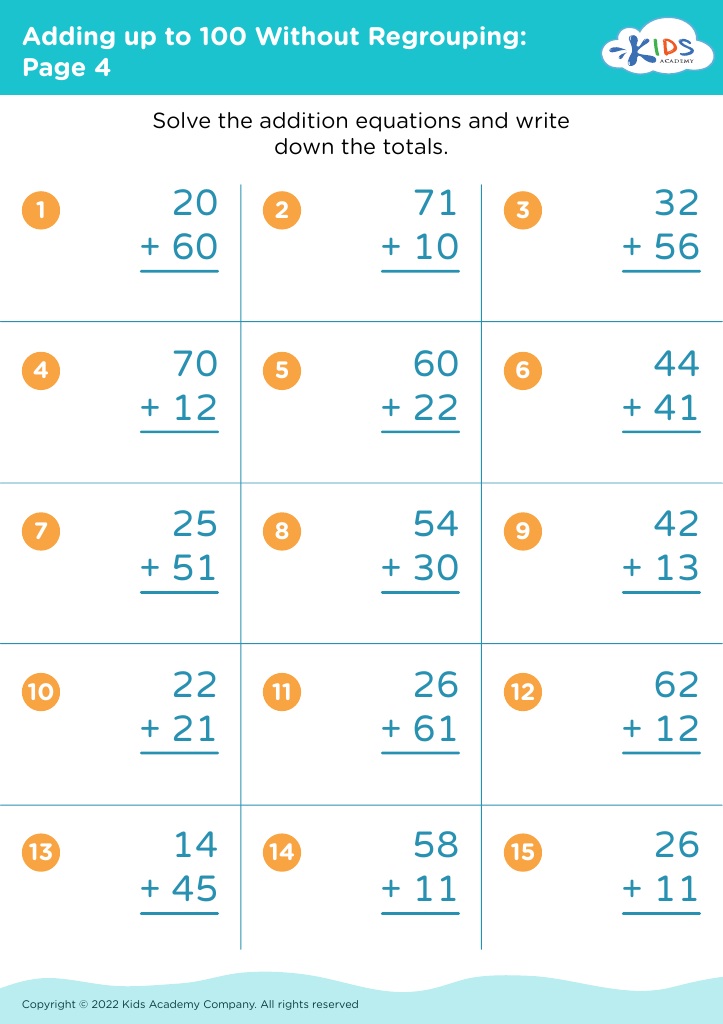
Adding up to 100 Without Regrouping: Page 4
Worksheet
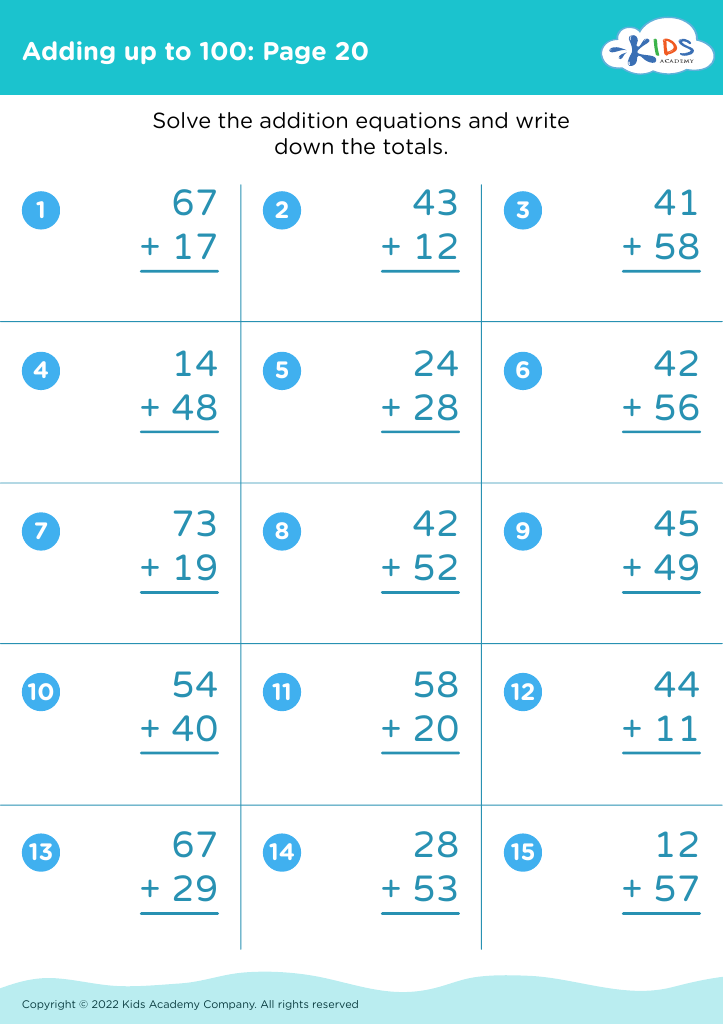
Adding up to 100: Page 20

Adding up to 100: Page 20

Adding up to 100: Page 20
Worksheet
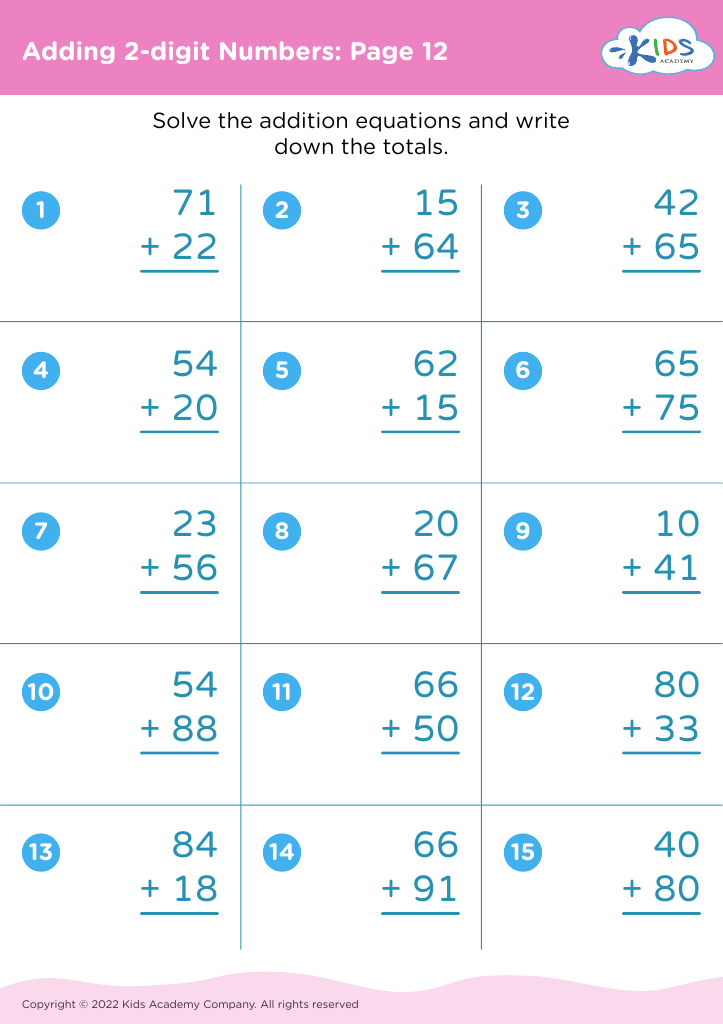
Adding 2-digit Numbers: Page 12

Adding 2-digit Numbers: Page 12

Adding 2-digit Numbers: Page 12
Worksheet
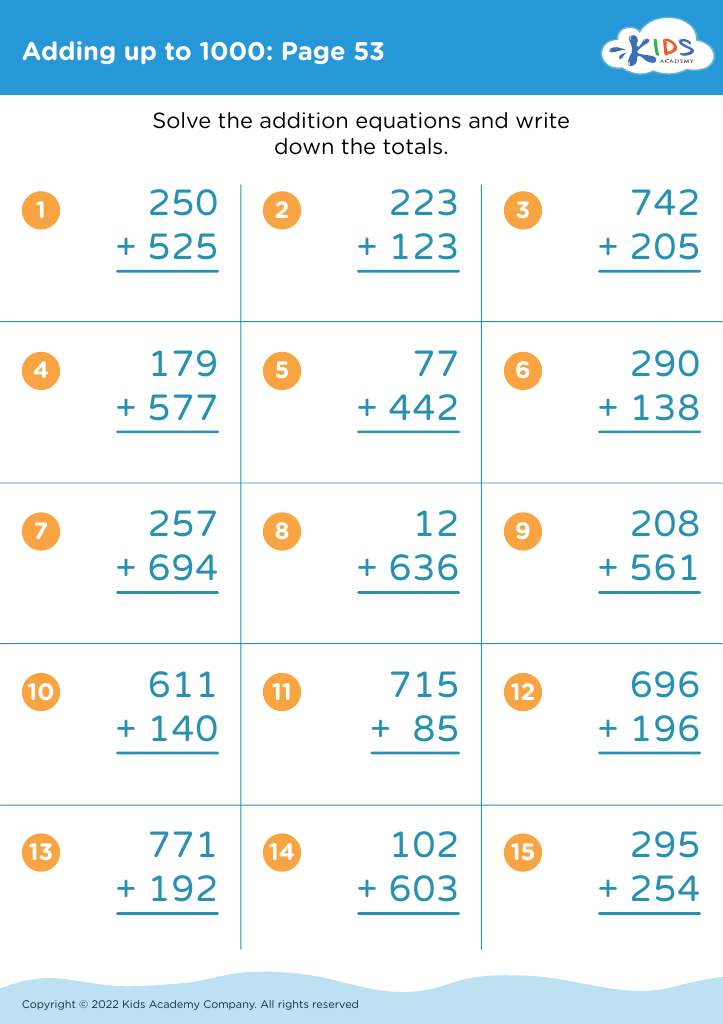
Adding up to 1000: Page 53

Adding up to 1000: Page 53

Adding up to 1000: Page 53
Worksheet
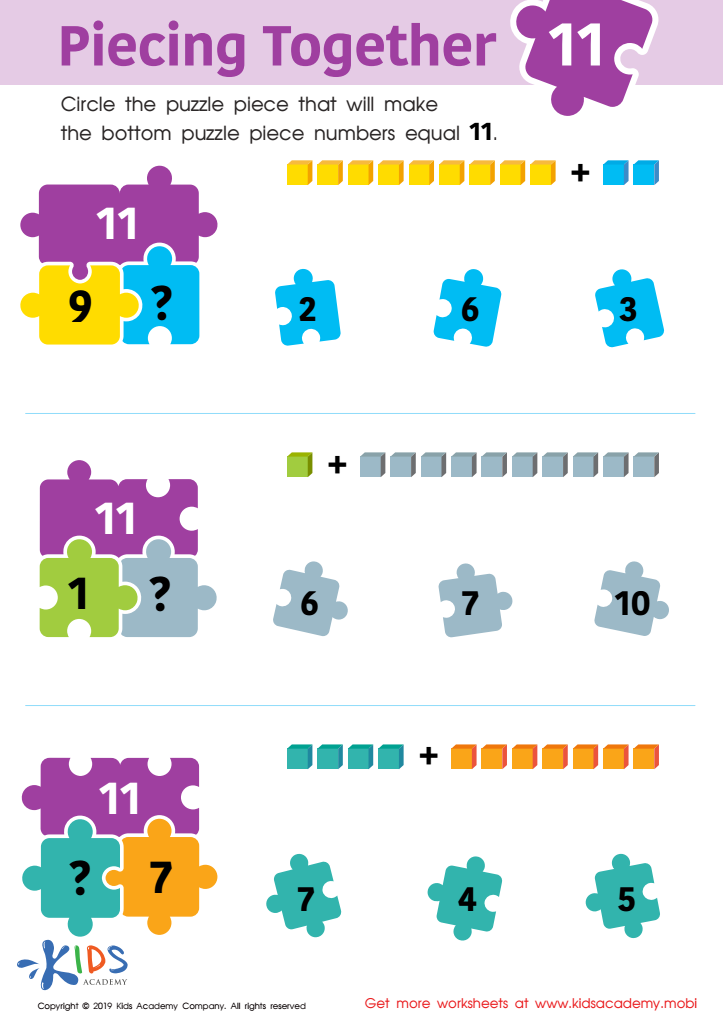
Piecing Together 11 Worksheet

Piecing Together 11 Worksheet

Engage your preschoolers with learning-filled fun! Show them this colorful worksheet, and ask them to identify the figures. Each puzzle piece features an equation, except one which is missing. Help the kids solve the problems and circle the piece that'll make the numbers equal 11. It's a surefire way to make learning enjoyable!
Piecing Together 11 Worksheet
Worksheet
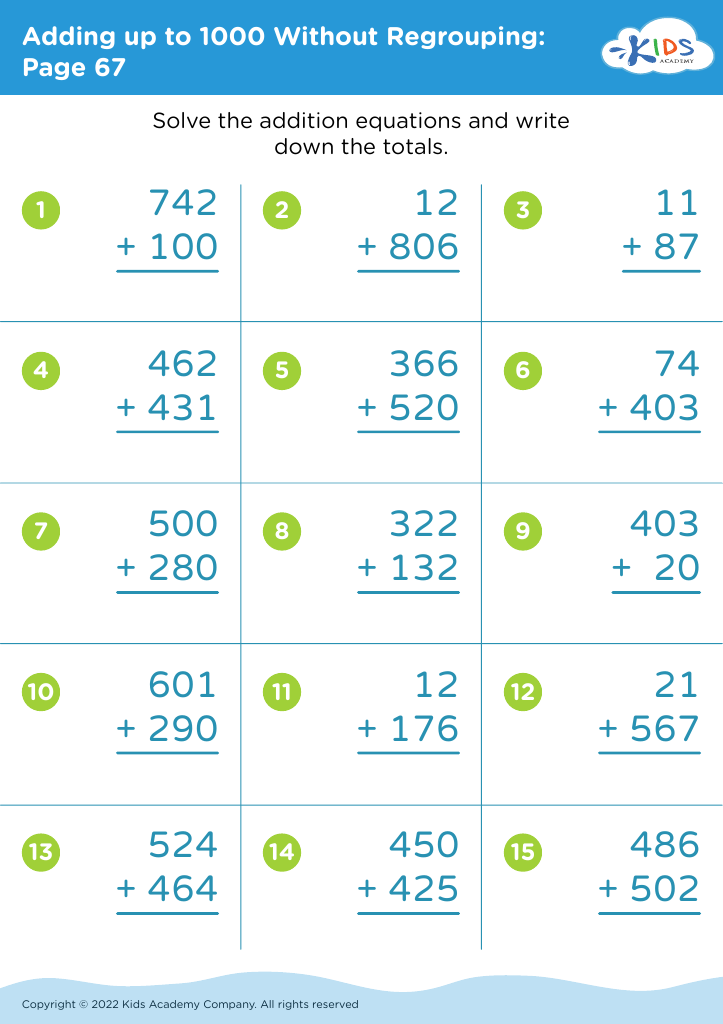
Adding up to 1000 Without Regrouping: Page 67
Worksheet
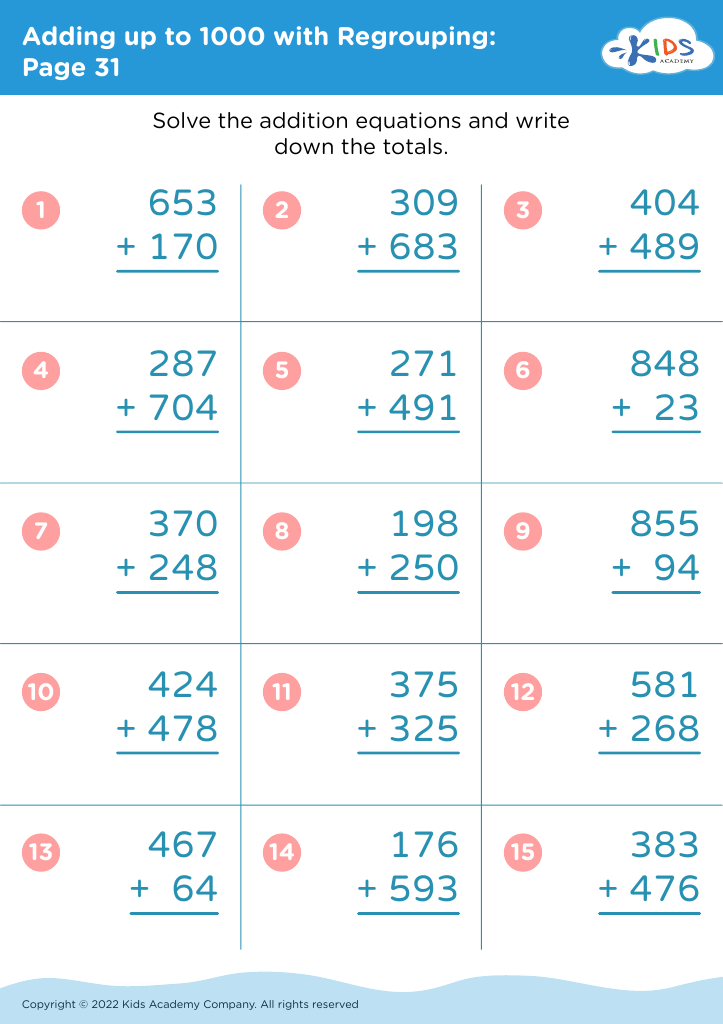
Adding up to 1000 with Regrouping: Page 31
Worksheet
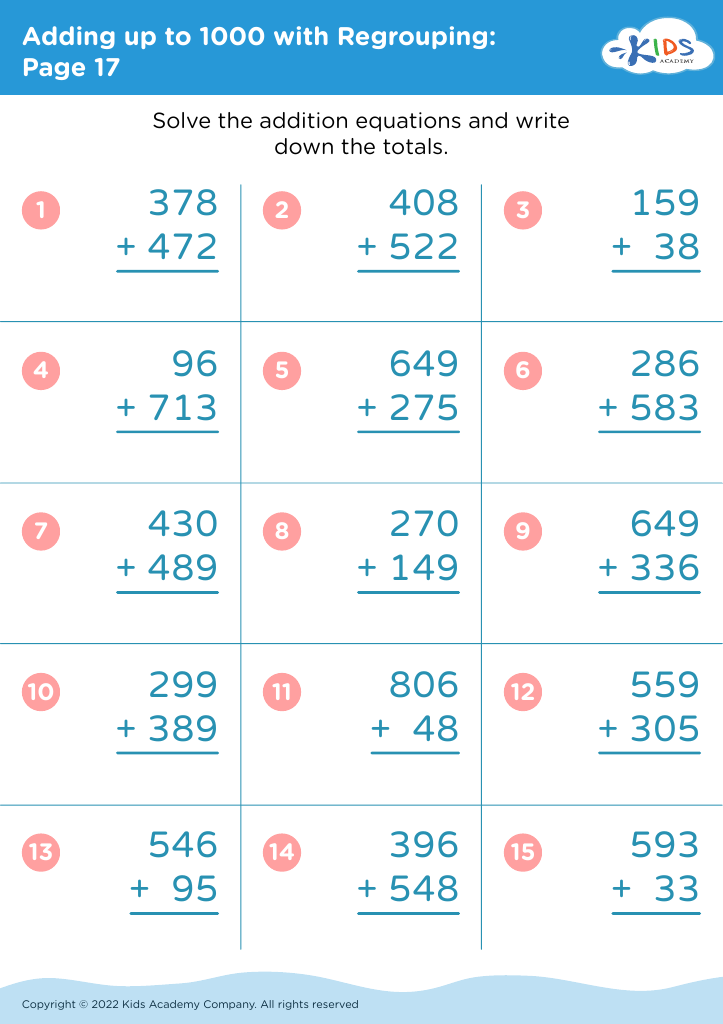
Adding up to 1000 with Regrouping: Page 17
Worksheet
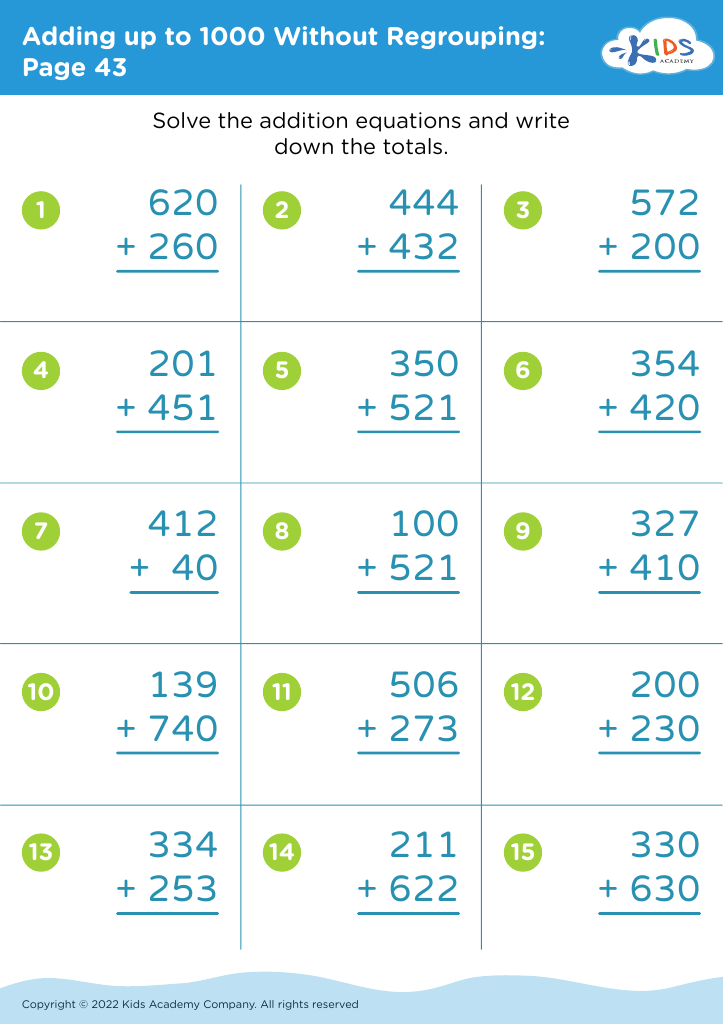
Adding up to 1000 Without Regrouping: Page 43
Worksheet
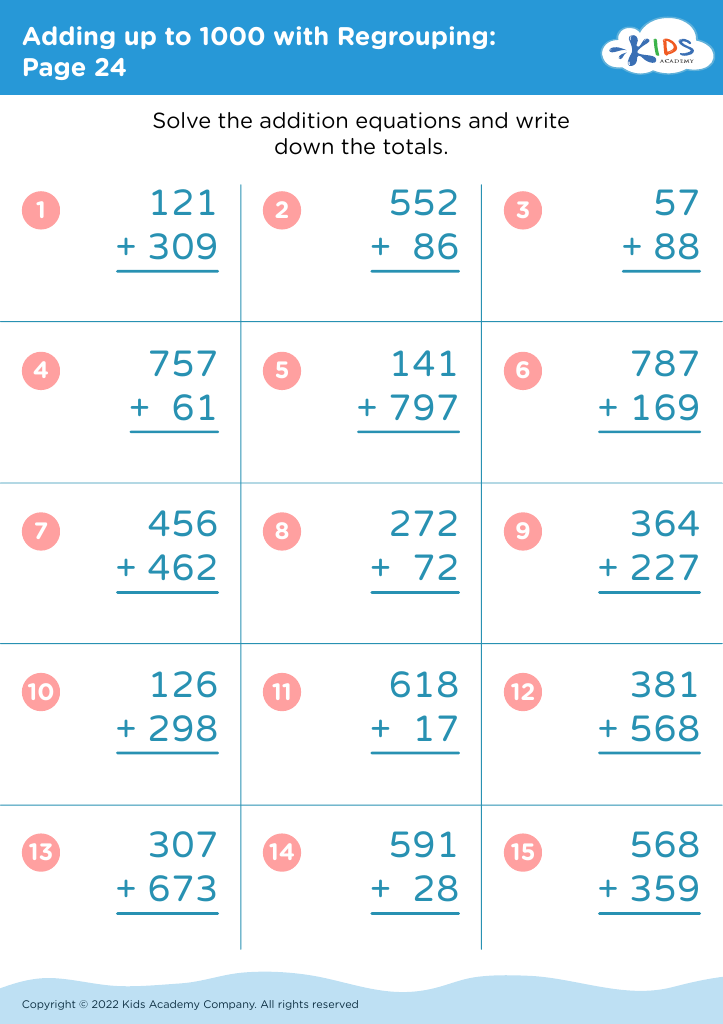
Adding up to 1000 with Regrouping: Page 24
Worksheet
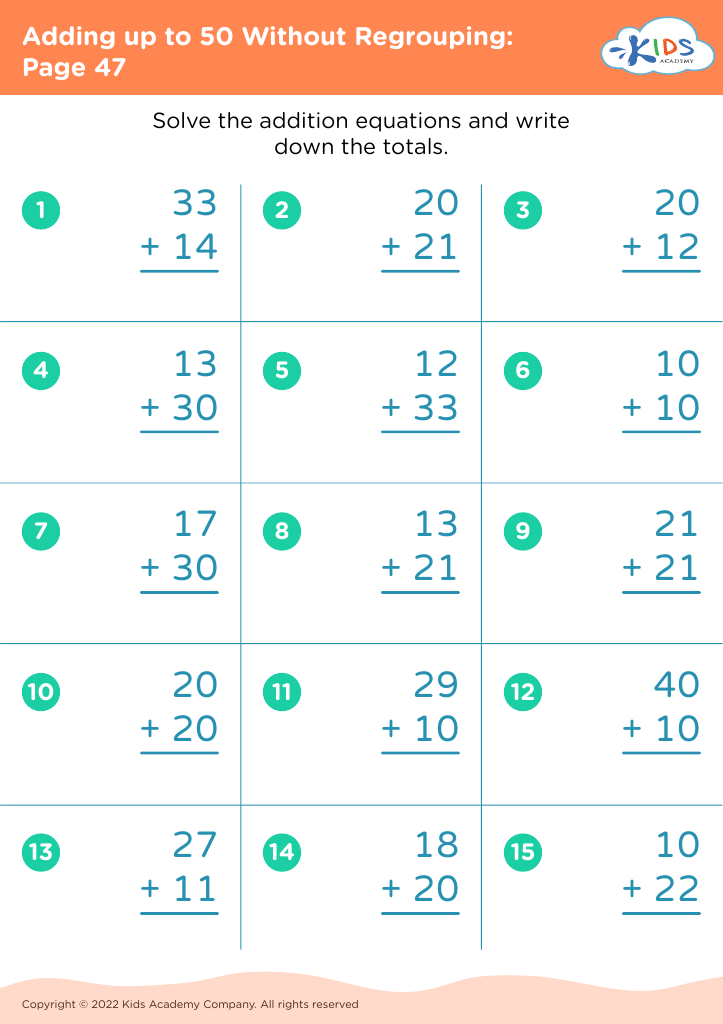
Adding up to 50 Without Regrouping: Page 47
Worksheet
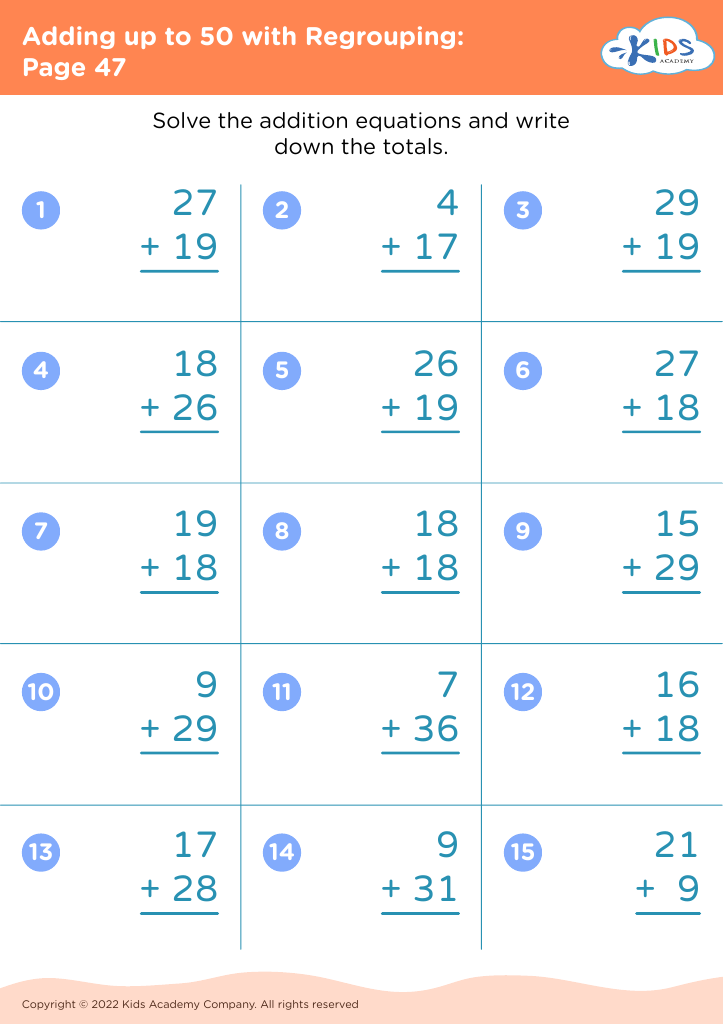
Adding up to 50 with Regrouping: Page 47
Worksheet
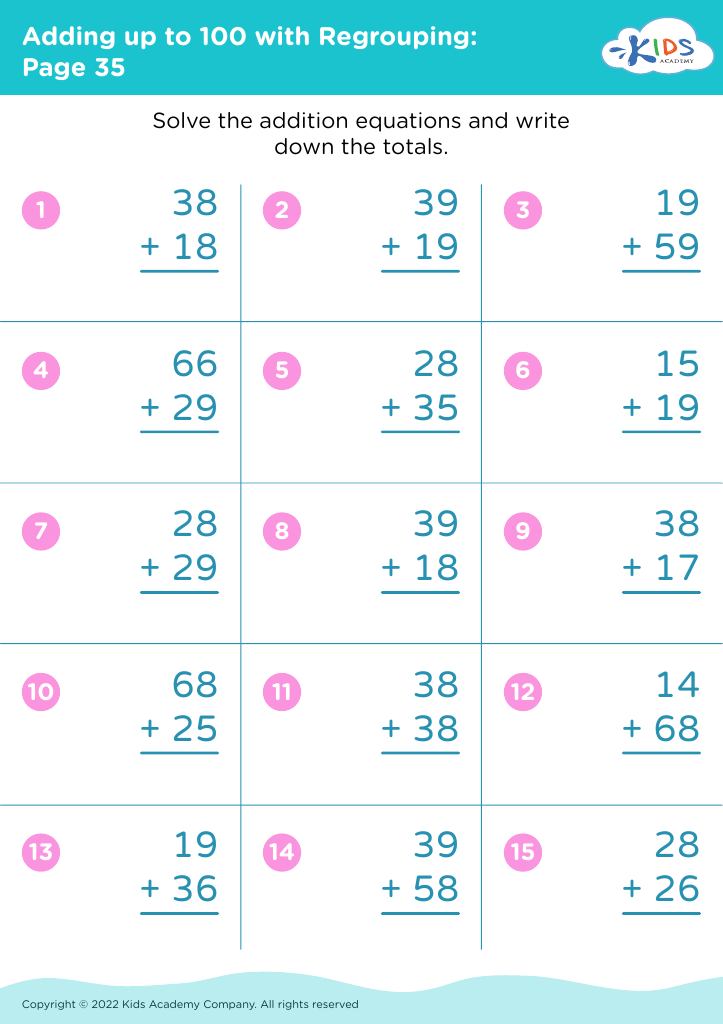
Adding up to 100 with Regrouping: Page 35
Worksheet
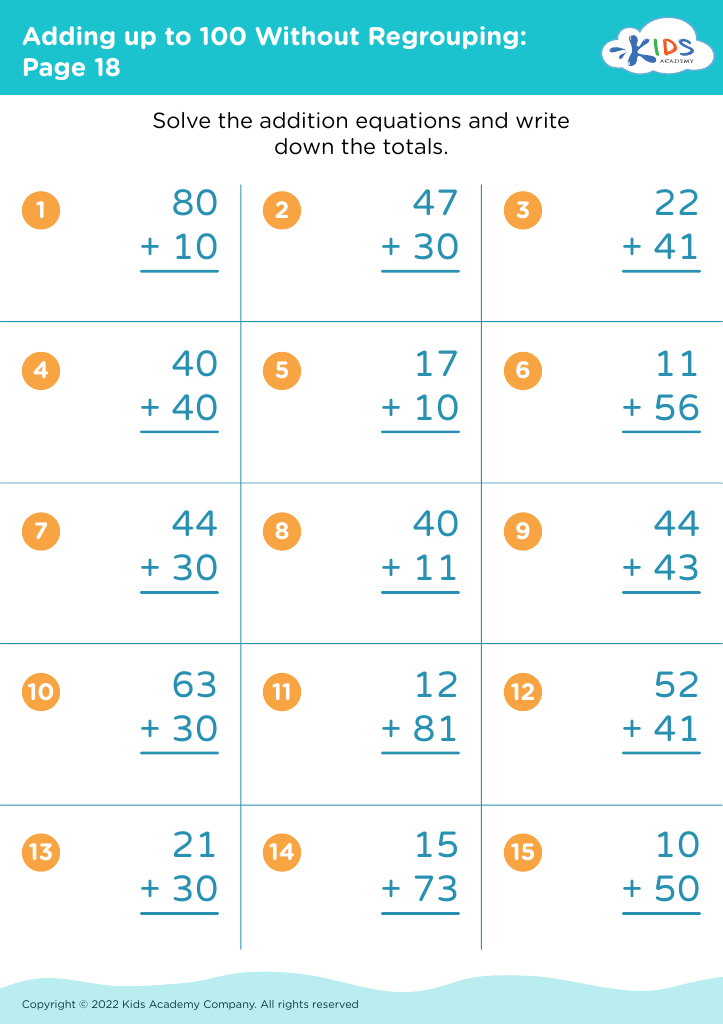
Adding up to 100 Without Regrouping: Page 18
Worksheet
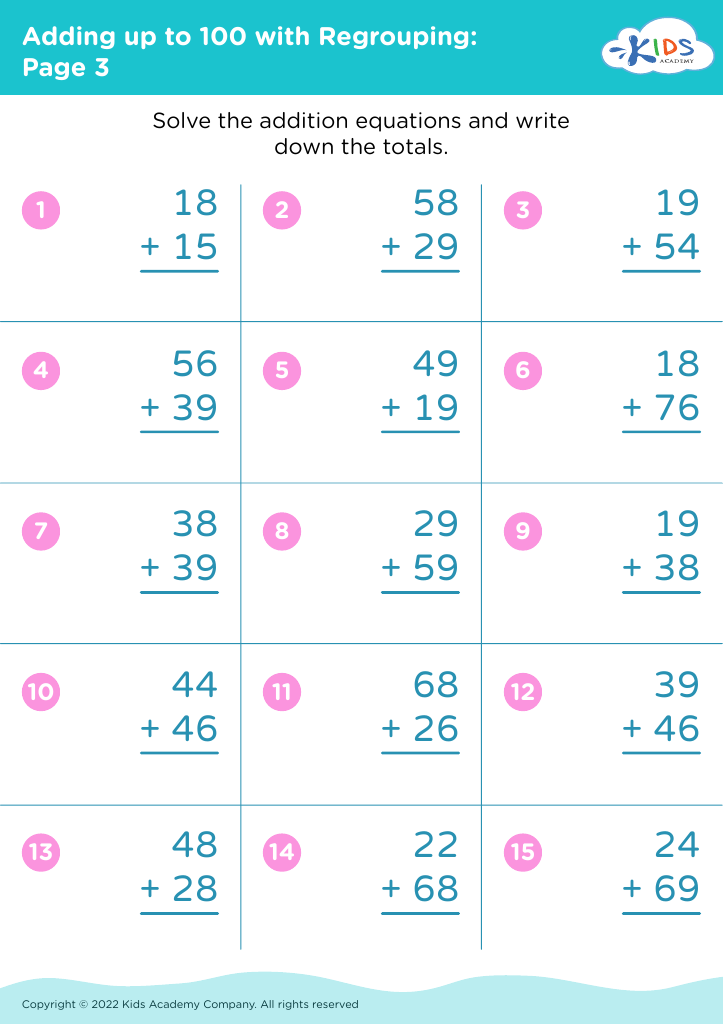
Adding up to 100 with Regrouping: Page 3
Worksheet
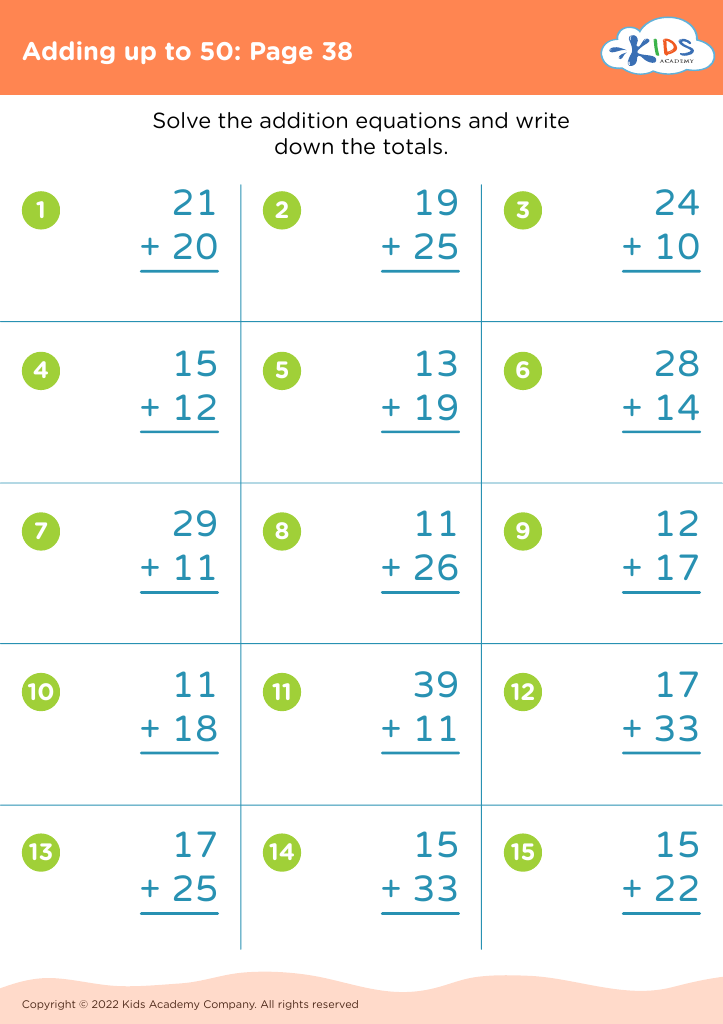
Adding up to 50: Page 38

Adding up to 50: Page 38

Adding up to 50: Page 38
Worksheet
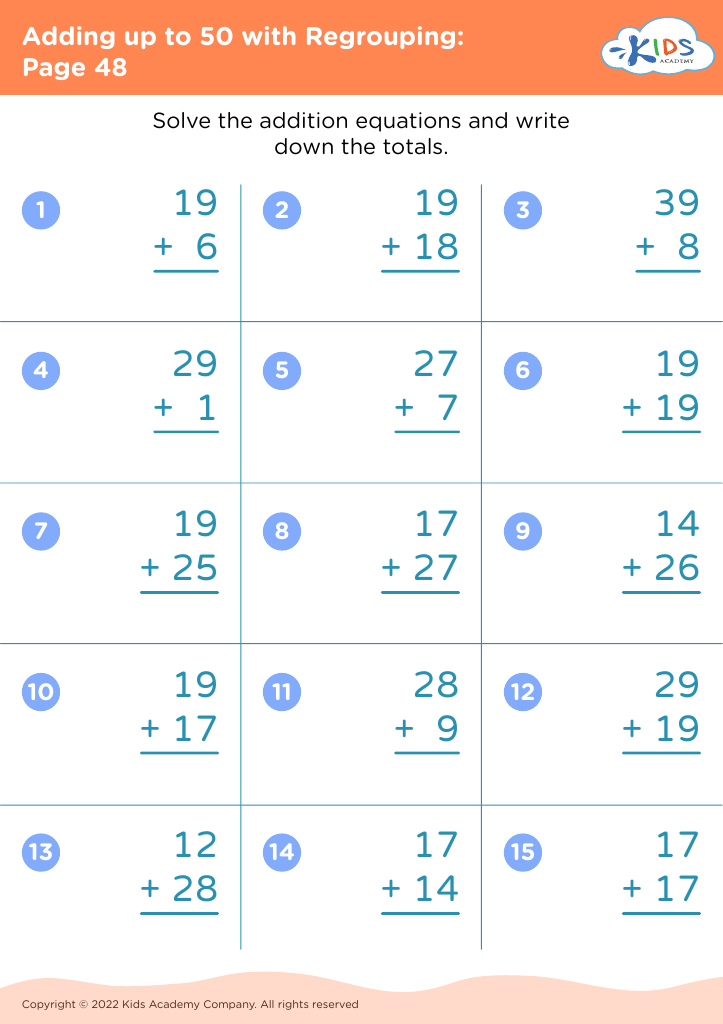
Adding up to 50 with Regrouping: Page 48
Worksheet
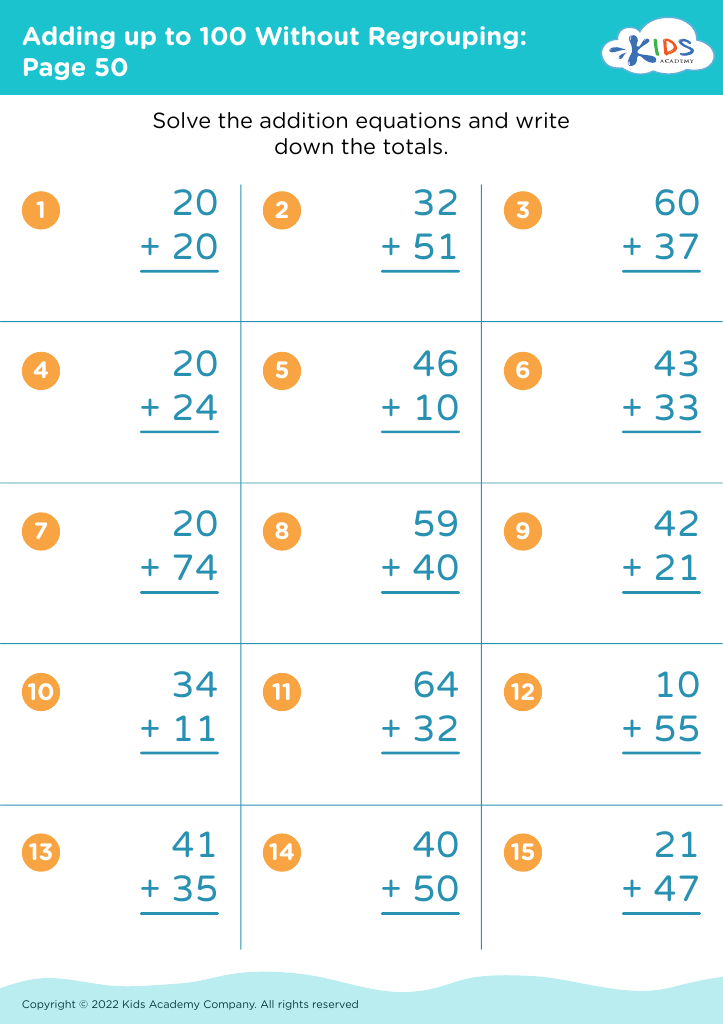
Adding up to 100 Without Regrouping: Page 50
Worksheet
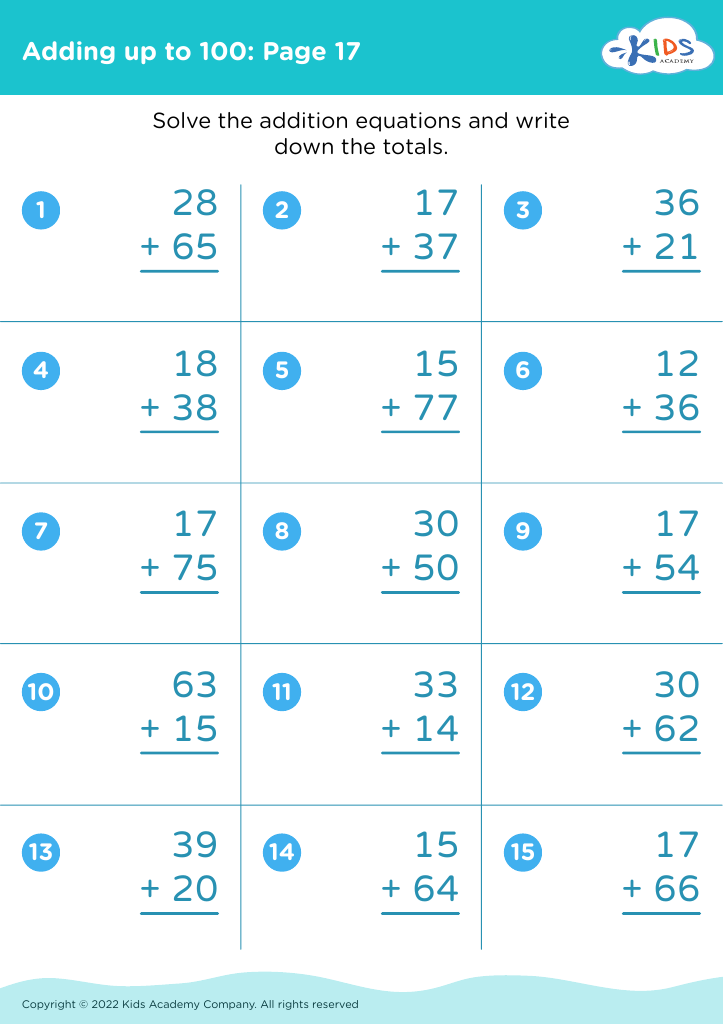
Adding up to 100: Page 17

Adding up to 100: Page 17

Adding up to 100: Page 17
Worksheet
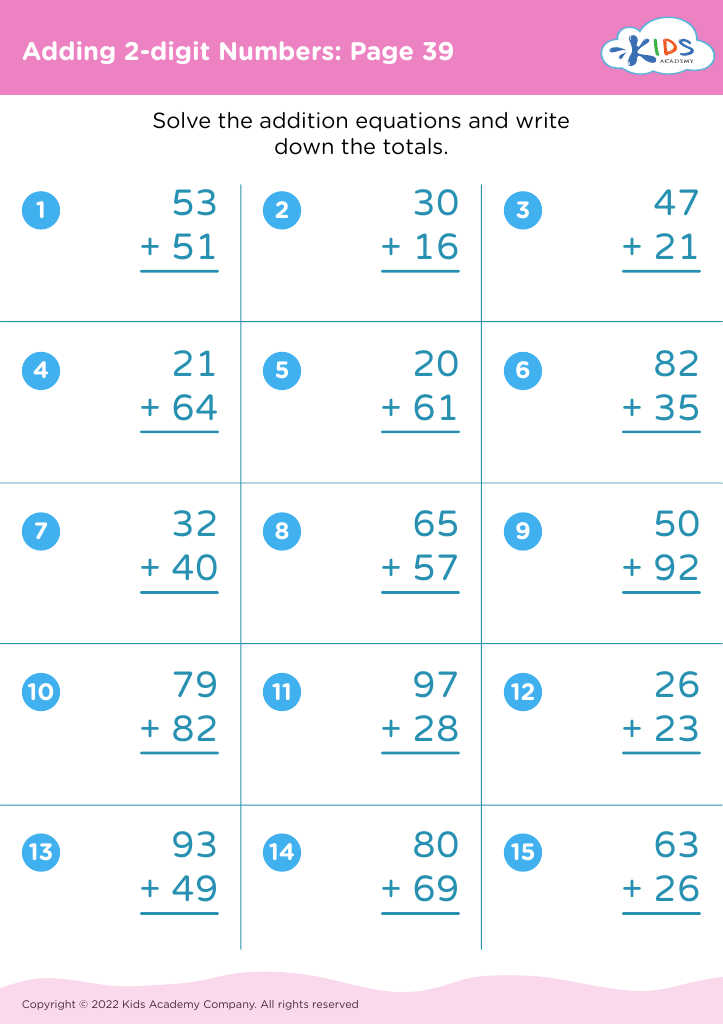
Adding 2-digit Numbers: Page 39

Adding 2-digit Numbers: Page 39

Adding 2-digit Numbers: Page 39
Worksheet
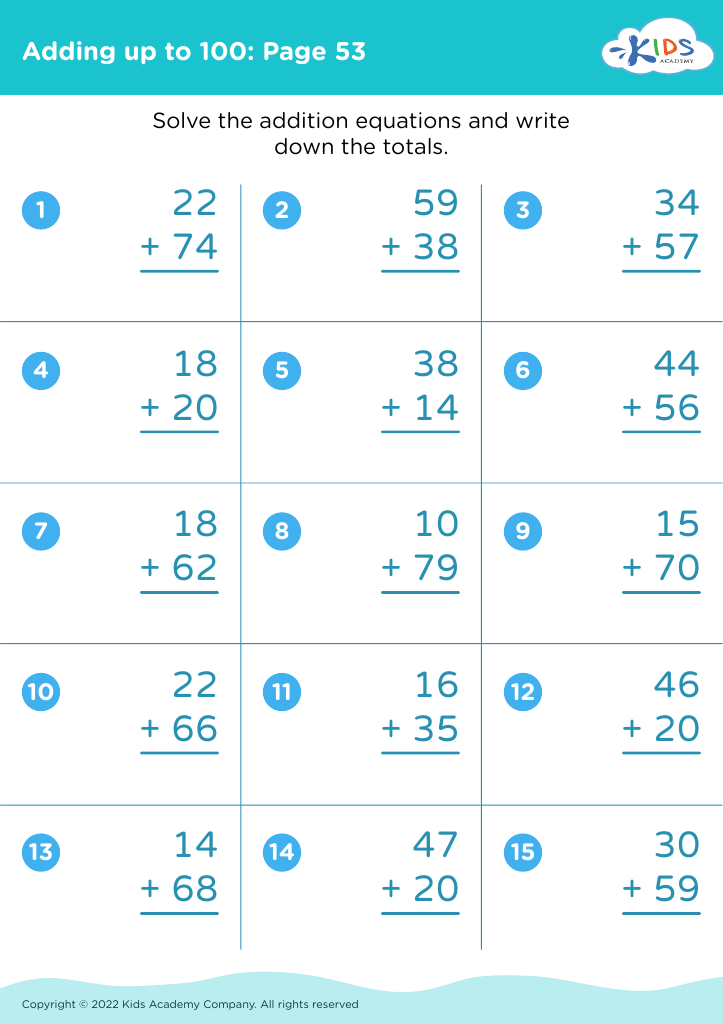
Adding up to 100: Page 53

Adding up to 100: Page 53

Adding up to 100: Page 53
Worksheet
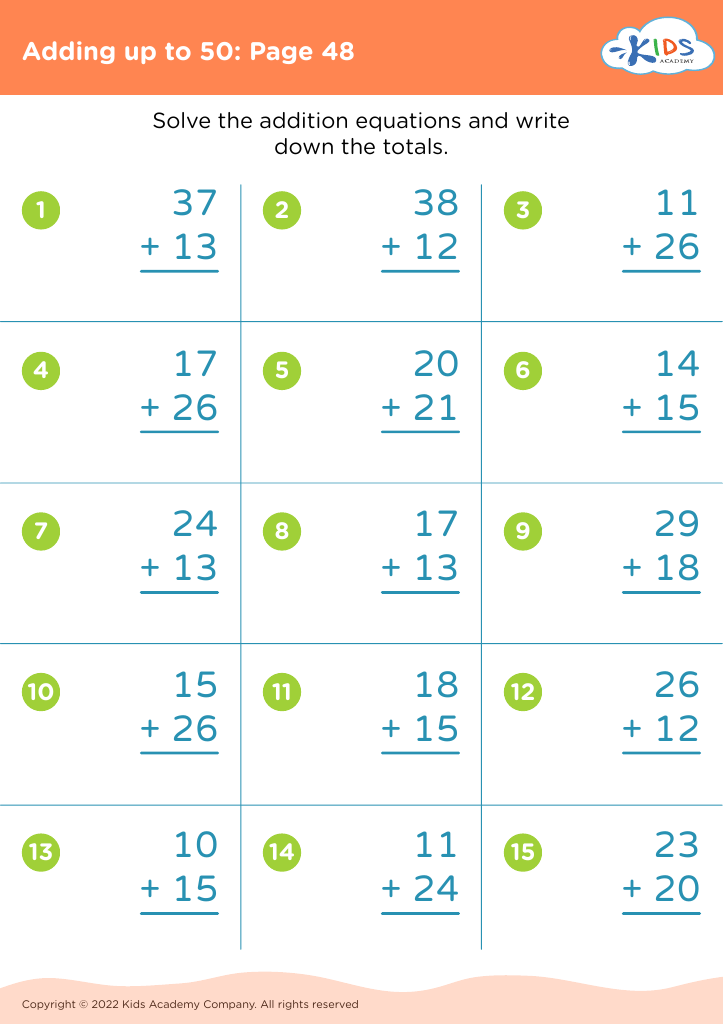
Adding up to 50: Page 48

Adding up to 50: Page 48

Adding up to 50: Page 48
Worksheet
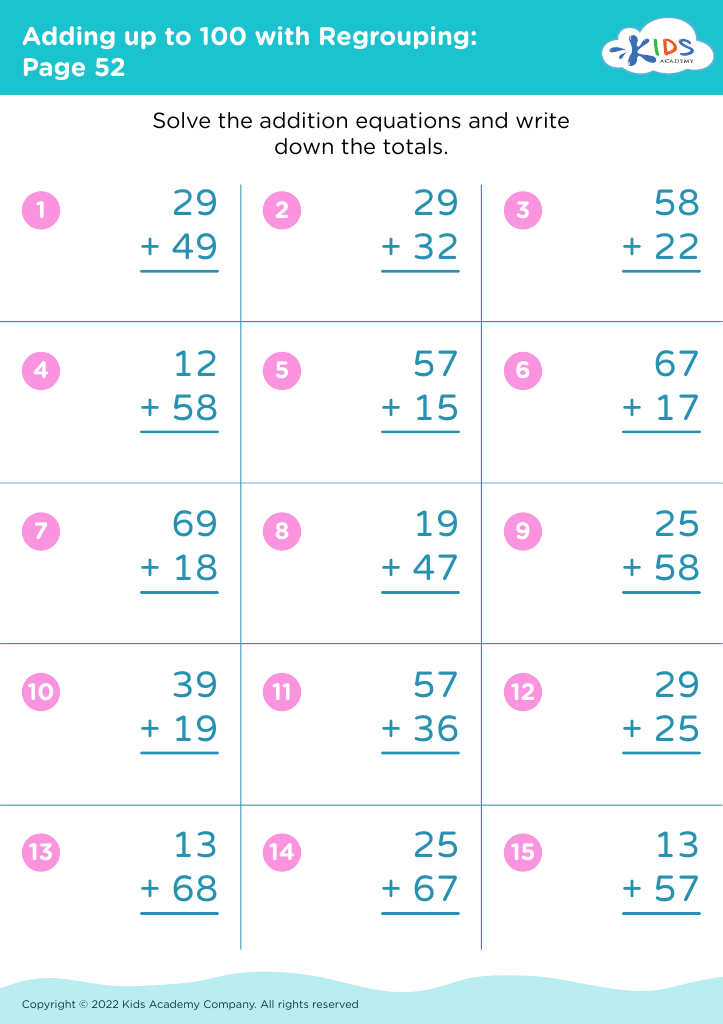
Adding up to 100 with Regrouping: Page 52
Worksheet
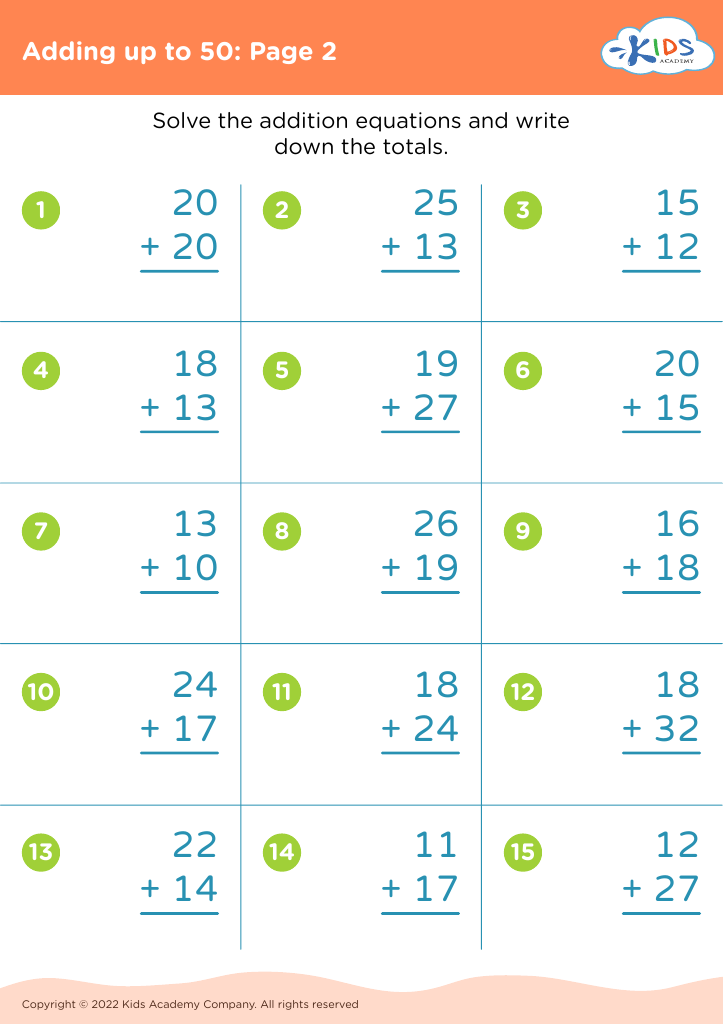
Adding up to 50: Page 2

Adding up to 50: Page 2

Adding up to 50: Page 2
Worksheet


Understanding fractions is crucial for children aged 6-7, as it lays the foundation for their mathematical development and everyday life skills. At this age, children are beginning to grasp more abstract concepts, and fractions introduce them to the idea of parts being related to a whole. This understanding is not only fundamental for mathematics but also for critical thinking and problem-solving skills.

Parents and teachers should care because mastery of fractions fosters confidence and mathematical fluency. As children learn to visualize fractions through slices of pizza or segments of a pie, they also enhance their ability to make comparisons and understand relationships between numbers. This foundational knowledge is essential for more complex mathematical operations in later years, such as addition, subtraction, and even ratios and percentages.

Additionally, understanding fractions nurtures a child's ability to handle everyday situations like sharing food, measuring ingredients while cooking, or dividing time. These practical applications connect math to real life, making learning meaningful and engaging. By investing time in their fraction education, parents and teachers equip children with vital skills they'll use throughout their lives, promoting a positive outlook toward math as they grow.