Understanding more/less concept Worksheets for Ages 6-7
3 filtered results
-
From - To
Discover a fun and engaging way to teach your 6-7-year-olds the concept of "more" and "less" with our specially designed worksheets! These interactive resources help children grasp the fundamentals of comparison and quantity. Through colorful visuals and engaging activities, students will practice identifying greater and lesser amounts, boosting their early math skills. Perfect for classroom or at-home learning, the worksheets encourage critical thinking and problem-solving as children work through exercises that enhance numerical understanding. With our resources, young learners will develop confidence in their math abilities while having enjoyable learning experiences. Start your child's math journey today with our more/less concept worksheets!
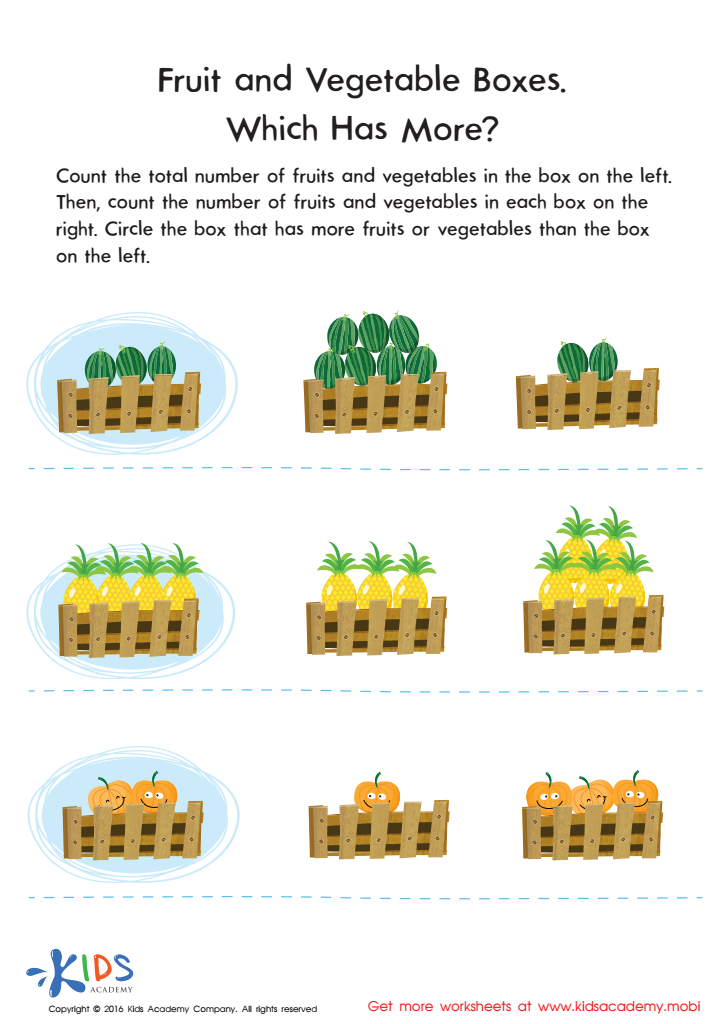
Which Has More? Size Worksheet
 Assign to My Students
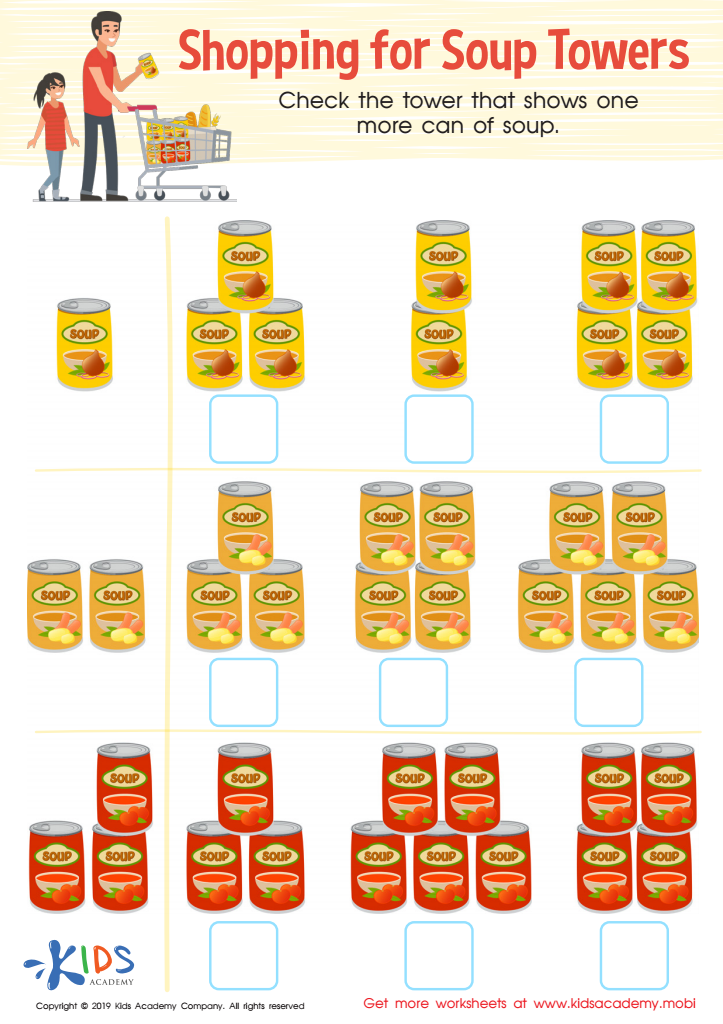
Soup Towers Worksheet
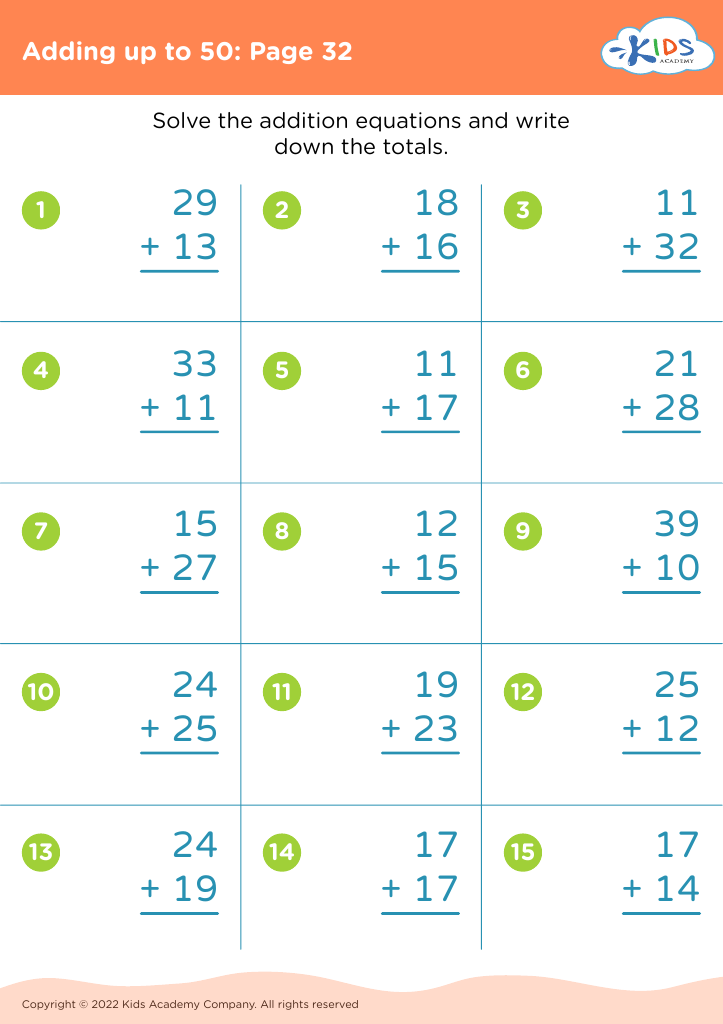






.jpg)

Understanding the concept of more and less is vital for children aged 6-7 as it forms the foundation for their mathematical skills and critical thinking. At this age, children are beginning to grasp basic arithmetic and numerical comparisons. By mastering the concepts of "more" and "less," they enhance their ability to analyze and interpret numerical situations, which is essential for everyday decision-making.
Parents and teachers play a crucial role in fostering this understanding. When children learn to identify which quantity is greater or smaller, they develop problem-solving skills and logical reasoning abilities. This comprehension also extends beyond math, spilling into areas such as science, where comparisons are essential, and even social contexts, such as determining preferences or evaluating ideas.
Moreover, engaging in activities that emphasize more and less supports language development as children learn how to articulate their thoughts and observations effectively. Ultimately, by emphasizing these foundational concepts, parents and teachers equip children with skills that will serve them throughout their educational journey and in daily life. These early experiences not only aid in academic success but also build confidence and a love for learning, fostering lifelong learners.








