Understanding prefixes Worksheets for Ages 6-7
4 filtered results
-
From - To
Explore our "Understanding Prefixes Worksheets" designed specifically for ages 6-7! These engaging worksheets help young learners grasp the concept of prefixes and enhance their vocabulary. Perfect for accompanying lessons or as stand-alone activities, children will practice identifying and applying common prefixes to form new words. Our colorful and interactive worksheets foster independent learning while making education fun. With a variety of exercises, kids will build their reading skills and increase their language comprehension. Ideal for classroom use or at-home practice, these resources make learning prefixes an enjoyable adventure! Start your child's journey to better language skills today!
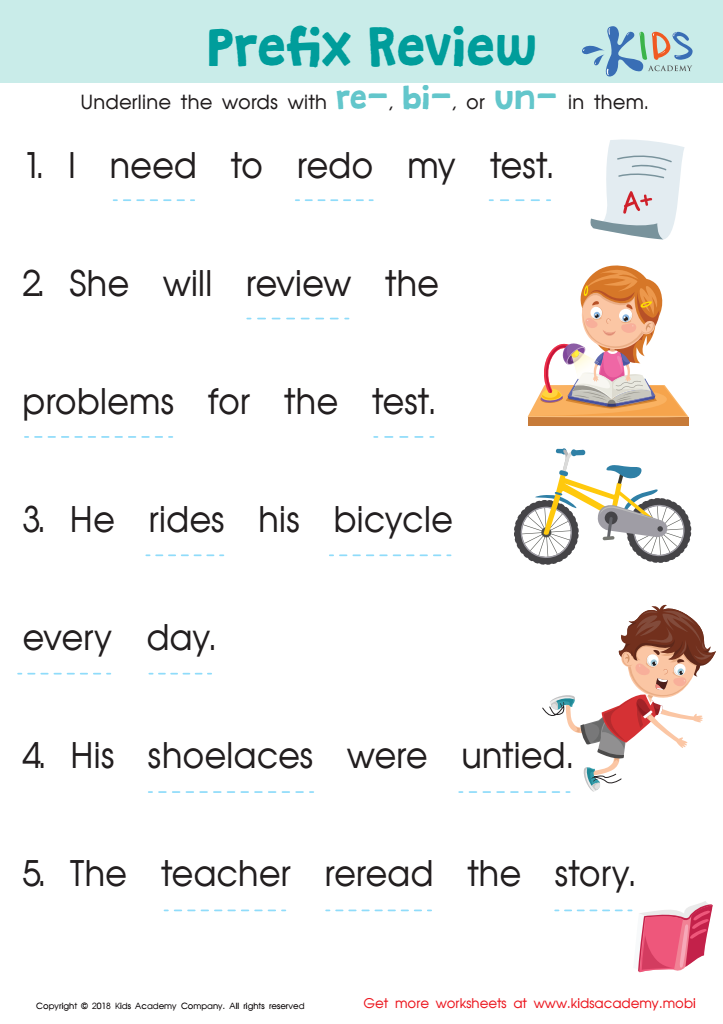
Prefix Review Worksheet
 Assign to My Students
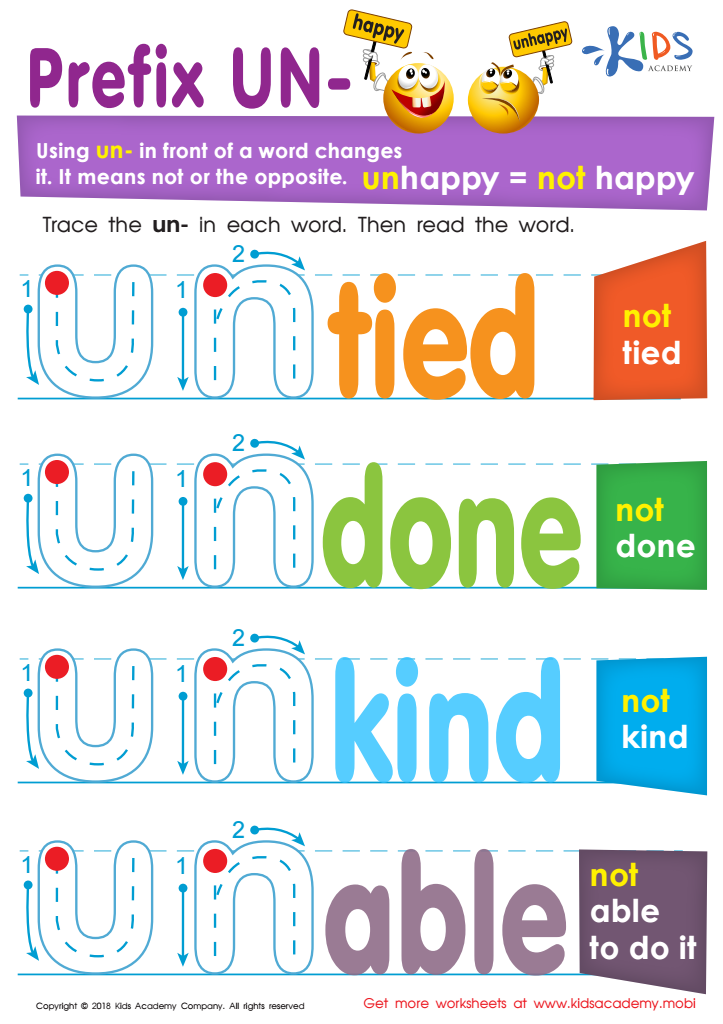
Prefix Un- Worksheet
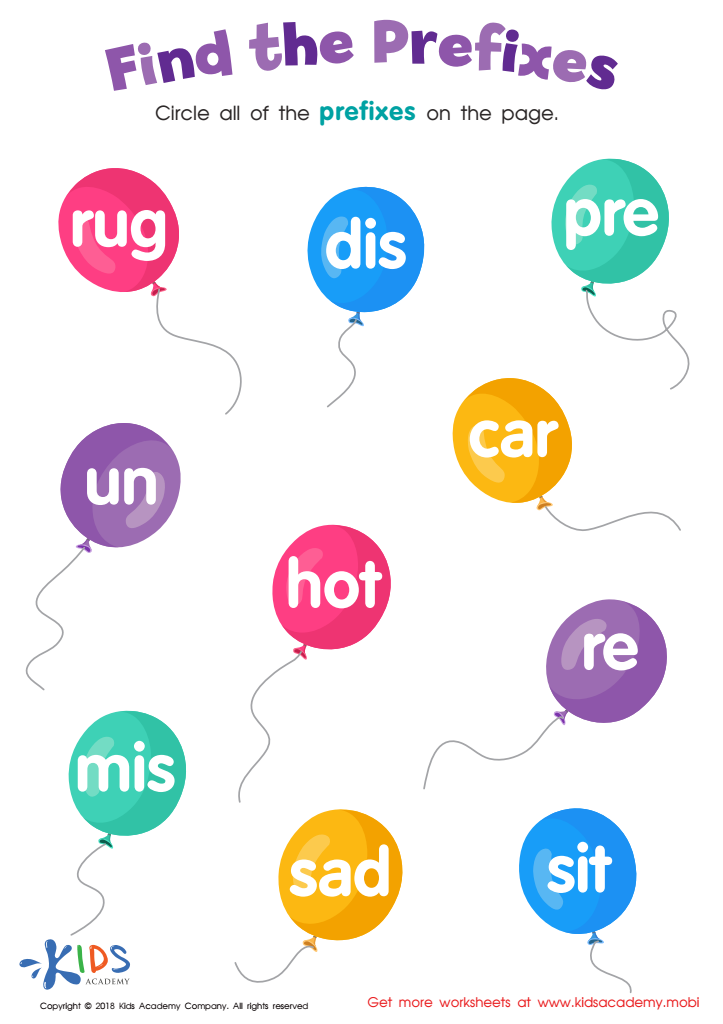
Reading: Find the Prefixes Worksheet
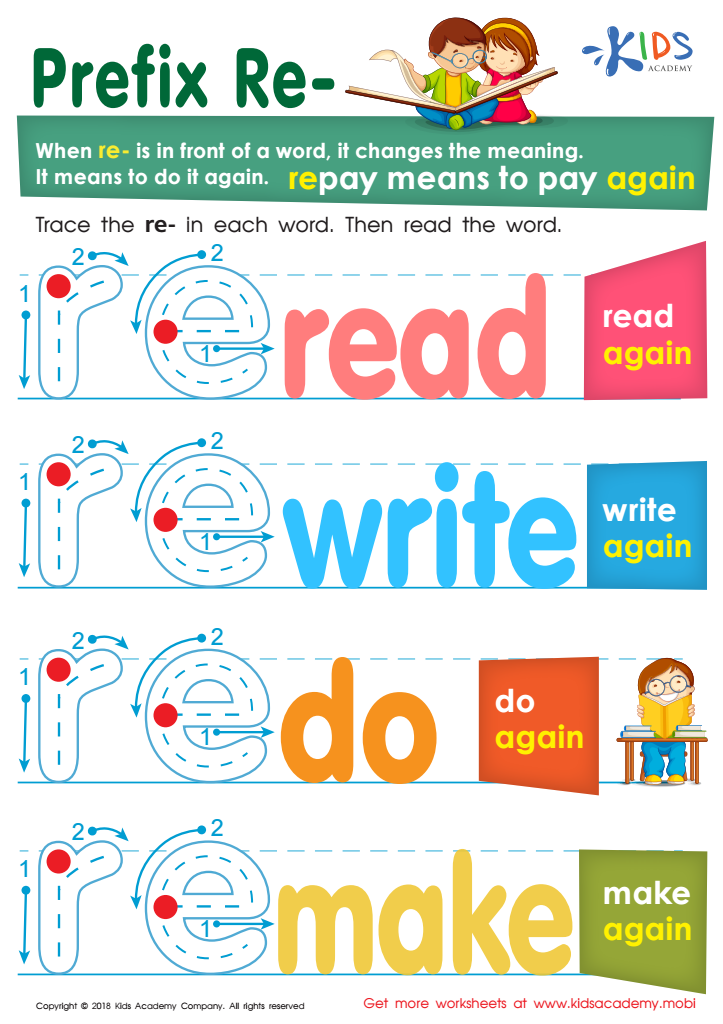
Prefix Re- Worksheet








Understanding prefixes is crucial for children aged 6-7 as it lays the foundation for their literacy and language skills. Prefixes are fundamental building blocks of words that modify and enhance meanings. By learning them, children expand their vocabulary and comprehension, making it easier for them to decode larger words and grasp more complex ideas.
For parents and teachers, promoting prefix knowledge helps simplify the learning process in reading and writing. This skill allows children to tackle unfamiliar words confidently, fostering a love for reading and self-reliance in language use. For instance, by knowing that "un-" means "not," children can easily deduce that “happy” becomes “unhappy.”
Teaching prefixes also encourages critical thinking and cognitive development. Children analyze word parts, promoting curiosity and deeper understanding of language mechanics. It cultivates better communication, enabling children to express themselves with more precision.
Moreover, a strong foundation in prefixes aligns with broader educational goals, as effective communication is essential for academic success across subjects. When children understand prefixes, they not only enhance their literacy but also develop essential skills, making it a key area for parents and teachers to focus on during these formative learning years.








