Understanding shapes Worksheets for Ages 6-7
6 filtered results
-
From - To
Discover our "Understanding Shapes Worksheets for Ages 6-7," where learning geometry becomes an enjoyable adventure! Perfectly tailored for young learners, these engaging worksheets offer a variety of activities that teach kids to recognize, categorize, and draw different shapes. With colorful illustrations and interactive tasks, children will develop essential skills in shape identification and geometric thinking. Our high-quality, printable worksheets support your child's educational journey, laying a strong foundation for future math success. Visit Kids Academy to explore these expertly designed resources that turn shape learning into a playful and enriching experience. Help your child master shapes today!
 Assign to My Students
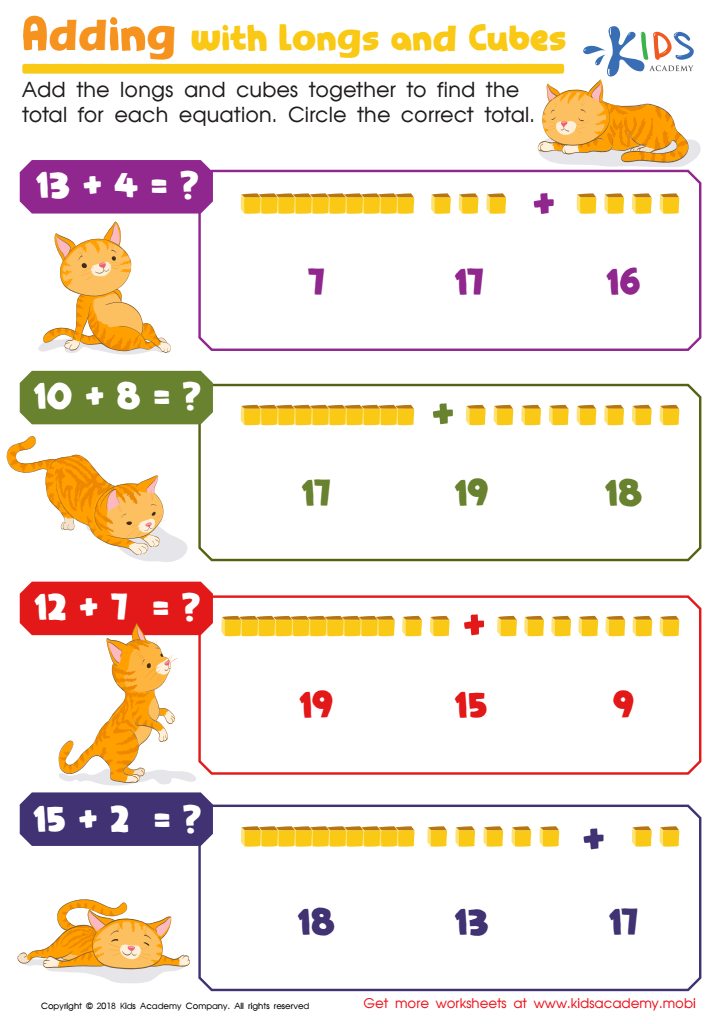
Adding With Longs and Cubes Worksheet
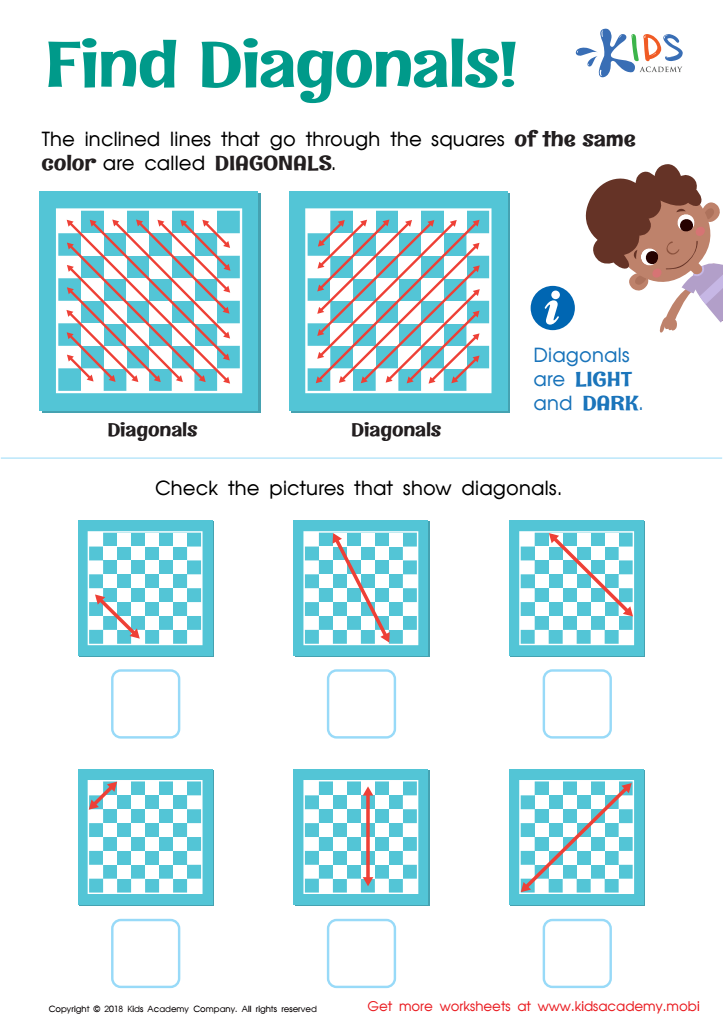
Find Diagonals Worksheet
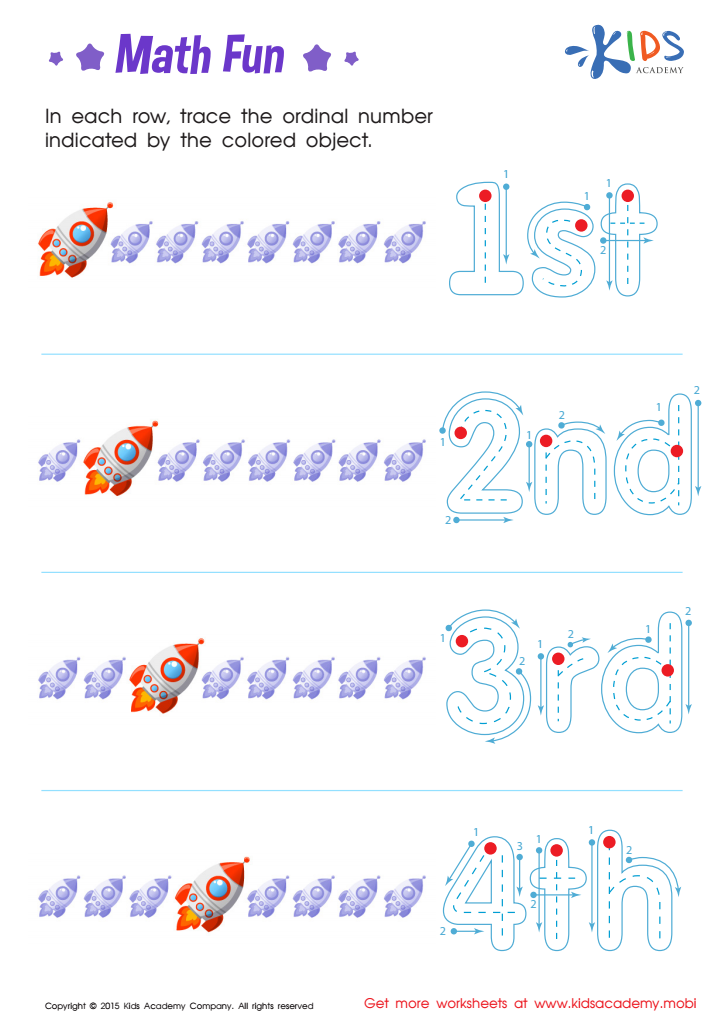
Ordinal Numbers: Math Fun Worksheet
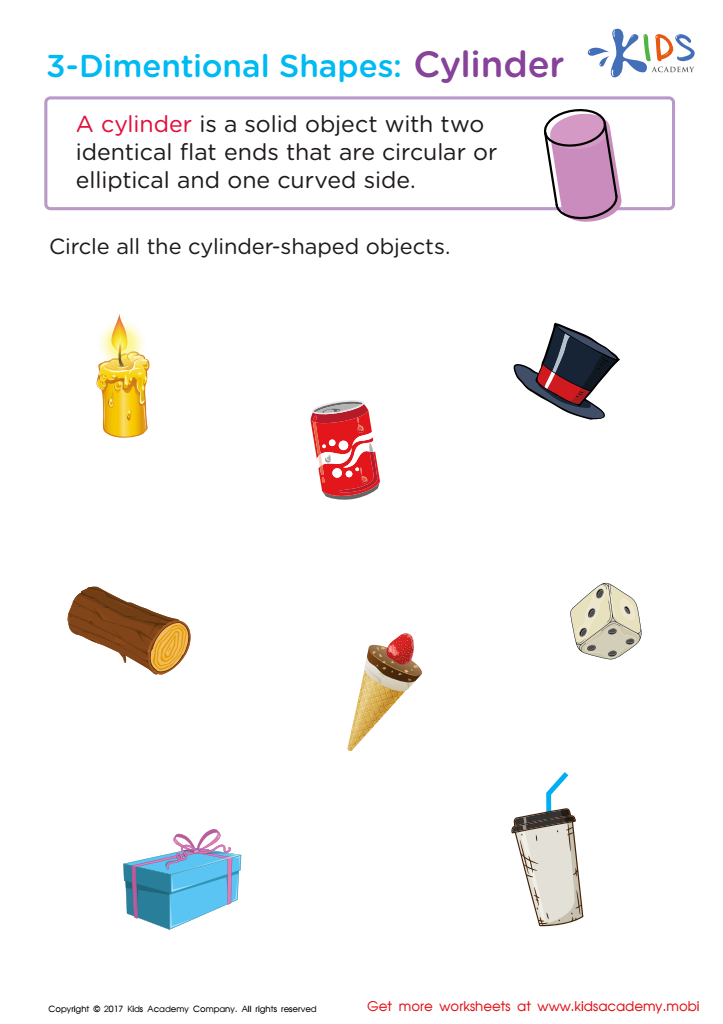
Three–Dimensional Shapes: Cylinder Worksheet


.jpg)





Understanding shapes at ages 6-7 forms a fundamental component of early childhood education that extends beyond simply recognizing circles or squares. At this developmental stage, children are concrete learners who interpret the world largely through visual and tactile experiences. Grasping geometric shapes nurtures spatial awareness; kids learn to interpret and organize space by identifying patterns and making connections. This fosters cognitive abilities essential for math, reading, and problem-solving.
In particular, recognizing and manipulating shapes lays the groundwork for understanding more complex mathematical concepts. Shapes become building blocks for geometry lessons; counting sides teaches early arithmetic, while comparing shapes leads to notions of congruence and symmetry. Furthermore, the language used to describe shapes enriches children’s vocabulary, encouraging precise communication skills.
For teachers and parents, integrating shapes into activities can make learning interactive and fun. When children cut out shapes, build models, or work with puzzles, they're using hands-on techniques that cater to their sensory learning styles. Virtually every aspect of daily life involves shapes: road signs, household items, even letters. Awareness and understanding of shapes enable children to make sense of their environments more coherently.
Therefore, investing in geometric education for young children bolsters their cognitive development, primes them for future STEM learning, and equips them with essential, lifelong skills.








