Boost your child's grammar skills with our engaging Verb Identification Worksheets for Ages 6-7! Designed to make learning fun and interactive, these worksheets help young learners recognize and understand verbs through a variety of exercises. Each activity is tailored to suit the developmental stage of 6-7-year-olds, ensuring that they build a solid foundation in language arts. From coloring tasks to sentence completion, our worksheets reinforce verb usage in creative and captivating ways. Perfect for both classroom teaching and home practice, these worksheets enhance kids' linguistic abilities while keeping them entertained. Start your child's journey to becoming a grammar pro today!

Check out this FREE "Verb identification" Trial Lesson for age 6-7!

Combine Nouns and Verbs to Form Sentences

Favorites
With answer key
Interactive
  • 6-7
  • Verb identification
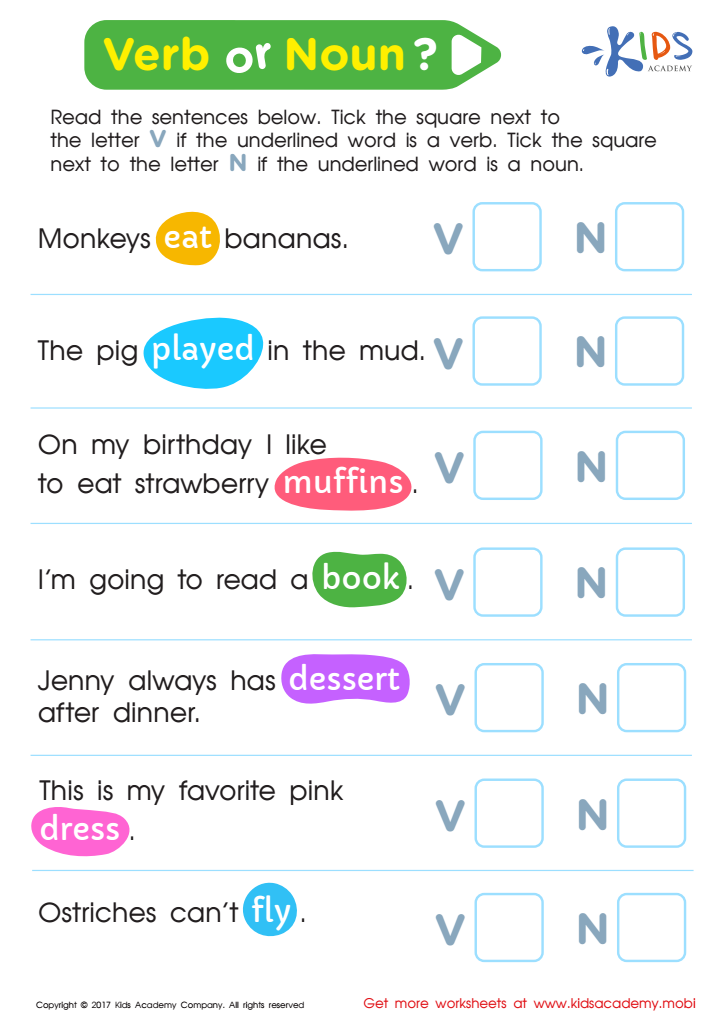
Worksheet: Verb or Noun

Verb or Noun Worksheet

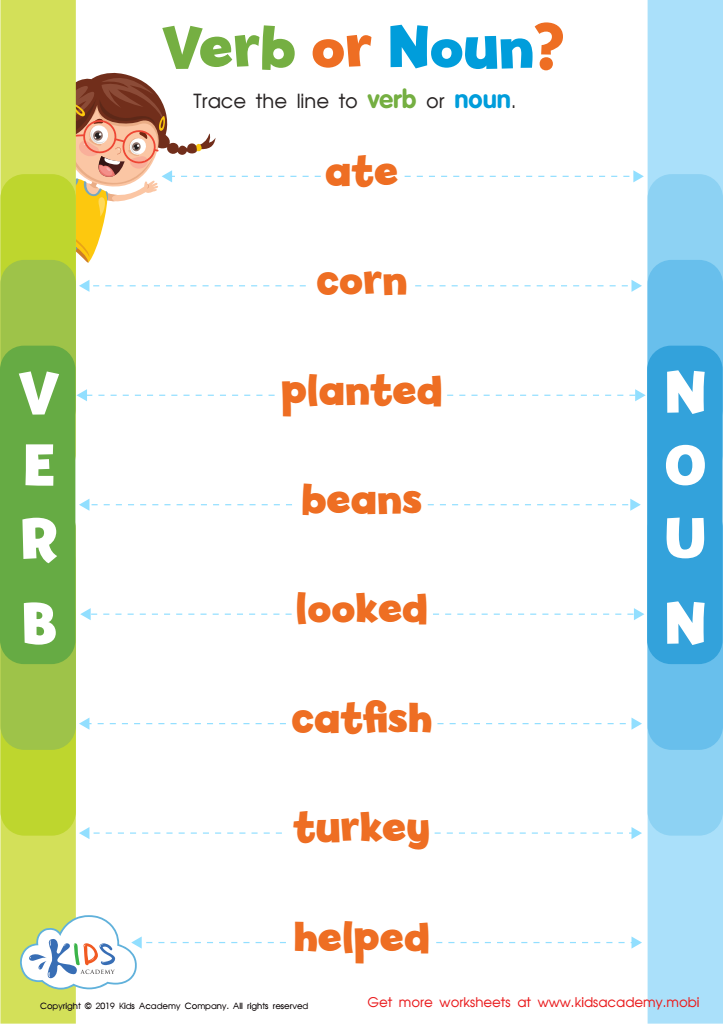
This worksheet will help your child identify verbs and nouns quickly. With colorful highlights and simple sentences, they'll master parts of speech in no time! Get ahead of the game with this incredible worksheet.
Verb or Noun Worksheet
Worksheet
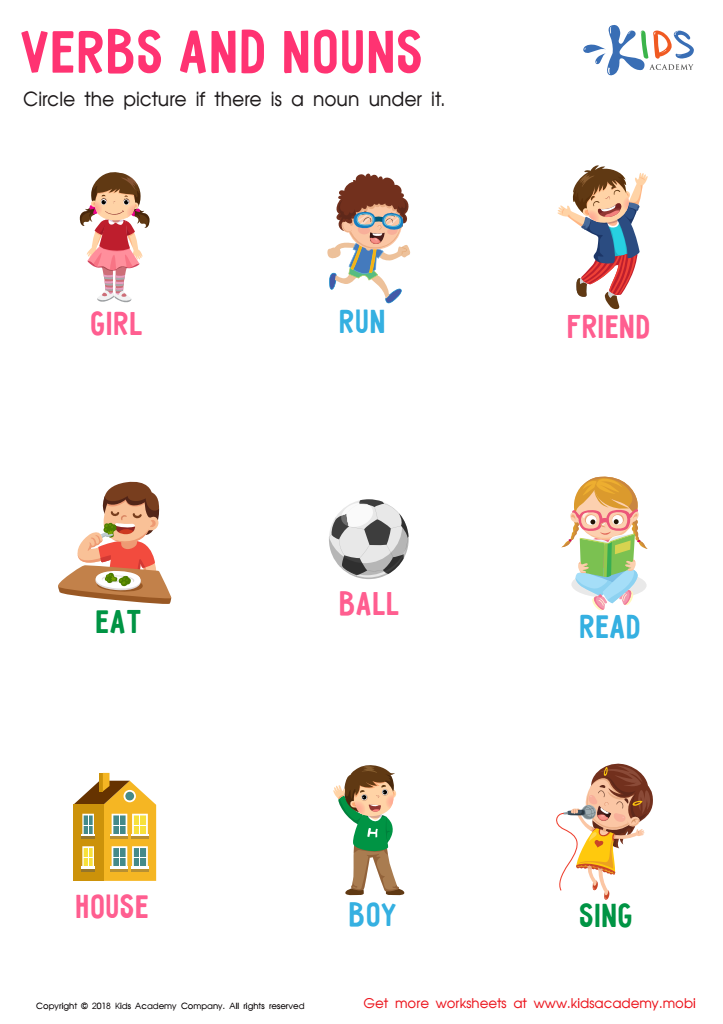
Verbs and Nouns Worksheet

Verbs and Nouns Worksheet

Your child should have basic knowledge of verbs and nouns before starting this worksheet. Go through it with them and ask them to circle the pictures with nouns under them. This way, they'll become more familiar with parts of speech.
Verbs and Nouns Worksheet
Worksheet
Verb or Noun Worksheet

Verb or Noun Worksheet

Explain verbs and nouns to your kids, then read all the words on the tracing sheet aloud. Help them identify and trace the lines to a verb or noun. This activity helps them understand sentence structure and strengthens language skills.
Verb or Noun Worksheet
Worksheet
Verbs in The Lion and the Mouse Worksheet

Verbs in The Lion and the Mouse Worksheet

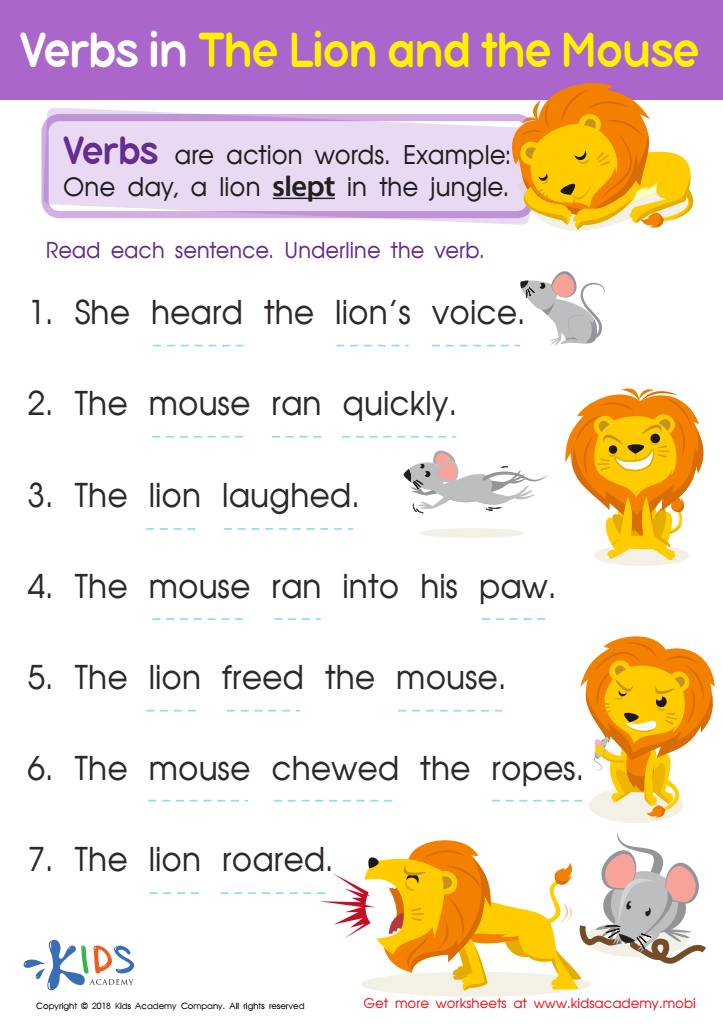
This grammar worksheet is perfect for young learners starting to learn parts of speech. It includes action verbs, which can be used in conjunction with the story The Lion and the Mouse. Students can read the sentences and choose the verb. Understanding and using verbs helps children read and write with expression.
Verbs in The Lion and the Mouse Worksheet
Worksheet
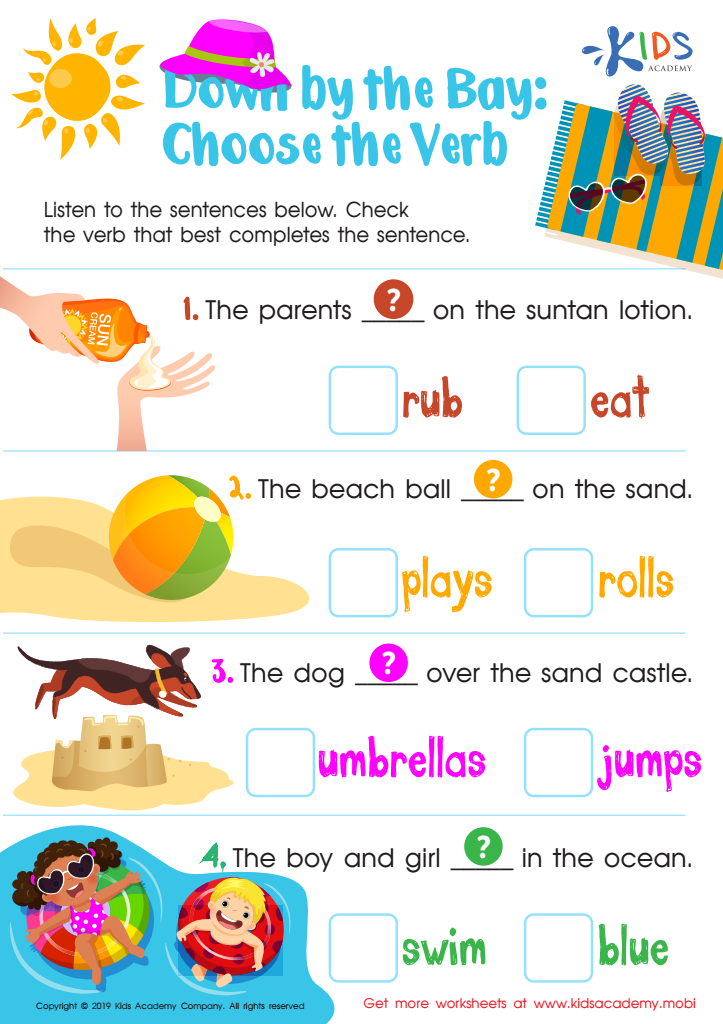
Down by the Bay: Choose the Verb Worksheet

Down by the Bay: Choose the Verb Worksheet

Teach your kids about verbs: words that describe actions, like 'playing', 'eating', 'talking'. Ask your child to give their own verbs, then read the sentences in a worksheet and help them pick the best one for each question.
Down by the Bay: Choose the Verb Worksheet
Worksheet
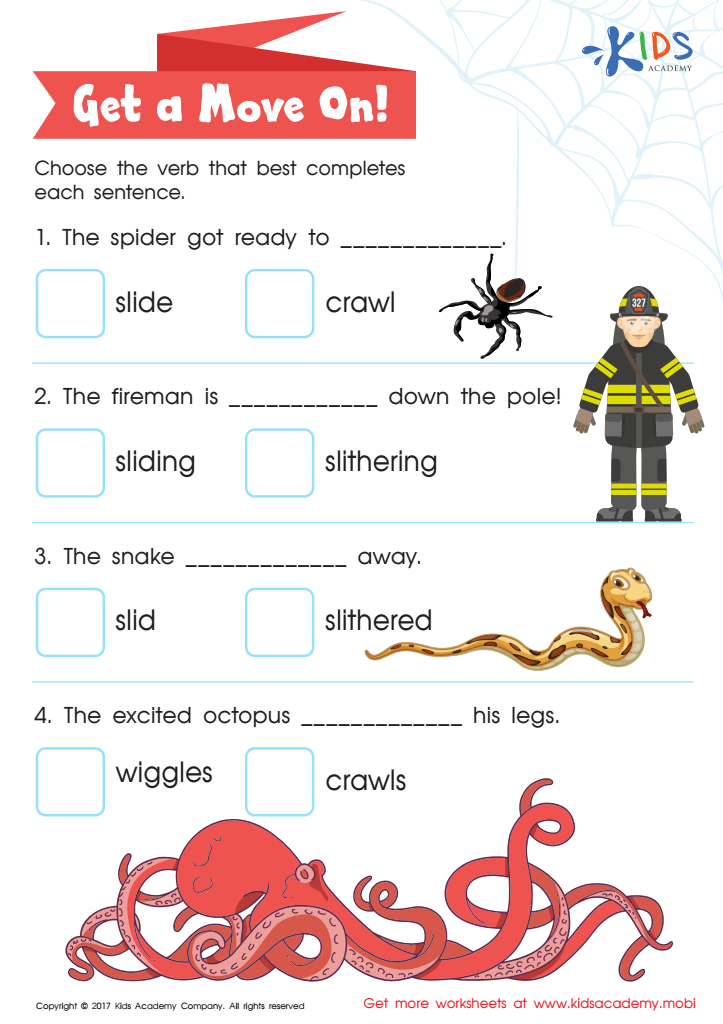
Verb worksheet for grade 2

Verb Worksheet

Help your child learn verbs with this fun verb worksheet for grade 2! Firemen slide down poles, spiders crawl - they'll learn while they select the right verb in each sentence.
Verb Worksheet
Worksheet
Race Car Verbs Worksheet

Race Car Verbs Worksheet

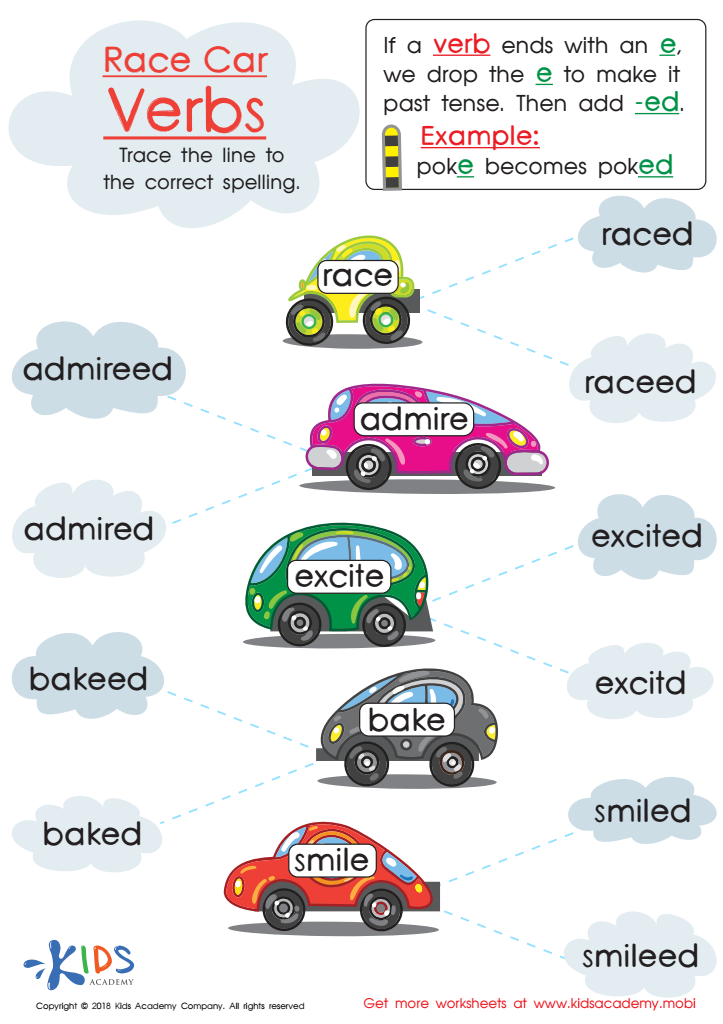
Help your child learn to spell and write with this fun car-themed worksheet! Read the words in the center of each car and review their past tense versions in the smoke. Have your learner trace the line from each car to the correctly spelled word – and don't forget to drop the 'e' before adding an -ed ending!
Race Car Verbs Worksheet
Worksheet


Verb identification is a crucial foundational skill for children aged 6-7, integral to their linguistic and cognitive development. At this age, children are building their basic literacy skills, and understanding verbs is essential for effective communication. Verbs are action words that drive sentences, making them vital for expressing events, actions, and states of being.

When children can identify verbs, they improve their reading comprehension. They can better grasp what characters are doing in stories, which enriches their ability to follow plots and understand narratives. This skill also enhances their writing; knowing how to use a variety of verbs allows for more dynamic and accurate expression. For example, instead of merely saying 'The cat is,' they can say, 'The cat jumps,' adding clarity and interest.

Moreover, recognizing and using verbs correctly helps children master grammar rules, which are fundamental for learning other languages in the future. Encouraging this skill supports their ability to construct well-formed sentences, improving overall communication effectiveness.

By dedicating attention to verb identification, parents and teachers lay a solid groundwork for academic success and efficient language use, fostering more confident and capable communicators. Thus, investing time in teaching this skill has long-term benefits for children’s educational journeys.