Visual perception development Worksheets for Ages 6-7
4 filtered results
-
From - To
Discover engaging and educational Visual Perception Development Worksheets crafted specifically for children ages 6-7. These worksheets are designed to sharpen critical skills such as visual discrimination, spatial awareness, and pattern recognition. Through a variety of fun activities that involve shapes, patterns, and sequences, your child will enhance their ability to process and interpret visual information, aiding their reading, writing, and daily functioning. Perfect for parents and teachers, these resources offer a structured yet enjoyable way to support young learners in their developmental journey. Unlock your child's potential with our expertly designed visual perception worksheets.
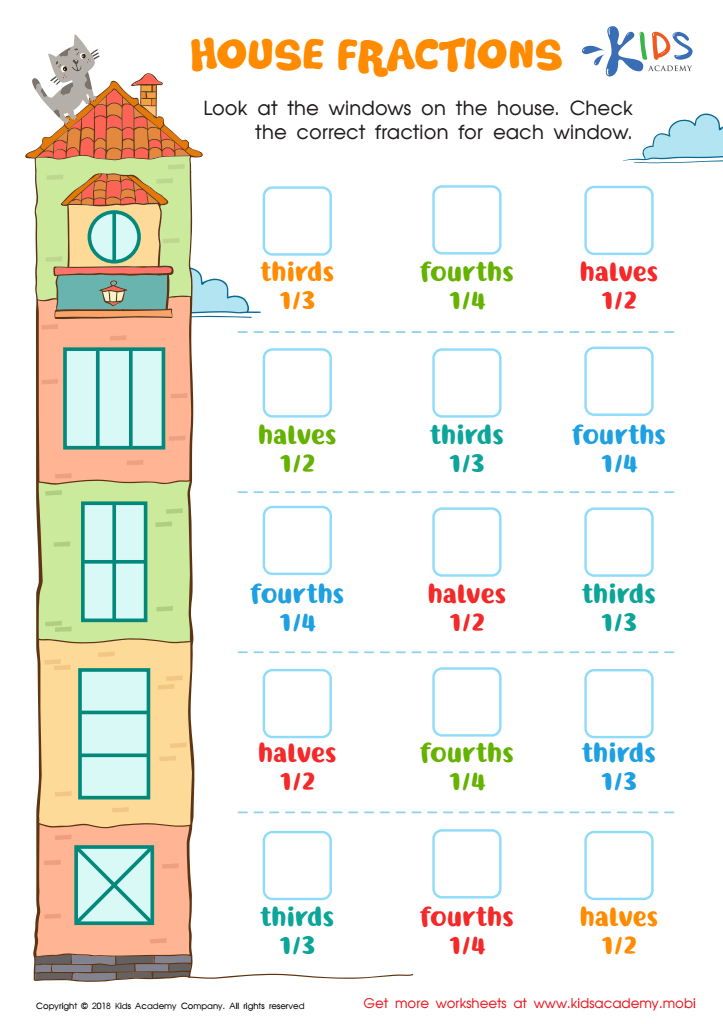
House Fractions Worksheet
 Assign to My Students
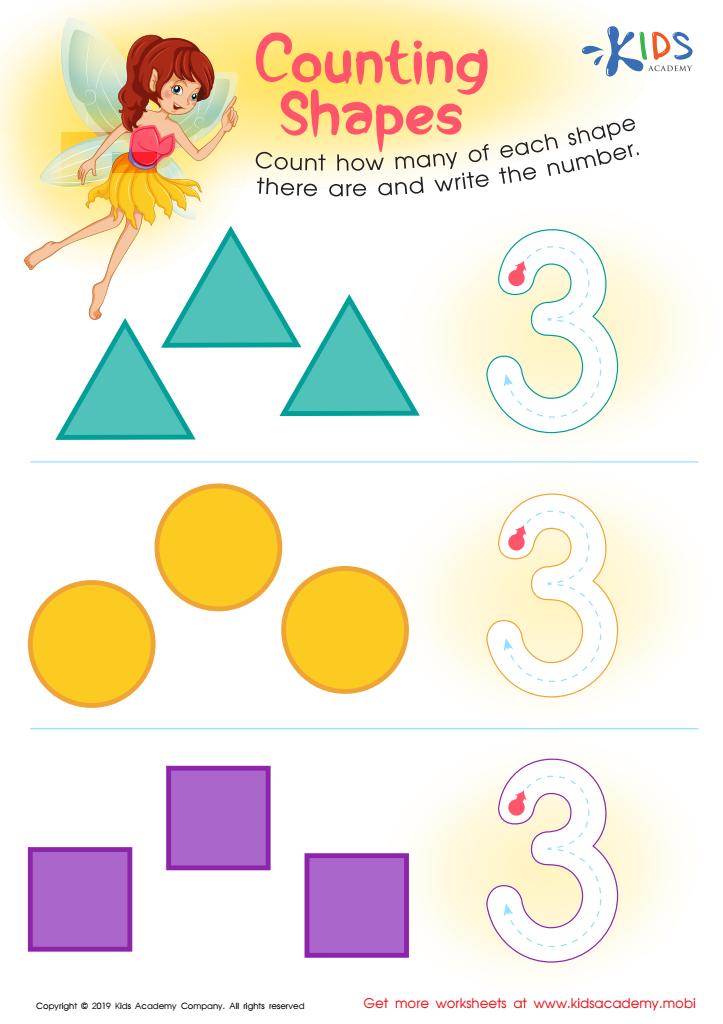
Counting Shapes Worksheet








Visual perception is crucial for children aged 6-7 as it significantly impacts their ability to learn and interact with the world. At this stage, kids are just beginning formal education, where visual skills play an integral role. Visual perception includes abilities such as recognizing shapes, identifying colors, tracking moving objects, and comprehending spatial relationships, which are foundational for reading, writing, mathematics, and overall academic success.
Reading requires the ability to differentiate between letters and words, and writing demands spatial awareness to place letters properly on a line. Effective tracking is necessary for following along in a book or on a whiteboard. Mathematics also demands visual perception skills for understanding patterns, shapes, and spatial concepts.
Socially, good visual perception helps children recognize faces and emotions, fostering better peer interactions and healthier relationships. Engaging in sports and physical activities, critical for physical health, also relies on coordinated eye movements and spatial judgment.
Neglecting visual perception development can lead to reading difficulties, poor academic performance, reduced self-esteem, and even behavioral issues. Early detection and intervention can help address any deficiencies, leading to better academic outcomes, improved social interactions, and higher overall confidence. Thus, parents and teachers should prioritize activities that strengthen visual perception to support holistic childhood development.








