Weather Vocabulary Worksheets for Ages 6-7
3 filtered results
-
From - To
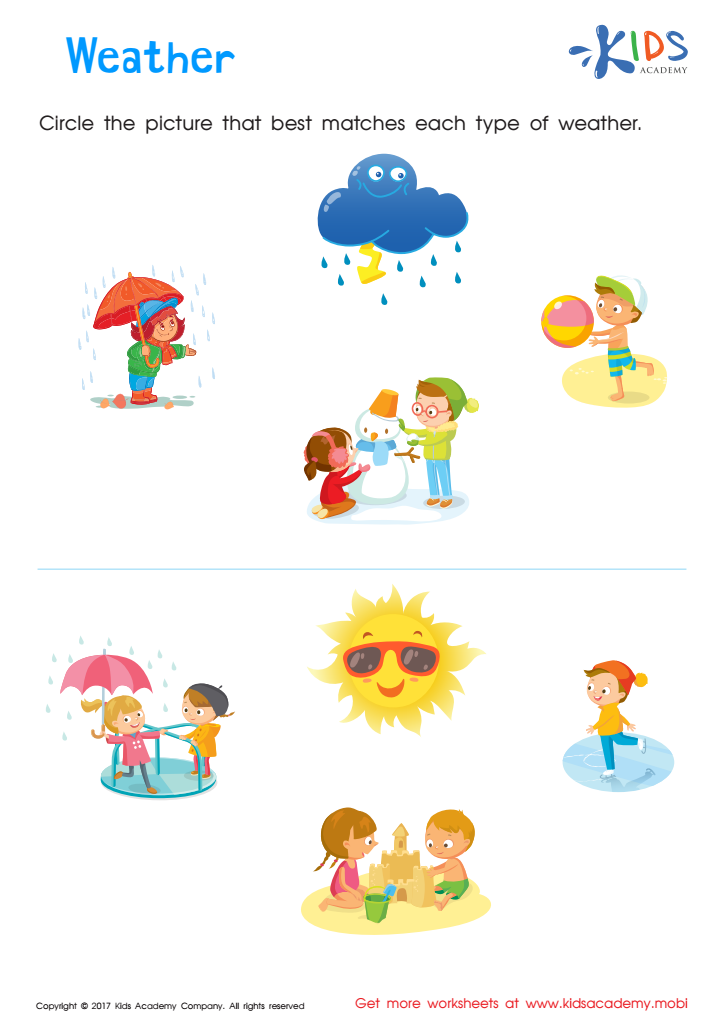
Enhance your child's vocabulary with our engaging Weather Vocabulary Worksheets designed specifically for ages 6-7! These interactive activities introduce young learners to essential weather terms, including sun, rain, snow, wind, and more. Each worksheet combines fun illustrations and simple exercises to reinforce understanding, making it easy for kids to grasp the concept of different weather conditions. Perfect for classroom use or at-home learning, our worksheets promote language development and critical thinking skills. Whether your little one is a budding meteorologist or simply curious about the world, these resources are an excellent way to explore weather while having fun!
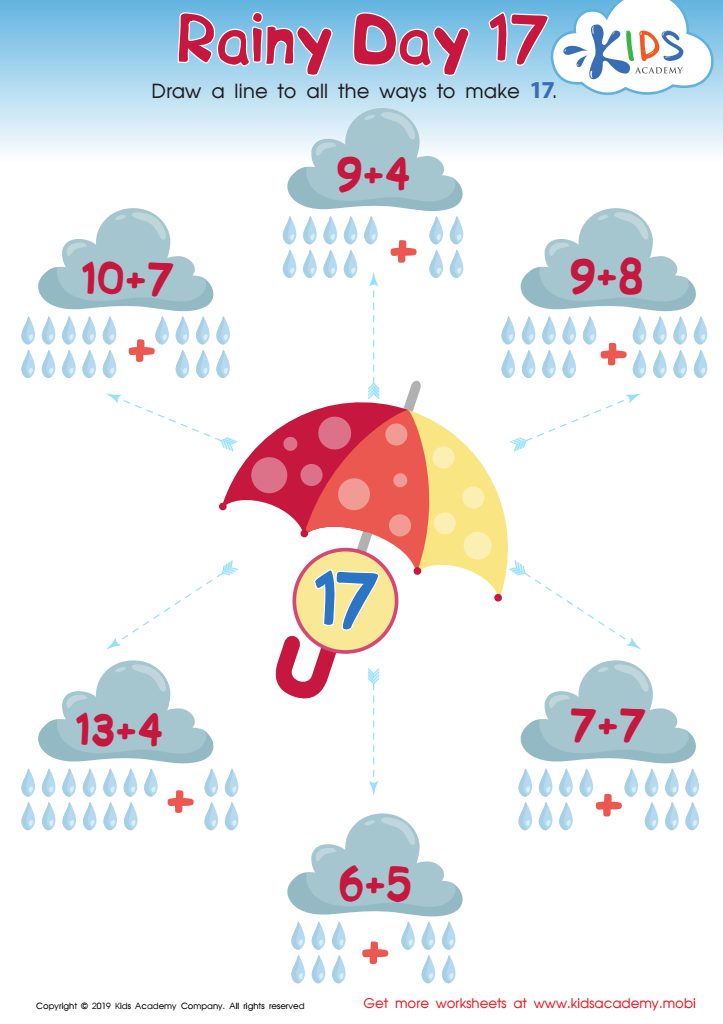
Rainy Day 17 Worksheet
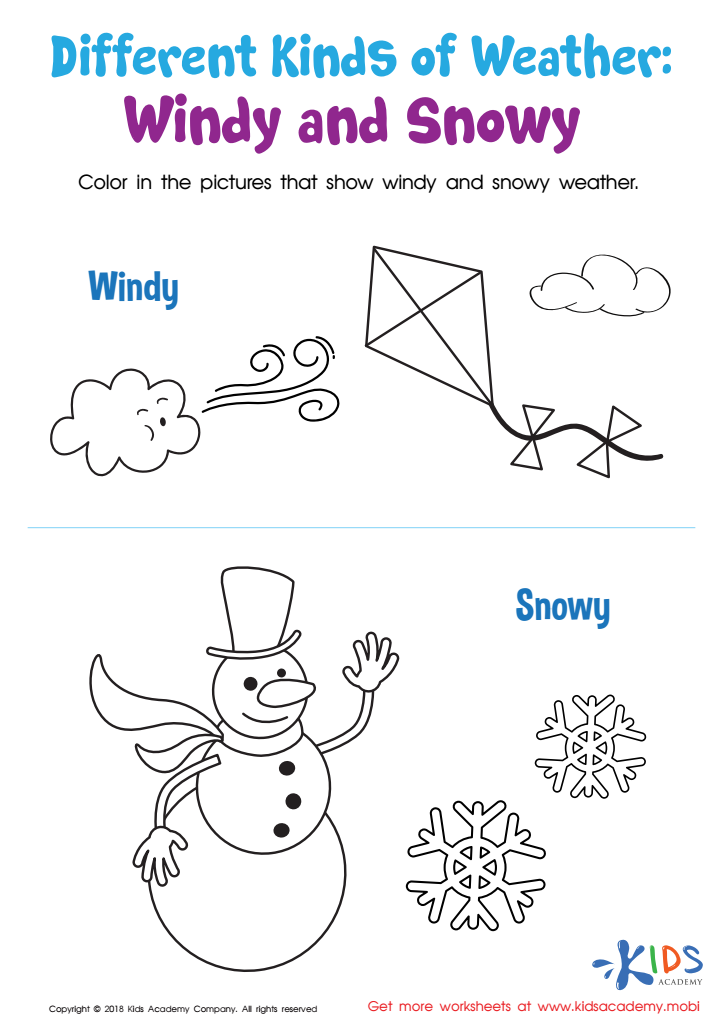
Different Kinds of Weather: Windy and Snowy Worksheet
 Assign to My Students







Weather vocabulary is crucial for children aged 6-7 as it plays a significant role in their cognitive and social development. At this age, children are naturally curious about their environment, and learning weather-related terms helps them make sense of their surroundings. Understanding concepts like "rain," "sunny," "cloudy," and "windy" not only enhances their communication skills but also equips them to articulate their experiences and observations effectively.
Furthermore, knowledge of weather vocabulary promotes critical thinking. When children learn to describe the weather, they begin to make connections between climate patterns and daily activities. For instance, they can assess when it might be appropriate to wear a raincoat or plan outdoor games, thereby developing decision-making skills.
Additionally, understanding weather concepts lays the groundwork for later scientific learning. As children progress in school, introducing basic meteorology fosters interest in science and nature, helping them ask questions and seek answers about the world around them.
Finally, incorporating weather vocabulary into learning activities can encourage social interaction. Children often discuss the weather during play, support cooperative games, and share experience-based narratives, fostering a sense of community and enhancing their language development. Overall, weather vocabulary is fundamental for both academic growth and social skills in young learners.








