Critical Thinking Adding 2-digit Numbers Worksheets for Ages 6-7
3 filtered results
-
From - To
Enhance your child’s math skills with our engaging Critical Thinking Adding 2-Digit Numbers Worksheets, designed specifically for ages 6-7. These worksheets not only focus on addition mastery but also encourage children to think critically and develop problem-solving skills. Each activity is crafted to challenge young learners, helping them to understand numeric relationships and strengthen their mental math abilities. With a variety of fun, interactive tasks, your child will enjoy exploring addition through visual aids and real-life scenarios. Foster a love for learning while building confidence in math with our thoughtfully designed resources that cater to early learners’ needs.
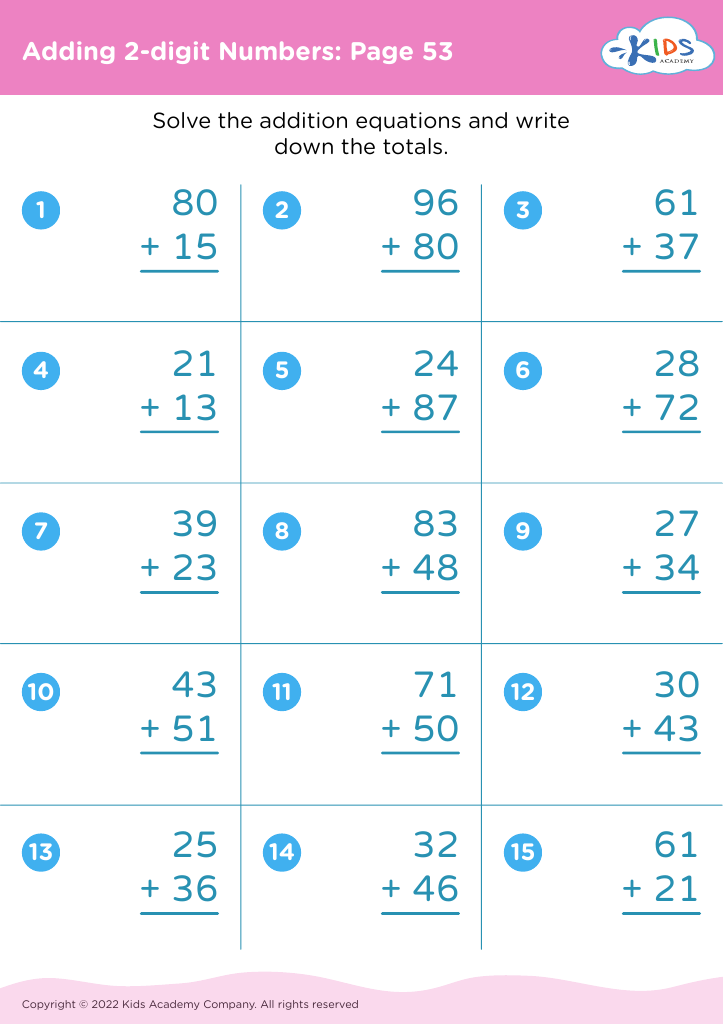
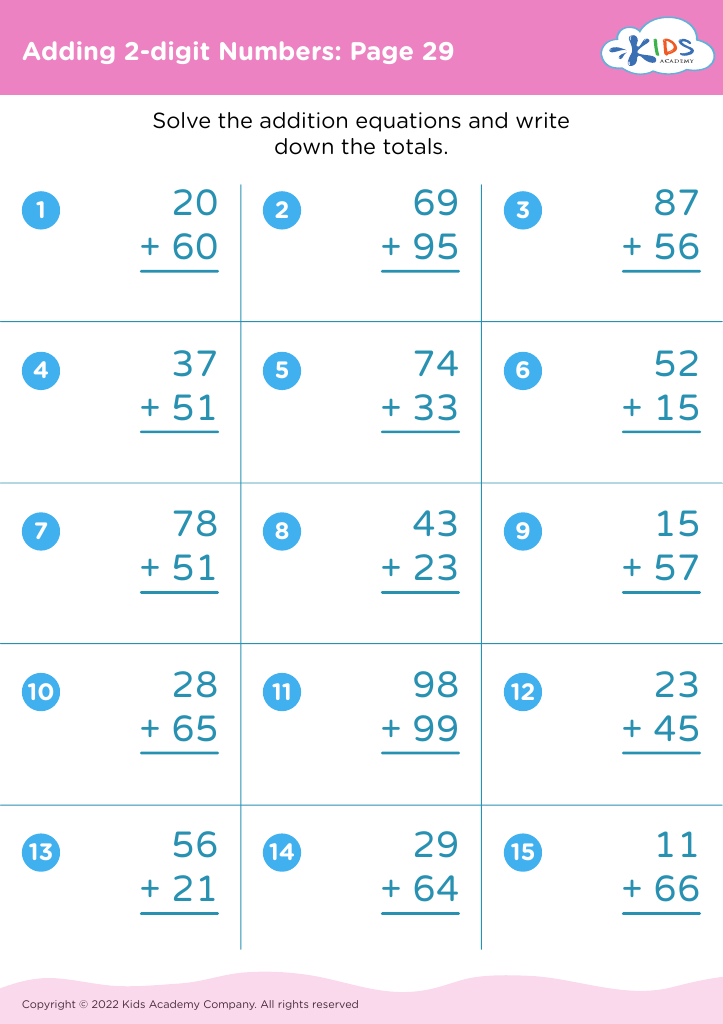
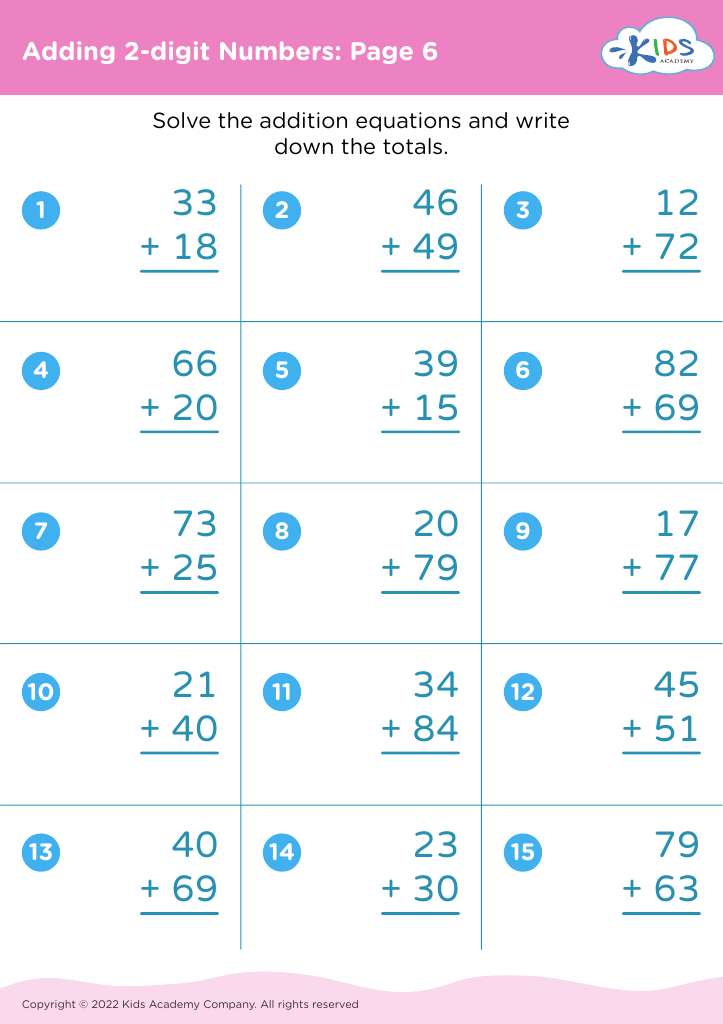








Critical thinking skills are essential for children as they lay the foundation for problem-solving and decision-making abilities. When it comes to adding 2-digit numbers for ages 6-7, promoting critical thinking allows students to go beyond rote memorization and develop a deeper understanding of mathematical concepts. This age is crucial for establishing a positive attitude toward mathematics, and fostering critical thinking can inspire a love for the subject.
By encouraging children to understand the "why" behind the process of adding 2-digit numbers, parents and teachers help them make connections between mathematical concepts and real-world applications. It supports cognitive development, empowering children to break down complex problems into manageable steps. For instance, when children learn to regroup or carry over in addition, they build strategies that apply to more advanced math in the future.
Moreover, critical thinking in mathematics sets the groundwork for confidence and resilience in facing challenges. Students become better equipped to tackle unfamiliar problems and develop a curious mindset. Ultimately, cultivating critical thinking skills in early math not only supports academic success in the classroom but also fosters lifelong learners who approach challenges creatively and analytically. This is why parents and teachers should prioritize critical thinking skills when teaching addition.








