Recognizing Patterns Adding 2-digit Numbers Worksheets for Ages 6-7
3 filtered results
-
From - To
Explore our engaging "Recognizing Patterns Adding 2-Digit Numbers Worksheets" designed for ages 6-7! These thoughtfully crafted activities help young learners identify and apply patterns in addition, making math both fun and effective. With an emphasis on visual recognition and problem-solving, children will develop their skills in adding two-digit numbers while enhancing their comprehension of mathematical concepts. Our worksheets feature colorful visuals and interactive exercises that keep kids motivated and excited about learning. Perfect for classroom use or at-home practice, these resources ensure a strong mathematical foundation for your child. Start your pattern recognition journey today!
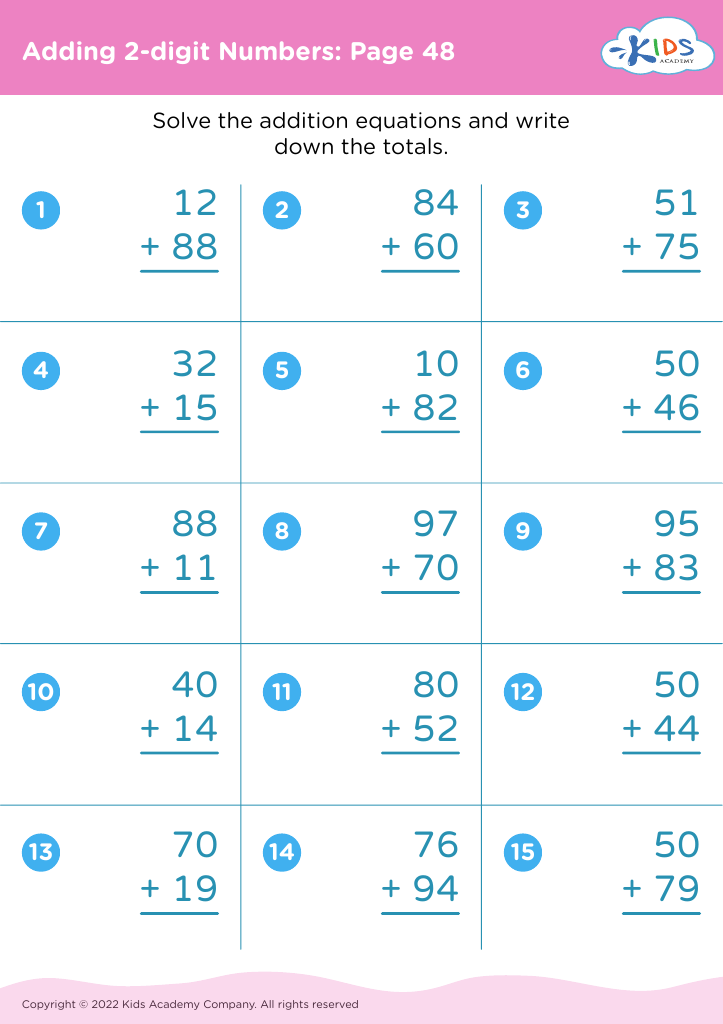
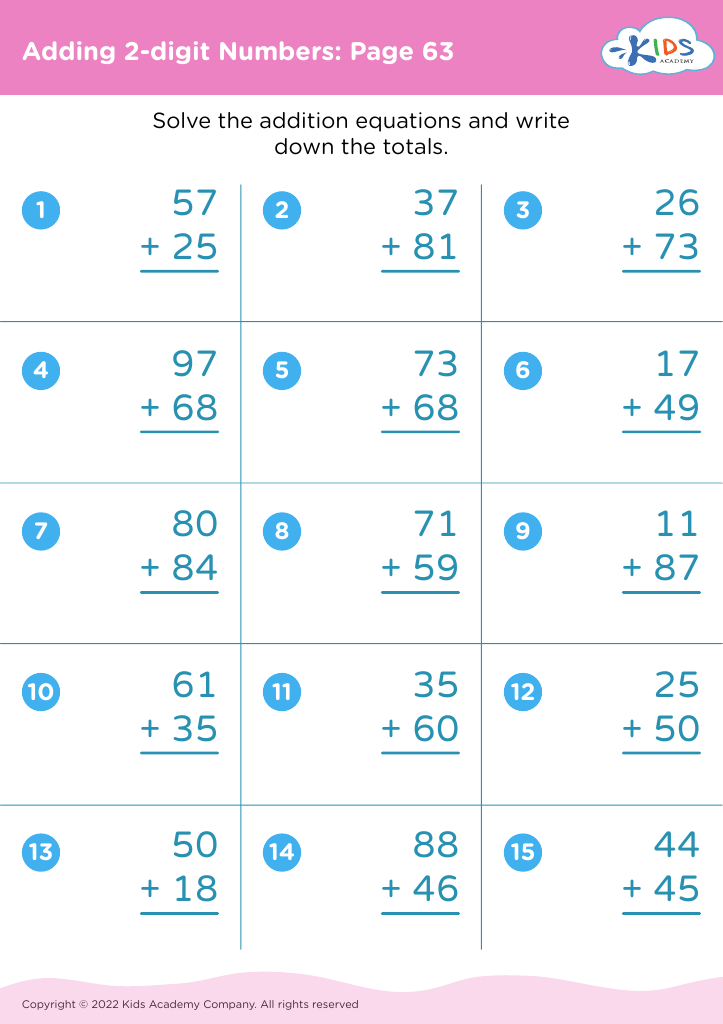
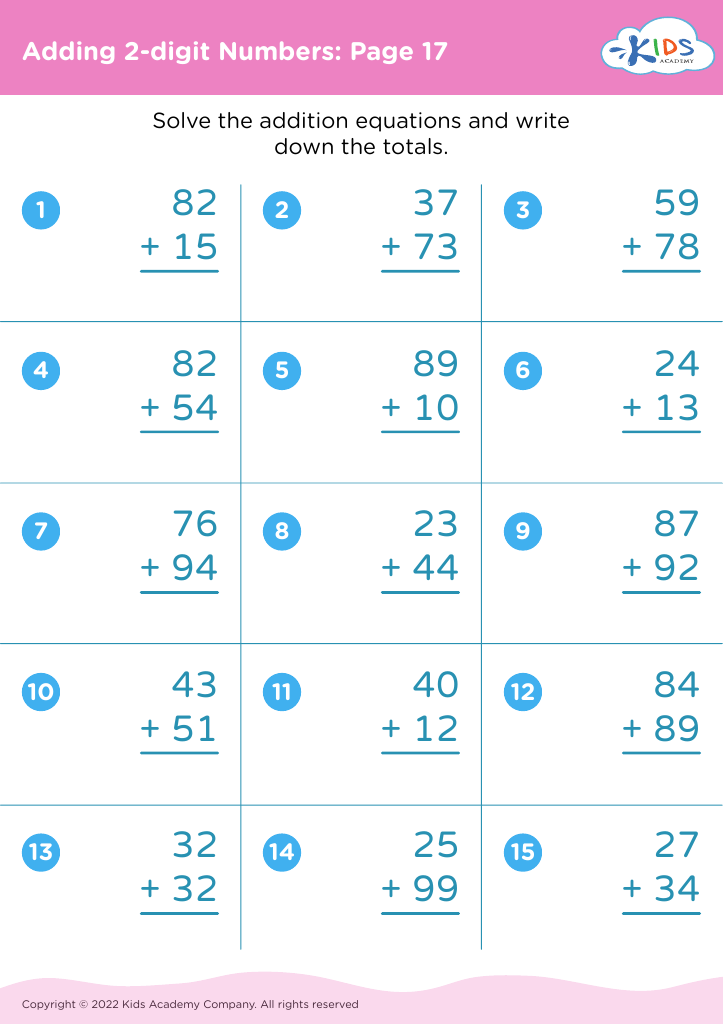








Recognizing patterns in adding 2-digit numbers is a fundamental skill for early learners, and it's crucial for both parents and teachers to understand its importance. At ages 6-7, children are developing crucial mathematical skills that will serve as the foundation for more advanced concepts. Identifying patterns helps students grasp how numbers work together, making addition less daunting and more intuitive.
When children recognize patterns, like the consistency of number combinations or the "friendly" numbers that add up to multiples of ten (e.g., 27 + 23 = 50), they enhance their computational fluency and confidence. This skill not only promotes an understanding of addition but also lays the groundwork for skills in subtraction, multiplication, and division.
Moreover, engaging with patterns in math can nurture a child's problem-solving abilities and critical thinking skills, fostering a growth mindset. This can lead to a deeper appreciation for math, encouraging a lifelong interest in the subject.
Additionally, by incorporating pattern recognition in their education, parents and teachers can make learning more engaging, relevant, and effective. Ultimately, nurturing these abilities at this critical stage supports children's academic success and empowers them with the tools they need for future learning challenges.








