Understanding patterns Adding 2-digit Numbers Worksheets for Ages 6-7
4 filtered results
-
From - To
Unlock the world of mathematics for children ages 6-7 with our "Understanding Patterns Adding 2-Digit Numbers" worksheets! Designed to introduce young learners to the concept of patterns in addition, these engaging worksheets foster critical thinking and problem-solving skills. By recognizing patterns, kids will enhance their ability to add two-digit numbers with confidence and accuracy. Each worksheet features fun visuals and varying difficulty levels, catering to different learning styles while keeping your child motivated. Our educational resources are specifically crafted to make math enjoyable, ensuring that children build a strong foundation for future mathematical concepts. Explore the joy of learning with us!
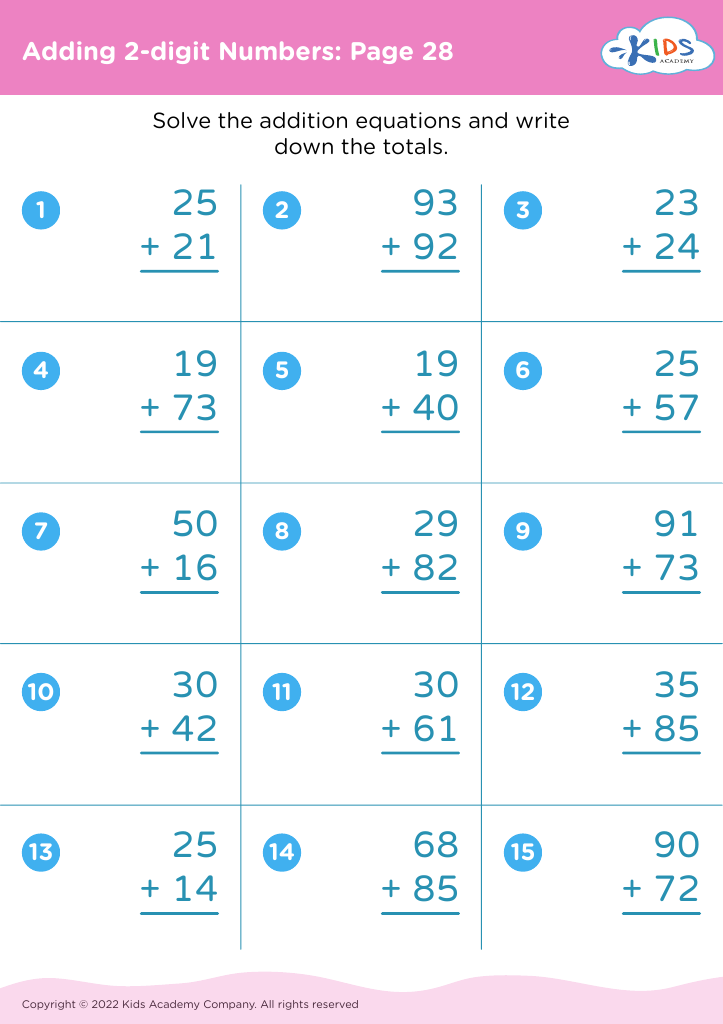
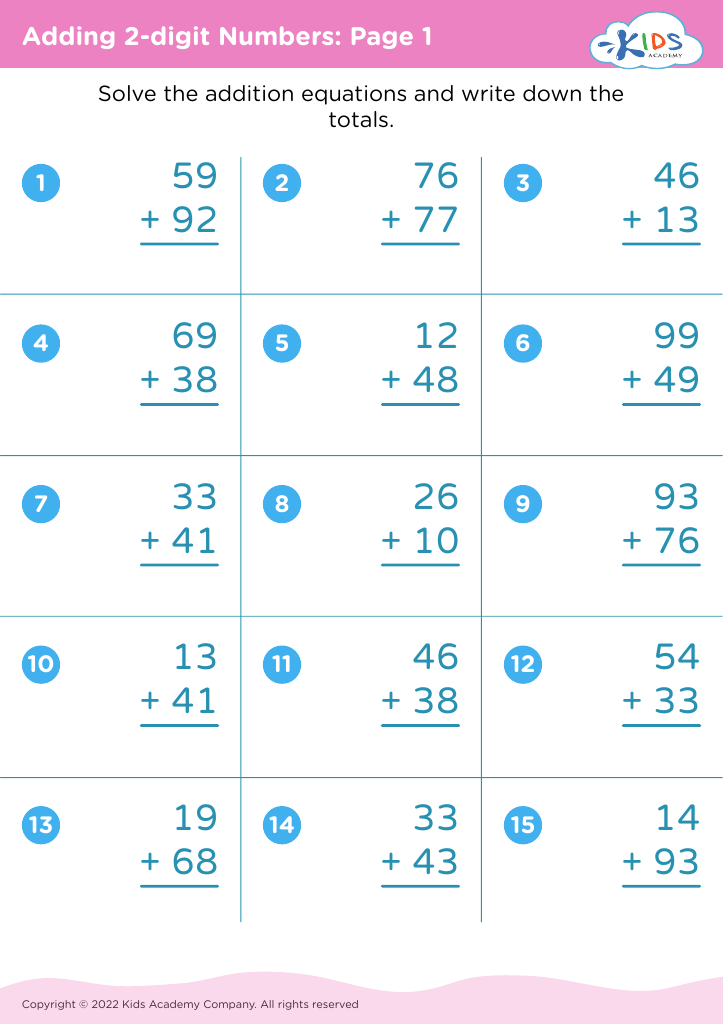
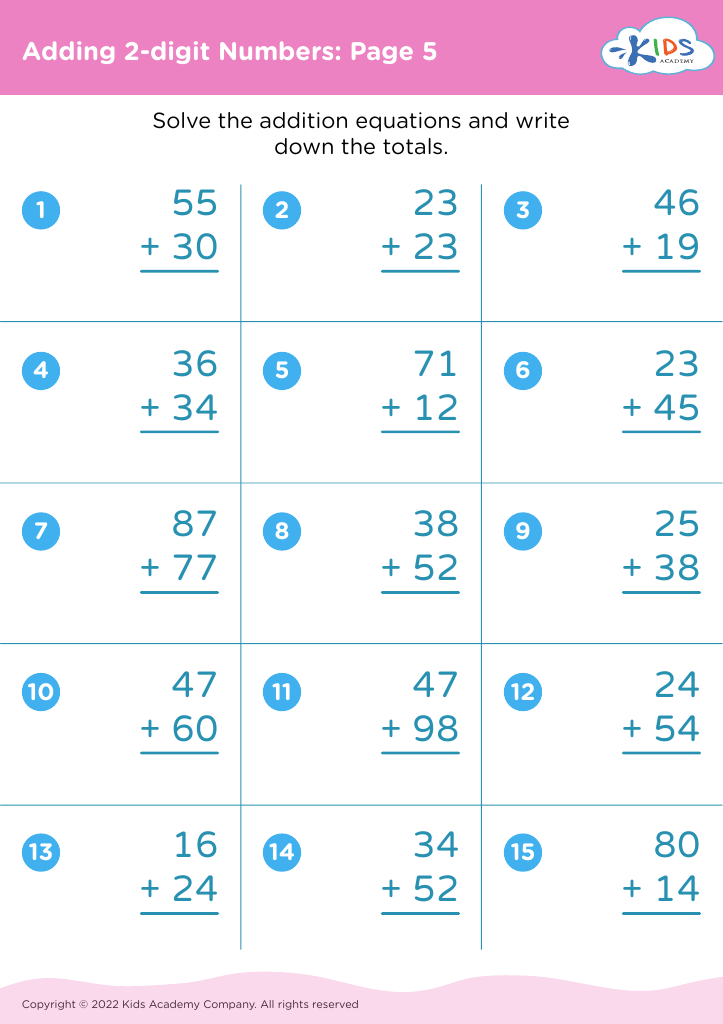
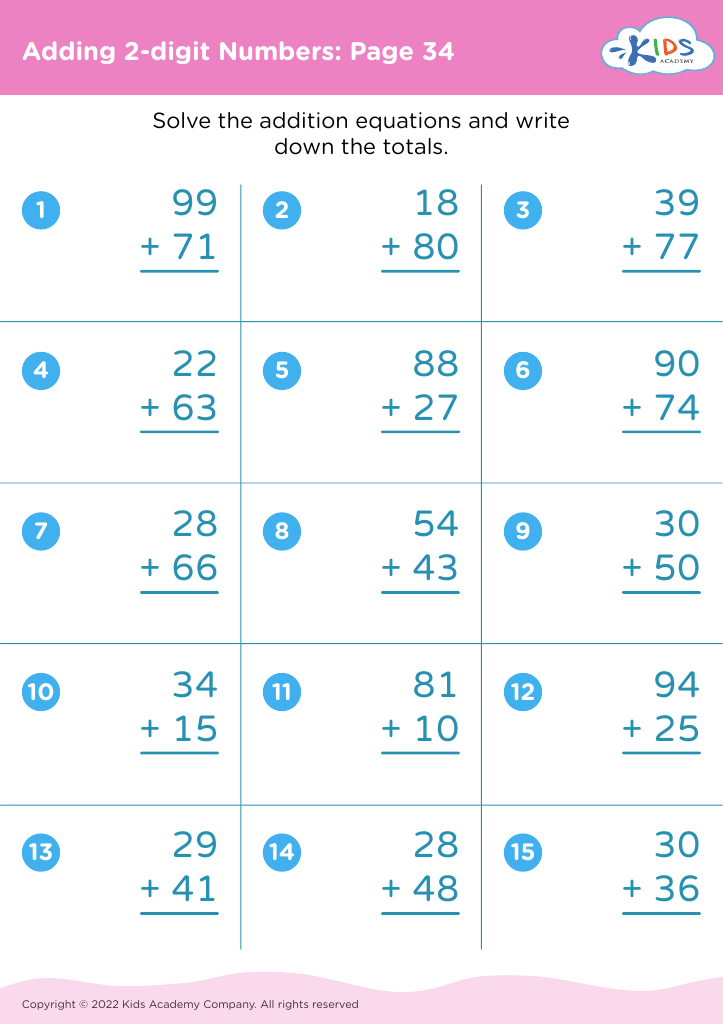








Understanding patterns in adding 2-digit numbers is essential for children aged 6-7, as it lays the foundation for their mathematical skills. For parents and teachers, recognizing the importance of this concept ensures that children develop both competency and confidence in math. Mastering addition through patterns helps students recognize relationships between numbers, promoting a deeper understanding of arithmetic.
When children understand that numbers can be grouped and simplified, such as breaking down numbers into tens and ones, their problem-solving skills improve significantly. For instance, knowing that 27 + 45 can be approached by adding 20 + 40 and then 7 + 5 demonstrates the power of pattern recognition. This skill aids in mental math and eventually prepares students for more complex operations like subtraction, multiplication, and eventually, algebra.
Moreover, fostering an environment where pattern recognition is celebrated encourages a love for math. Parents and teachers can facilitate engaging activities that highlight these patterns, making learning enjoyable and relevant. Ultimately, when children build a solid grasp of adding 2-digit numbers through patterns, they not only enhance their arithmetic skills but also lay the groundwork for future mathematical success, setting them on a path to become confident learners.








