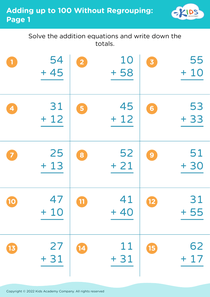
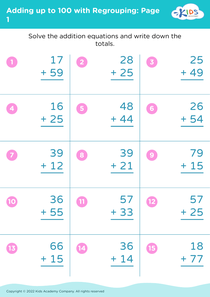
Develop fine motor skills Adding up to 100 Misc Worksheets for Ages 6-7
4 filtered results
-
From - To
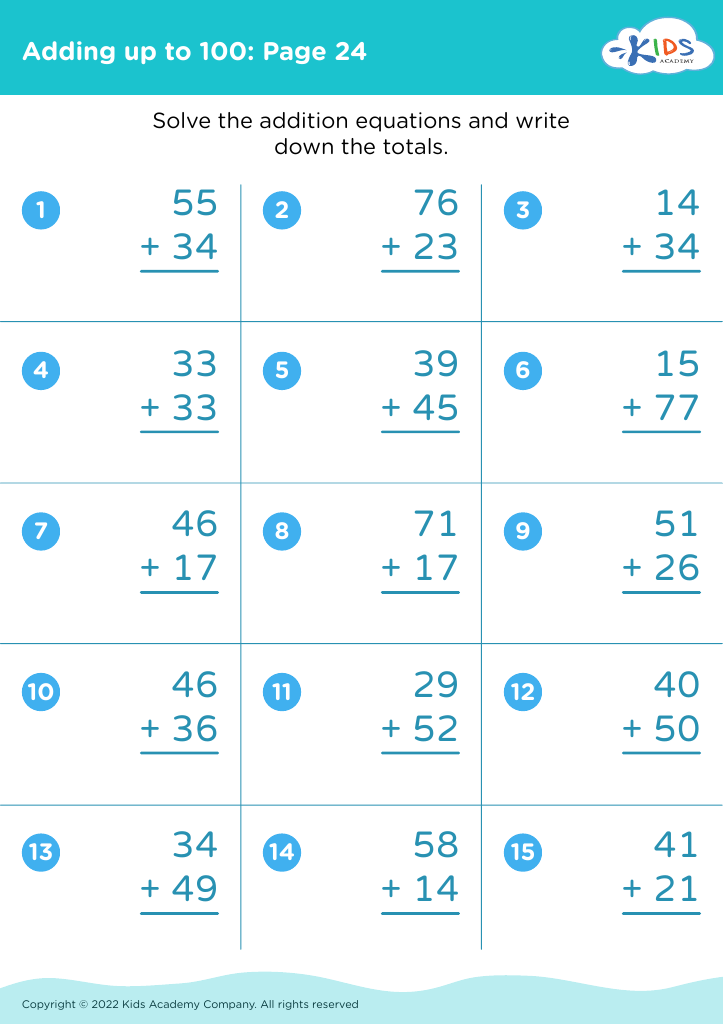
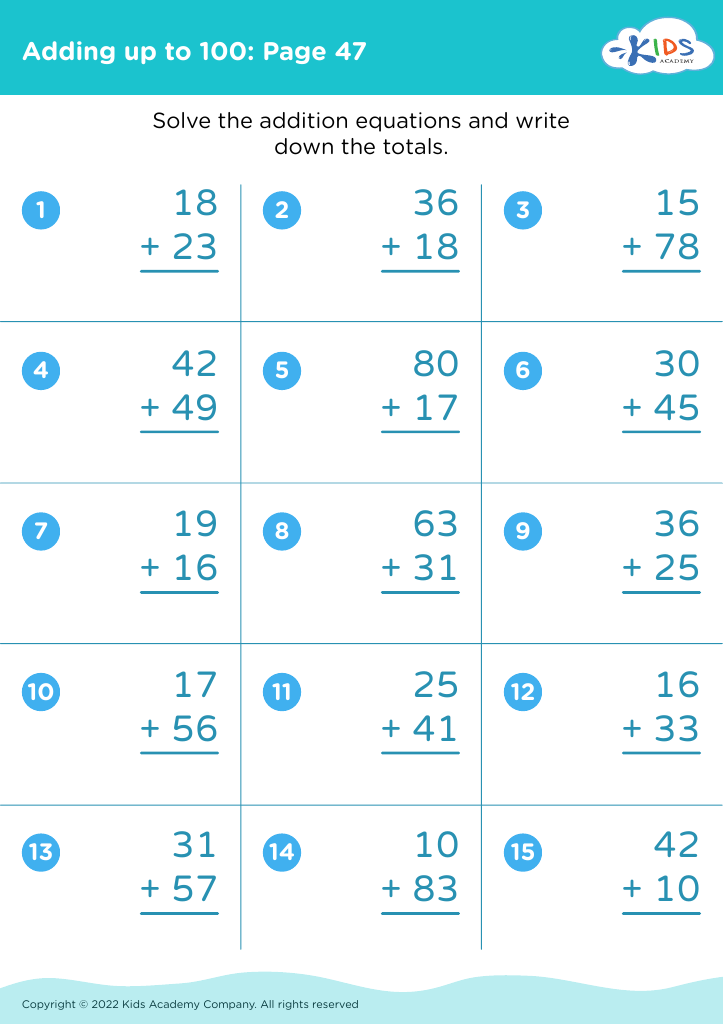
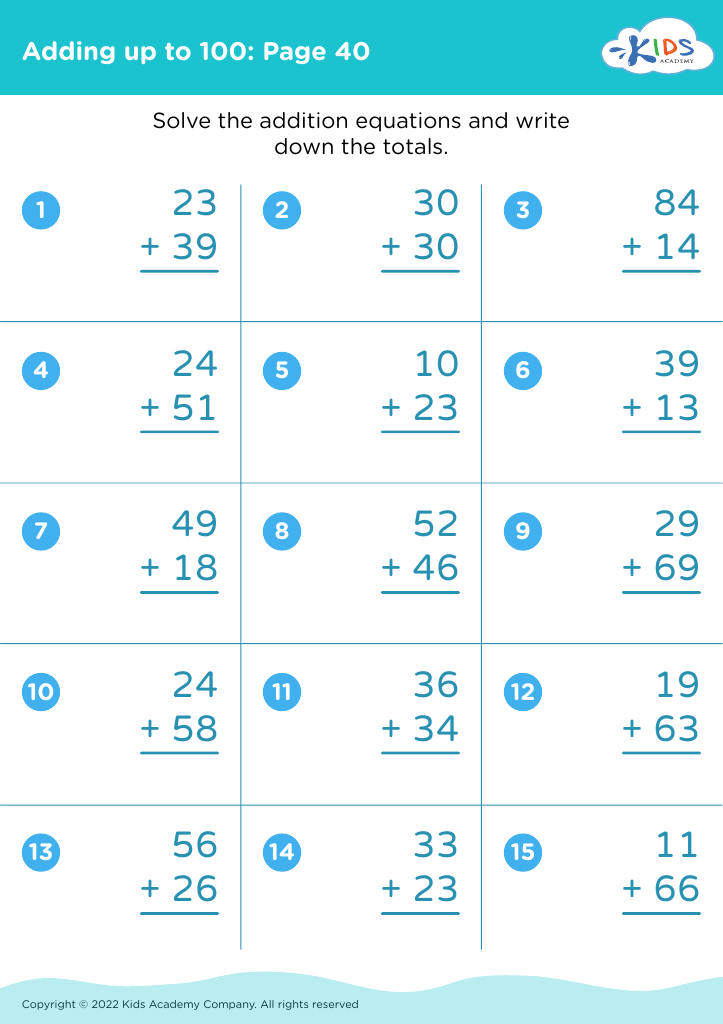
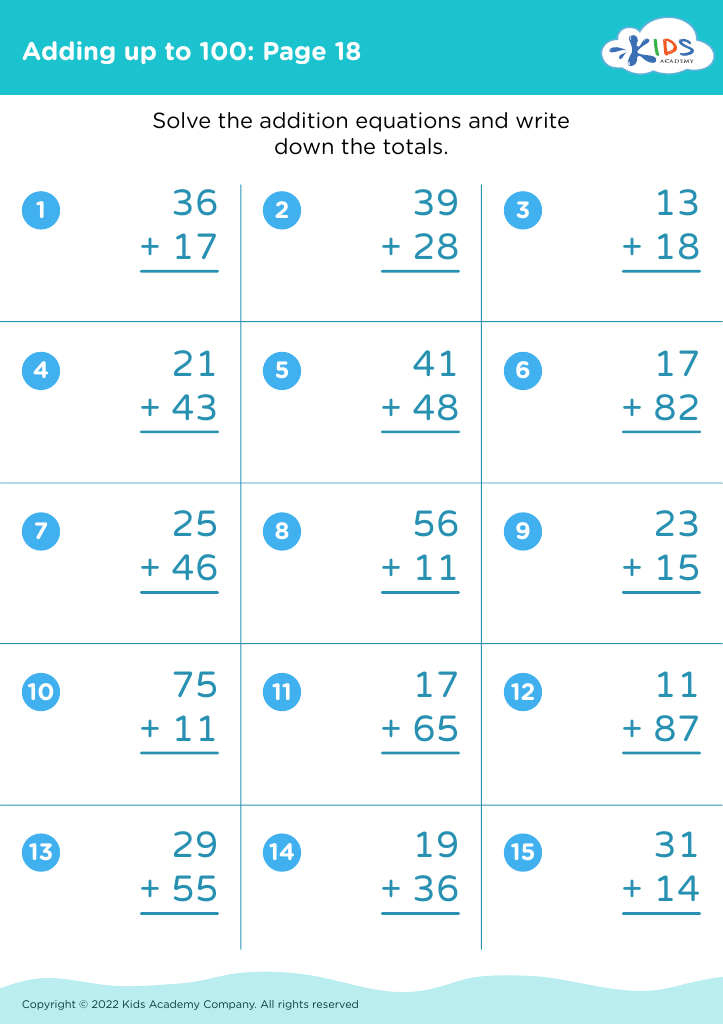
Welcome to our collection of engaging worksheets designed to develop fine motor skills for ages 6-7! Our "Adding up to 100 Misc Worksheets" offer a fun and interactive way for children to practice their math skills while enhancing their dexterity. These worksheets include a variety of activities that encourage essential hand-eye coordination, grip strength, and pencil control. As children add numbers and complete fun exercises, they are not only mastering addition up to 100 but also fostering crucial fine motor abilities vital for their overall development. Encourage your young learners to explore these creative tools and make math practice both enjoyable and effective!


Developing fine motor skills in children aged 6-7 is crucial for their overall growth and learning capabilities. These skills, which involve the coordination of small muscles in hands and fingers, are essential for a range of everyday tasks, from writing and drawing to buttoning clothes and using scissors. Parents and teachers should care about this development because it sets the foundation for academic success and boosts a child's confidence.
At this age, children engage in more complex activities that require precision and dexterity, such as crafting or operating educational tools. Strong fine motor skills enhance their ability to focus and control their movements, paving the way for better handwriting and increased participation in classroom activities.
Moreover, fine motor development is linked to cognitive and social-emotional growth. Engaging children in hands-on tasks encourages patience, perseverance, and problem-solving skills. It enables them to express their creativity and fosters a sense of accomplishment. By investing in activities that enhance fine motor skills, parents and teachers not only support a child's individual progress but also create a rich learning environment that nurtures holistic development. Prioritizing fine motor skills is thus essential for fostering a child’s independence and readiness for school and life.