Improve number recognition Adding up to 100 Misc Worksheets for Ages 6-7
3 filtered results
-
From - To
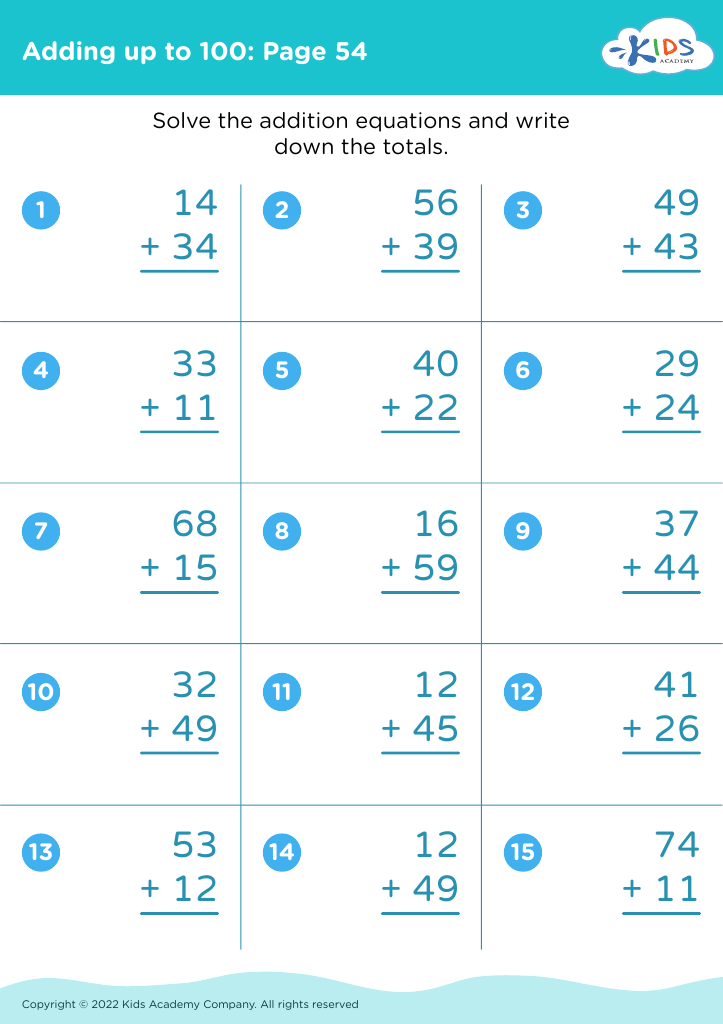
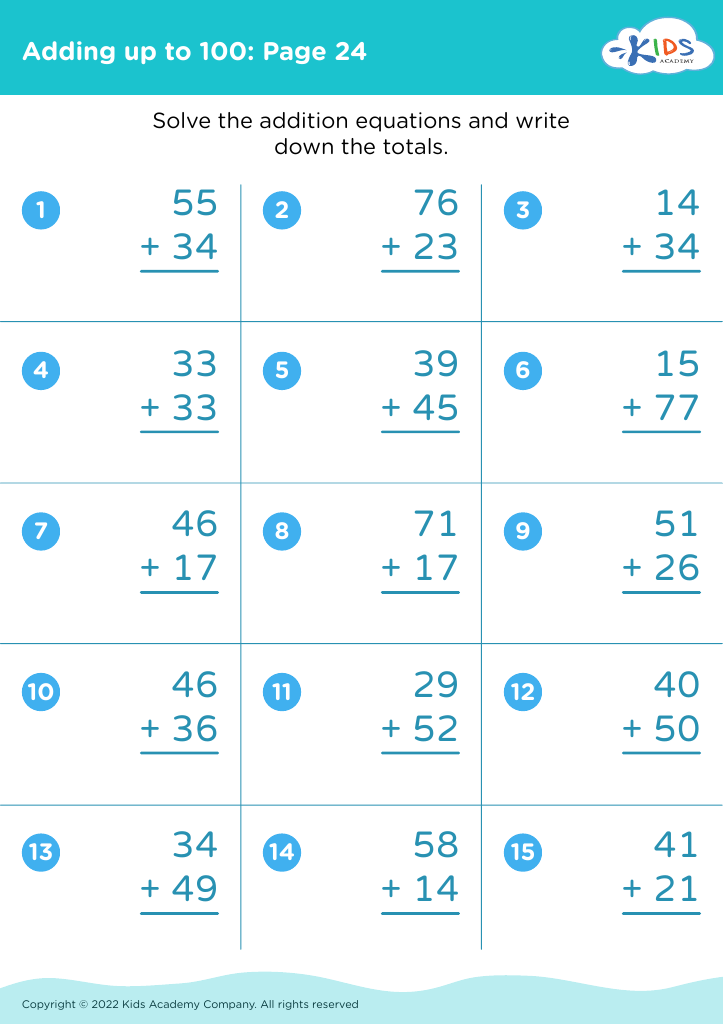
Enhance your child's math skills with our "Improve Number Recognition: Adding Up to 100 Misc Worksheets" tailored for ages 6-7. These engaging and interactive worksheets focus on helping young learners master number recognition and addition concepts up to 100. Each activity is designed to encourage critical thinking, improve numerical understanding, and make learning fun. Perfect for home or classroom use, these worksheets cater to various learning styles and allow students to practice at their own pace. Foster a love for math and boost your child's confidence as they explore numbers through a variety of exercises and challenges. Start learning today!
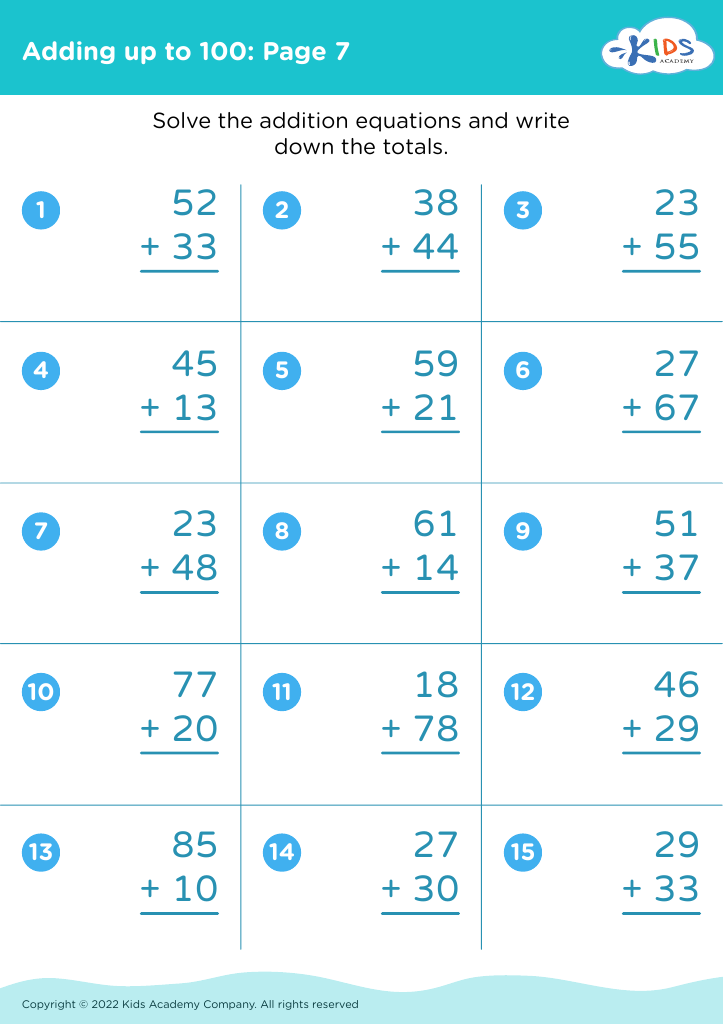


Improving number recognition and the ability to add up to 100 is crucial for children aged 6-7, as these foundational skills support their overall mathematical development. At this age, students transition from basic counting to more complex arithmetic, forming the bedrock for future math concepts. Enhanced number recognition helps children identify and understand numbers quickly, which is vital in solving problems, giving them confidence in their abilities.
Moreover, learning to add numbers efficiently up to 100 equips students with quick mental math strategies, essential in everyday situations such as budgeting, telling time, and measuring. It encourages critical thinking and problem-solving skills, important assets for academic success.
For teachers and parents, fostering these skills means better preparing children for standardized assessments and real-world scenarios. Incorporating fun, engaging activities like games and puzzles makes learning enjoyable, thereby encouraging children to practice and develop a positive attitude towards math. By focusing on number recognition and addition skills, adults can nurture confident learners who appreciate the significance and applications of mathematics beyond the classroom, ultimately setting the stage for lifelong learning and enjoyment in math-related activities.