Number Recognition Adding up to 100 Misc Worksheets for Ages 6-7
8 filtered results
-
From - To
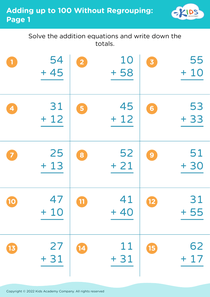
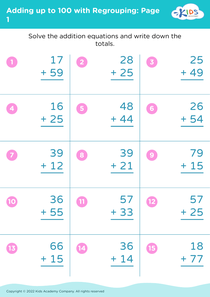
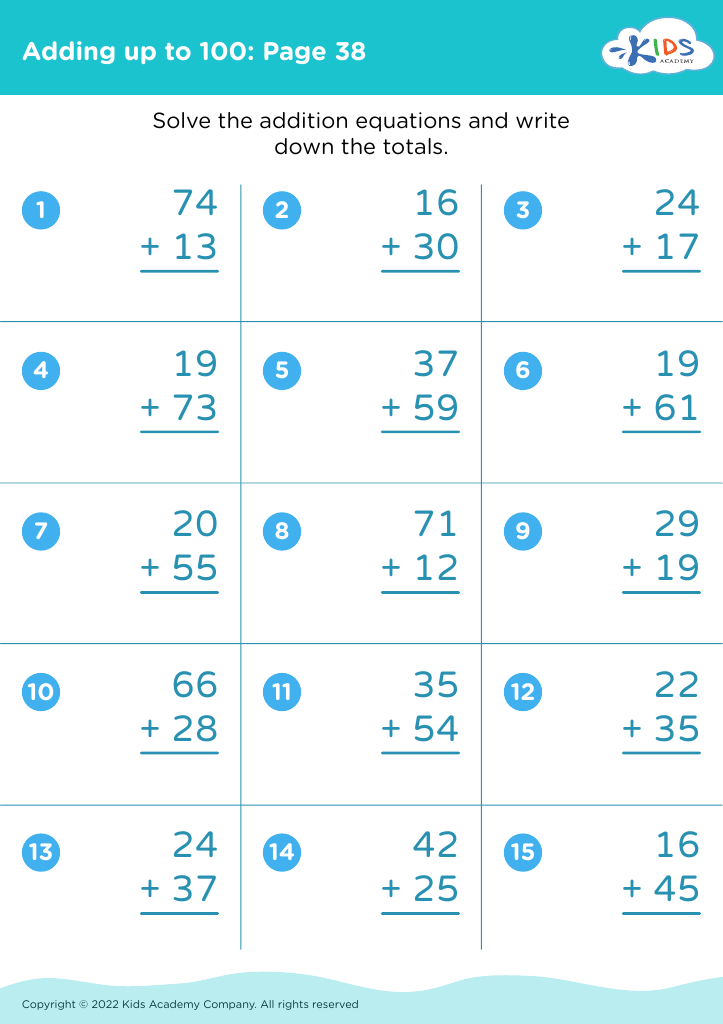
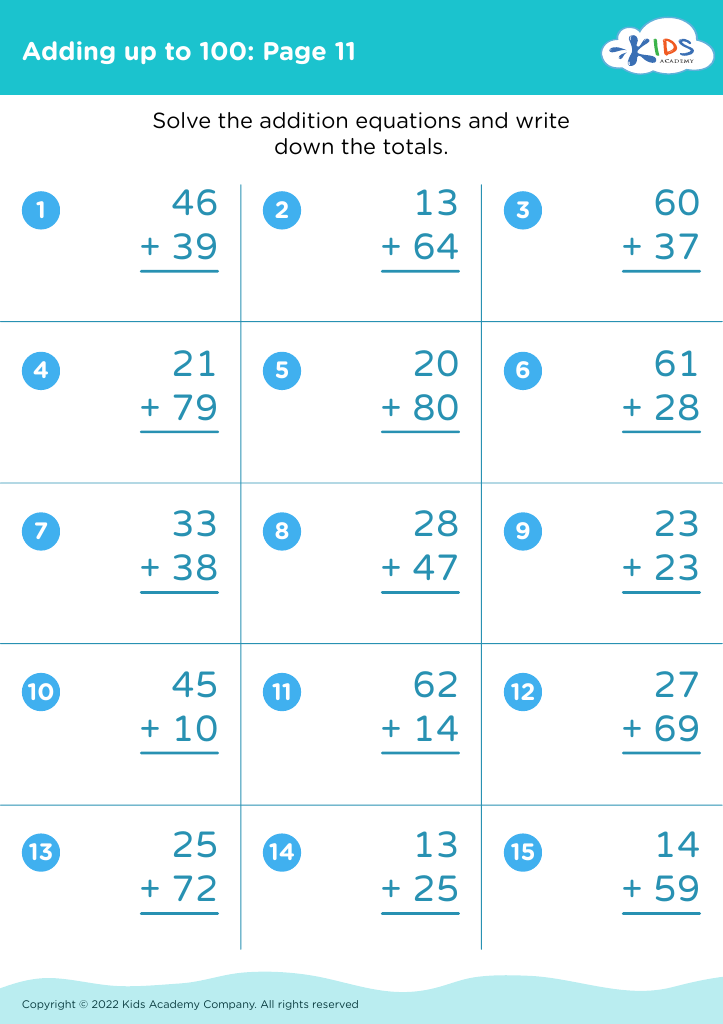
Boost your child's confidence in math with our "Number Recognition Adding up to 100 Misc Worksheets for Ages 6-7". These engaging and educational worksheets are designed to reinforce number recognition and basic addition skills. Perfect for young learners, each worksheet offers a variety of exercises that make learning fun and memorable. Children will practice recognizing, counting, and adding numbers up to 100, helping them build a solid foundation for future math success. Ideal for use at home or in the classroom, these printables provide a great way to support and challenge young mathematicians. Download them today and watch your child thrive!
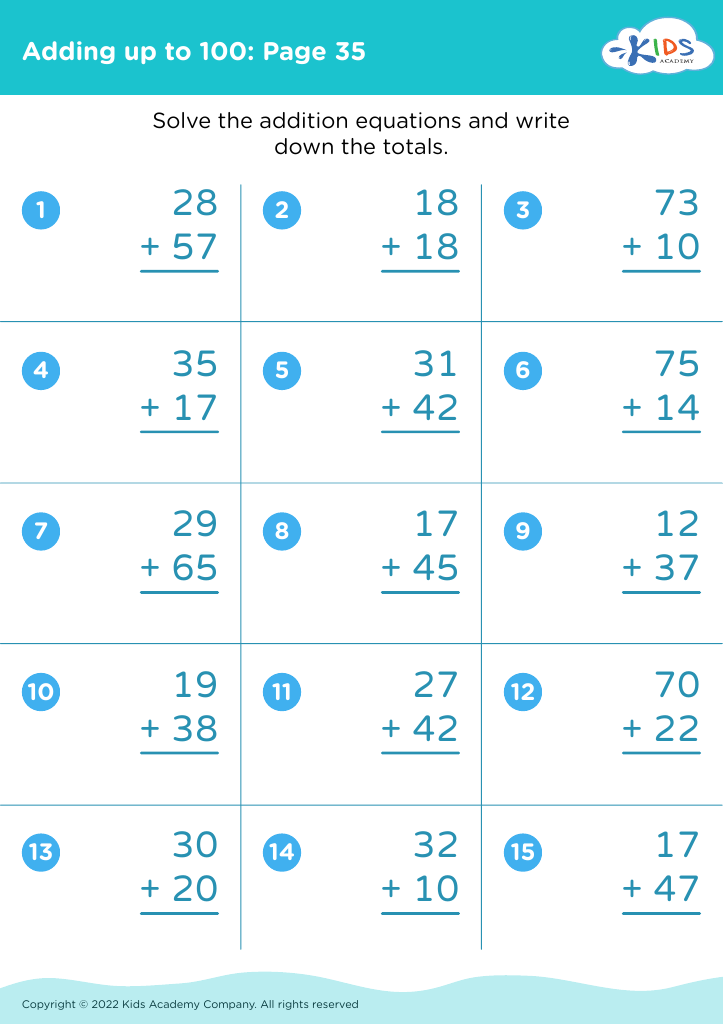
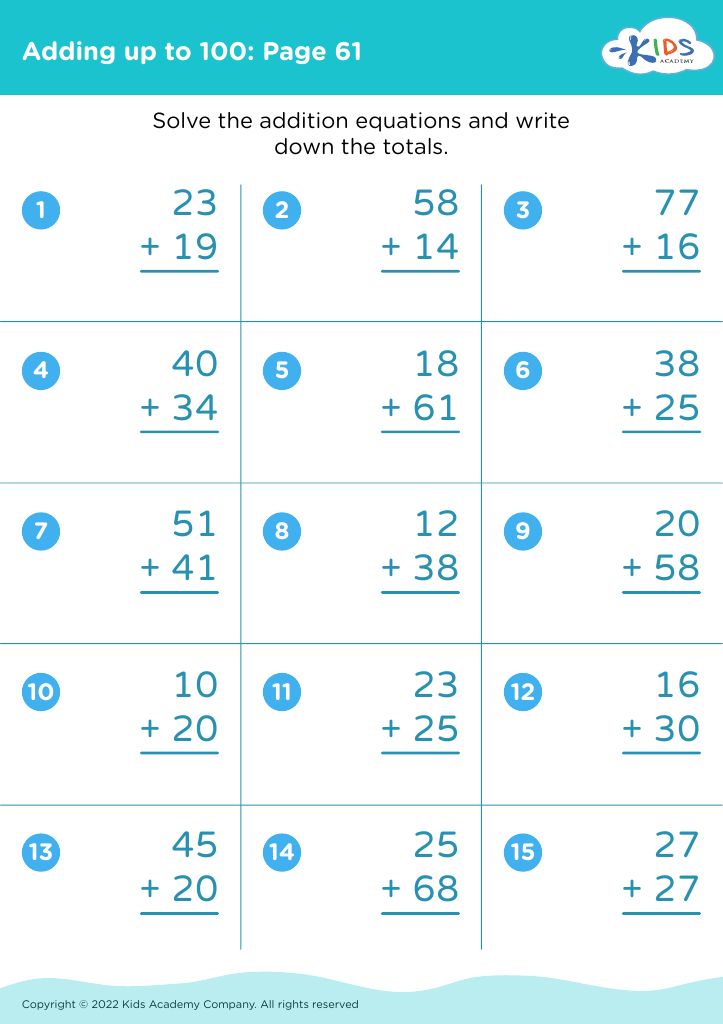
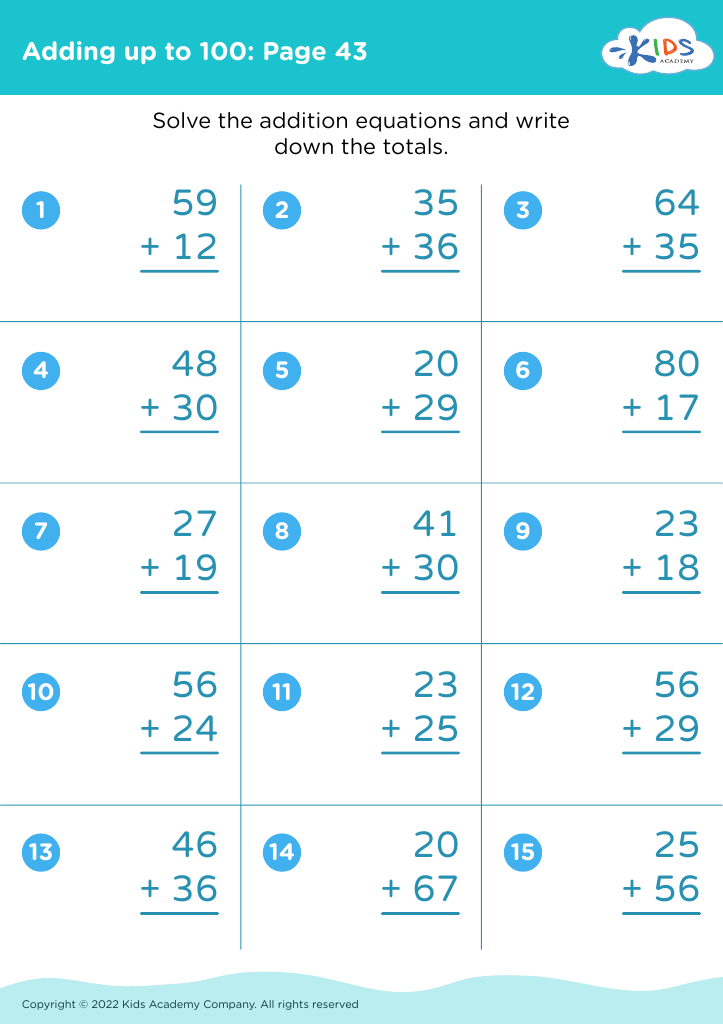
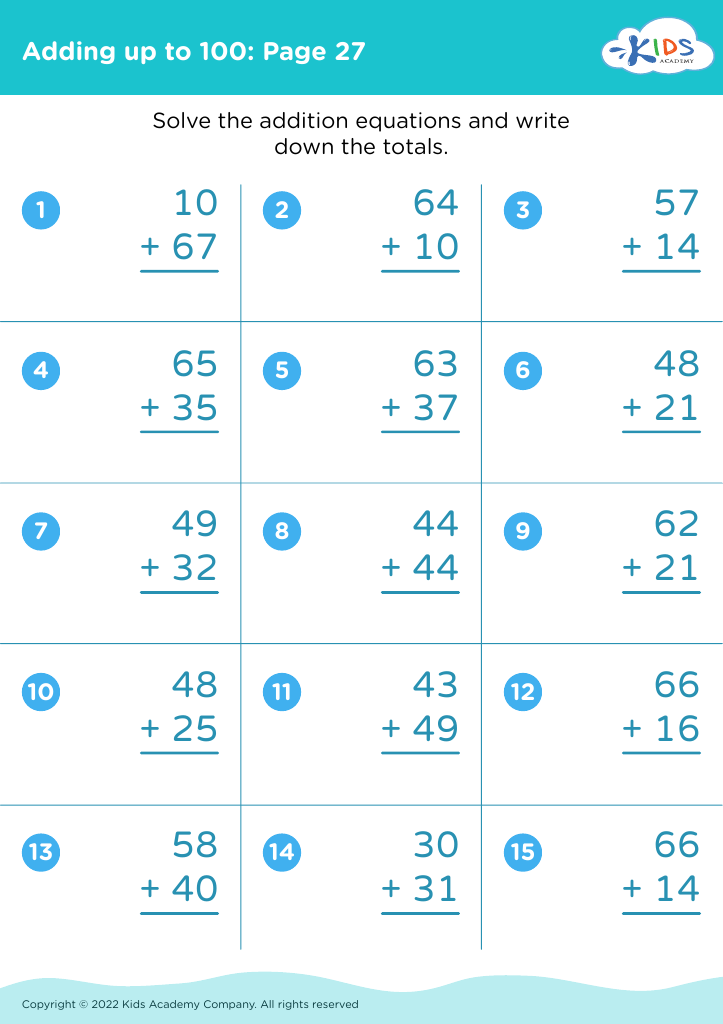
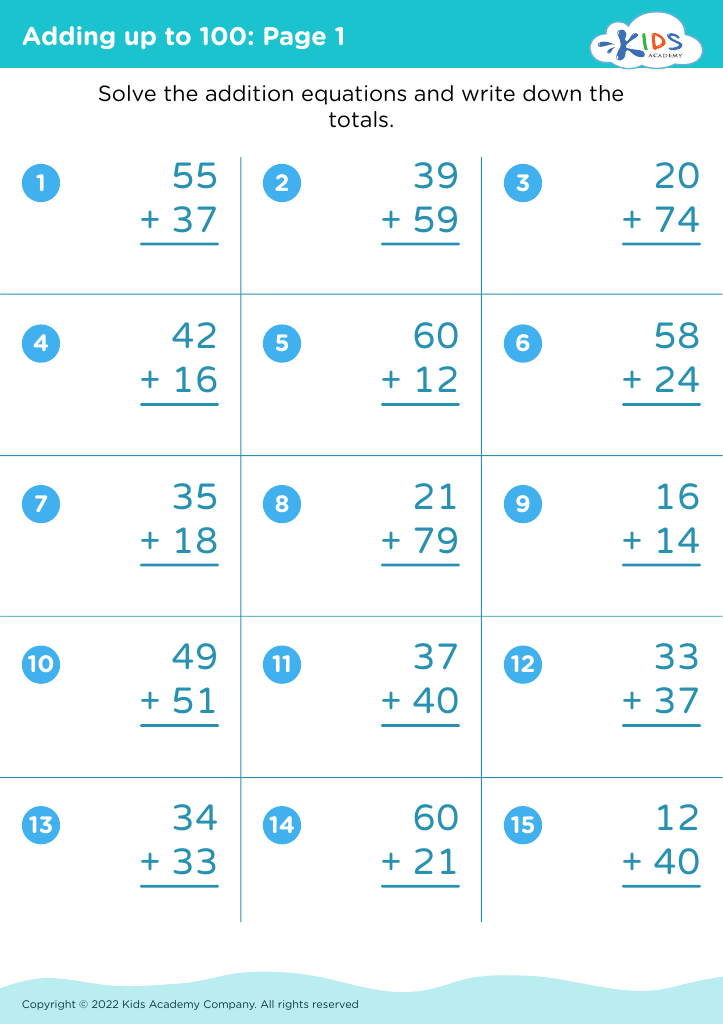
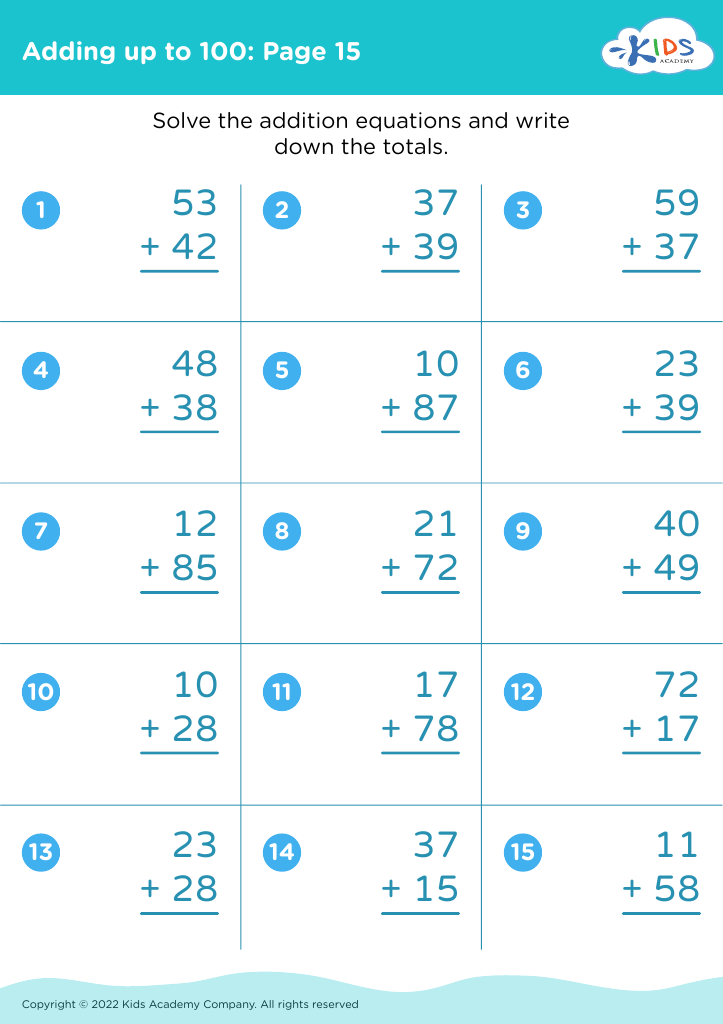


Number recognition and basic addition skills up to 100 are fundamental building blocks in a child's early mathematics education. For 6-7-year-olds, these skills form the foundation for their future academic success and daily life application. Parents and teachers should prioritize these concepts to ensure comprehensive math readiness.
Firstly, understanding and recognizing numbers enable children to interact with their environment more effectively, whether it's handling money, telling time, or following sequences. Strong number recognition enhances their ability to perform simple arithmetic, which is crucial for solving problems both in academic settings and real-world scenarios.
Addition skills are essential as they represent the first step in a series of increasingly complex math functions children will encounter as they grow. Mastering basic addition not only boosts their confidence but also paves the way for more advanced calculations, critical thinking, and logical reasoning.
Moreover, early proficiency in math is linked to better performance in other subjects like science and technology. It fosters a growth mindset, teaching children that they can achieve mastery through practice and persistence.
Paying close attention to these skills at ages 6-7 helps identify any learning difficulties and allows for timely intervention. This strong numerical foundation supports cognitive development and encourages a lifelong love for learning and problem-solving.