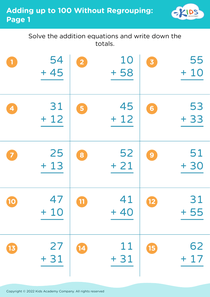
Improve counting skills Adding up to 100 with Regrouping Worksheets for Ages 6-7
5 filtered results
-
From - To
Enhance your child's counting skills with our "Adding up to 100 with Regrouping Worksheets" designed for ages 6-7. Our engaging worksheets provide a fun and interactive way for young learners to practice and master addition within 100, focusing on regrouping techniques. These printable activities aim to build strong foundational math skills, boost confidence, and ensure a deeper understanding of number relationships. Perfect for classroom or home practice, our worksheets support students as they develop essential arithmetic skills that pave the way for future math success. Download now and watch them transform into confident little mathematicians!
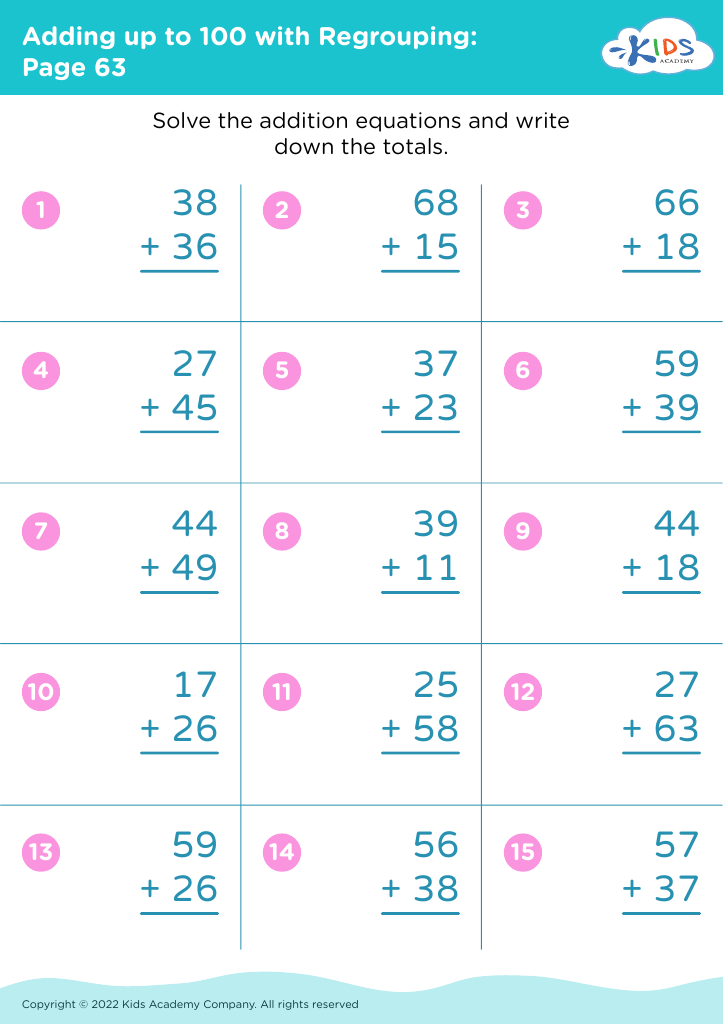
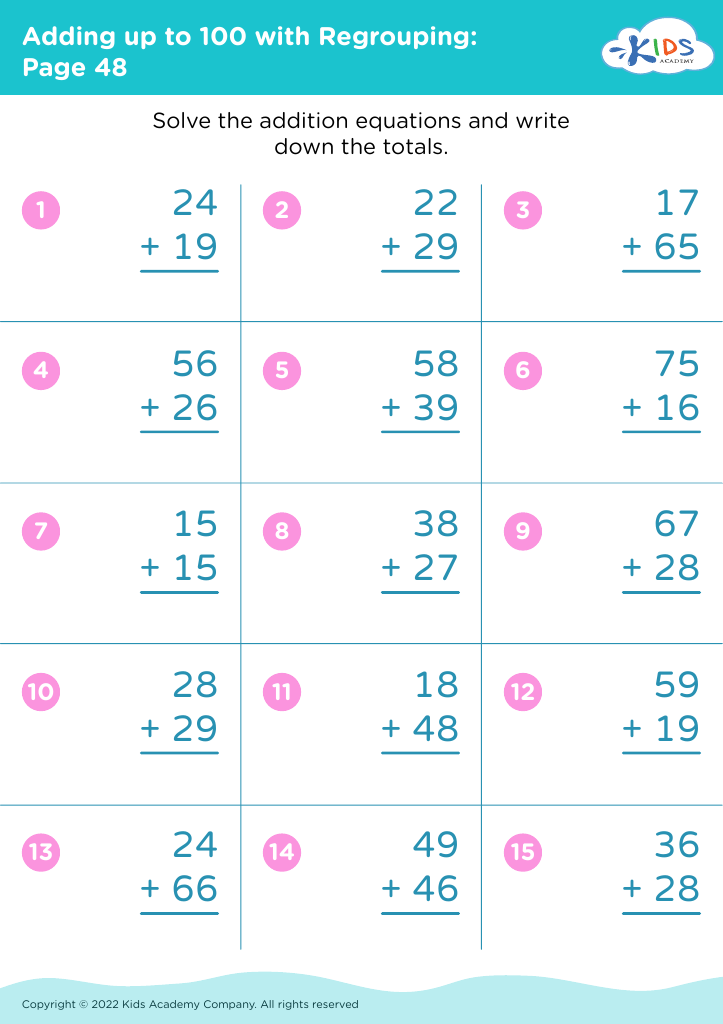
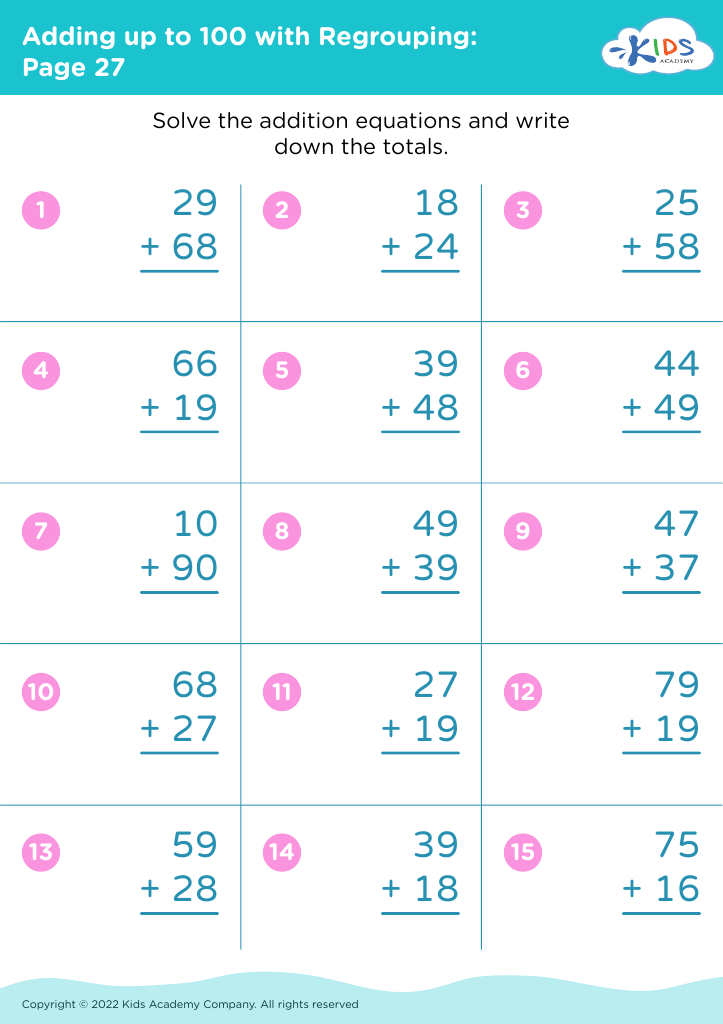
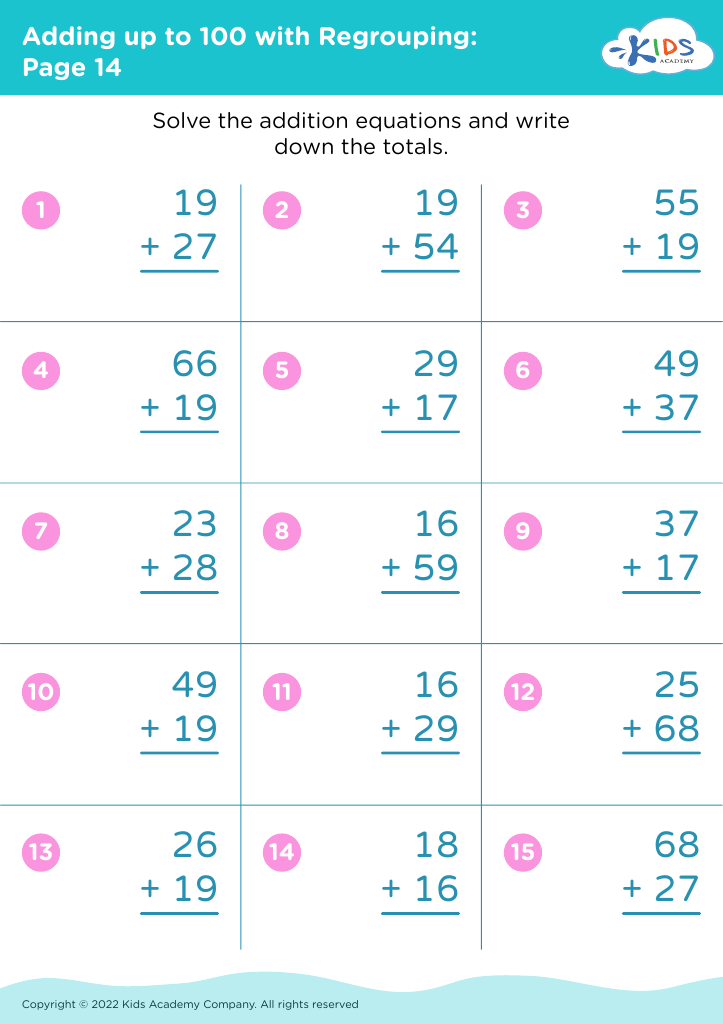
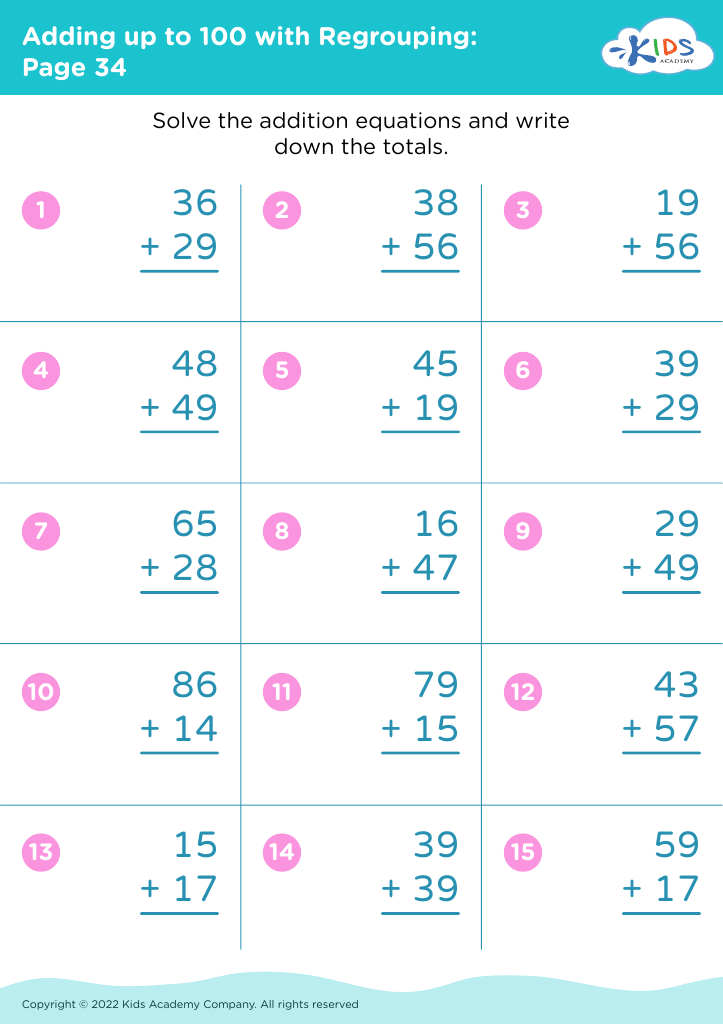




Parents and teachers should prioritize improving counting skills and adding up to 100 with regrouping for children aged 6-7 because these foundational math skills are crucial for their cognitive and academic development. At this age, children transition from simple counting to more complex arithmetic operations, which form the basis for future mathematical understanding.
Counting up to 100 with regrouping helps children grasp the concept of place value, an essential component of the number system. This understanding enables them to recognize the significance of tens and ones, which is critical for performing higher-level arithmetic operations like addition, subtraction, multiplication, and division. It strengthens their problem-solving abilities, logical thinking, and mental math skills, allowing for quicker and more accurate calculations.
Moreover, mastering these skills fosters confidence and a positive attitude towards math, reducing math anxiety. Early success in math enhances children's willingness to tackle more challenging concepts later on. It also has practical implications; for instance, children can handle everyday tasks such as measuring ingredients, telling time, and managing money, contributing to their overall independence and life skills.
In summary, investing in the improvement of counting and regrouping skills for young learners sets a strong mathematical foundation, promoting both academic success and essential life competencies.