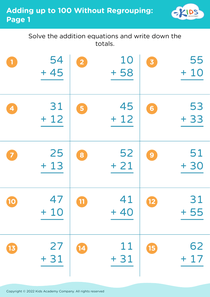
Practice problem-solving Adding up to 100 with Regrouping Worksheets for Ages 6-7
3 filtered results
-
From - To
Explore our "Practice Problem-Solving: Adding Up to 100 with Regrouping Worksheets" designed specifically for children aged 6-7. These engaging worksheets focus on enhancing young learners' mathematical skills, emphasizing the crucial concept of regrouping in addition. Through a variety of fun and interactive problems, kids will develop a solid understanding of how to effectively add numbers up to 100. Our resources aim to build confidence and proficiency in math while fostering critical thinking and problem-solving abilities. Download and print the worksheets today to help your child enjoy learning and master these essential math skills! Ideal for home practice or classroom use.
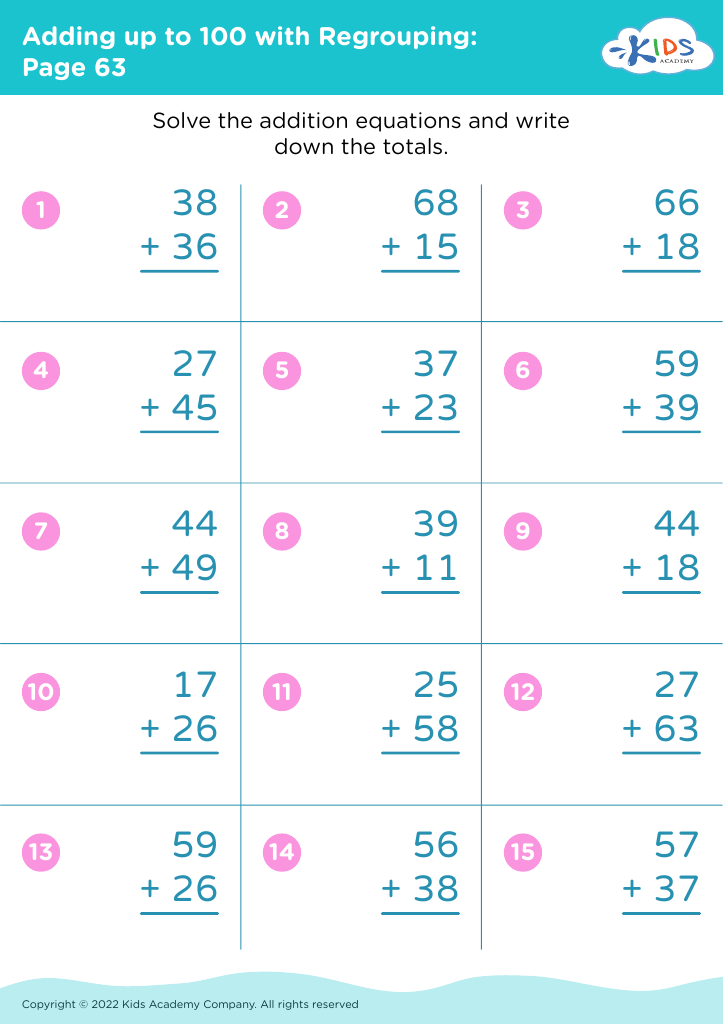
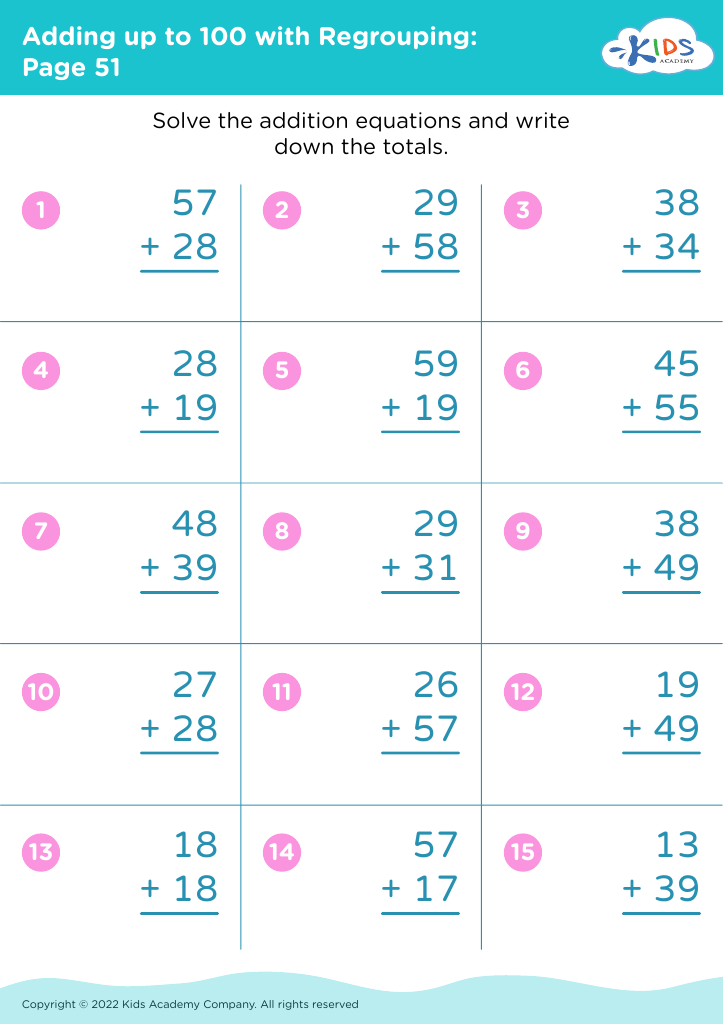
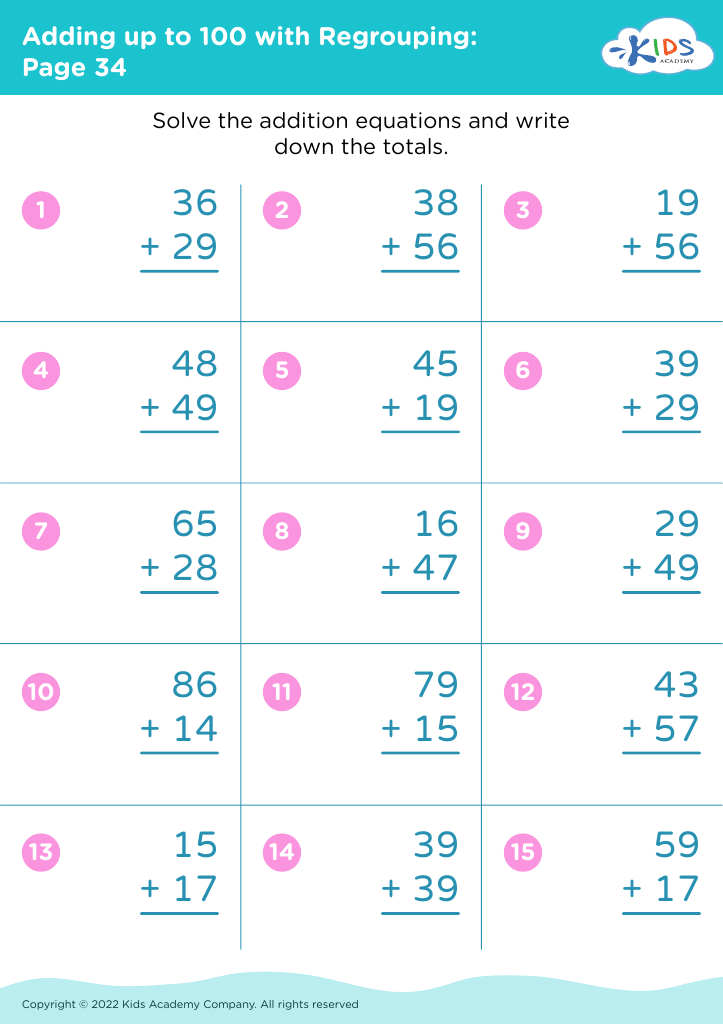




Practice problem-solving with adding up to 100 with regrouping is crucial for children ages 6-7. At this developmental stage, students are beginning to transition from basic counting to more complex mathematical concepts. Mastering this skill helps lay a strong foundation for future math learning.
First and foremost, problem-solving fosters critical thinking. When children tackle math problems involving regrouping, they learn to analyze situations, identify strategies, and make decisions based on their understanding. This inquiry-based approach develops resilience as they encounter and overcome challenges.
Moreover, this practice enhances number sense. By working with numbers up to 100, children comprehend the relationships between digits, aiding in addition, subtraction, and other operations. Regrouping introduces them to the concepts of place value and carries, essential for their future learning trajectory.
Additionally, these skills promote mathematical fluency. Frequent practice provides children with the confidence to perform calculations accurately and quickly, which reduces math anxiety.
Finally, teachers and parents play a pivotal role in reinforcing these concepts. Engaging children in fun and interactive activities allows practice to become enjoyable, fostering a positive attitude toward mathematics. By showing interest and support, adults can inspire a lifelong love for learning and problem-solving in their children.