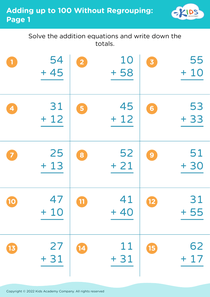
Shape Recognition Adding up to 100 with Regrouping Worksheets for Ages 6-7
5 filtered results
-
From - To
Enhance your child's math skills with our "Shape Recognition Adding up to 100 with Regrouping Worksheets" designed for ages 6-7. These engaging worksheets combine essential shape recognition and addition skills, helping young learners build a strong foundation in math. Focused on adding up to 100 using regrouping strategies, the activities encourage critical thinking and problem-solving. By exploring various shapes while practicing addition, children will develop both visual and numerical skills in a fun, interactive way. Ideal for home or classroom use, these worksheets offer a valuable learning experience that sets the stage for future math success. Unlock your child's potential today!
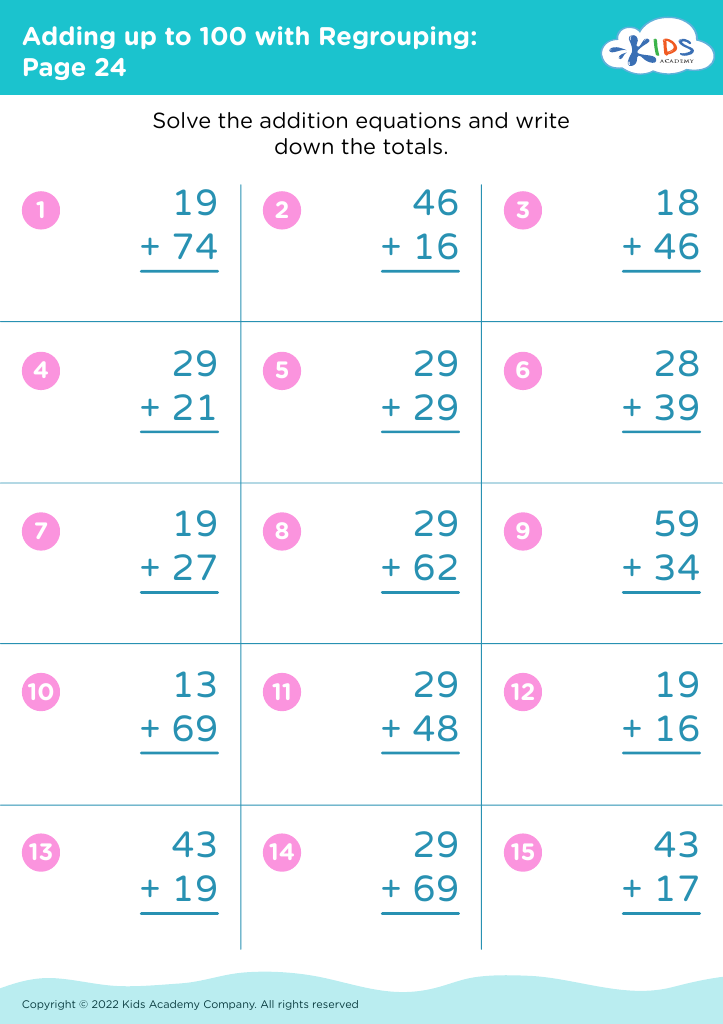
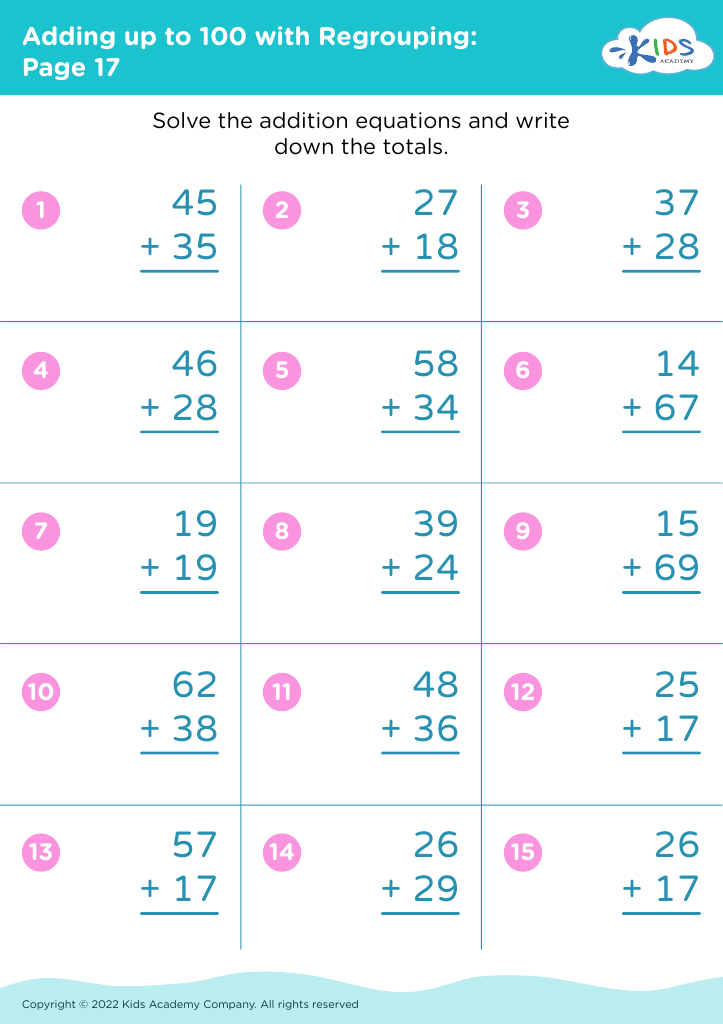
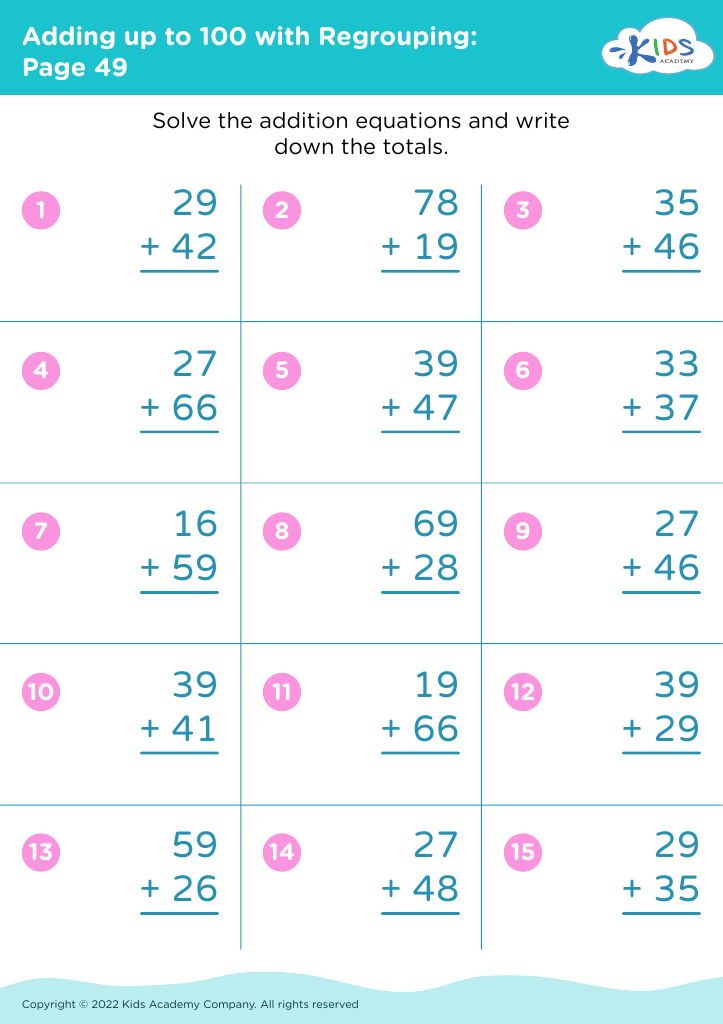
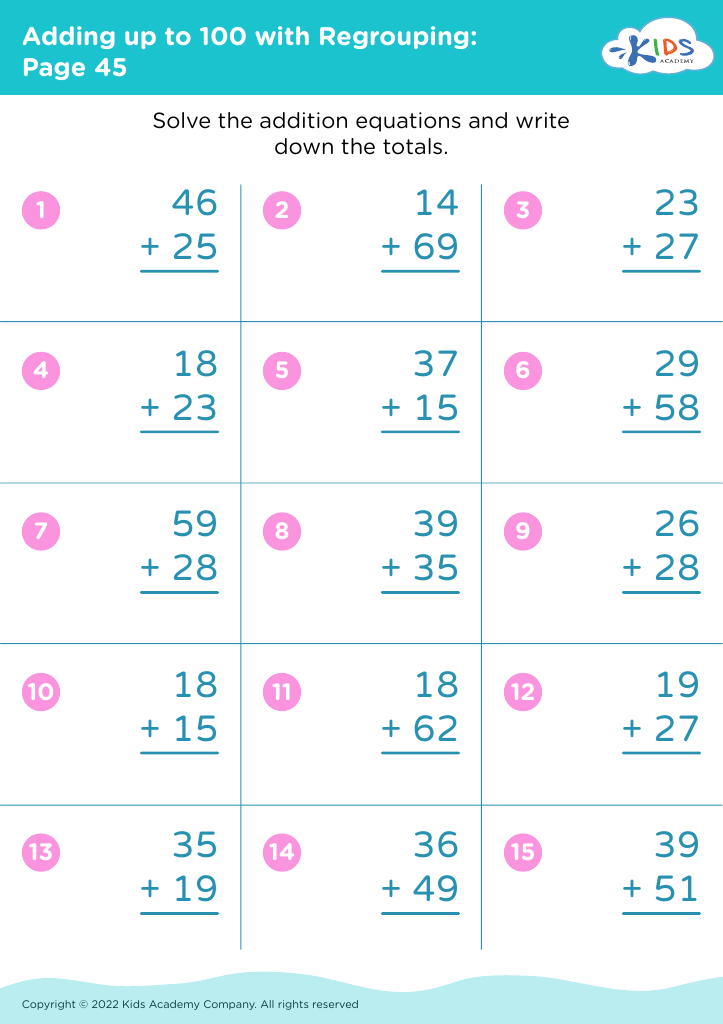
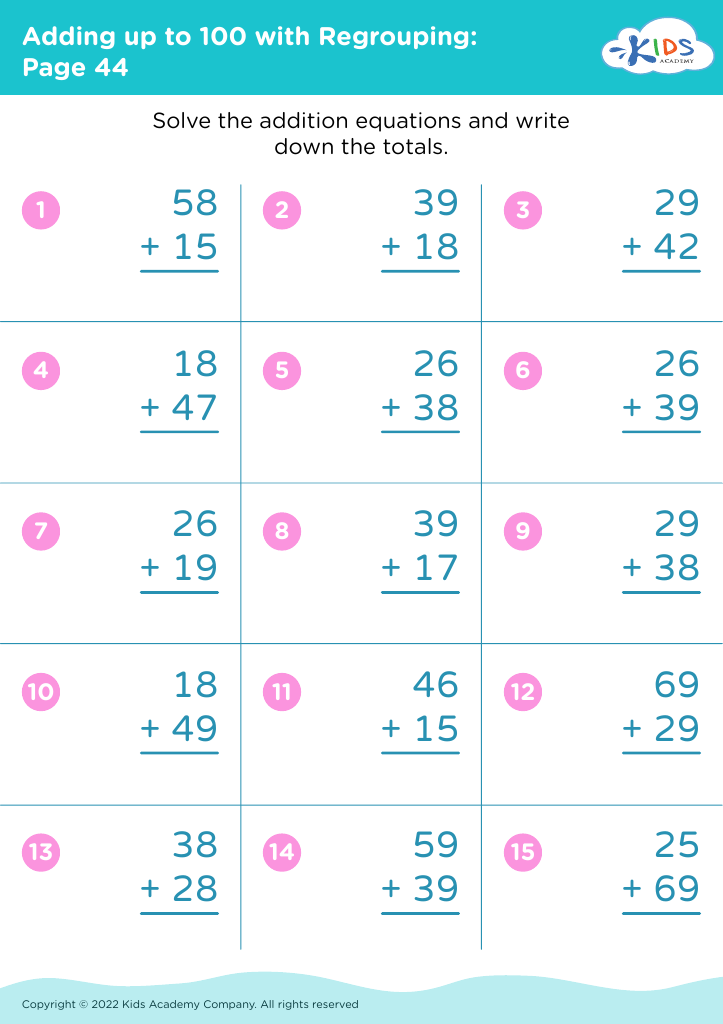




Shape recognition and the ability to add up to 100 with regrouping are crucial skills for children aged 6-7, making them vital areas of focus for parents and teachers. First, shape recognition lays the foundation for spatial awareness and geometry, which are essential for problem-solving in everyday life. By identifying and categorizing shapes, children develop critical thinking and observational skills that apply both in math and in real-world scenarios.
Similarly, mastering addition with regrouping helps children understand the place value system, reinforcing their numerical literacy. As children learn to add numbers that require regrouping, they improve their computational skills and foster a deeper understanding of how numbers interact. This sets the stage for more complex mathematical concepts later on, such as subtraction, multiplication, and division.
Furthermore, both skills encourage patience and perseverance as children navigate challenges and errors. Smart, supportive engagement from parents and teachers enhances motivation and positive reinforcement, paving the way for a love of learning. By focusing on these developmental milestones, adults help children build a stronger academic foundation that will benefit them throughout their educational journey. In essence, shape recognition and regrouping are critical components of their cognitive and mathematical growth.