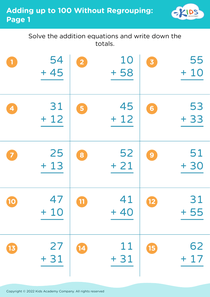
Understanding fractions Adding up to 100 with Regrouping Worksheets for Ages 6-7
16 filtered results
-
From - To
Enhance your child's mathematical skills with our "Understanding Fractions: Adding Up to 100 with Regrouping" worksheets, designed specifically for ages 6-7. These engaging worksheets provide a fun and interactive way for young learners to tackle fractions, helping them grasp essential concepts like equivalent fractions and addition with regrouping. With colorful illustrations and age-appropriate challenges, your child will gain confidence in their abilities while developing critical thinking skills. Perfect for teachers and parents alike, these resources support early math education, ensuring that students build a strong foundation in fractions. Explore our worksheets today and watch your child excel in their mathematical journey!
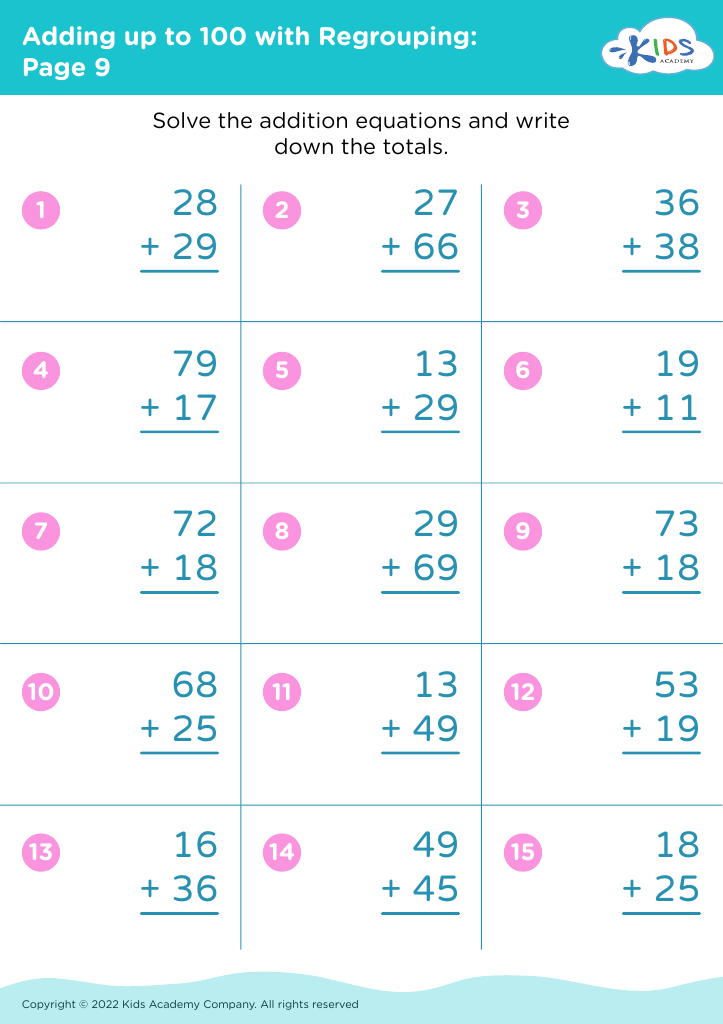
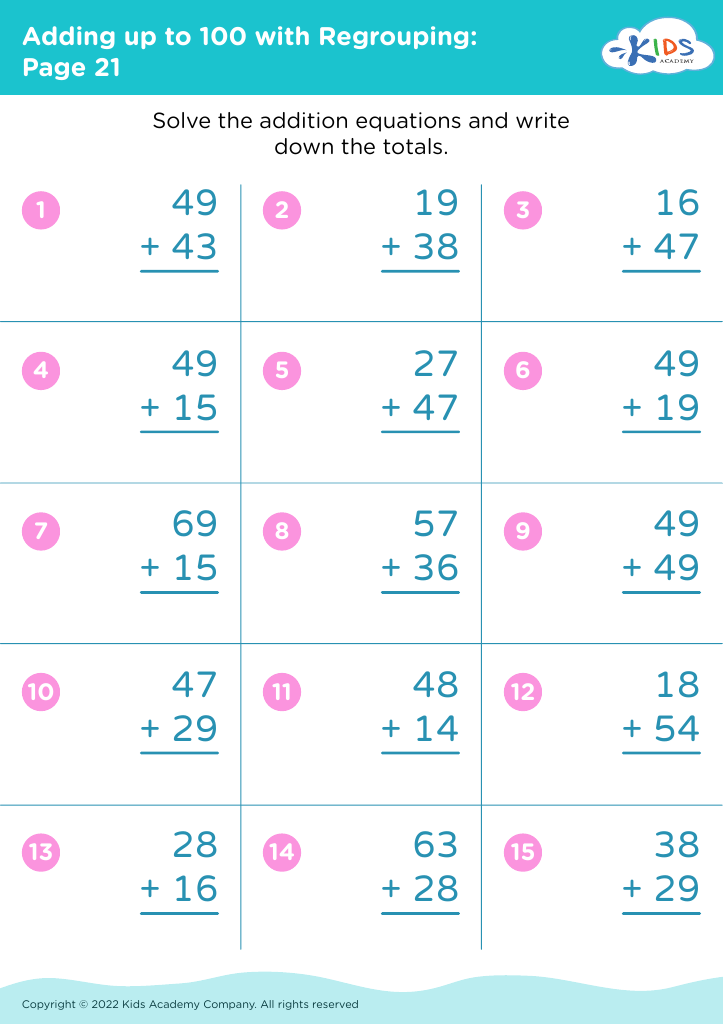
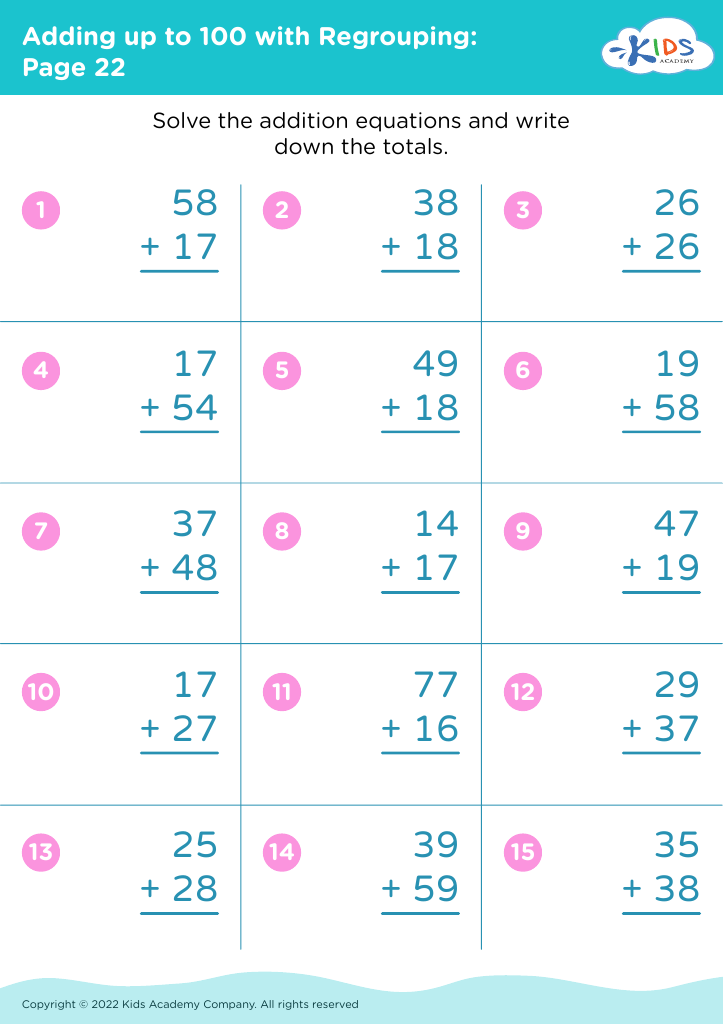
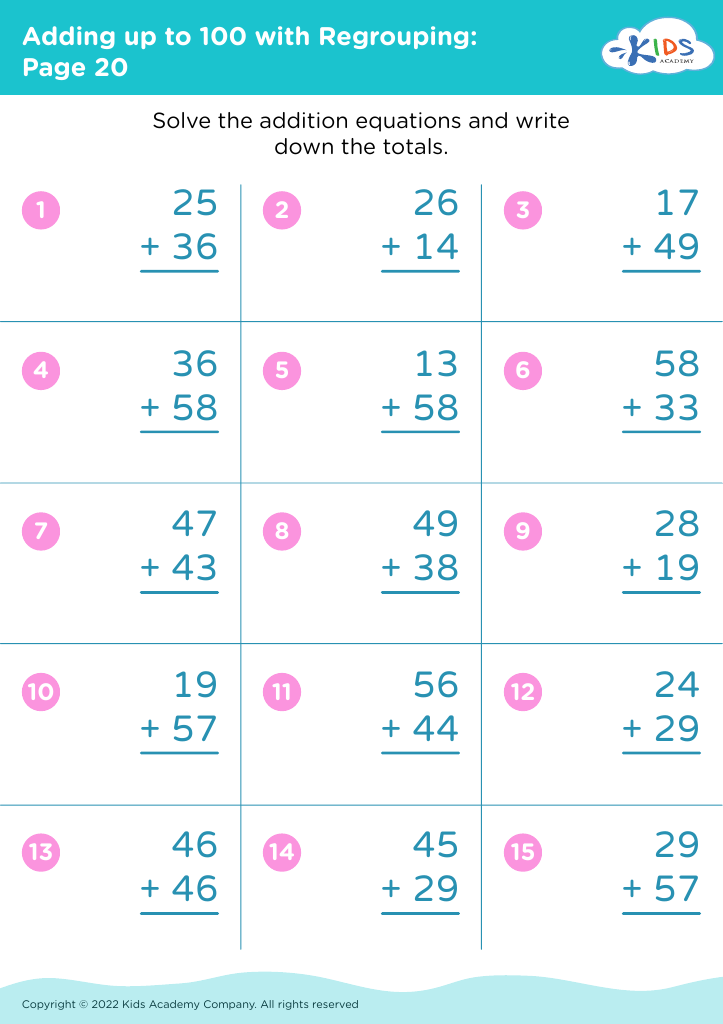
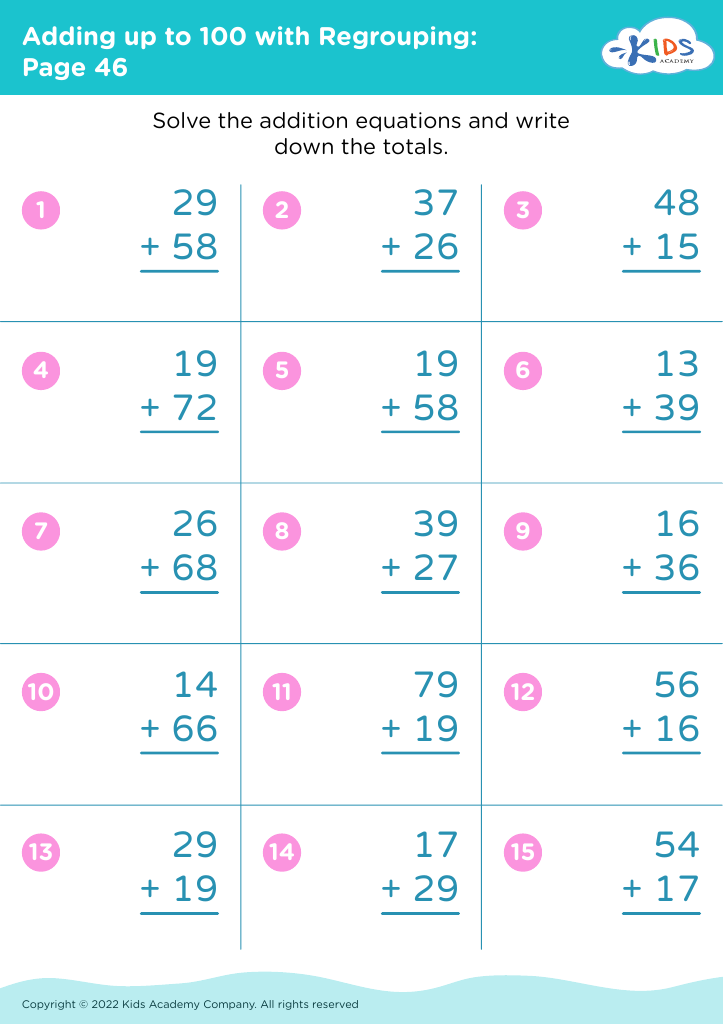
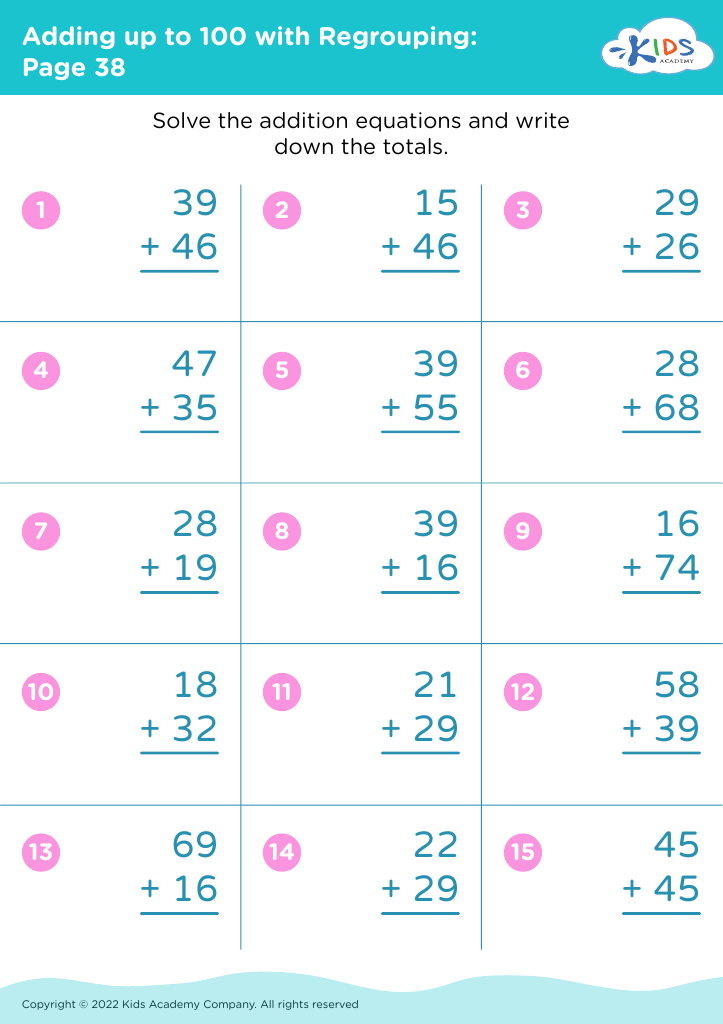
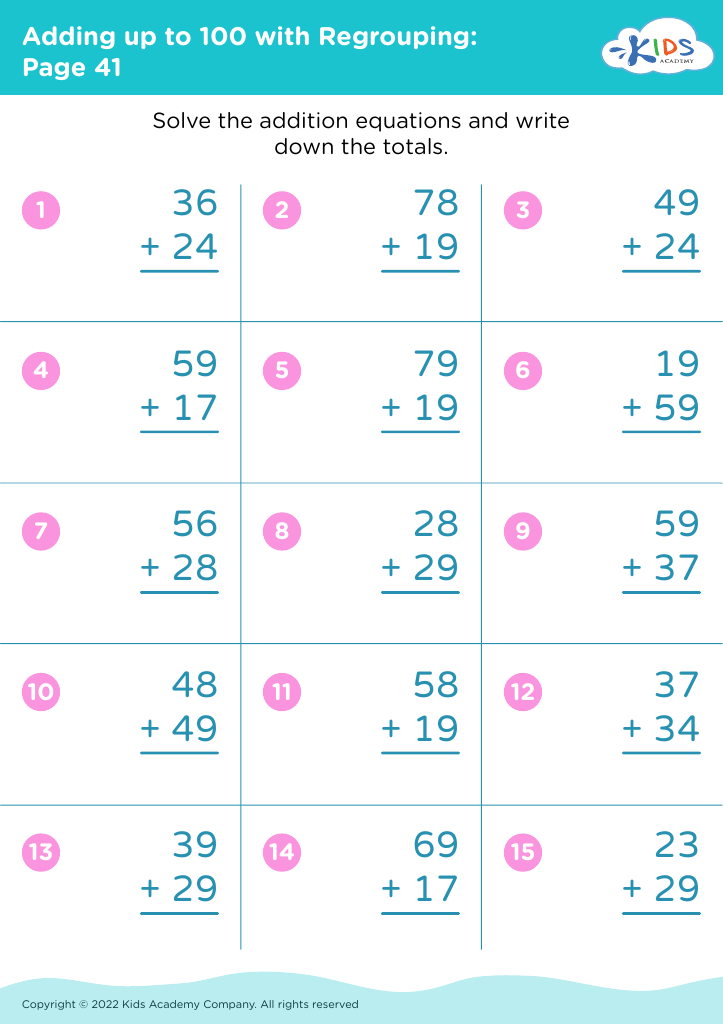
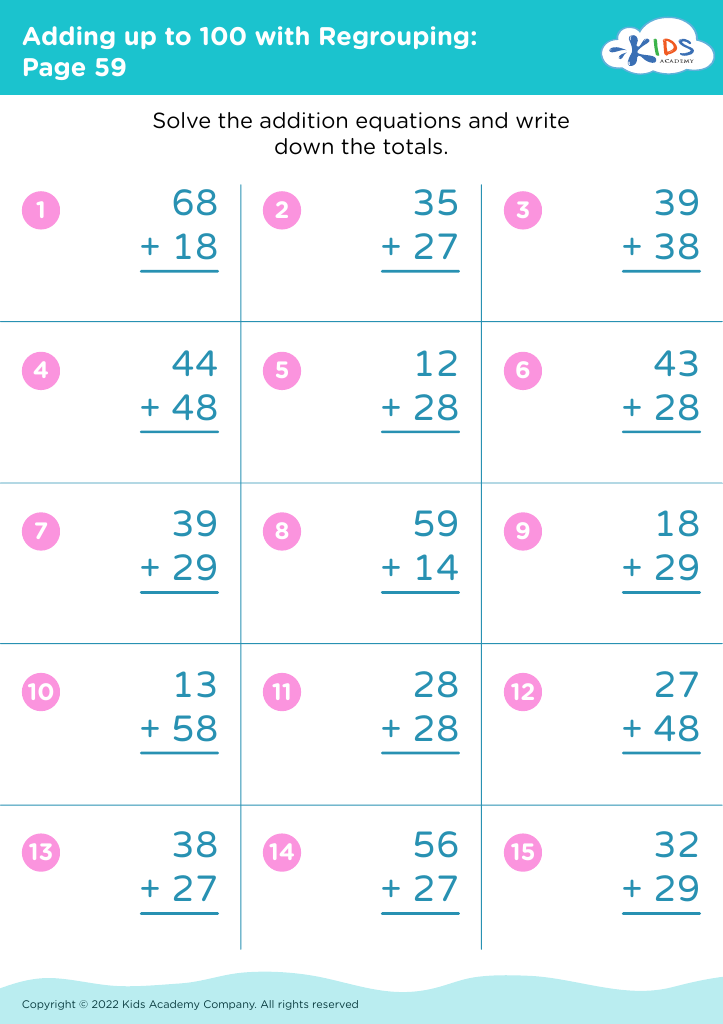
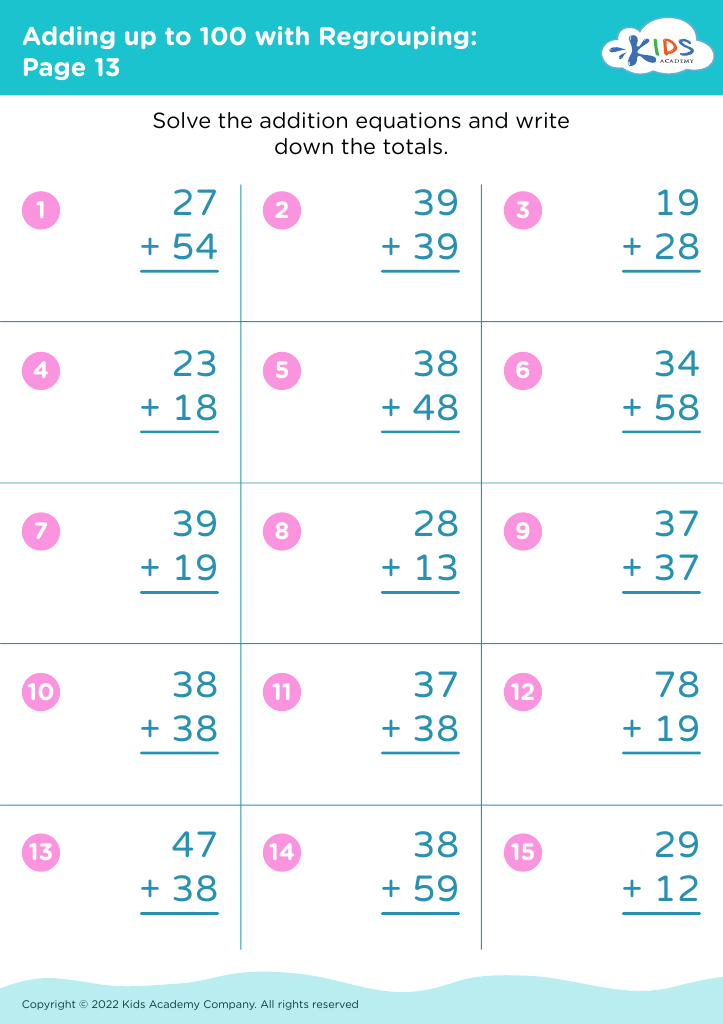
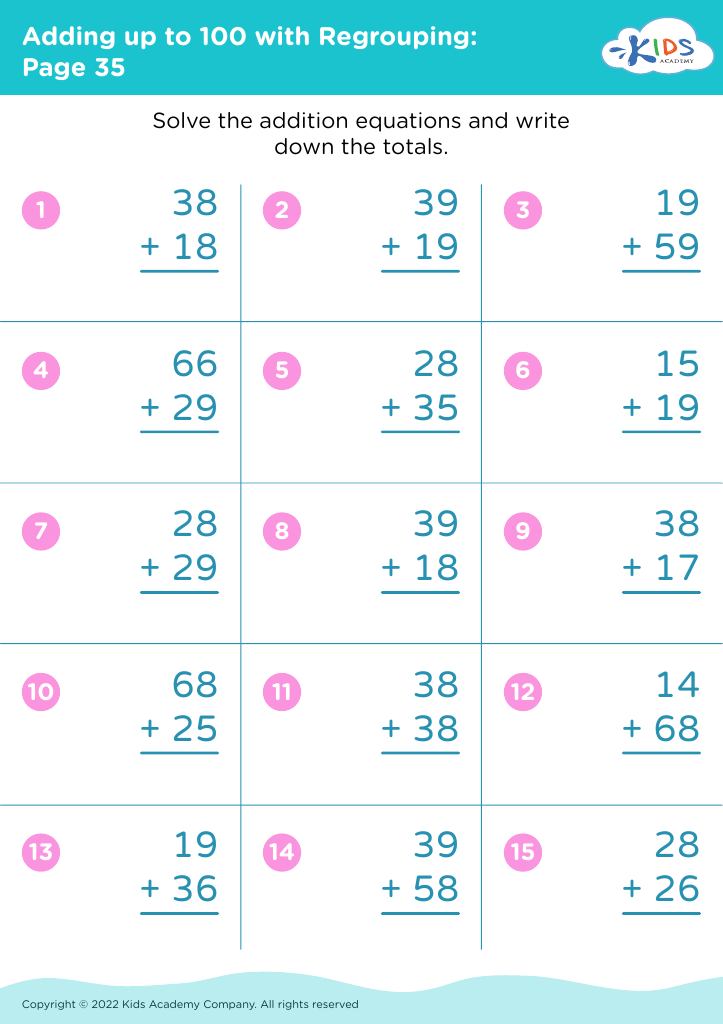
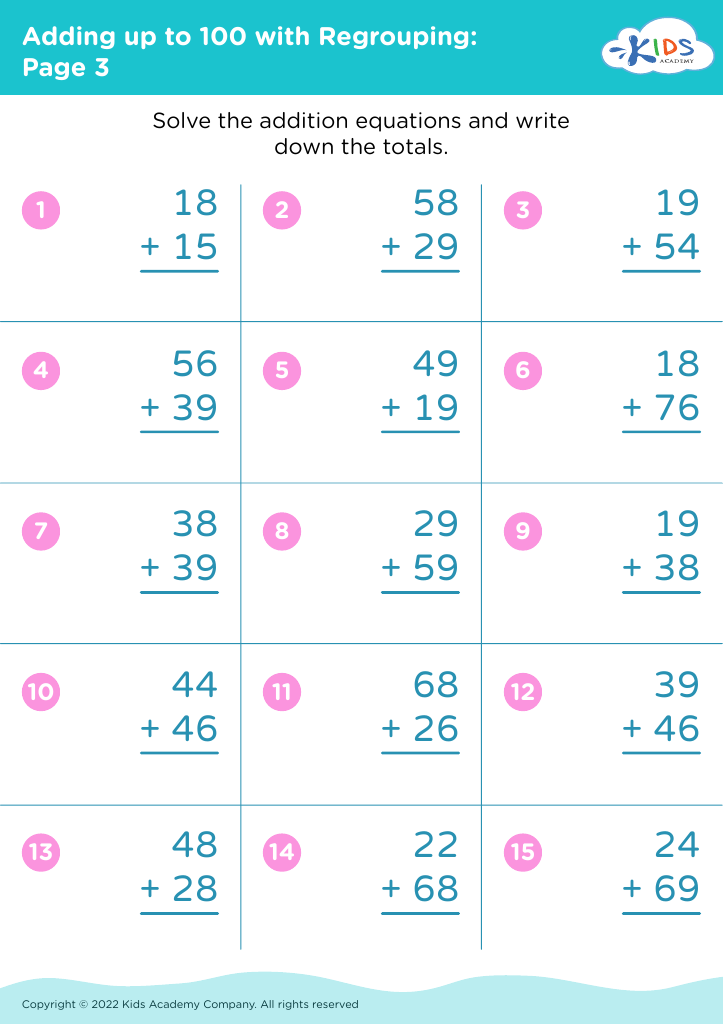
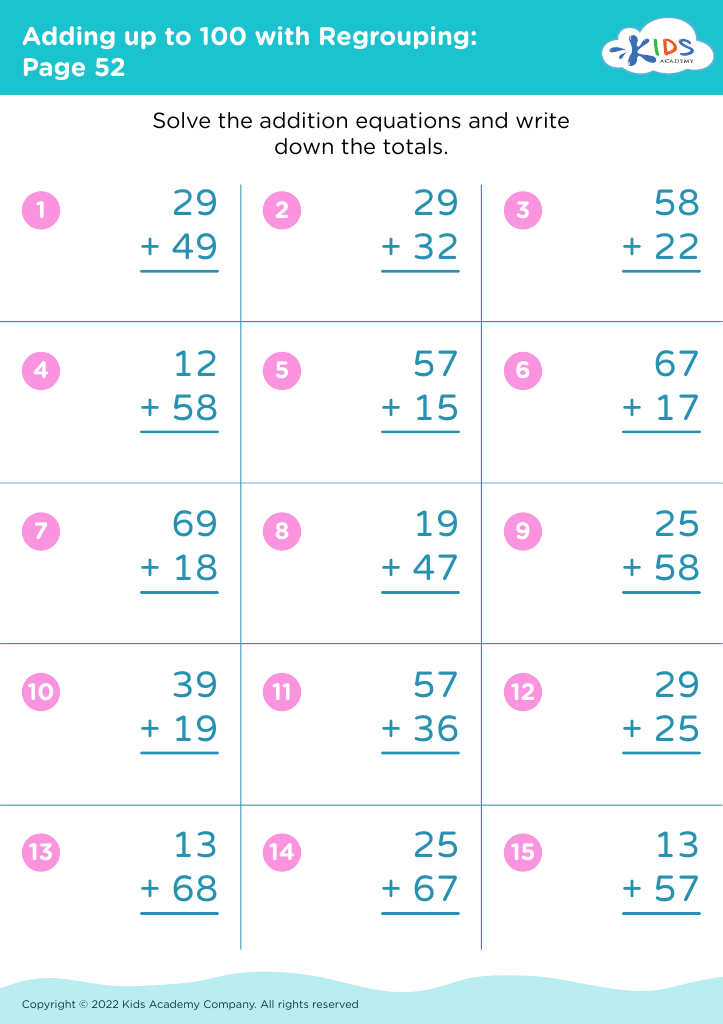
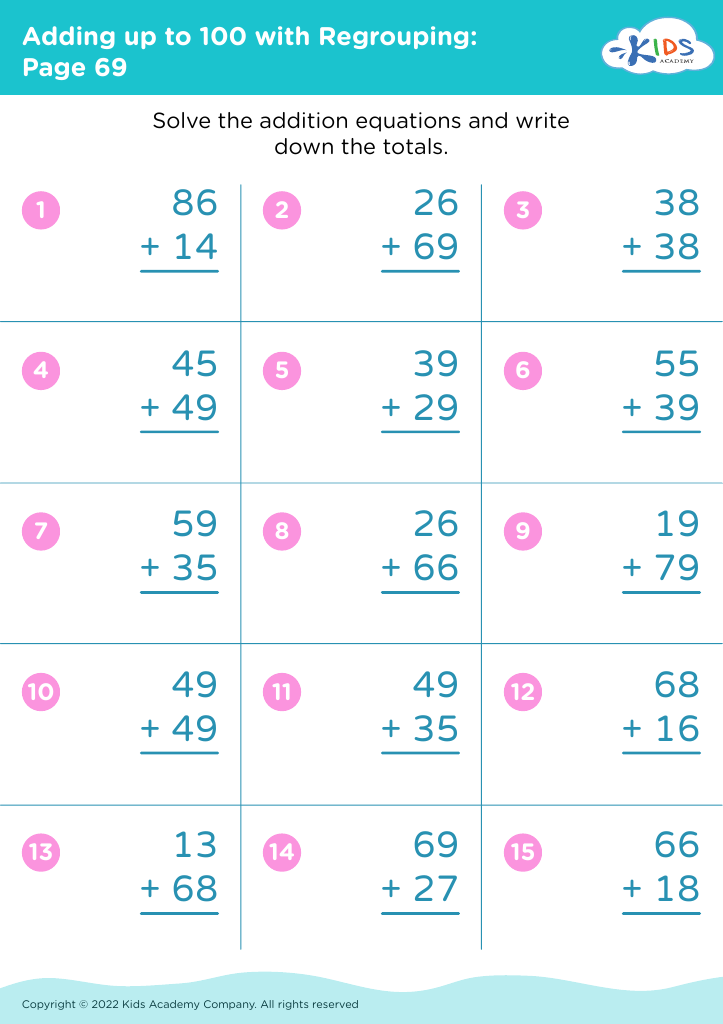
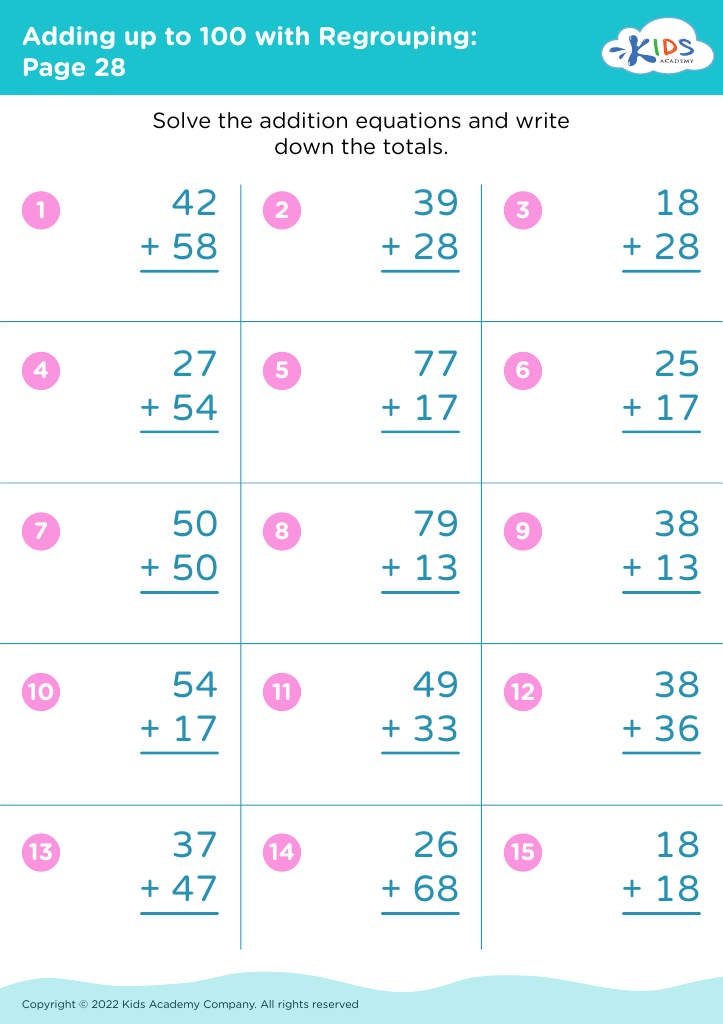
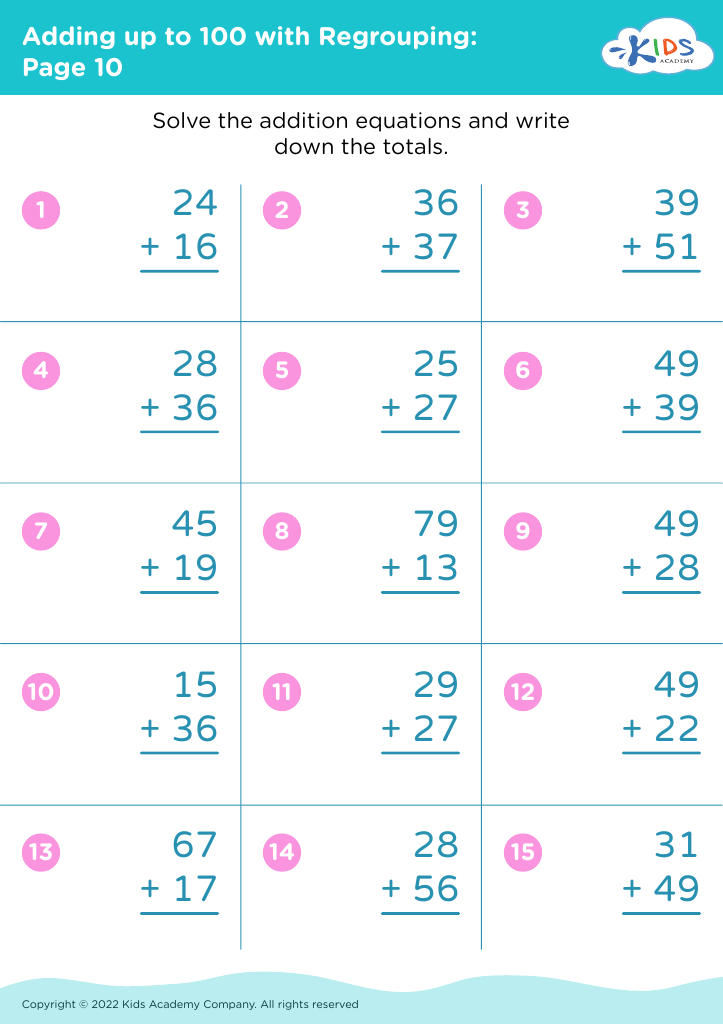
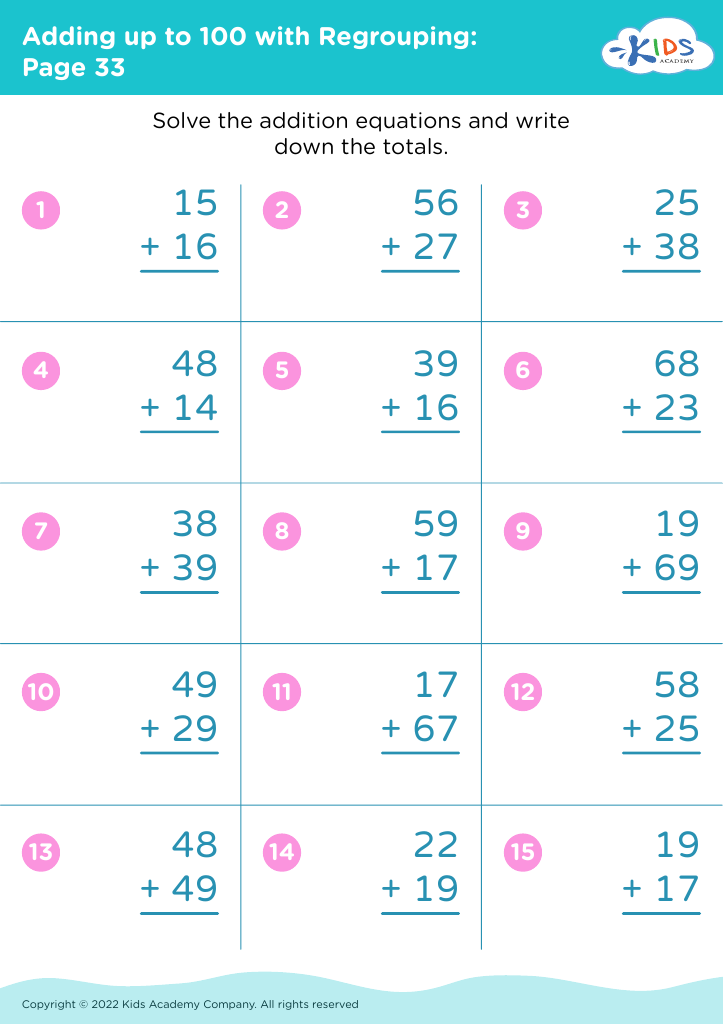




Understanding fractions, especially when it comes to adding them up to 100 with regrouping, is critical for children aged 6-7. At this developmental stage, students begin to grasp foundational math concepts that set the tone for their future learning. Fractions help children understand parts of a whole and the relationship between numbers, which is essential for more advanced math topics.
For parents and teachers, fostering a solid understanding of fractions supports problem-solving skills and critical thinking. Adding fractions with regrouping enhances arithmetic skills, important for tasks such as measuring, cooking, and budgeting later in life. Furthermore, mastering these concepts boosts children's confidence in math, reducing anxiety and encouraging a positive attitude toward learning.
Moreover, engaging with fractions enables children to apply their knowledge to real-world situations, making math relevant and interesting. By emphasizing teamwork and sharing, fractions can also strengthen social skills as kids collaborate to solve problems.
By supporting children in grasping fractions and their applications, parents and teachers facilitate a deeper understanding of mathematics, leading to long-term success in academics and life skills. Investing time in these essential skills reduces confusion, setting a strong foundation for future mathematical learning.