Fine Motor Skills Adding up to 100 Without Regrouping Worksheets for Ages 6-7
4 filtered results
-
From - To
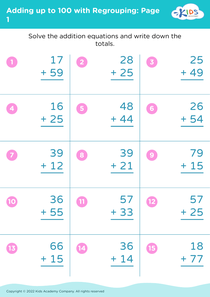
Enhance your child's fine motor skills while strengthening their addition skills with our "Fine Motor Skills Adding up to 100 Without Regrouping" worksheets, designed specifically for ages 6-7. These engaging resources encourage students to practice addition without regrouping, combining math practice with fun, hands-on activities. Each worksheet features colorful illustrations to spark creativity and maintain interest. Children will refine their pencil grip, improve hand-eye coordination, and gain confidence in their math abilities as they work toward mastering fundamental addition concepts. Perfect for at-home learning or in-class activities, these worksheets create a well-rounded educational experience that promotes both math and motor development.
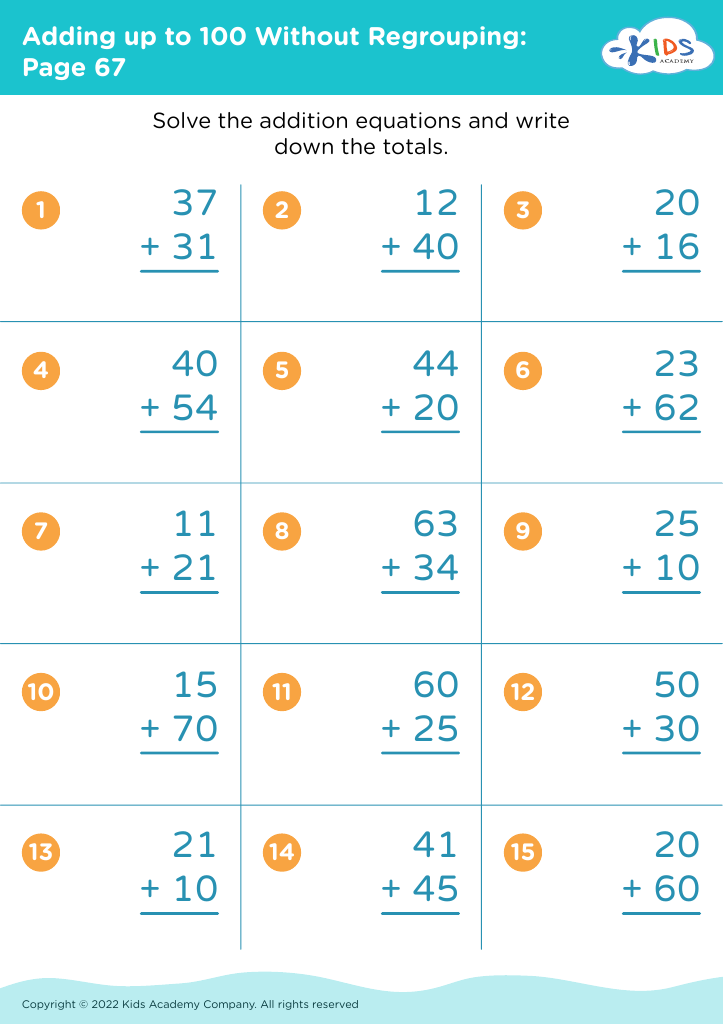
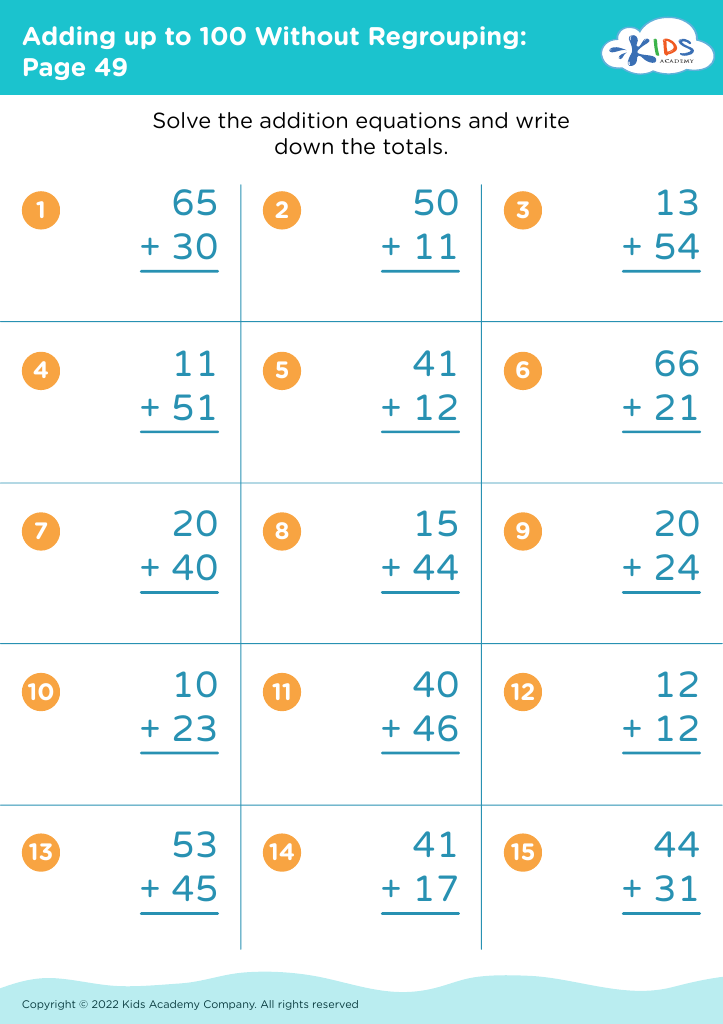
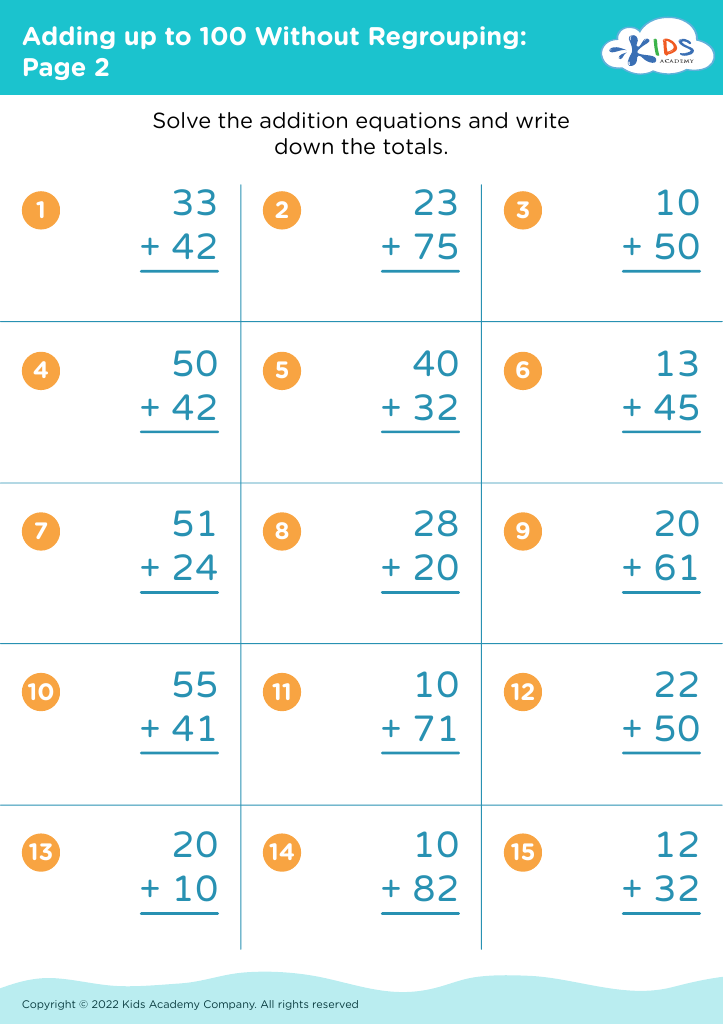
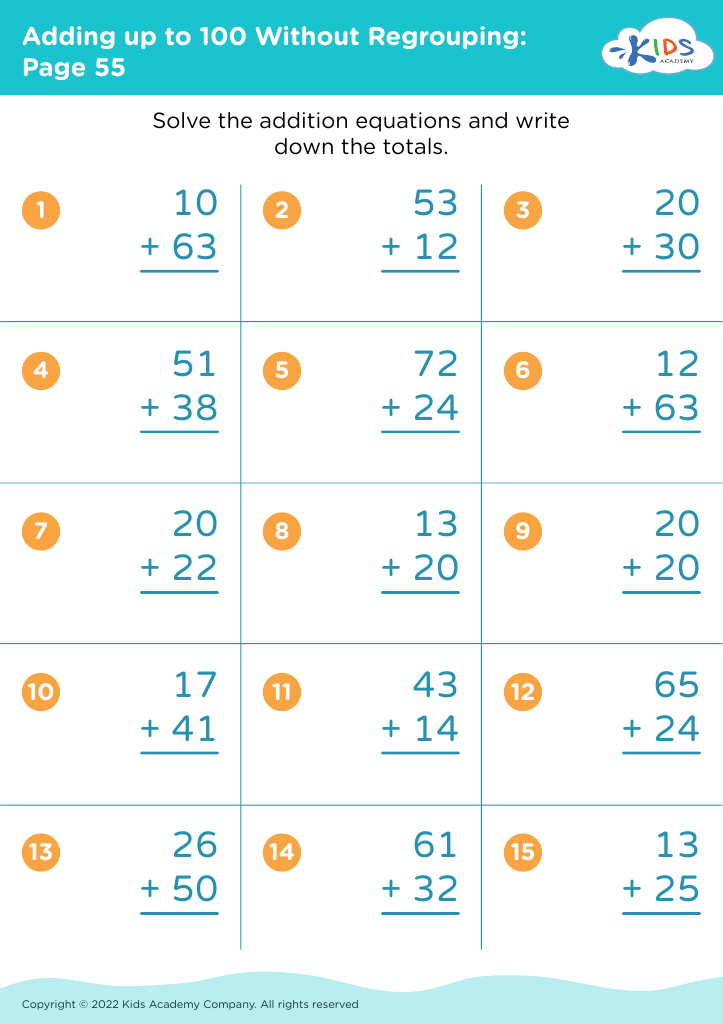




Fine motor skills are crucial for children aged 6-7 as they are foundational for learning and daily activities. These skills, including the ability to use fingers effectively for tasks like writing, drawing, and manipulating objects, significantly influence a child’s academic success, particularly in mathematics, where they will encounter tasks like adding up to 100 without regrouping.
When children engage in exercises that bolster fine motor skills, they develop hand-eye coordination, dexterity, and precision—any essential components for writing numbers accurately and keeping track of mathematical operations. Without strong fine motor skills, students may struggle to physically manage pencils or calculate numbers, which can hinder their confidence and enthusiasm for learning.
Additionally, these skills enable children to work independently when solving math problems. As they build confidence in their ability to manipulate objects or write clearly, they may naturally become more engaged in math lessons, exploring concepts without fear of making mistakes.
Parents and teachers should therefore consider developing fine motor skills as a fundamental aspect of their approach to teaching arithmetic. By combining this focus with hands-on experiences, they can foster a love of learning in their students while simultaneously equipping them with the necessary skills for academic progress.