Practicing multiplication Adding up to 100 Without Regrouping Worksheets for Ages 6-7
3 filtered results
-
From - To
Boost your child's math skills with our engaging "Practicing Multiplication Adding up to 100 Without Regrouping" worksheets designed for ages 6-7. These fun, interactive resources help young learners grasp essential multiplication concepts while seamlessly integrating addition that totals up to 100. Ideal for early practice, these worksheets encourage confidence in tackling basic math challenges without the complexity of regrouping. Each exercise is crafted to strengthen foundational skills, ensuring children build a solid understanding of multiplication. Perfect for at-home learning or classroom use, these worksheets are a great way to make math enjoyable and promote critical thinking in your child’s daily routine.
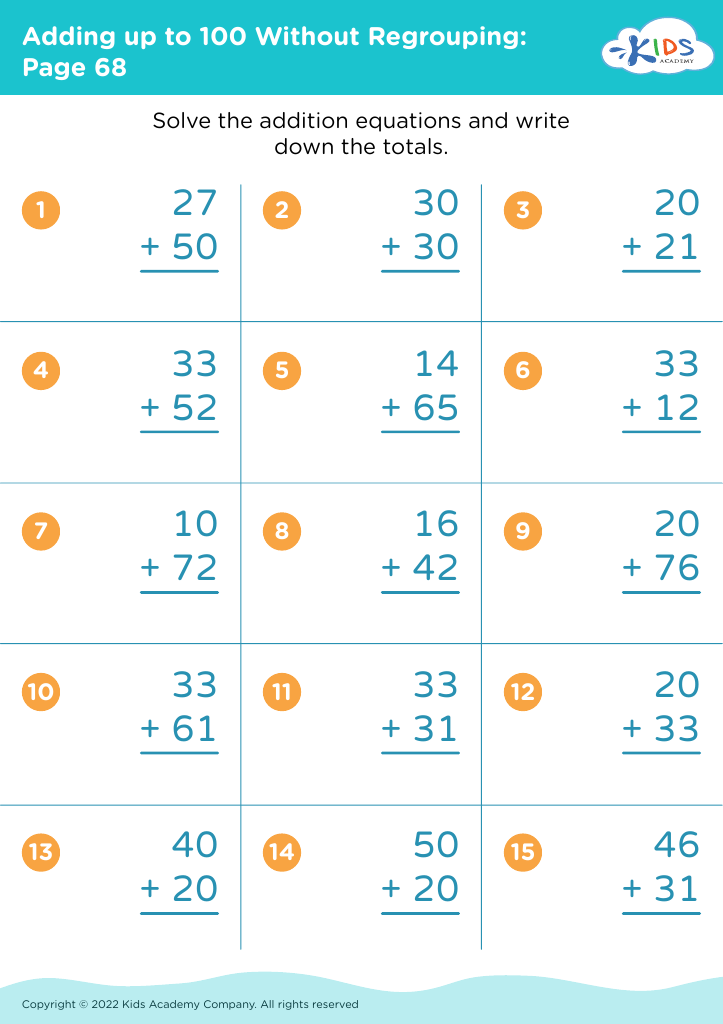
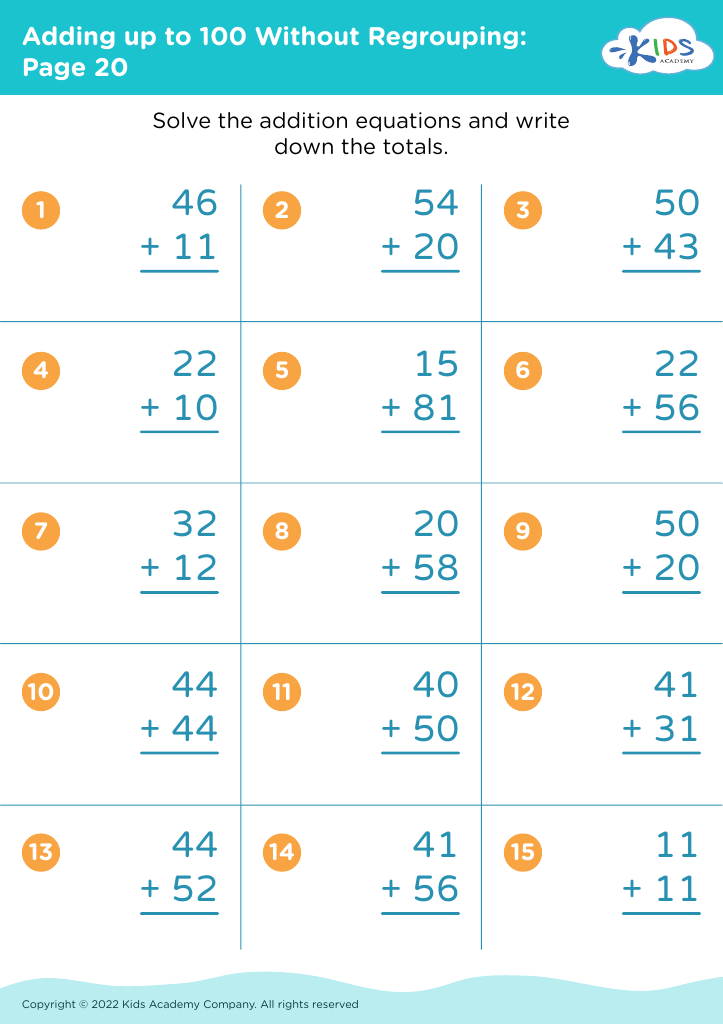
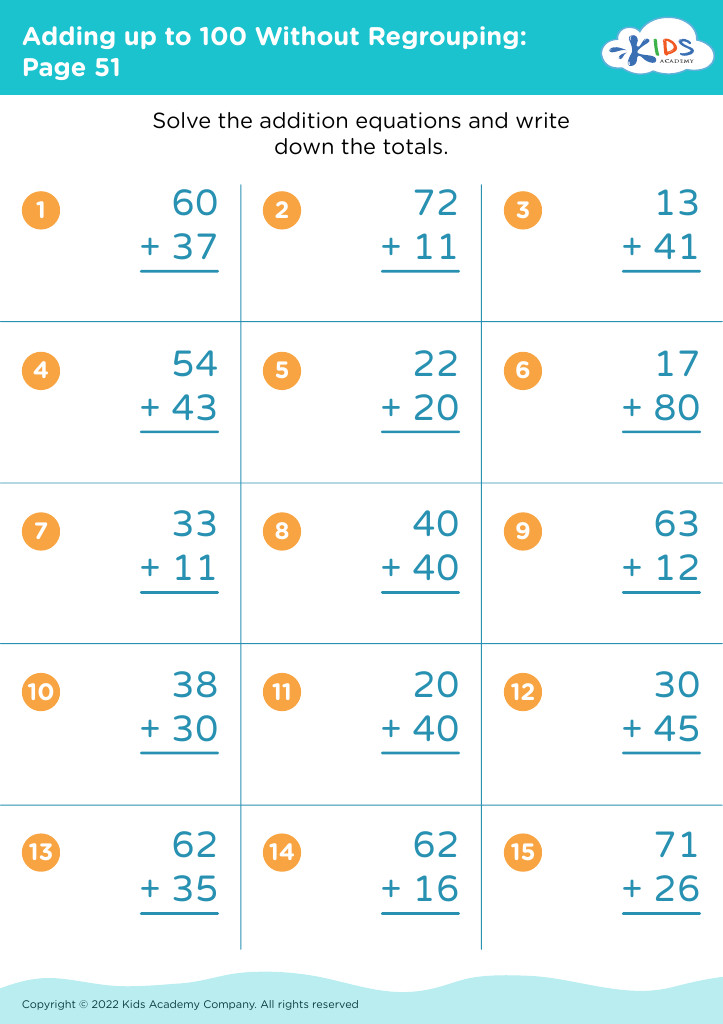




Practicing multiplication adding up to 100 without regrouping is crucial for children aged 6-7, as it lays a solid foundation for their mathematical understanding. At this age, children are beginning to grasp the concept of multiplication and its connection to addition. Mastering multiplication facts helps enhance their number sense, allowing them to recognize patterns and relationships between numbers.
Moreover, practicing multiplication without regrouping builds confidence in young learners. When children can easily add products without needing to regroup, they foster a sense of achievement that encourages perseverance in more complex math tasks. This competency also streamlines future mathematical concepts, including division and basic algebra, promoting a smoother transition as they advance through their education.
Additionally, strong multiplication skills benefit overall academic performance. This foundational math skill is often integrated into various subjects such as science and economics. As teachers and parents engage in this practice, they contribute to developing critical thinking and problem-solving abilities in their children. Ultimately, prioritizing multiplication skills early on cultivates not only mathematical competence but also a positive attitude toward learning, setting the stage for lifelong academic success.