Reading comprehension Adding up to 100 Without Regrouping Worksheets for Ages 6-7
3 filtered results
-
From - To
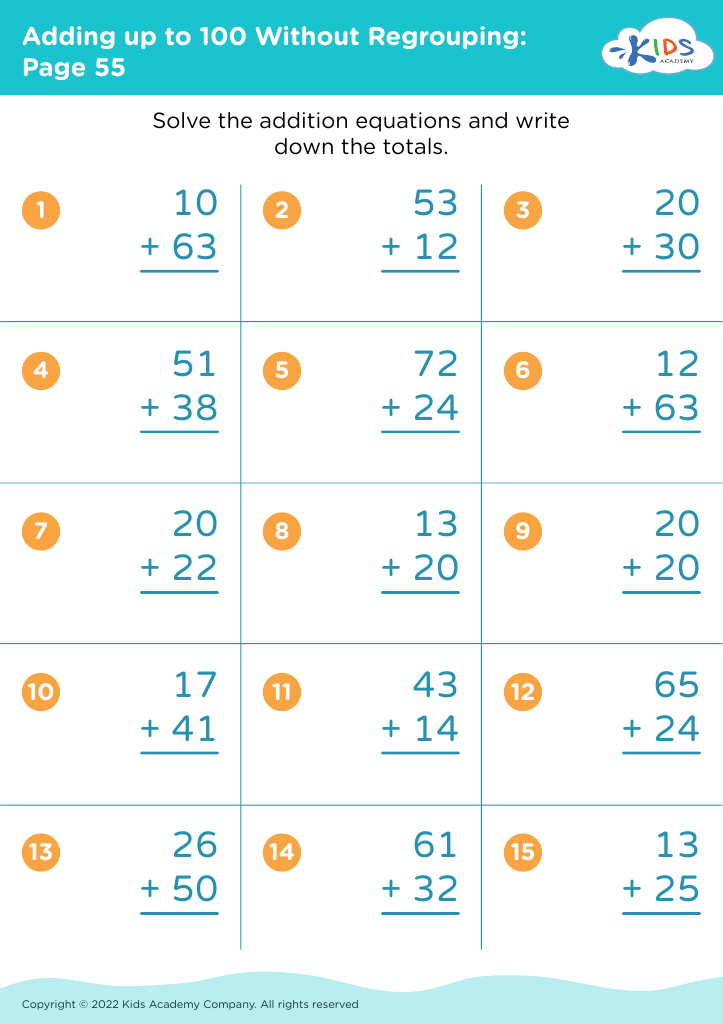
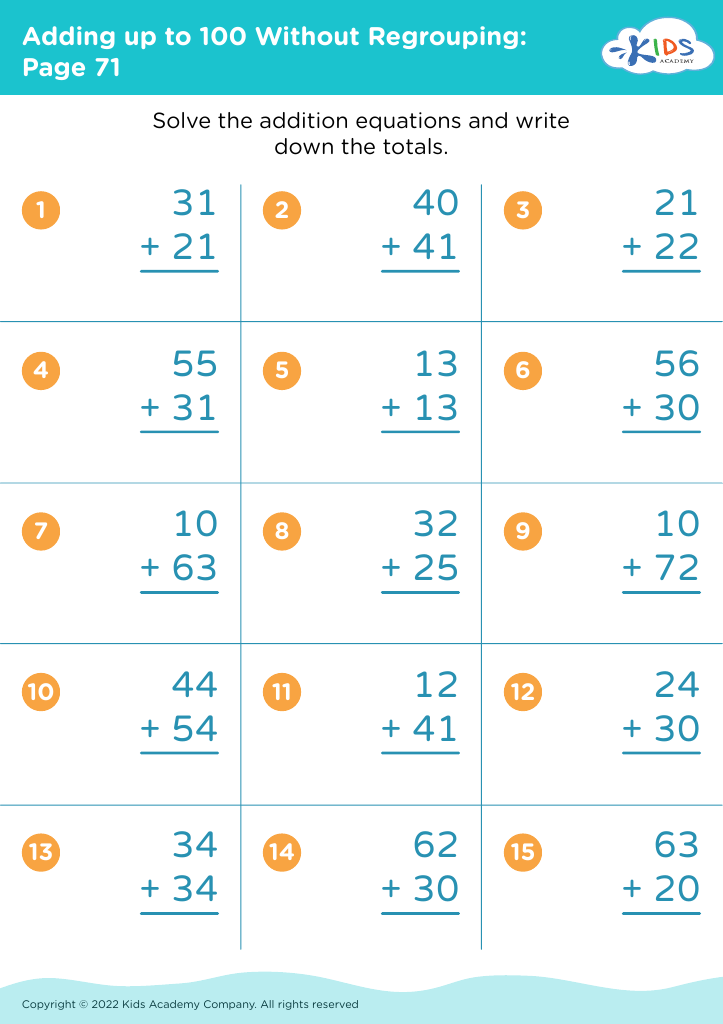
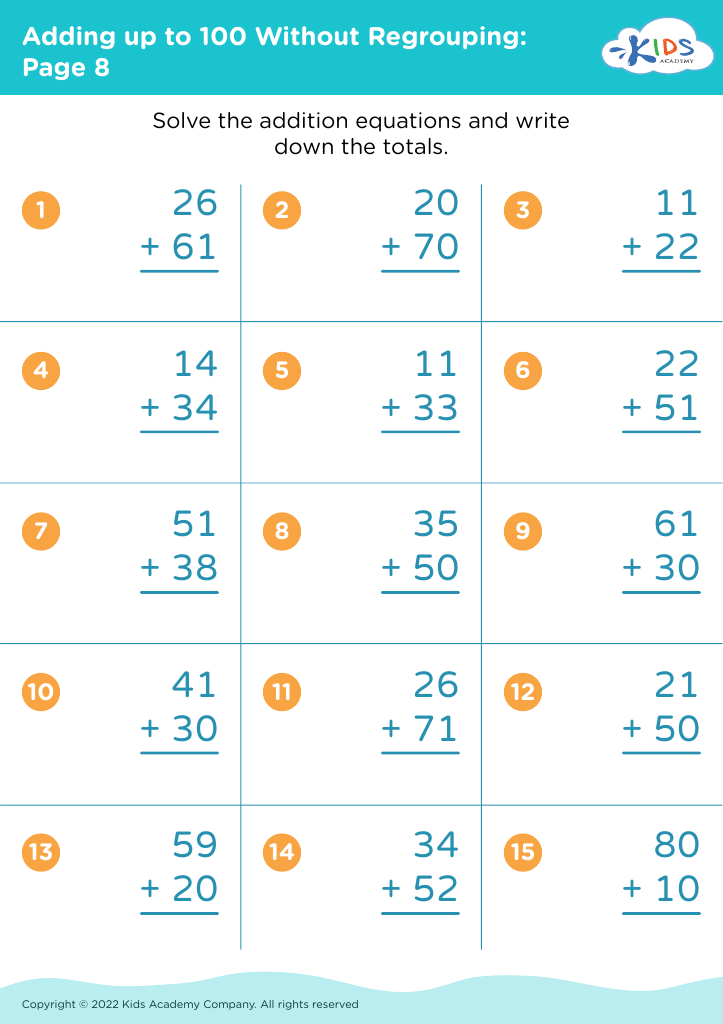
Explore our engaging "Reading Comprehension: Adding Up to 100 Without Regrouping Worksheets" designed for children aged 6-7. These worksheets provide a fun and interactive way for young learners to enhance their math skills while developing critical reading comprehension abilities. Kids will practice addition skills up to 100 without regrouping through relatable word problems and engaging scenarios. By integrating reading with math, children can strengthen their understanding of numerical concepts while enhancing vocabulary and comprehension skills. Perfect for classroom use or at-home learning, these worksheets help cultivate a solid foundation in both math and reading, setting the stage for future academic success.




Reading comprehension is a crucial skill for children, as it lays the foundation for successful learning across all subjects. For children aged 6-7, mastering reading comprehension helps them make sense of stories, identify main ideas, and engage with texts meaningfully, enhancing their overall literacy. When they understand what they're reading, they develop critical thinking and analytical skills that are essential for academic success.
At this age, children are also transitioning from learning to read to reading to learn, making it even more vital that they grasp the material they encounter. Coupling reading comprehension with math concepts, like adding numbers without regrouping, reinforces cognitive connections. It sharpens their problem-solving skills and enhances their ability to interpret word problems and context clues.
Moreover, parents and teachers play a significant role in fostering these skills. By encouraging discussions about reading material and integrating math into everyday life, they enhance children’s understanding and engagement. Ultimately, prioritizing reading comprehension not only supports academic achievement but also instills a love for learning, setting the stage for lifelong educational endeavors. This holistic approach empowers children, driving their curiosity and motivation, essential ingredients for future success.