Understanding multiplication Adding up to 100 Without Regrouping Worksheets for Ages 6-7
5 filtered results
-
From - To
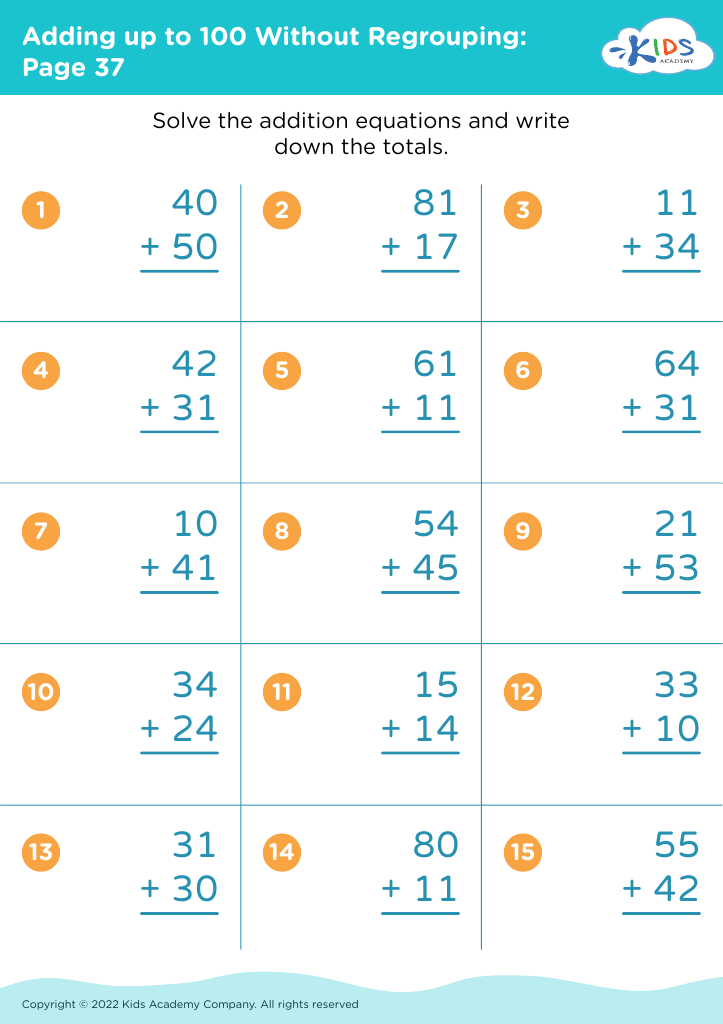
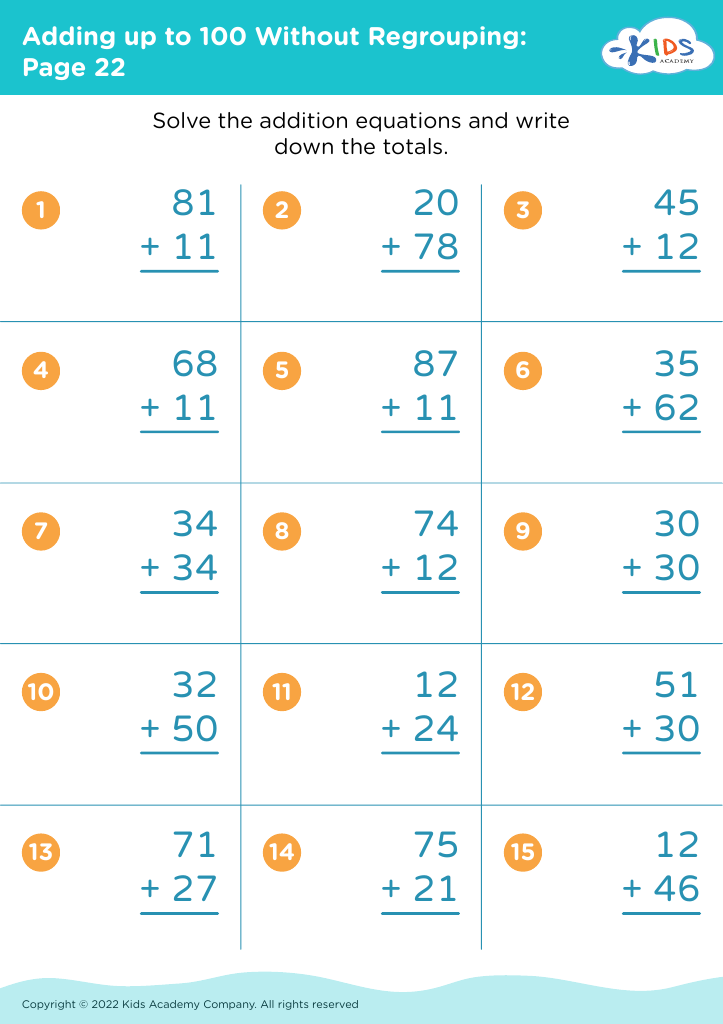
Explore our "Understanding Multiplication Adding Up to 100 Without Regrouping Worksheets" specially designed for children ages 6-7. These engaging, interactive worksheets help young learners grasp the foundational concepts of multiplication by presenting addition problems that total up to 100 without regrouping. As kids work through the exercises, they develop crucial skills in number recognition, problem-solving, and mental math, making learning both fun and effective. Tailored to enhance understanding and confidence, these worksheets encourage independent practice while reinforcing key math concepts. Dive into a world of numbers and boost your child’s multiplication skills with our thoughtfully curated resources!
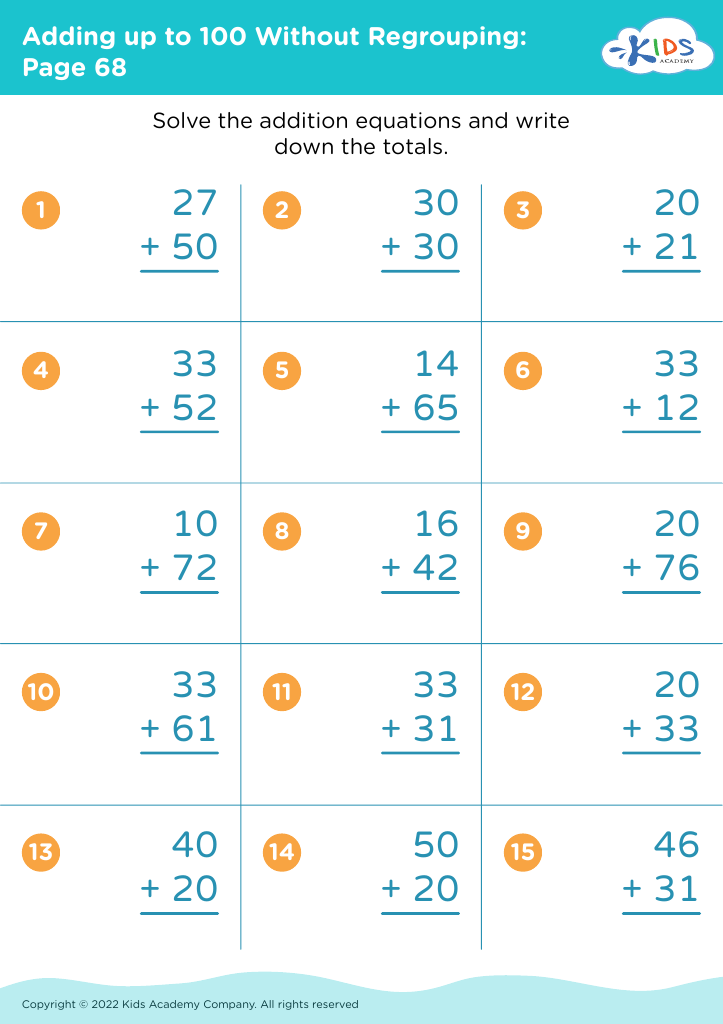
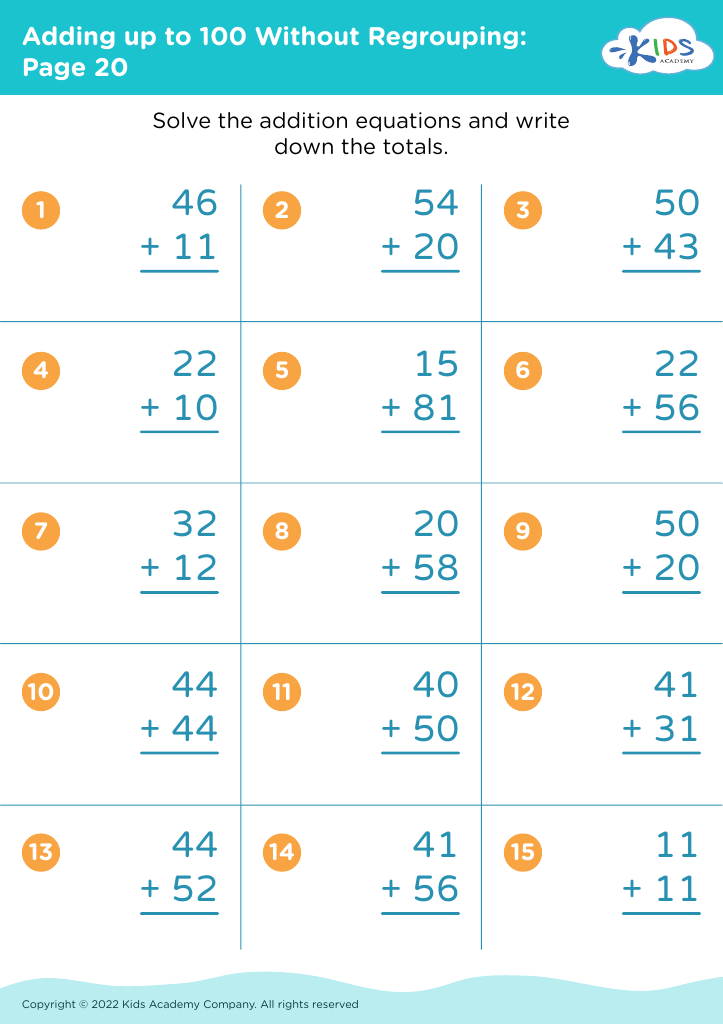
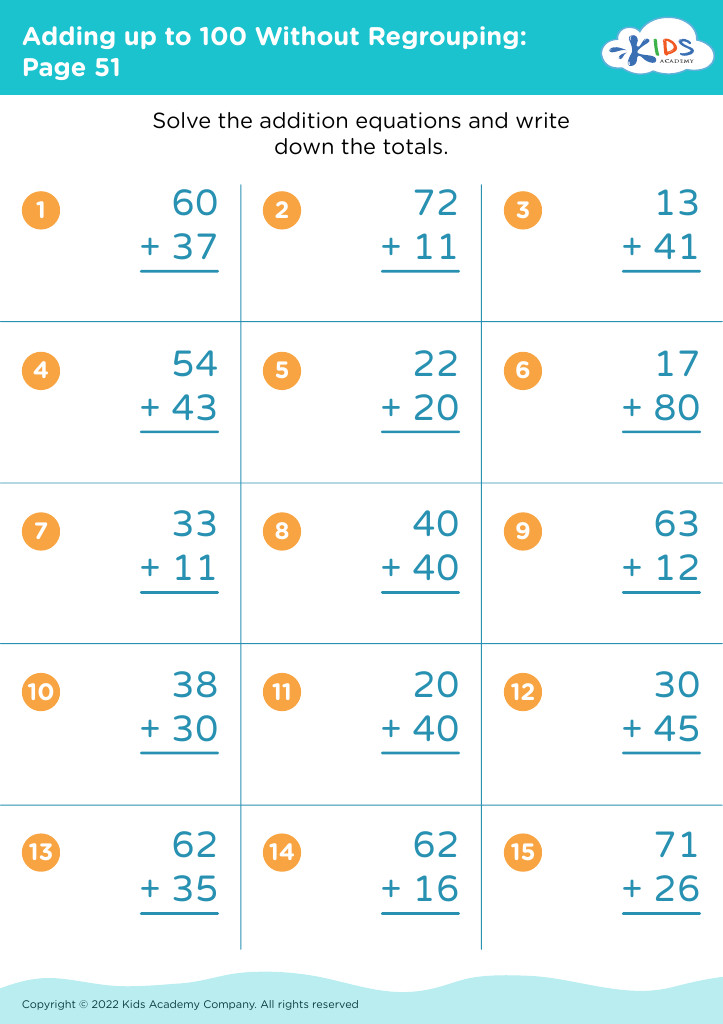




Understanding multiplication and addition concepts, especially when it comes to operations like adding up to 100 without regrouping, is crucial for children aged 6-7. At this age, students begin laying the foundation for more advanced mathematical concepts. Mastering basic multiplication and simple addition promotes confidence, enhances problem-solving skills, and nurtures logical thinking.
When children comprehend multiplication as repeated addition, they develop a holistic understanding of numbers and their relationships. This knowledge creates better connections between different math concepts, making future learning more intuitive. Adding up to 100 without regrouping also enhances their mental math skills; it encourages quick calculations and boosts numerical fluency, which is essential for tackling everyday math challenges.
Parents and teachers should focus on these skills because safe scaffolding in early education helps prevent future learning gaps. When students build a strong math base, they are less likely to struggle with more complex topics in later grades, ensuring a positive and successful academic experience. Overall, emphasizing understanding early (through engaging activities and practical examples) will foster a lasting, positive relationship with math, equipping children with essential skills for their educational journey and beyond.