Addition Practice Adding up to 1000 Misc Worksheets for Ages 6-7
5 filtered results
-
From - To
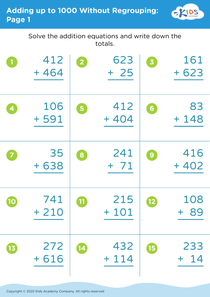
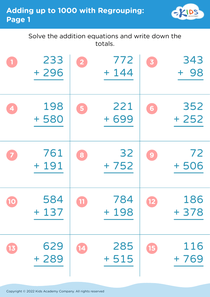
Explore our engaging Addition Practice worksheets designed for children aged 6-7, focusing on adding numbers up to 1000. Our collection offers a variety of fun and interactive exercises that aim to enhance your child's math skills through practical application. With colorful illustrations and diverse problems, these worksheets ensure learning is enjoyable while reinforcing crucial addition concepts. Perfect for at-home practice or classroom use, each worksheet is tailored to meet the developmental needs of early learners. Help your child build confidence in their math abilities and master addition in an exciting way! Download now for dynamic learning experiences!
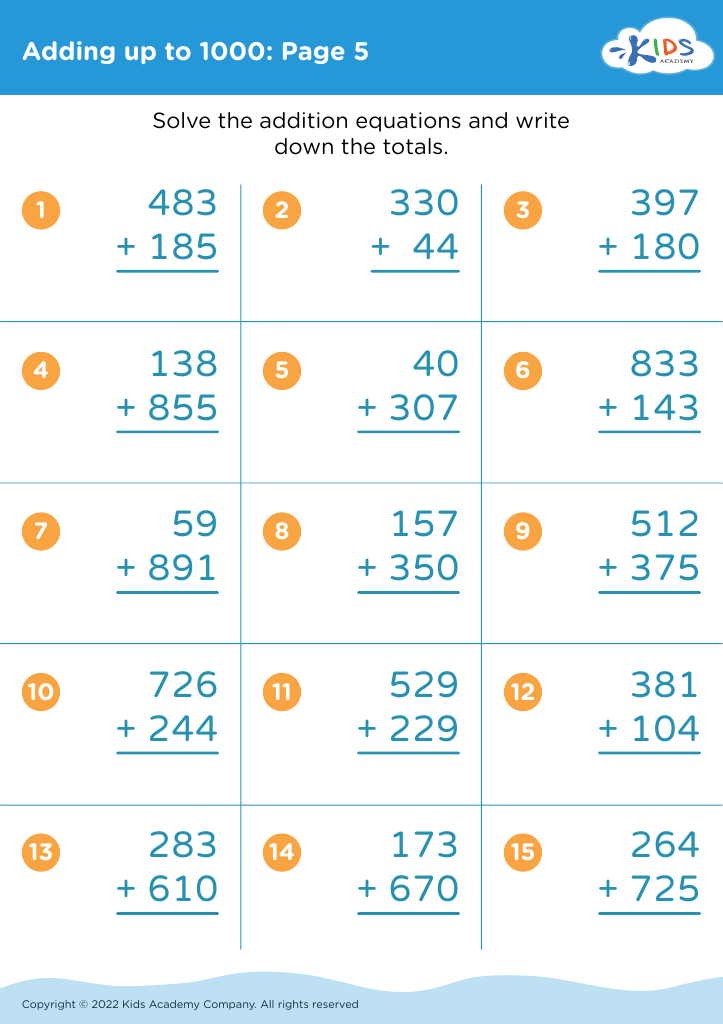
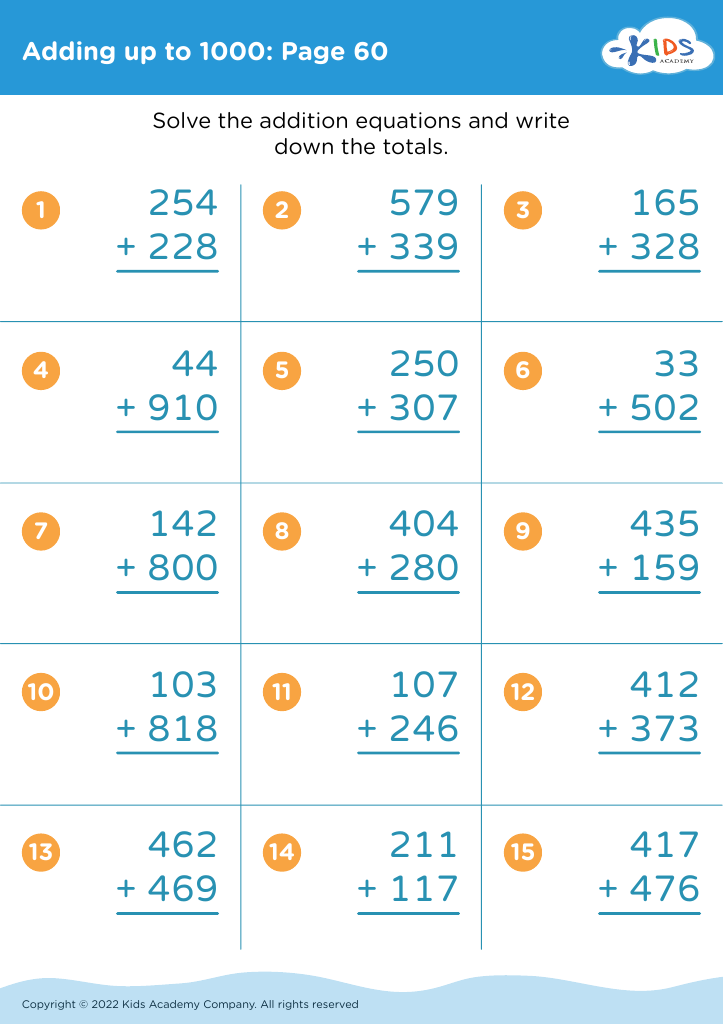
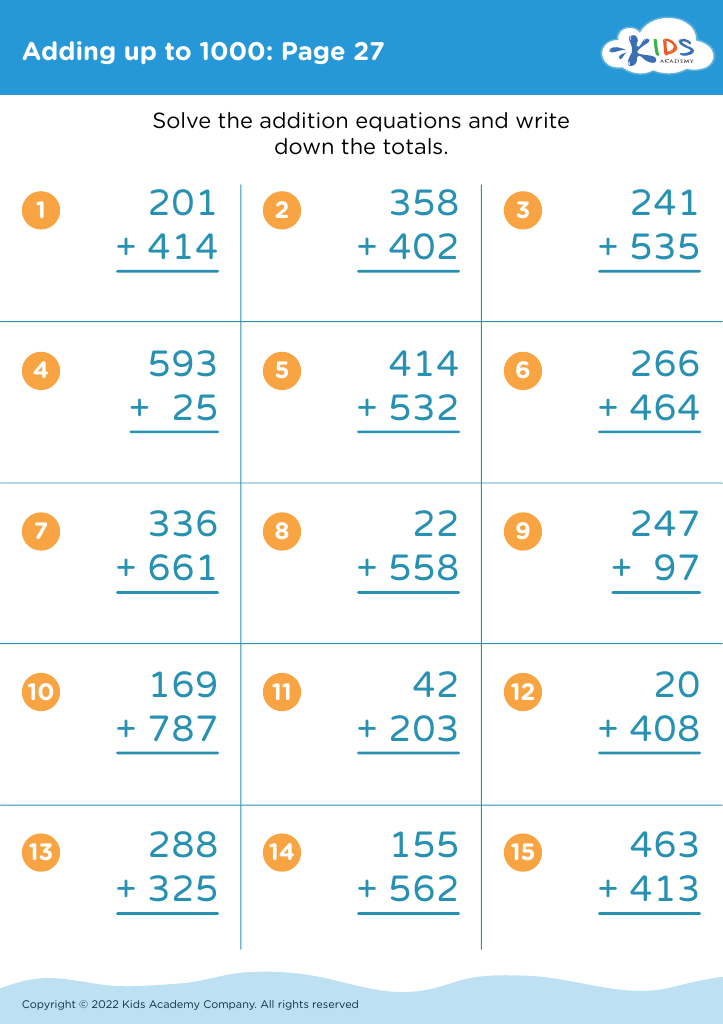
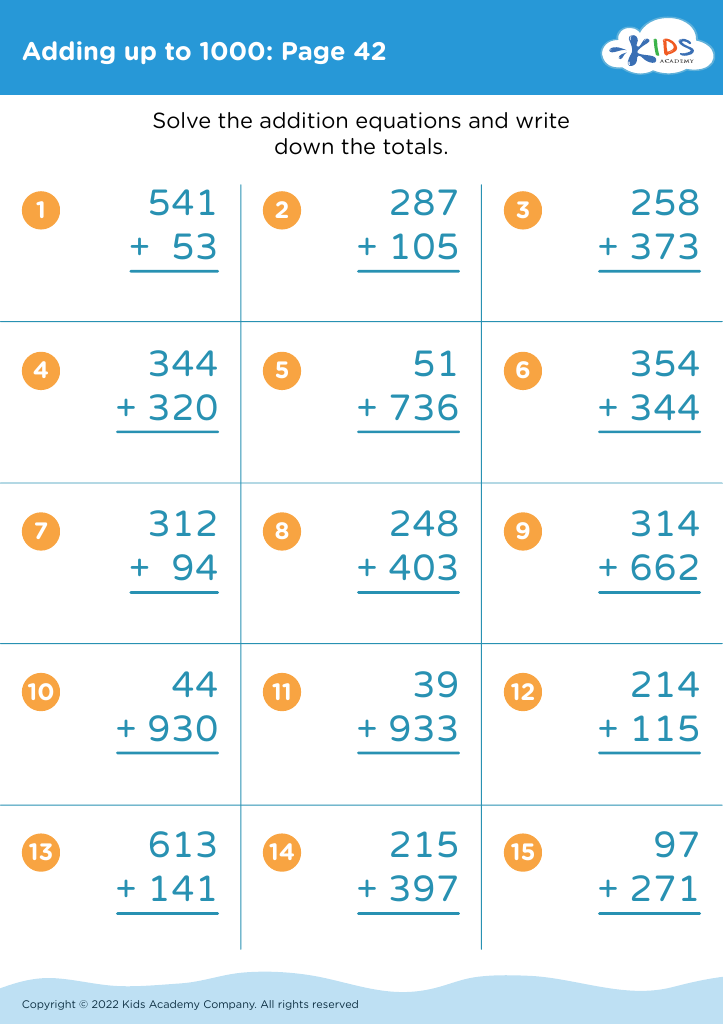
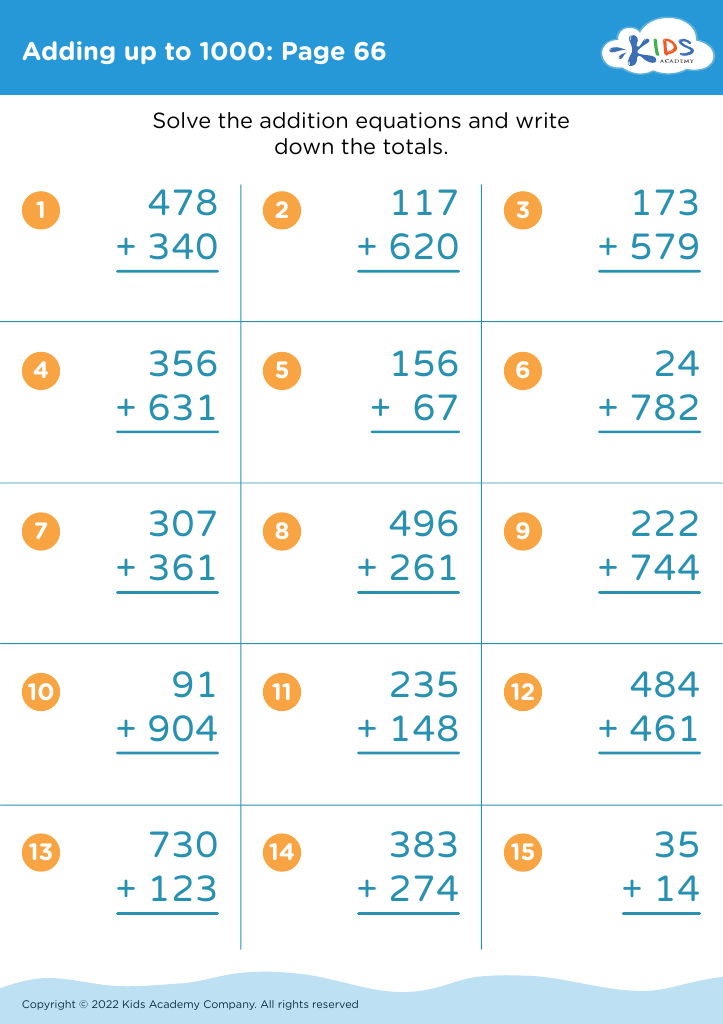


Parents and teachers should prioritize addition practice, specifically adding up to 1000, for children aged 6-7, as it lays the foundation for more complex mathematical concepts. At this developmental stage, children are building crucial cognitive skills, and mastering addition helps enhance their problem-solving abilities and logical thinking. By focusing on addition up to 1000, students develop number sense—a vital part of understanding how numbers relate to one another.
Additionally, practicing addition in a structured manner helps kids gain confidence in their mathematical abilities. It encourages a positive attitude toward math, reducing anxiety and fostering enjoyment in learning. This foundation not only supports future operations, such as subtraction and beyond but is also essential for real-world applications, like budgeting or measuring.
Furthermore, developing proficiency in addition can help children see mathematics as a fun and engaging subject. Creative activities and games that involve addition can keep them motivated, making learning both enjoyable and effective. In essence, early mastery of addition creates a solid support system for future academic success while cultivating essential life skills in young learners, making it a vital focus for parents and educators alike.