Improve counting skills Adding up to 1000 Without Regrouping Worksheets for Ages 6-7
4 filtered results
-
From - To
Enhance your child's counting skills with our engaging "Adding Up to 1000 Without Regrouping" worksheets, designed specifically for ages 6-7. These worksheets offer a fun and interactive way for young learners to practice addition and improve their number sense. By reinforcing their abilities to add numbers without regrouping, students build a strong mathematical foundation. Each worksheet features a variety of exercises tailored to different learning levels, ensuring your child stays motivated and challenged. Perfect for at-home practice or classroom use, these resources will help children gain confidence as they develop essential counting skills toward mastering addition. Start the journey to math success today!
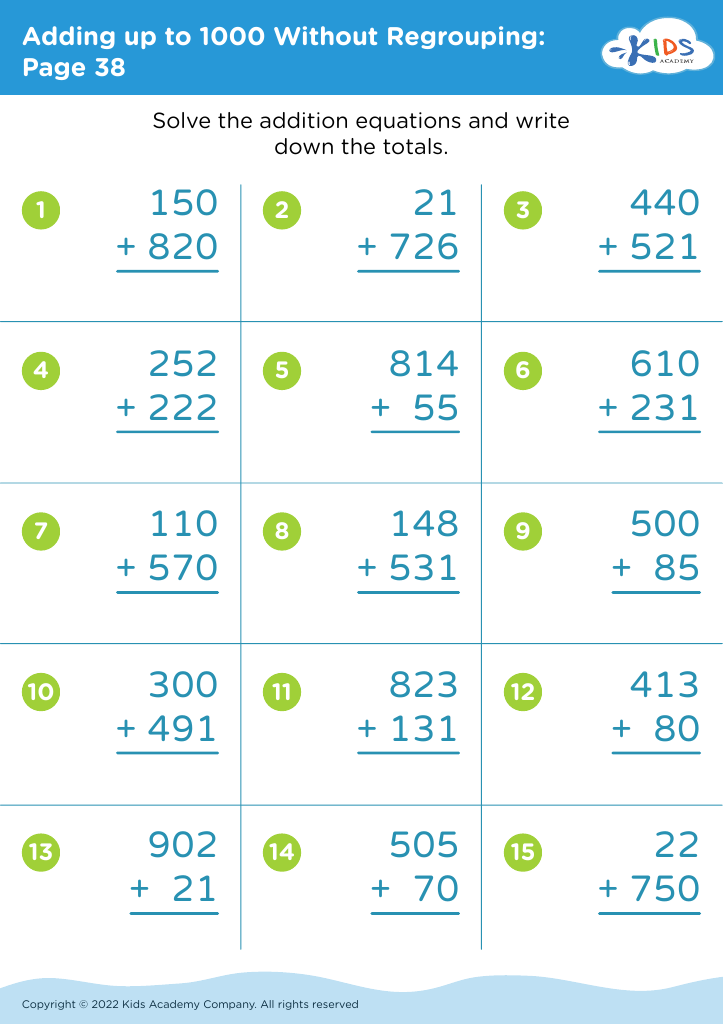
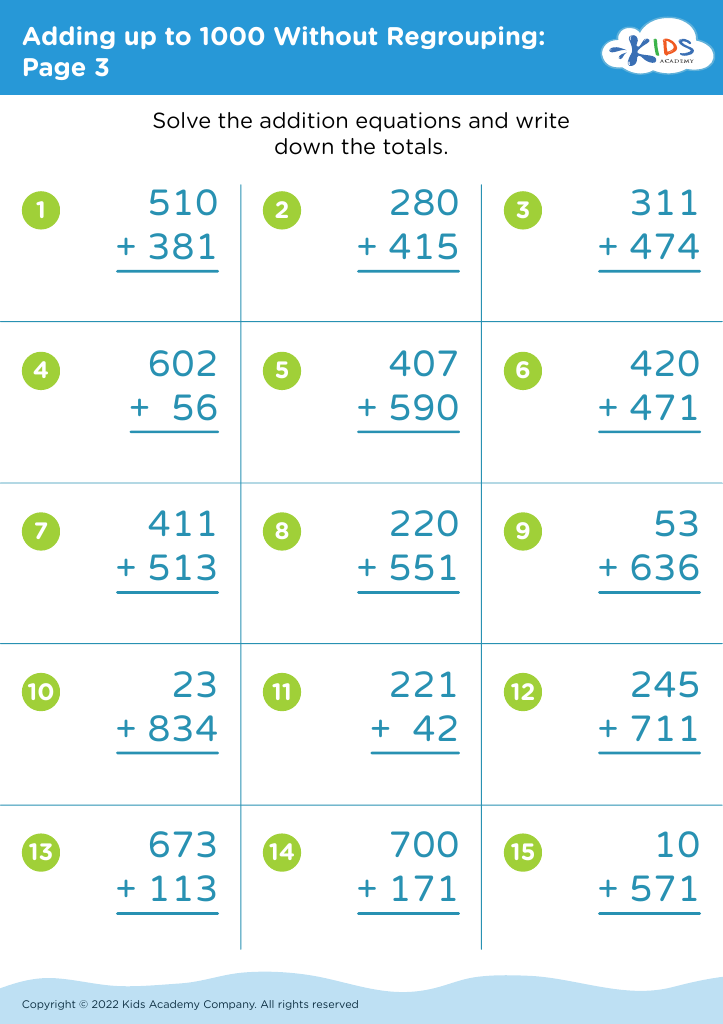
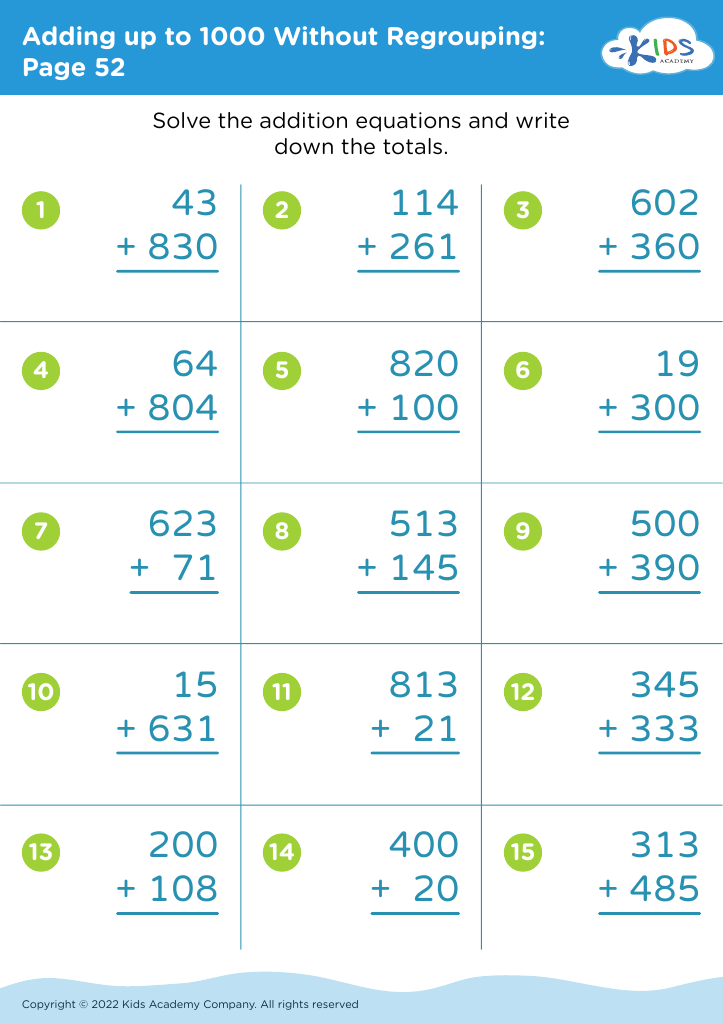
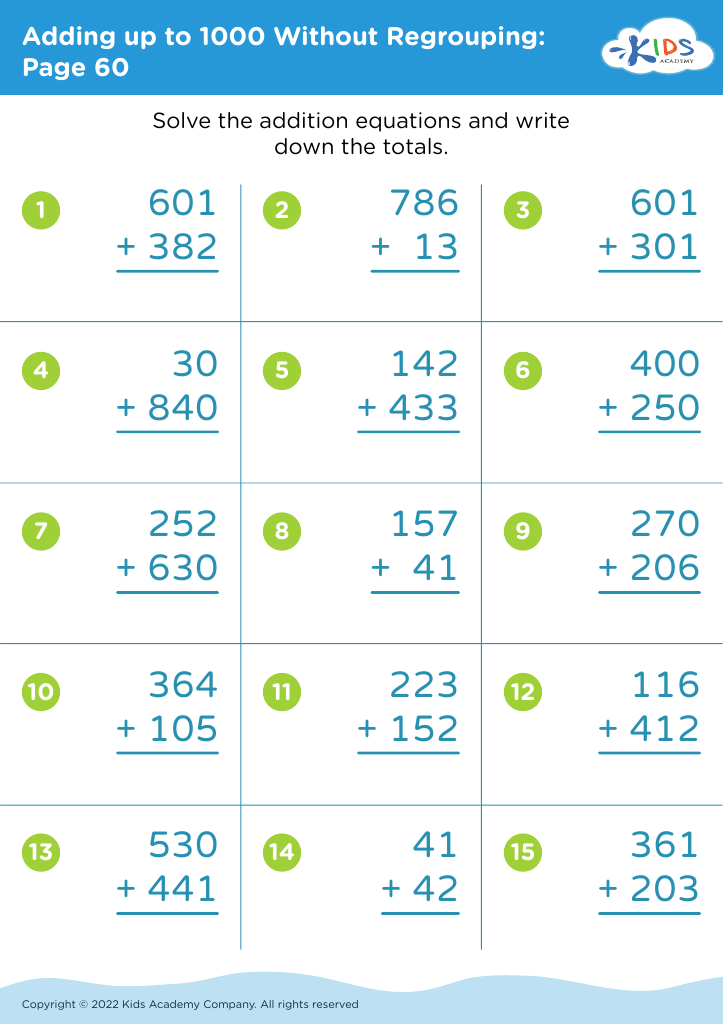


Developing strong counting skills, especially the ability to add up to 1,000 without regrouping, is crucial for children aged 6-7. This foundational skill not only enhances a child’s mathematics proficiency but also boosts their confidence in tackling more complex problems in the future. When children learn to count and add without regrouping, they visualize numbers more clearly, improving their number sense—a skill necessary for daily tasks and more advanced calculations.
Additionally, strong counting skills contribute to cognitive development. They encourage critical thinking, problem-solving abilities, and the capacity to recognize patterns and relationships in numbers. These skills extend beyond math; they influence a child's ability to analyze certain processes and make logical decisions.
Furthermore, by encouraging counting practice, parents and teachers instill perseverance and a growth mindset in young learners. Engaging children in counting activities creates enjoyable learning experiences, laying the groundwork for a positive attitude towards math. This set of skills directly correlates with academic performance, helping to ensure that children are well-prepared for future learning challenges and more sophisticated mathematical concepts as they progress in their education. Therefore, fostering counting skills now is an investment in their long-term success.