Understanding fractions Adding up to 1000 Without Regrouping Worksheets for Ages 6-7

Filters

13 filtered results

Clear all filters
Favorites
With answer key
Interactive

13 filtered results

Difficulty Level

Grade


Welcome to our "Understanding Fractions: Adding Up to 1000 Without Regrouping" worksheets tailored for children aged 6-7! These engaging materials are designed to help young learners develop a solid understanding of fractions while simplifying their addition skills. Our worksheets promote foundational math concepts, enabling kids to confidently tackle addition problems without the need for regrouping. Interactive activities encourage critical thinking and reinforce comprehension through practical examples. Perfect for classroom settings or home practice, our resources ensure that math becomes a fun and enjoyable experience. Start your child's math journey effortlessly by exploring our thoughtfully crafted worksheets today!
Check out this FREE Trial Lesson on Adding up to 1000 Without Regrouping for age 6-7!

Exactly the Same, or Not

Favorites
With answer key
Interactive
  • 6-7
  • Understanding fractions
  • Adding up to 1000 Without Regrouping
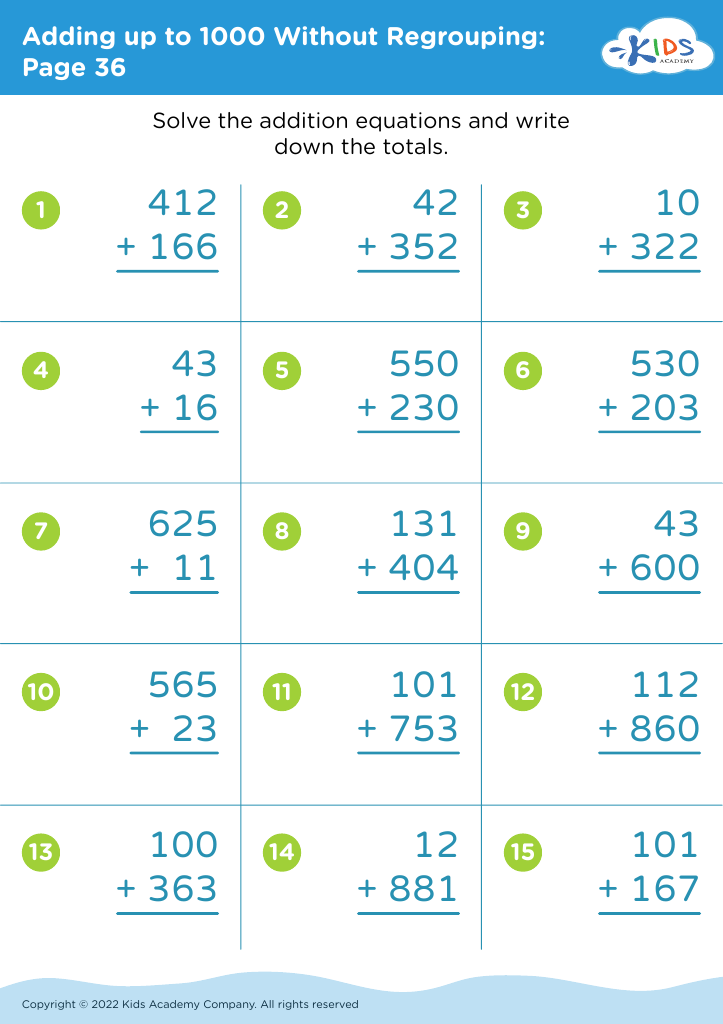
Adding up to 1000 Without Regrouping: Page 36
Worksheet
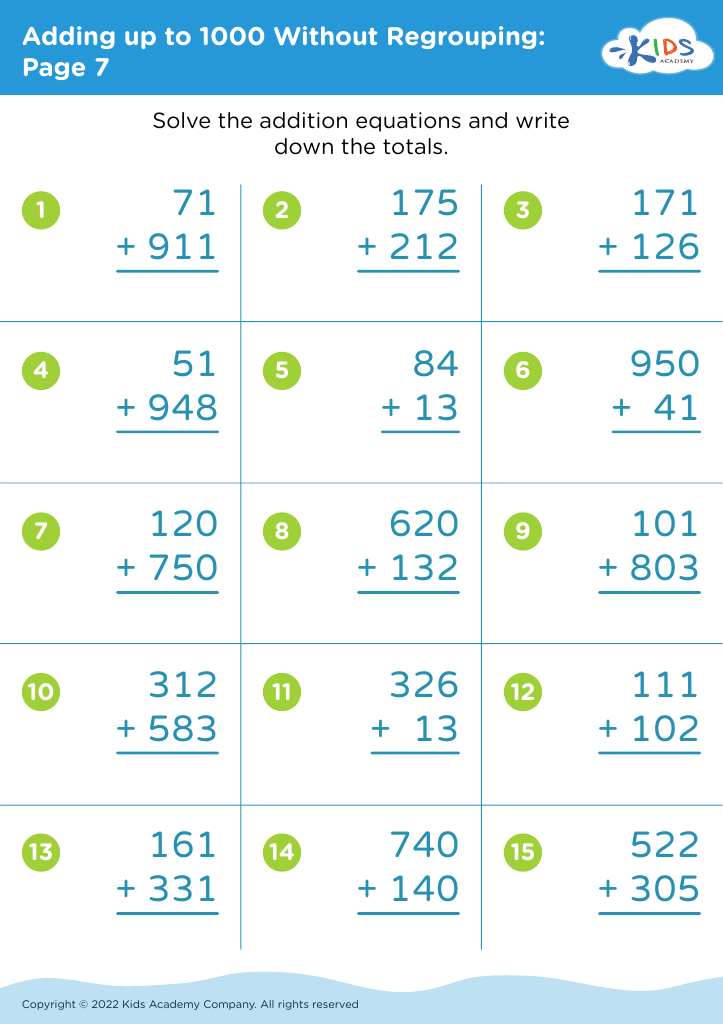
Adding up to 1000 Without Regrouping: Page 7
Worksheet
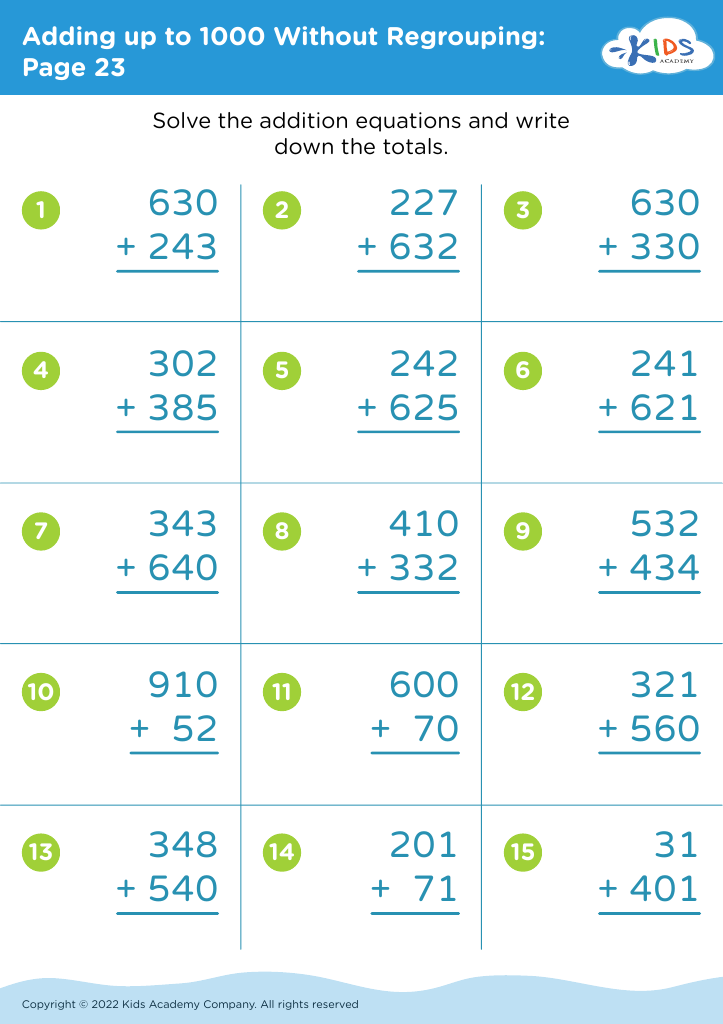
Adding up to 1000 Without Regrouping: Page 23
Worksheet
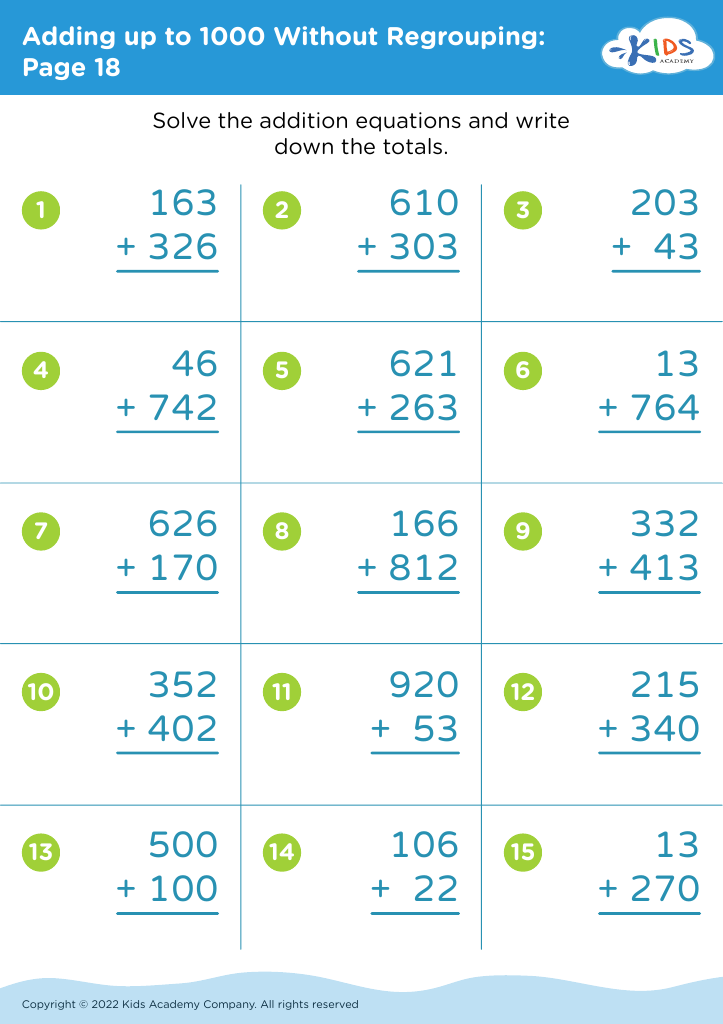
Adding up to 1000 Without Regrouping: Page 18
Worksheet
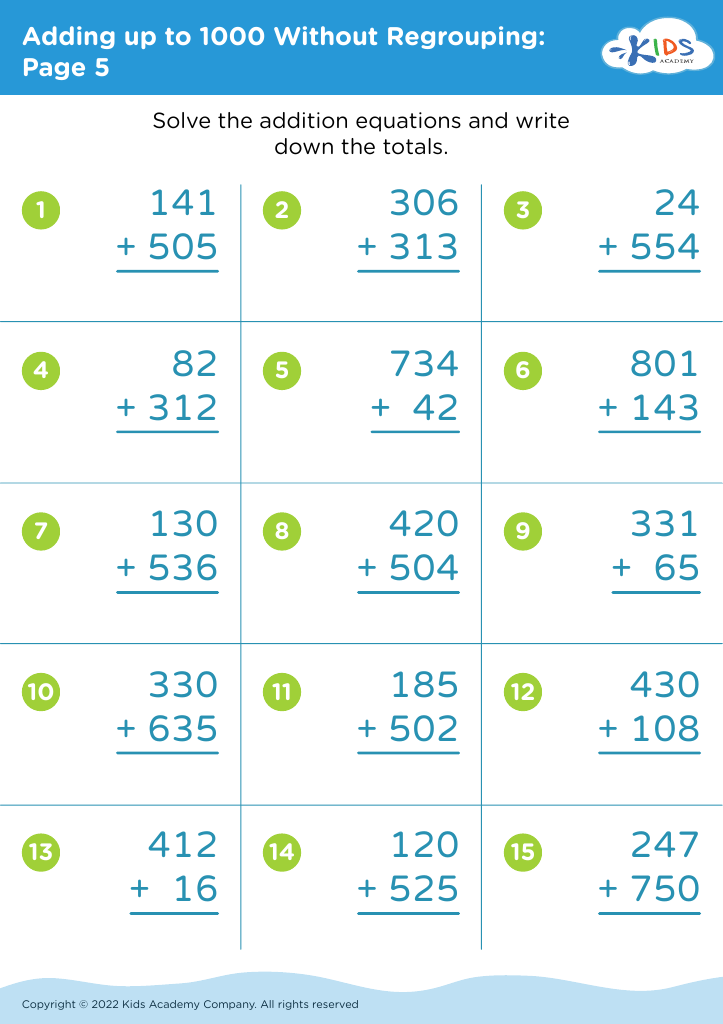
Adding up to 1000 Without Regrouping: Page 5
Worksheet
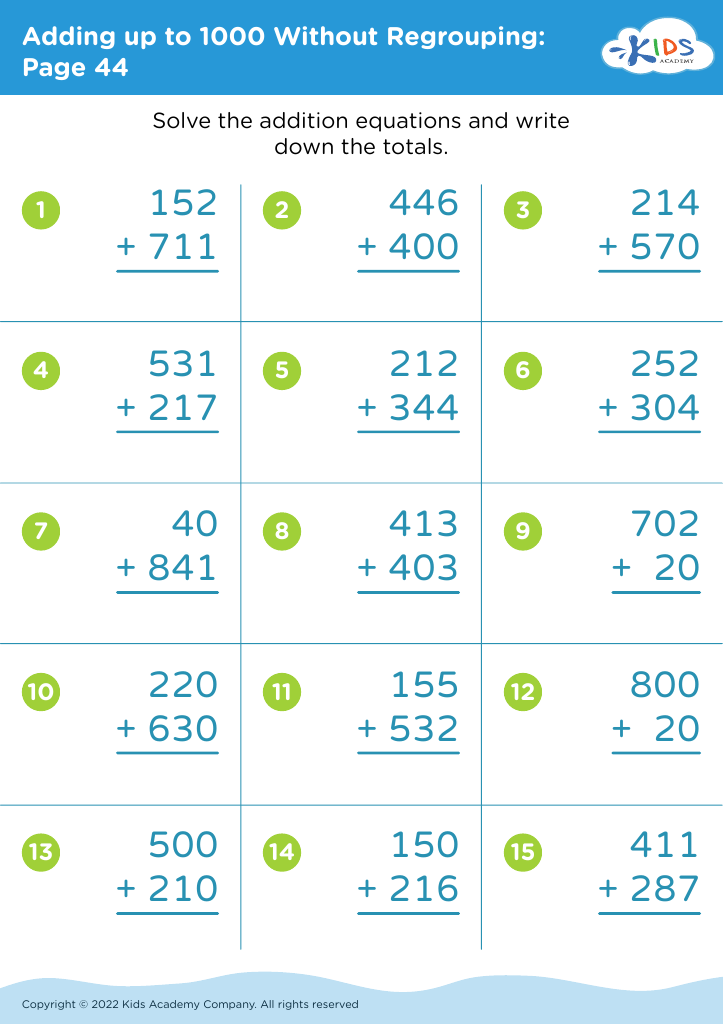
Adding up to 1000 Without Regrouping: Page 44
Worksheet
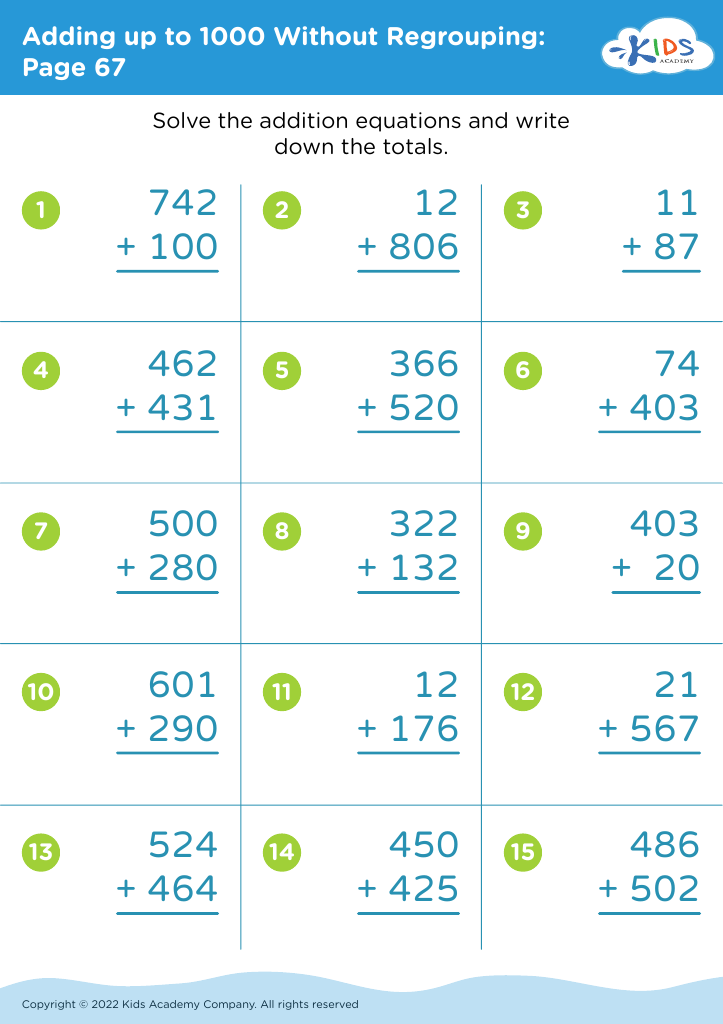
Adding up to 1000 Without Regrouping: Page 67
Worksheet
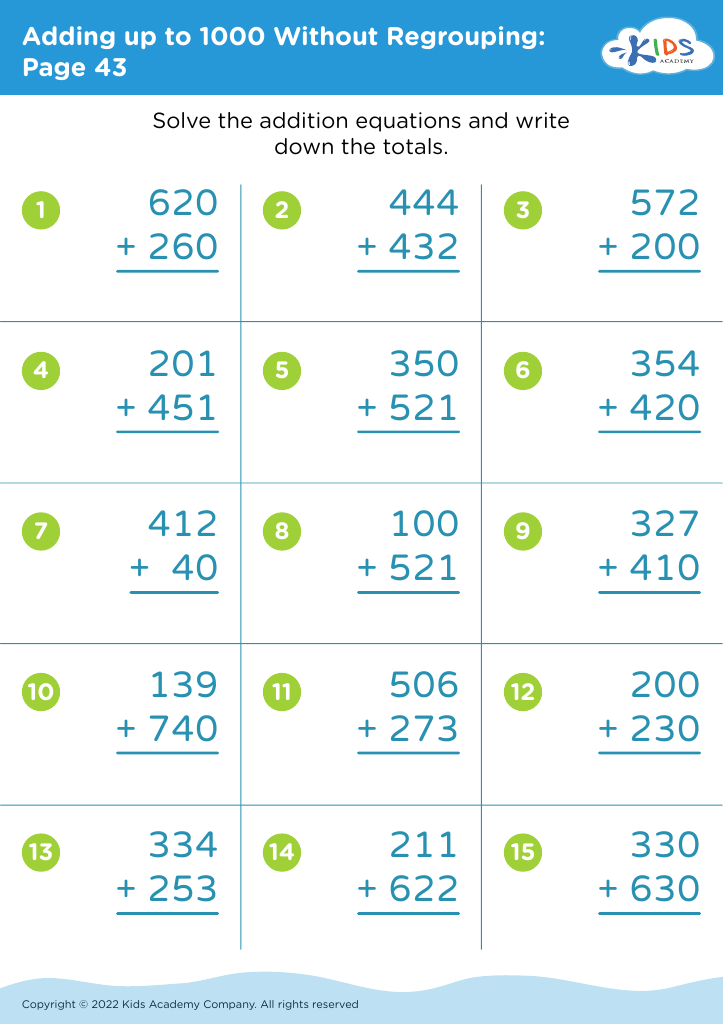
Adding up to 1000 Without Regrouping: Page 43
Worksheet
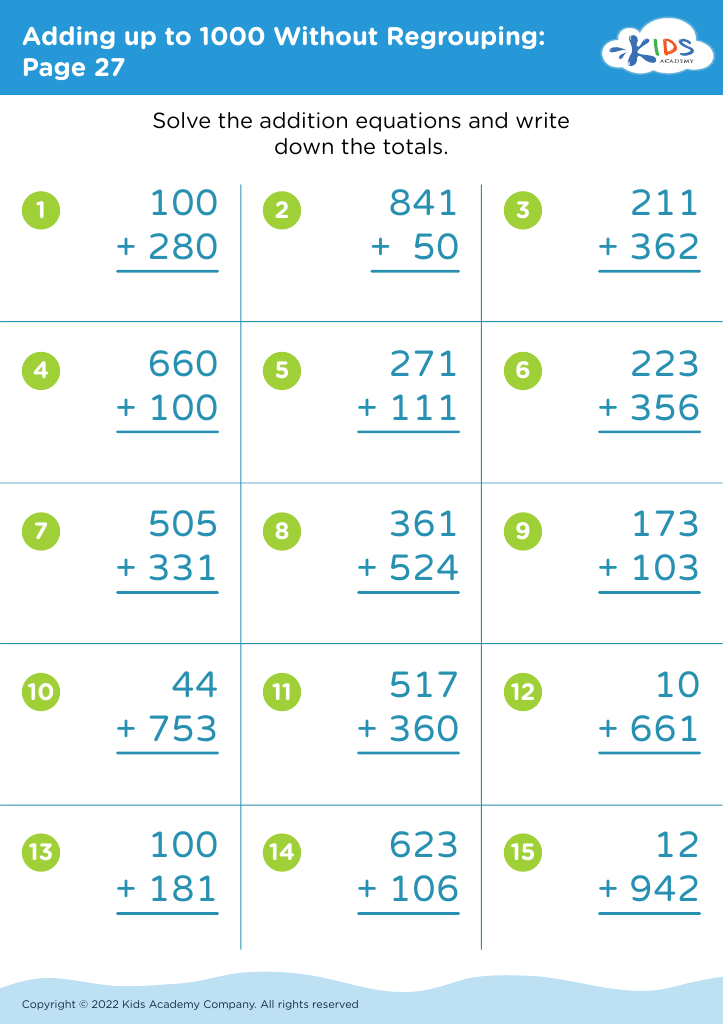
Adding up to 1000 Without Regrouping: Page 27
Worksheet
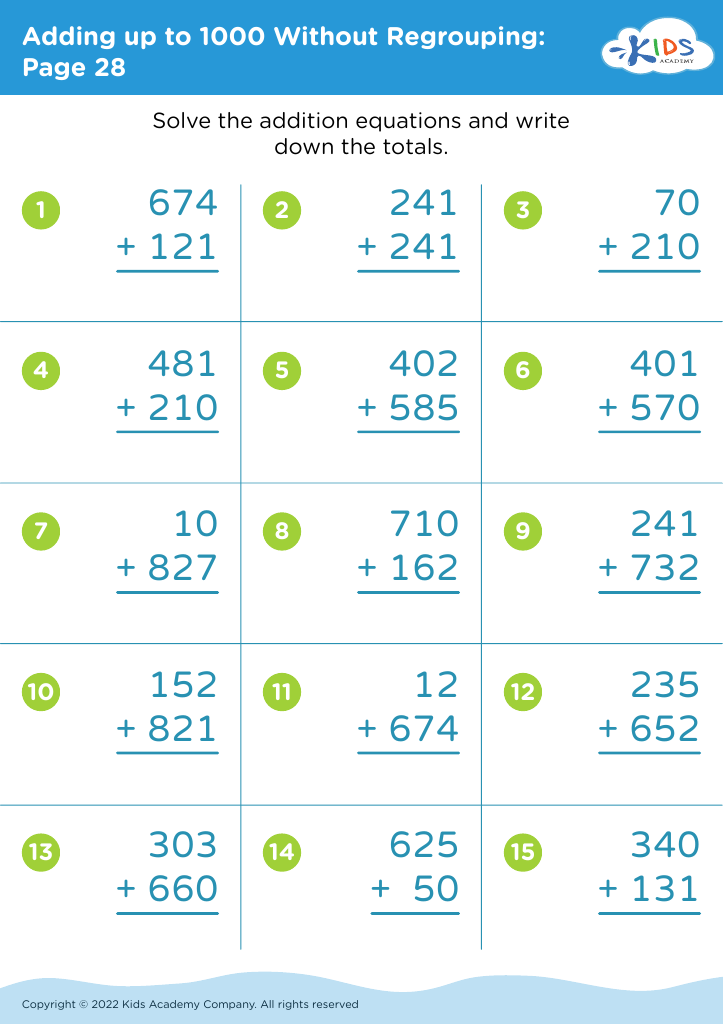
Adding up to 1000 Without Regrouping: Page 28
Worksheet
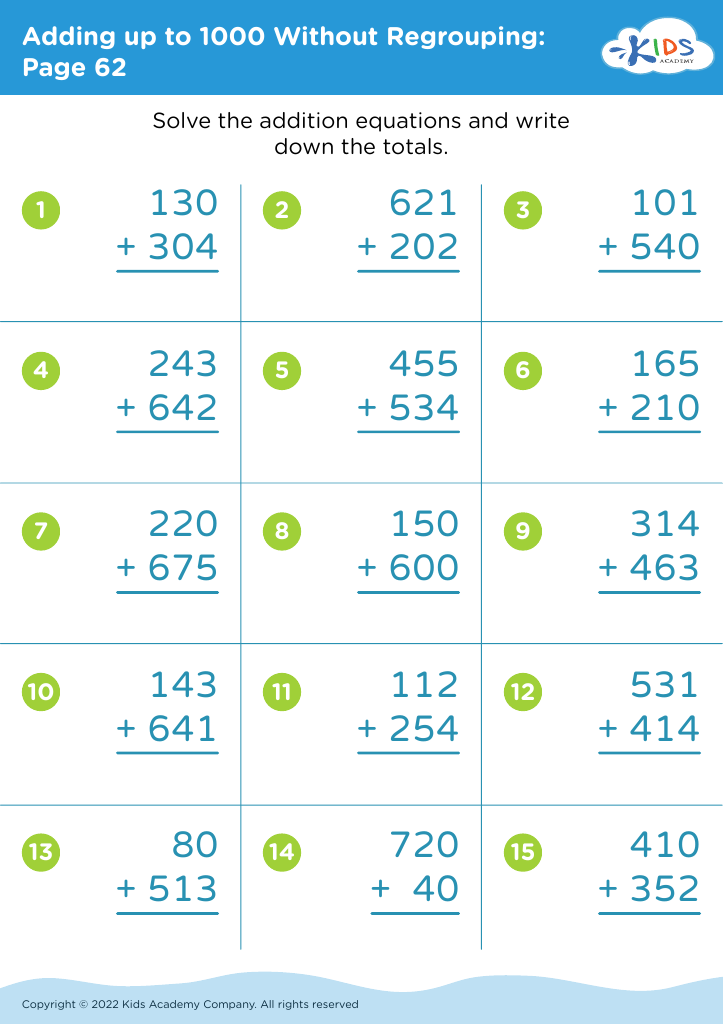
Adding up to 1000 Without Regrouping: Page 62
Worksheet
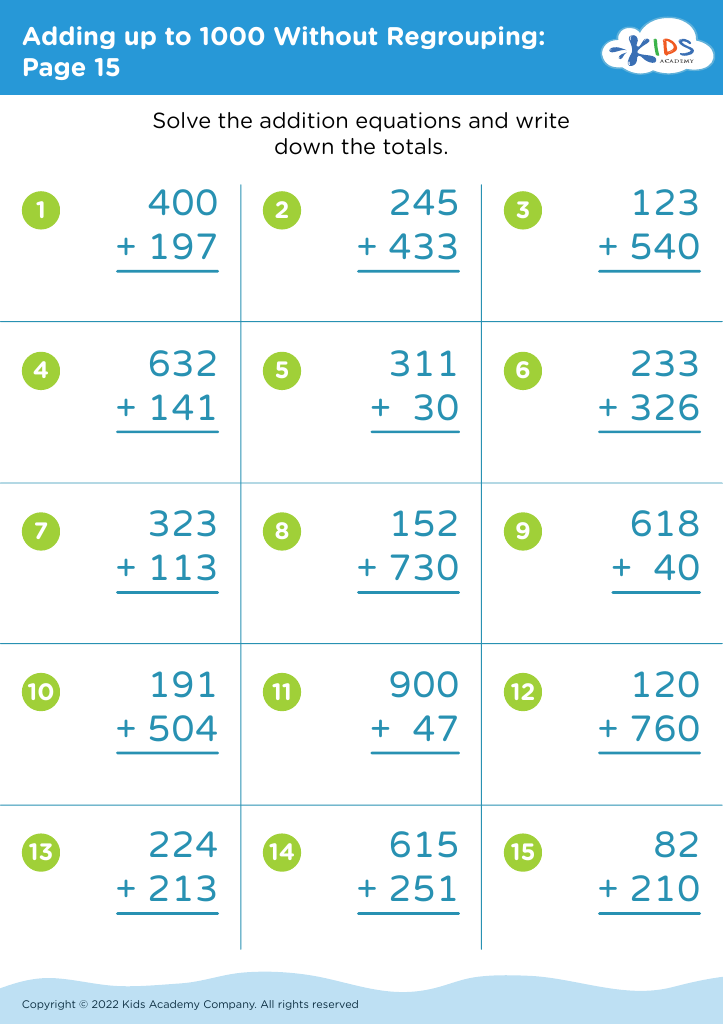
Adding up to 1000 Without Regrouping: Page 15
Worksheet
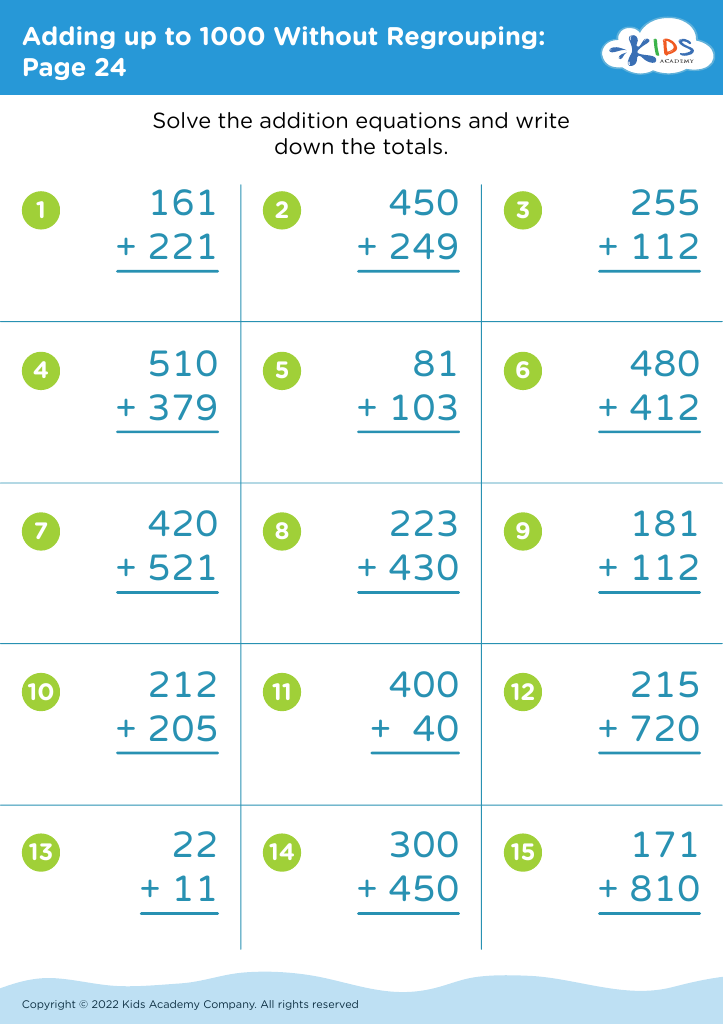
Adding up to 1000 Without Regrouping: Page 24
Worksheet


Understanding fractions, particularly adding fractions that total up to 1000 without regrouping, is crucial for young learners aged 6-7. At this developmental stage, children are building fundamental math skills that will serve them throughout their education and daily life.

Firstly, fractions introduce students to the concept of parts of a whole. This understanding is foundational for more complex mathematical concepts in the future, such as percentages and ratios. Additionally, learning to add fractions can improve their overall numerical sense, helping them become more comfortable with numbers.

Moreover, teaching students to add fractions without regrouping simplifies the process, fostering confidence and reducing anxiety around math tasks. It encourages critical thinking and problem-solving skills as they learn to visualize fractions as parts of a total.

For parents and teachers, supporting competence in these skills can promote a positive attitude towards math. Encouraging practice in a structured yet playful manner can lead to better retention and enthusiasm for learning. Overall, mastery of these fraction concepts creates a bridge to more complex mathematical ideas, ensuring that children develop essential skills needed for future learning and real-world applications.