Fraction comparison Adding up to 1000 Worksheets for Ages 6-7
13 filtered results
-
From - To
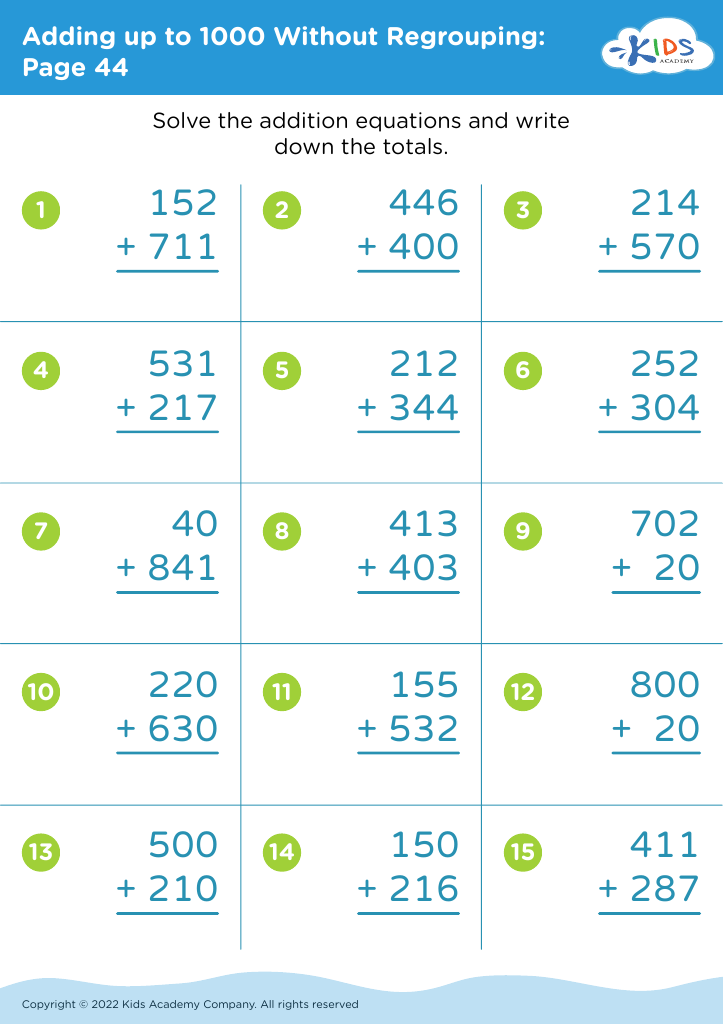
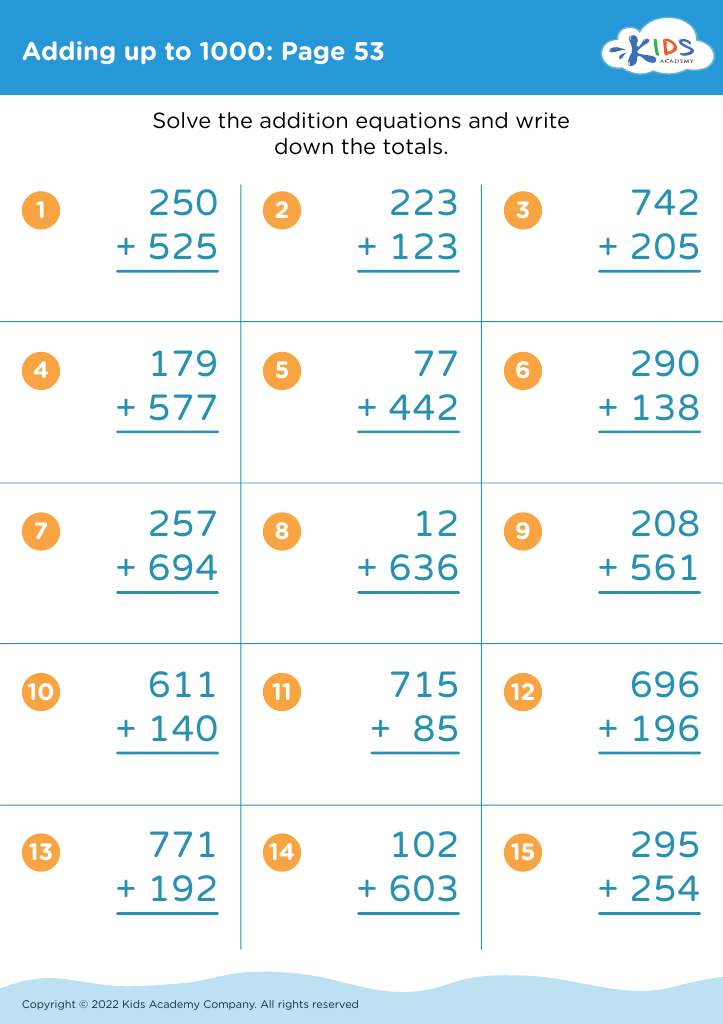
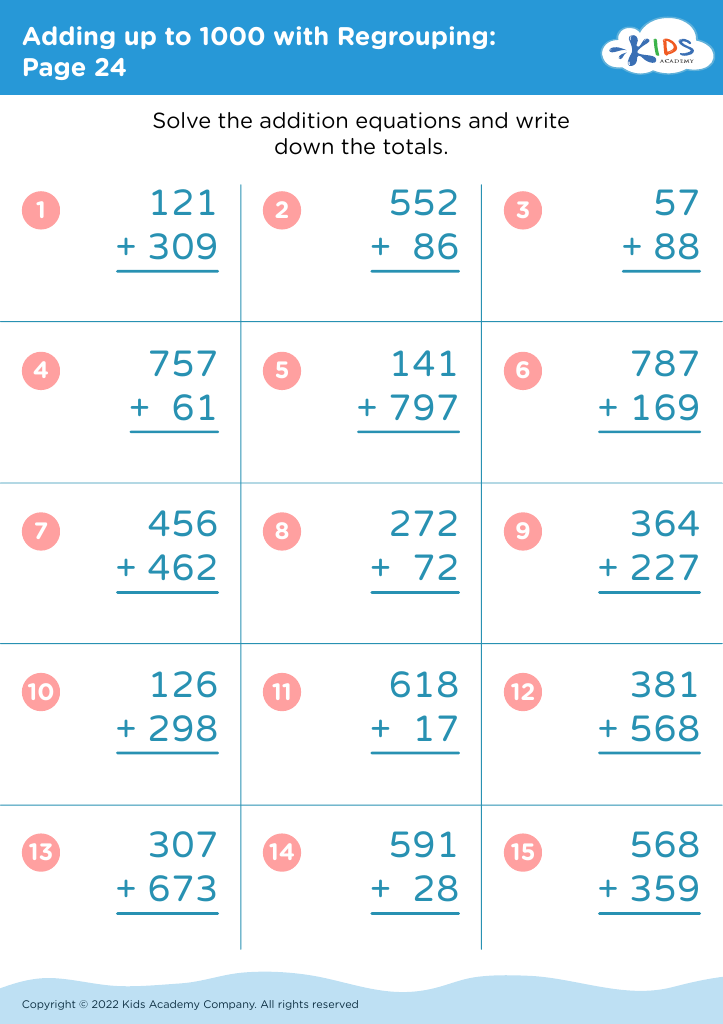
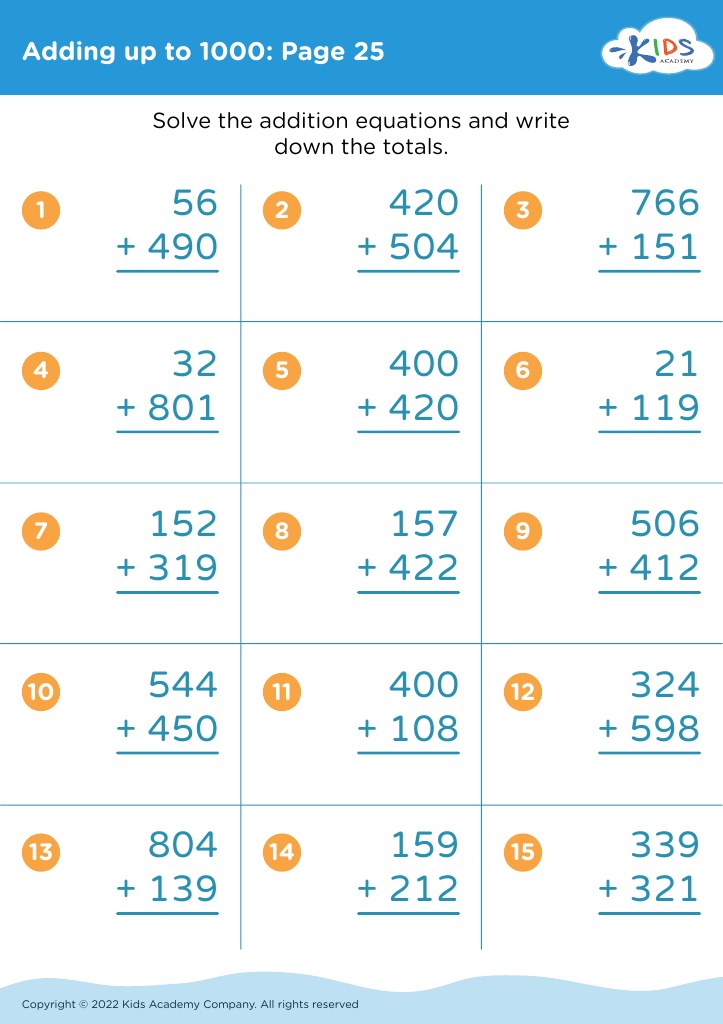
Enhance your child's math skills with our "Fraction Comparison Adding up to 1000 Worksheets for Ages 6-7." These engaging and educational worksheets are designed to help first graders understand and compare fractions while also reinforcing addition concepts. Each sheet provides fun, interactive activities that make learning about fractions and large numbers enjoyable and meaningful. Perfect for both classroom use and at-home practice, our worksheets are expertly crafted to boost confidence and mastery in key math areas. Start your child’s learning journey today with Kids Academy and watch them thrive in their arithmetic skills!
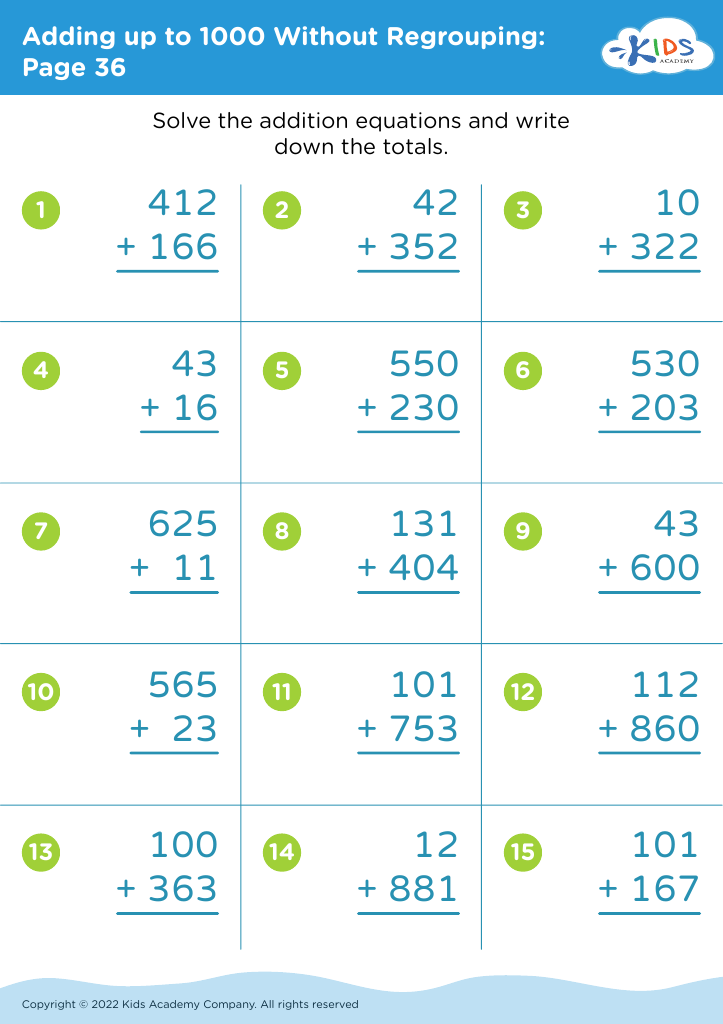
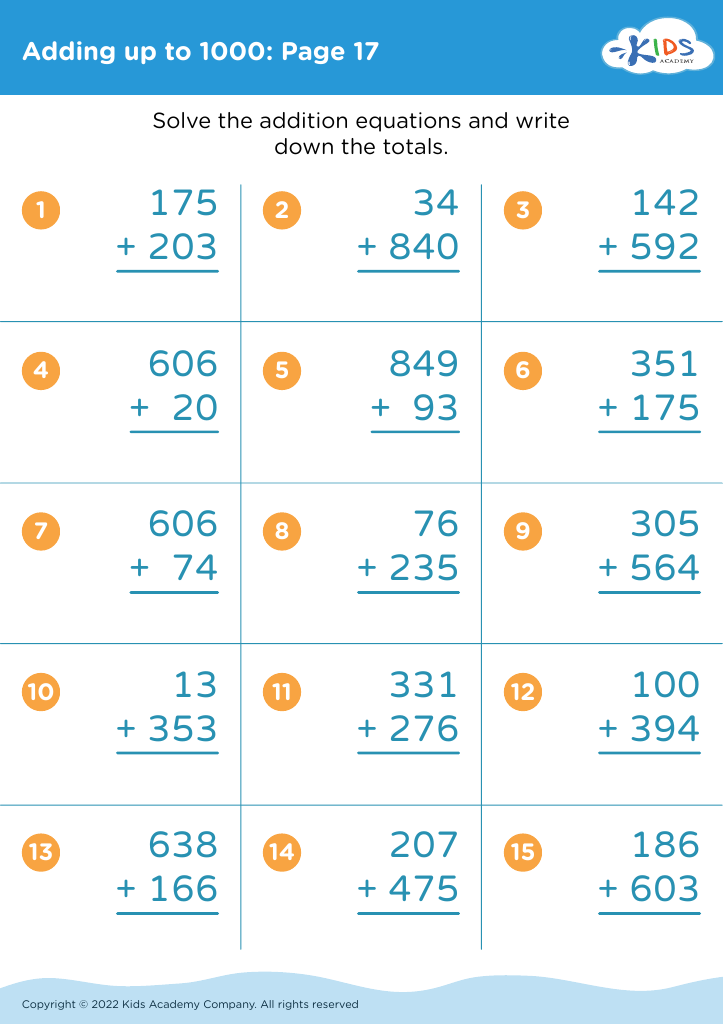
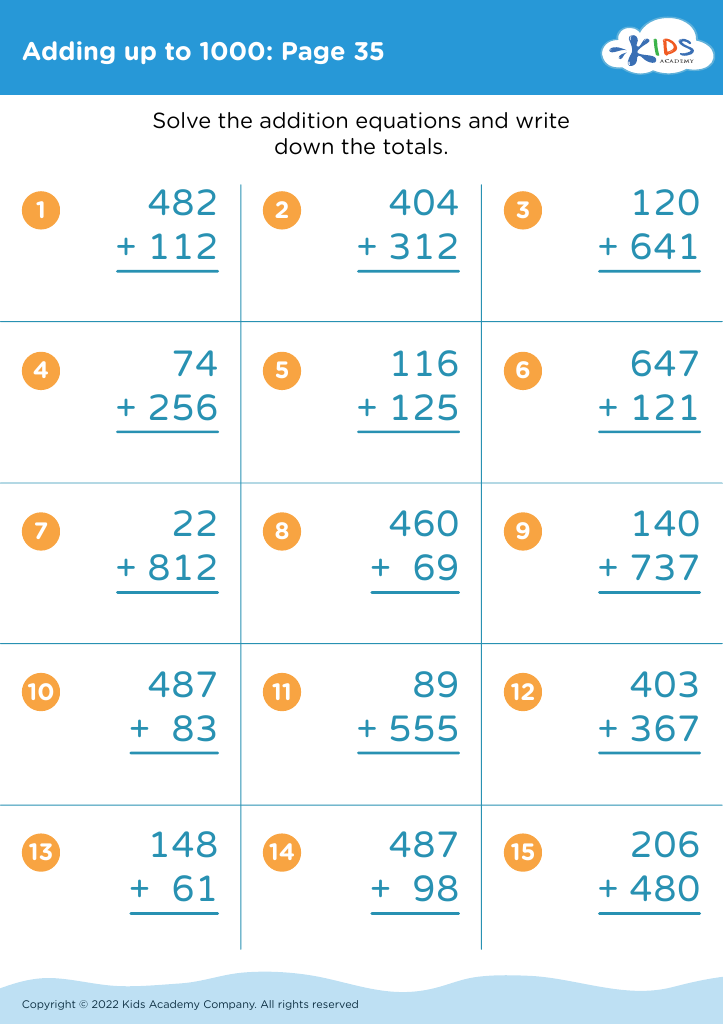
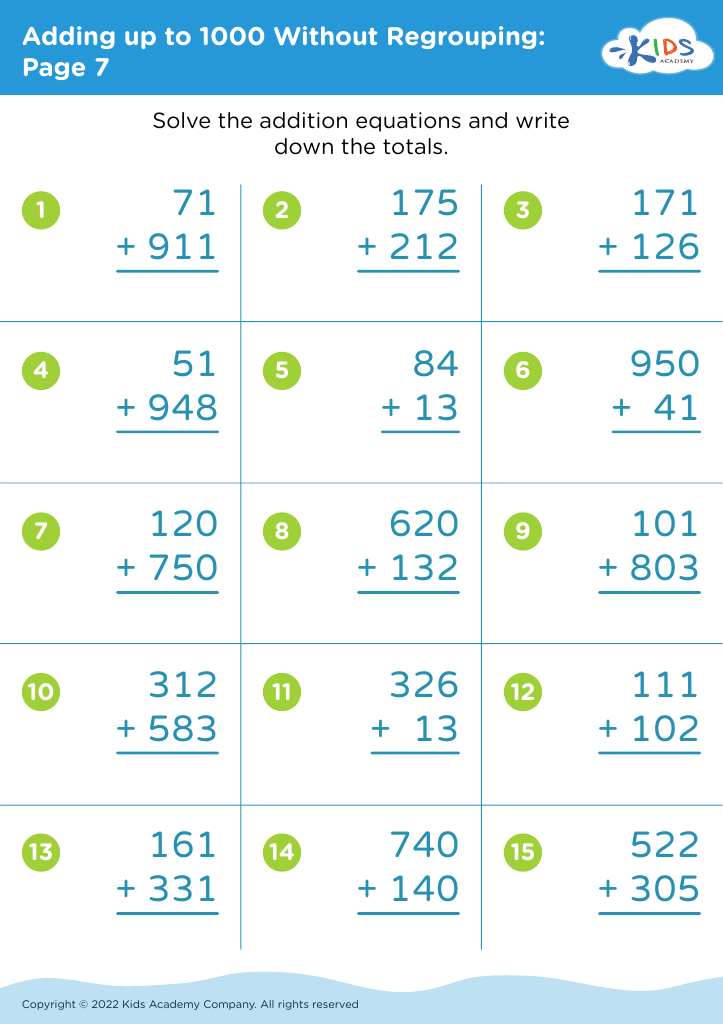
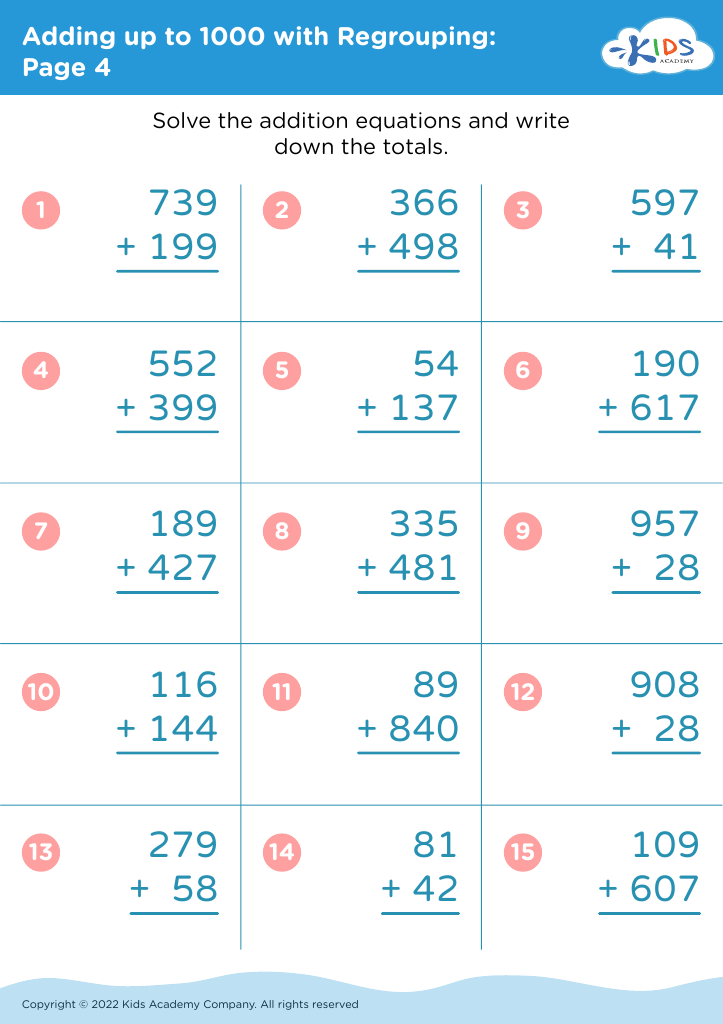
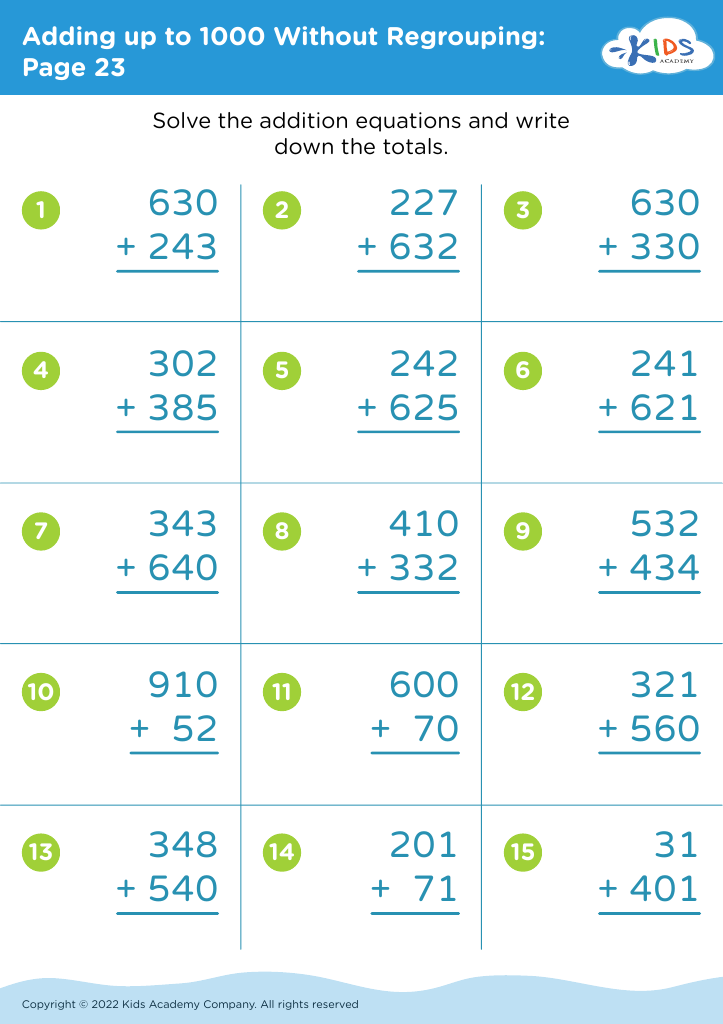
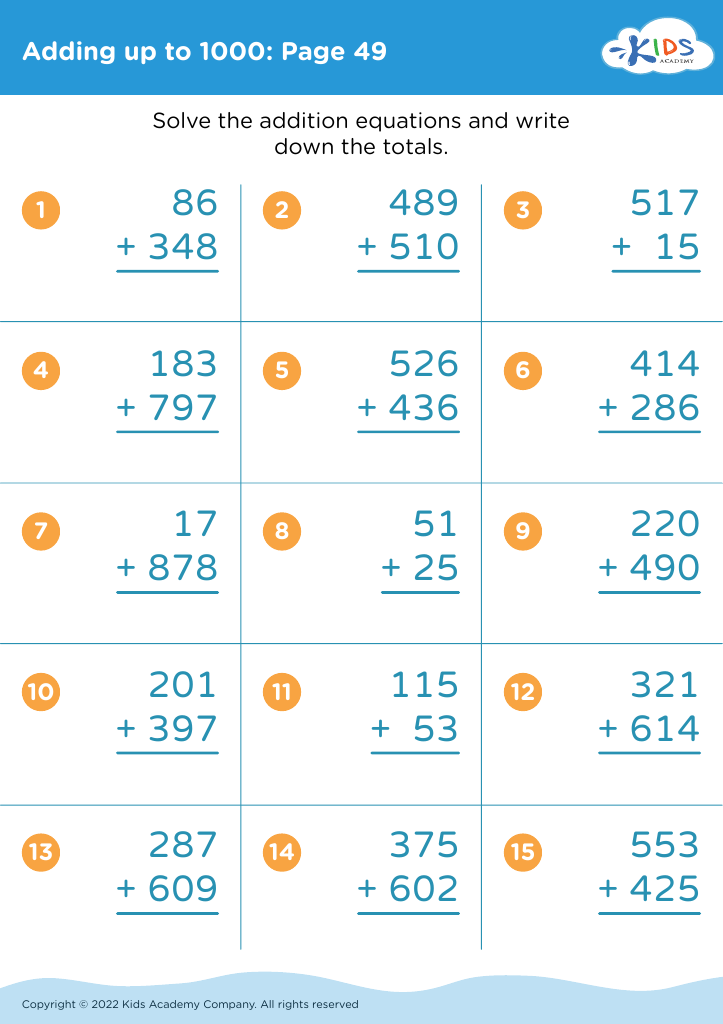
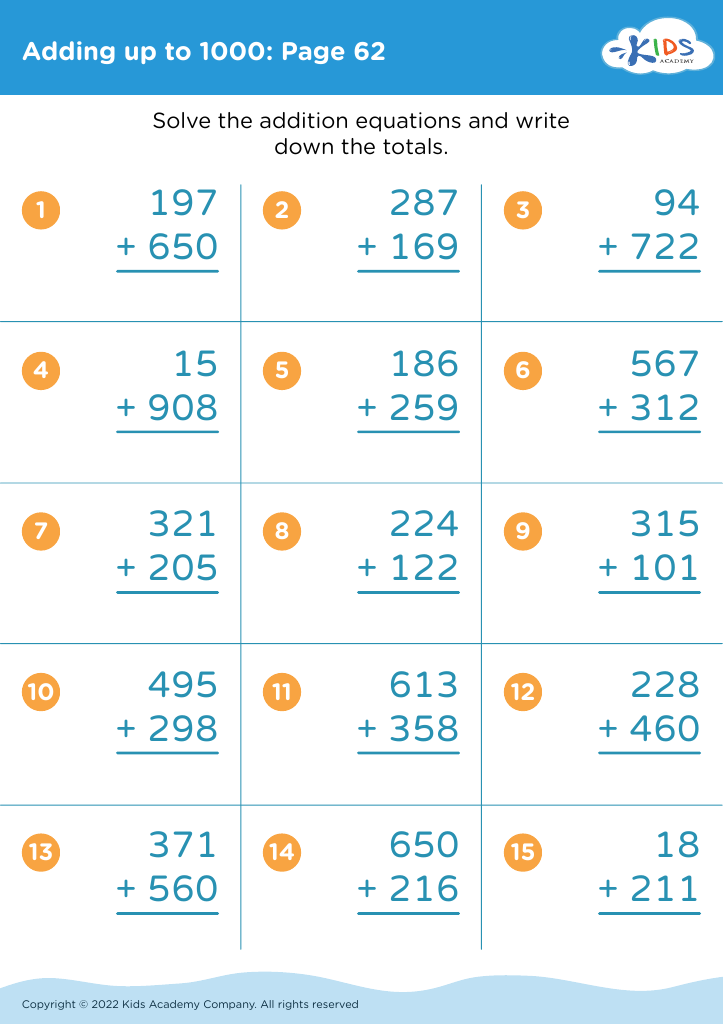
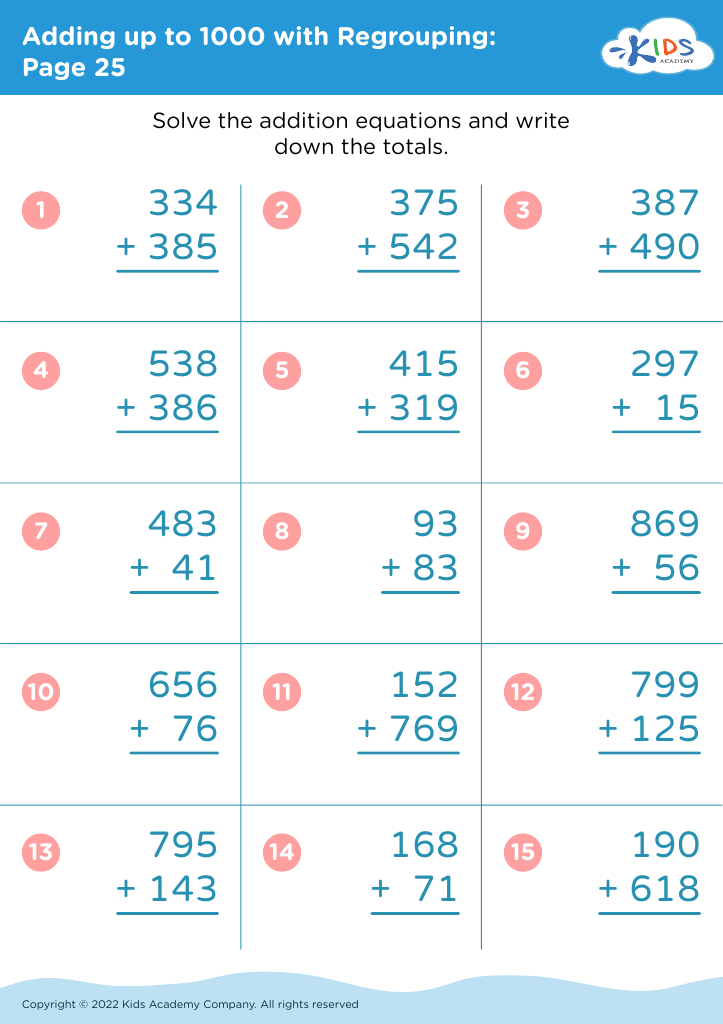



Parents and teachers should care about teaching fraction comparison and addition up to 1000 to children aged 6-7 to foster their early mathematical development in a meaningful way. At this influential age, kids are highly receptive to learning new concepts, and a strong foundation in math sets the stage for future academic success. Understanding fractions helps children grasp more complex mathematical ideas later, such as ratios, proportions, and algebra.
Teaching fraction comparison not only boosts number sense but also enhances critical thinking skills and logical reasoning. Children learn to compare parts to a whole, which is an essential skill for everyday situations such as dividing snacks, sharing toys, or understanding portions in cooking. Additionally, working with numbers up to 1000 encourages higher-order thinking and familiarity with larger quantities, incrementally building their confidence and competence in handling more challenging math problems.
Incorporating these lessons in engaging and practical contexts makes learning enjoyable and less intimidating, thus promoting a positive attitude toward math. Supportive education at this stage from both parents and teachers creates a collaborative learning environment, further enhancing the child's ability to manage their own learning effectively as they grow. Ultimately, mastering these concepts early makes mathematics an accessible and enjoyable subject for children, equipping them with skills that are vital for their future academic journey.








