Fraction simplification Adding up to 1000 Worksheets for Ages 6-7
7 filtered results
-
From - To
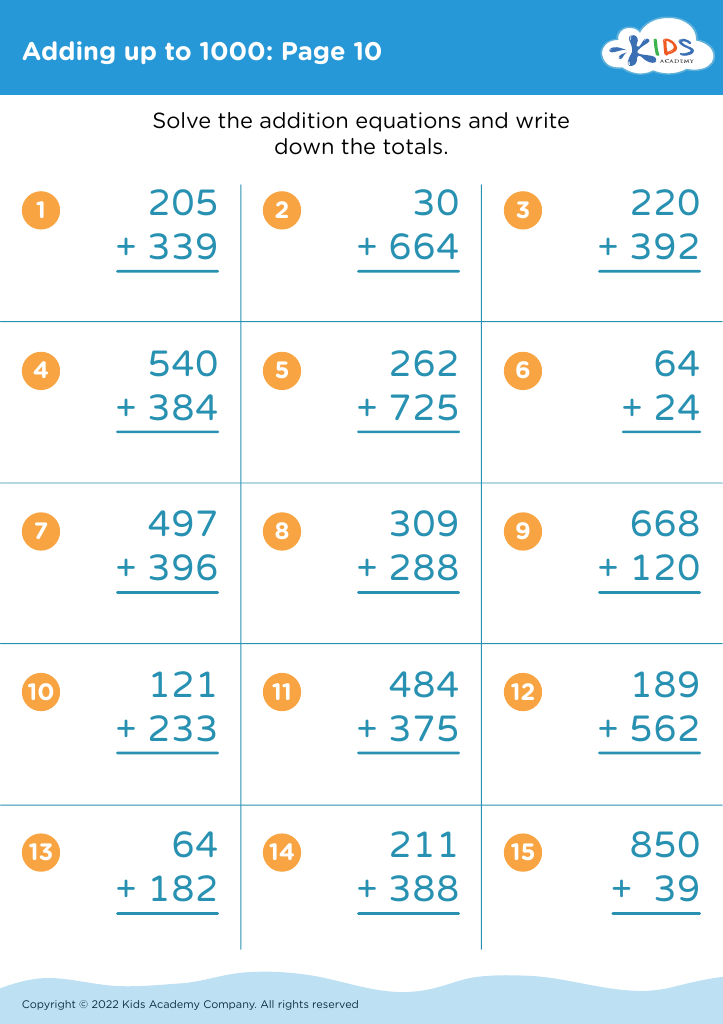
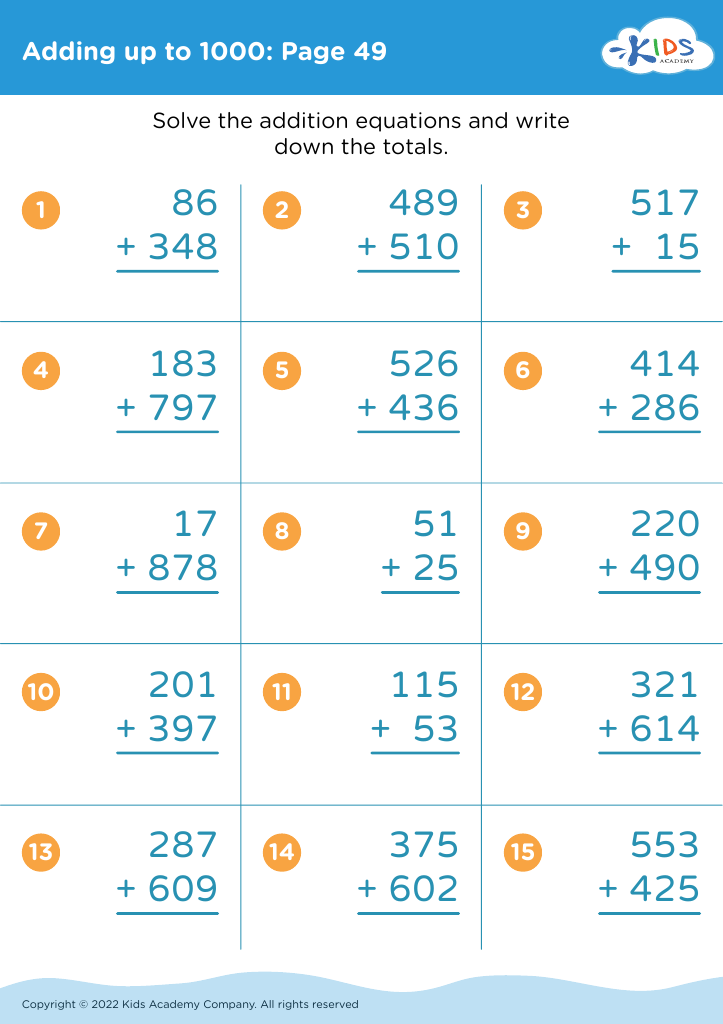
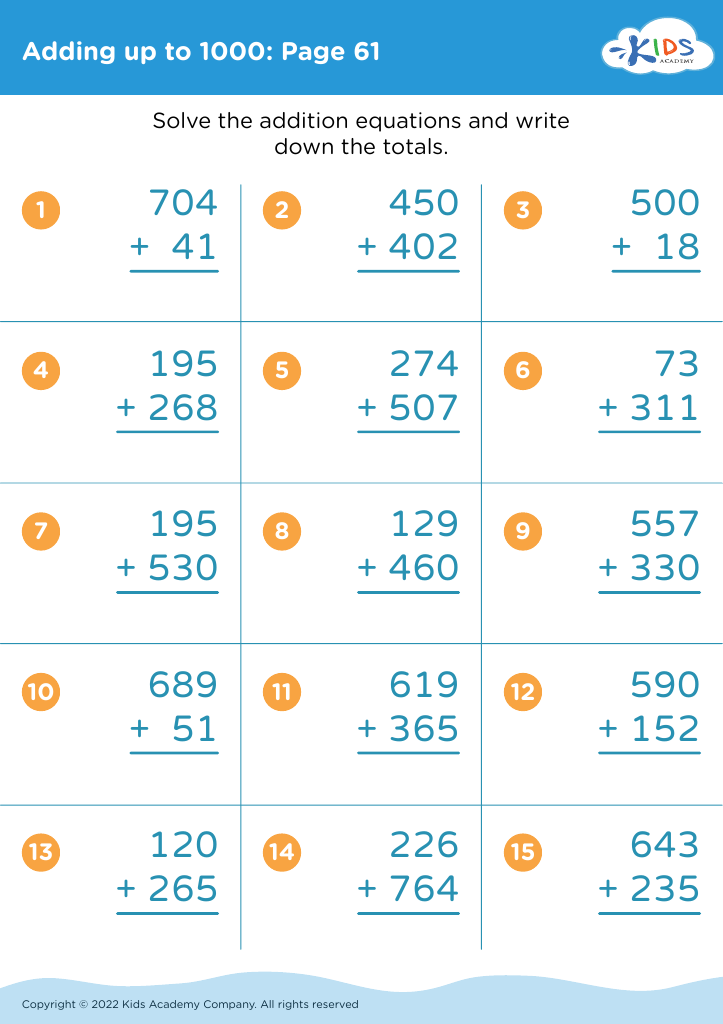
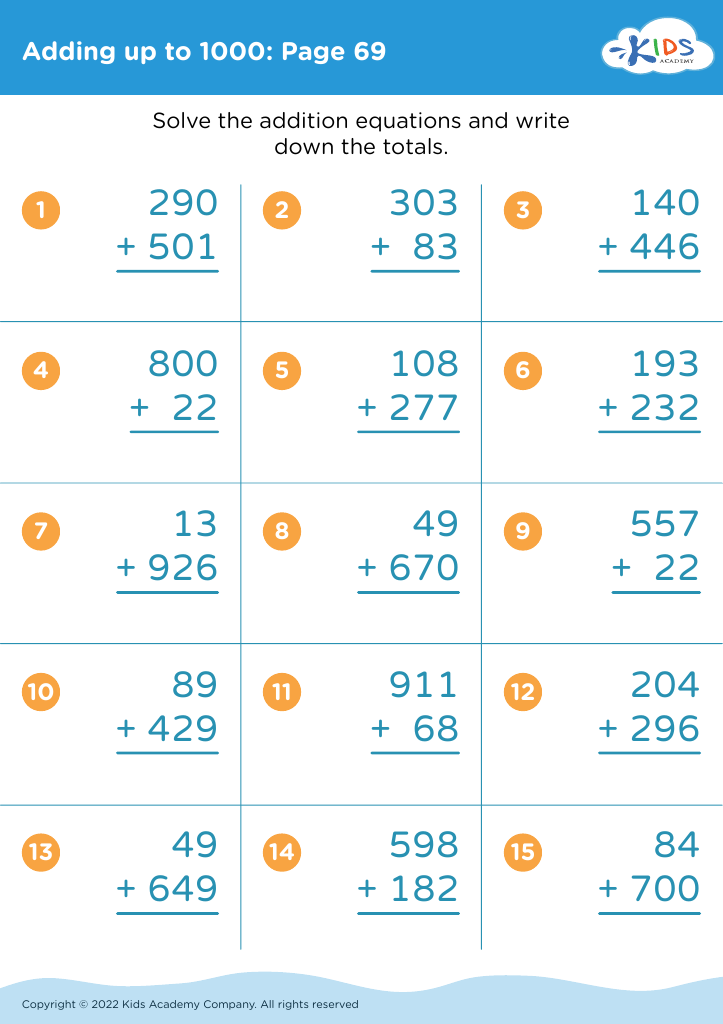
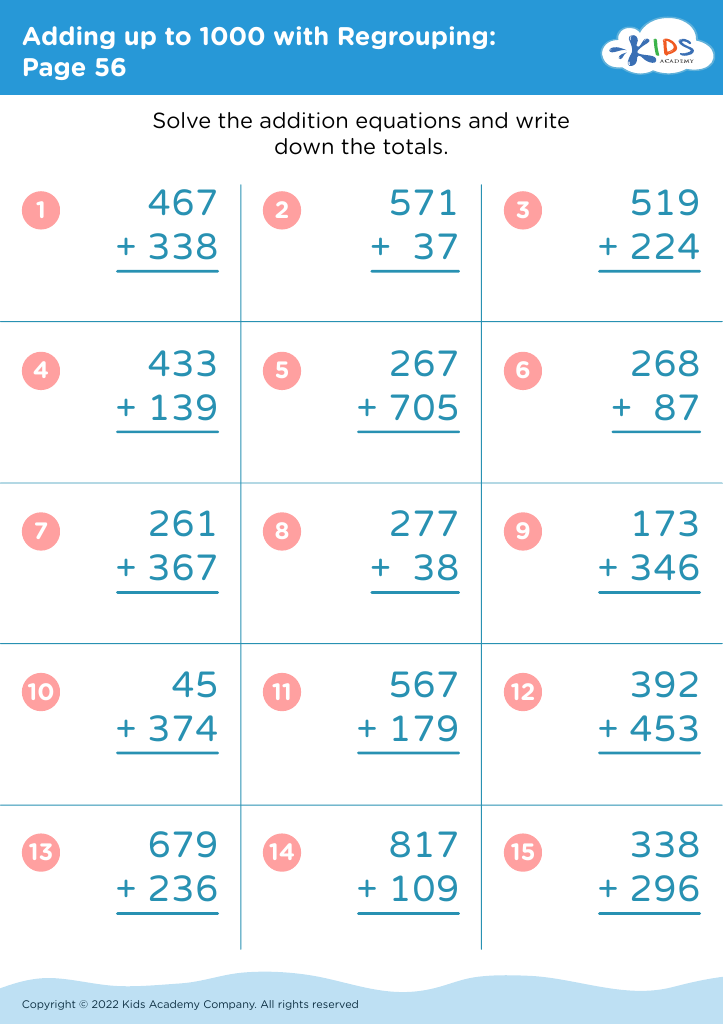
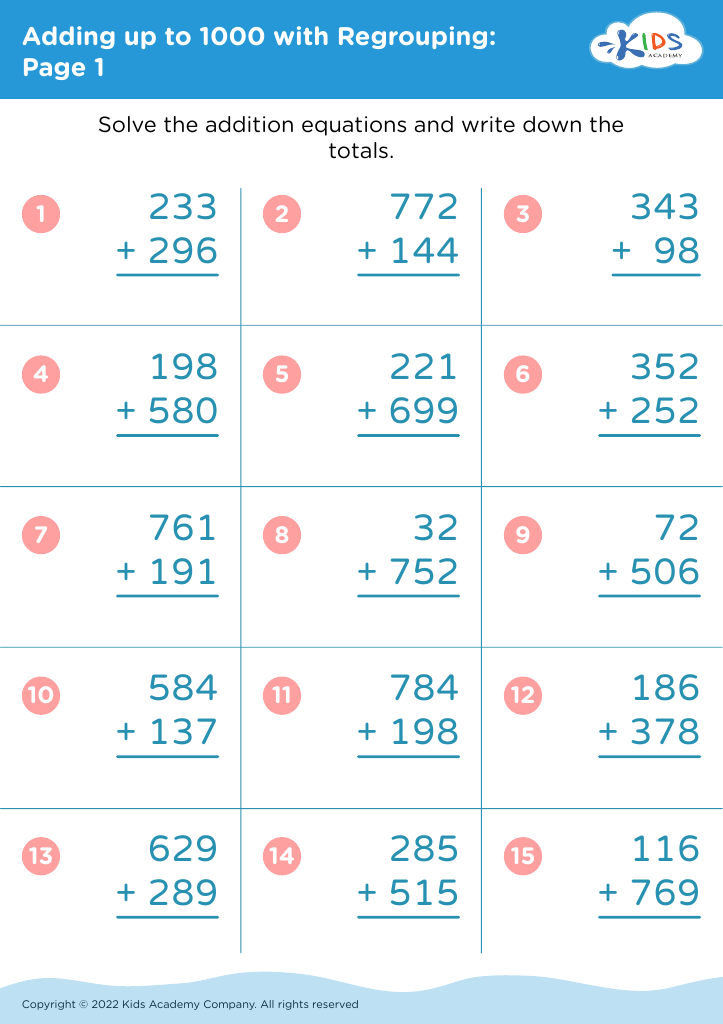
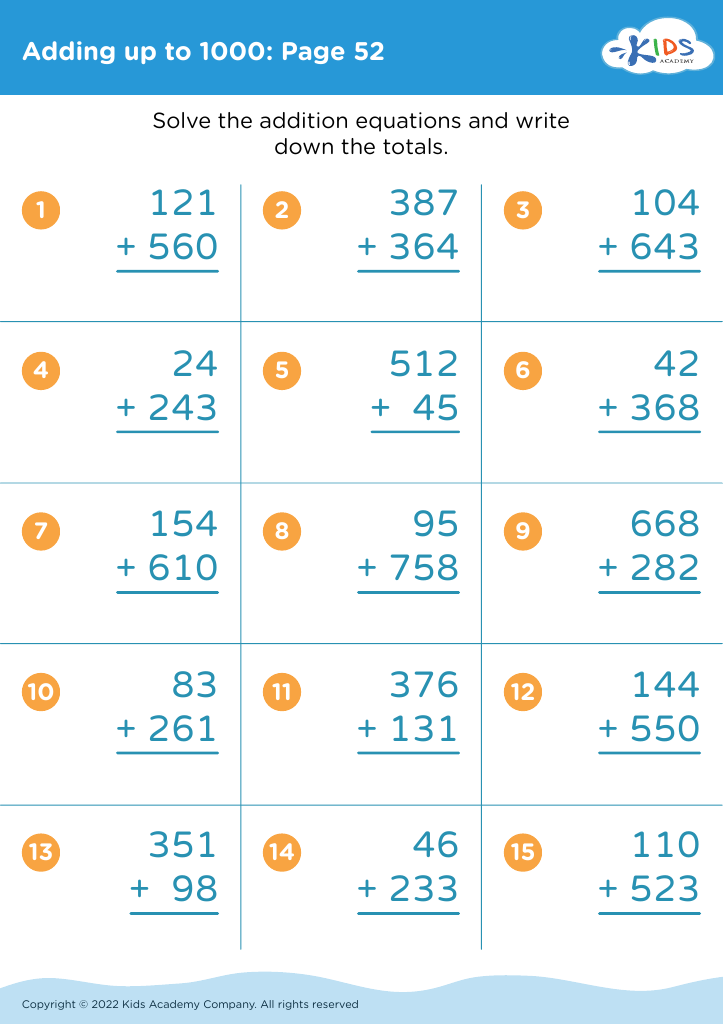
Explore our enriching "Fraction Simplification Adding Up to 1000 Worksheets" designed specifically for children ages 6-7. These engaging resources empower young learners to grasp fractional concepts while enhancing their overall math skills. With colorful illustrations and relatable examples, kids can practice simplifying fractions and learn the fundamentals of addition, then apply these skills to solve problems that total up to 1000. Perfect for reinforcing classroom learning or supplemental home study, our worksheets foster a fun, interactive experience, making math enjoyable. Help your child build confidence and proficiency in fractions with our thoughtfully crafted materials today!



Understanding fraction simplification is essential for children aged 6-7, as it lays the groundwork for their future mathematical skills. At this age, children are beginning to grasp the concept of parts of a whole, which is fundamental to comprehending fractions. Simplifying fractions helps them not only to understand the relationships between different quantities but also to enhance their critical thinking and problem-solving abilities.
Moreover, learning to simplify fractions prepares kids for more advanced math concepts, such as finding common denominators or performing operations with fractions. When students practice simplifying fractions, it reinforces their understanding of division and multiplication, which are pivotal in their overall mathematical development.
For parents and teachers, engaging children in fraction simplification at this age can encourage a love for math, making it fun and interactive. Using real-life examples, like slicing a pizza or sharing candy, can make the concept relatable and ignite enthusiasm for learning math. Furthermore, these skills contribute to their academic success and build a solid foundation for future mathematical reasoning, resulting in greater confidence in approaching complex problems as they progress in their education. In essence, fraction simplification is a vital skill that supports children’s lifelong learning journey.








