Understanding fractions Adding up to 1000 Worksheets for Ages 6-7 - Page 2
44 filtered results
-
From - To
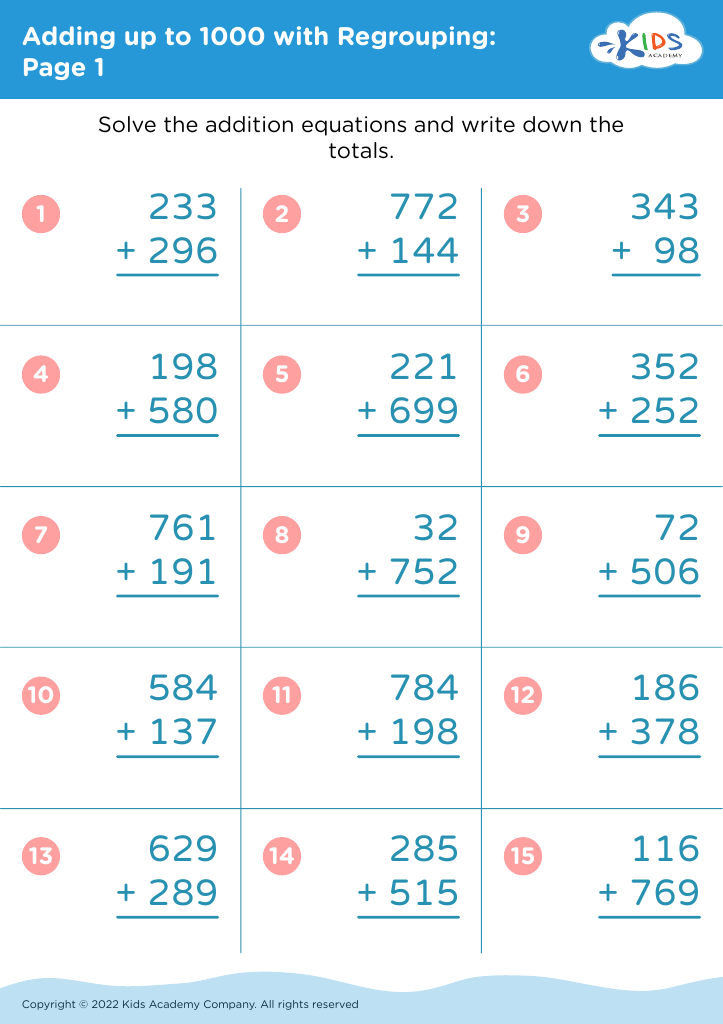
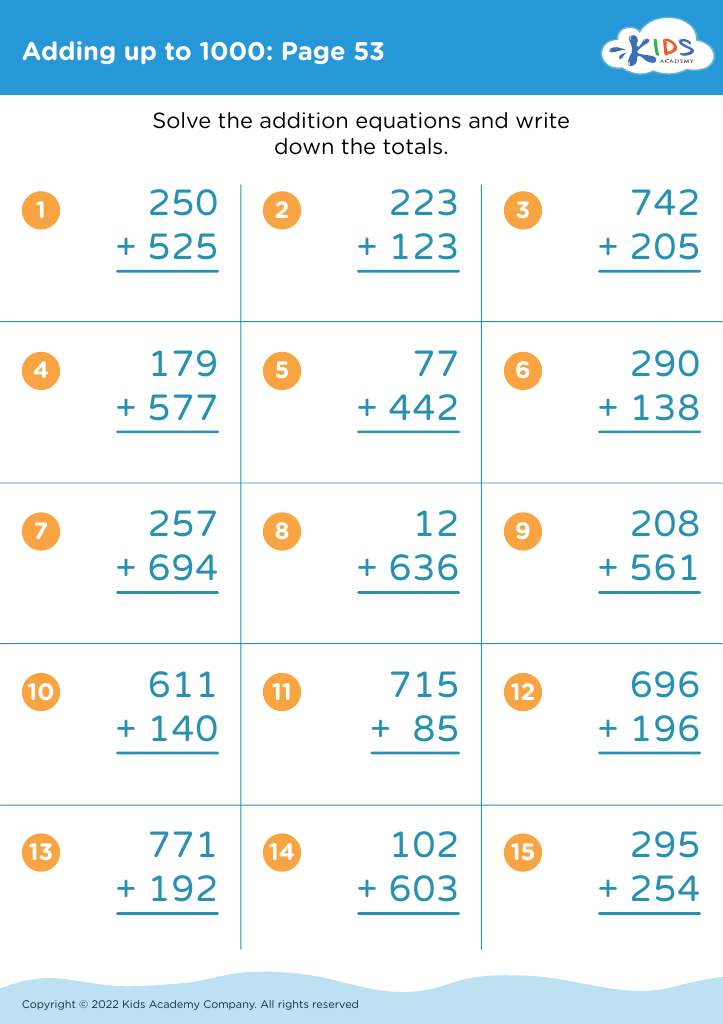
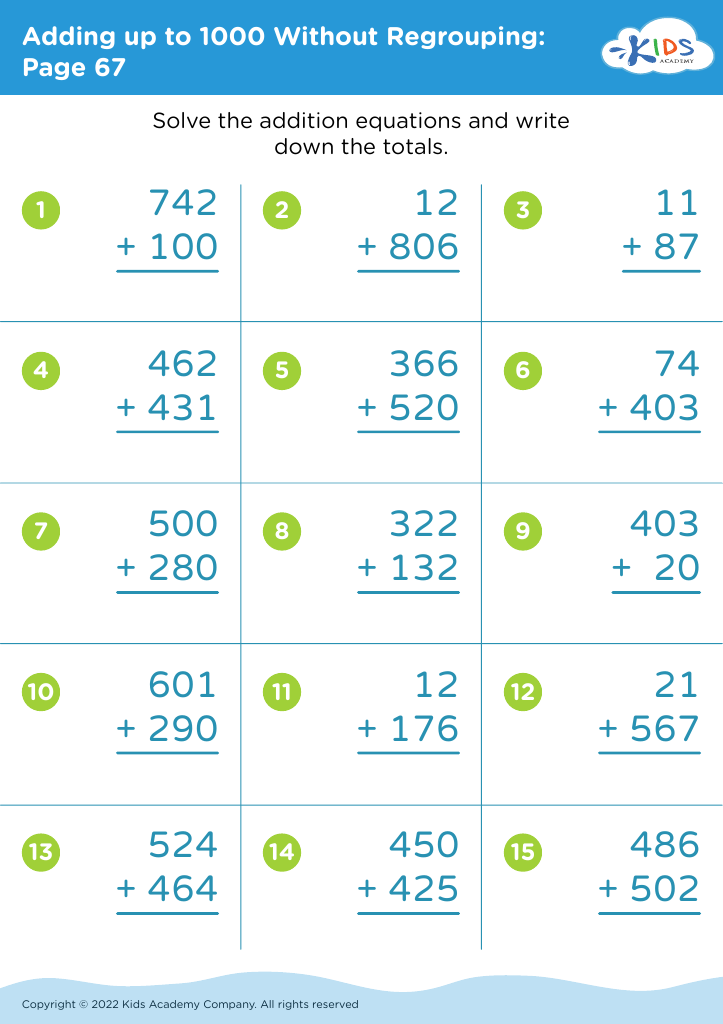
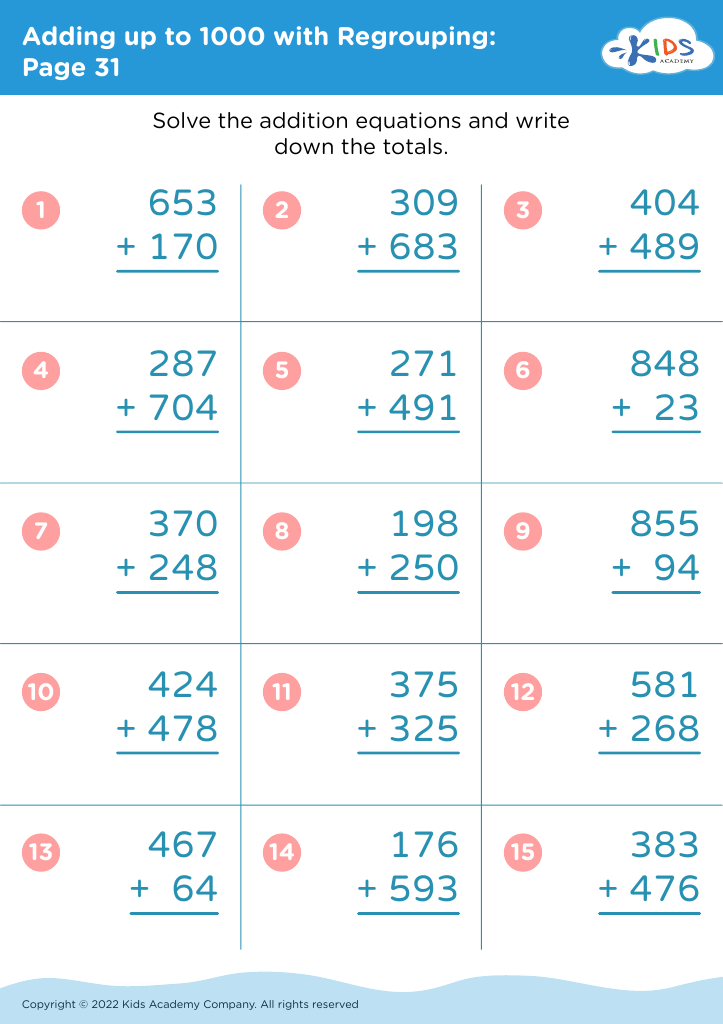
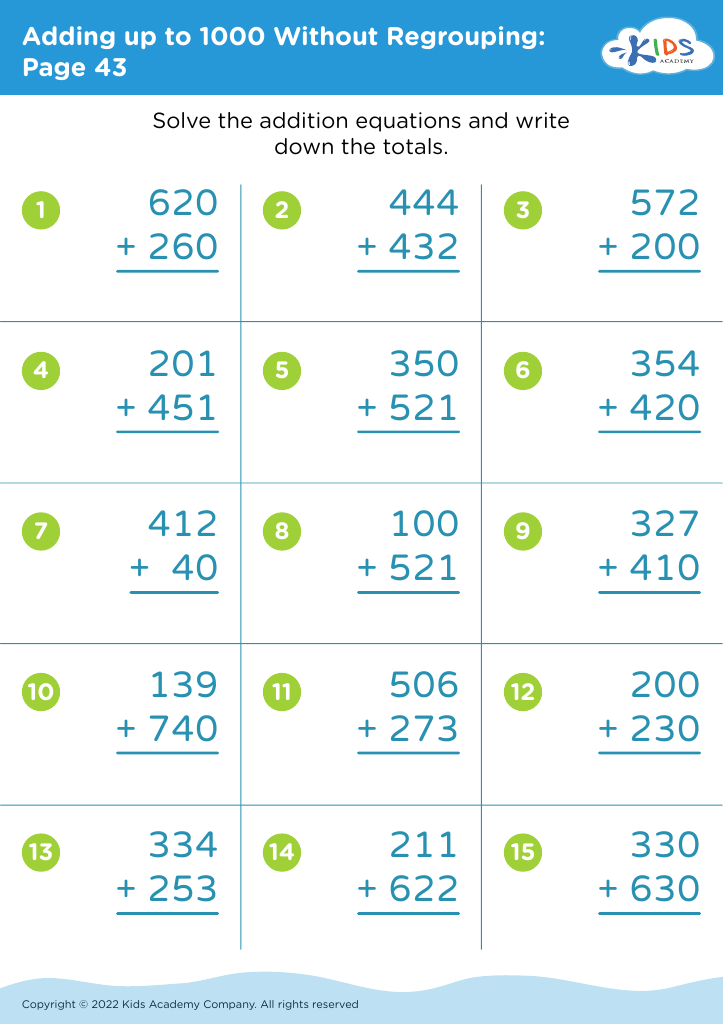
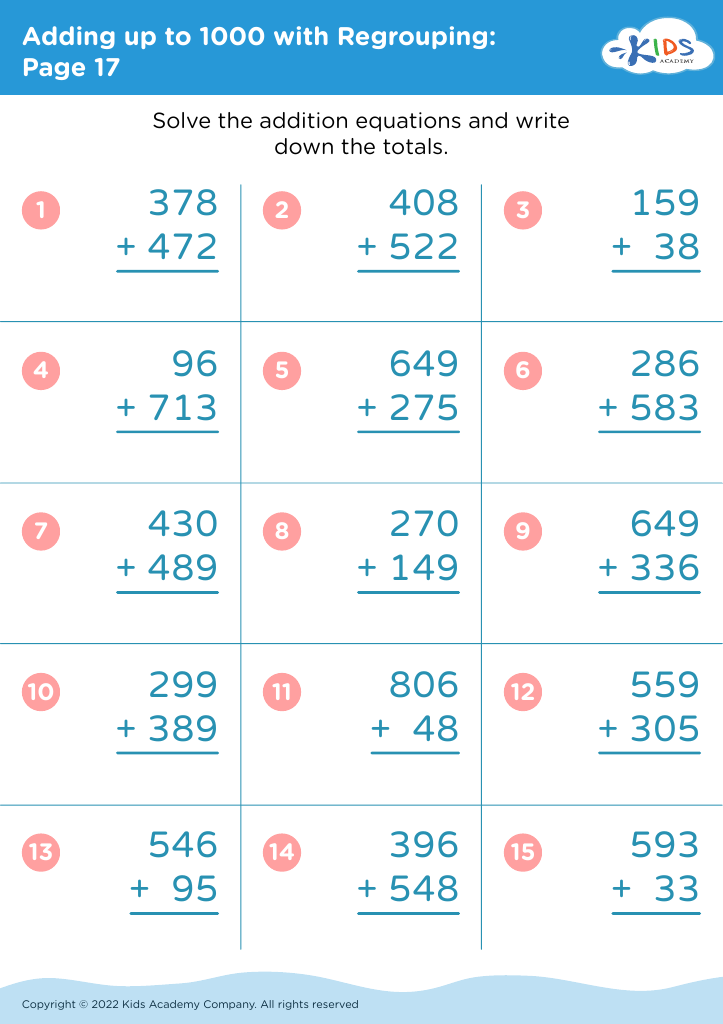
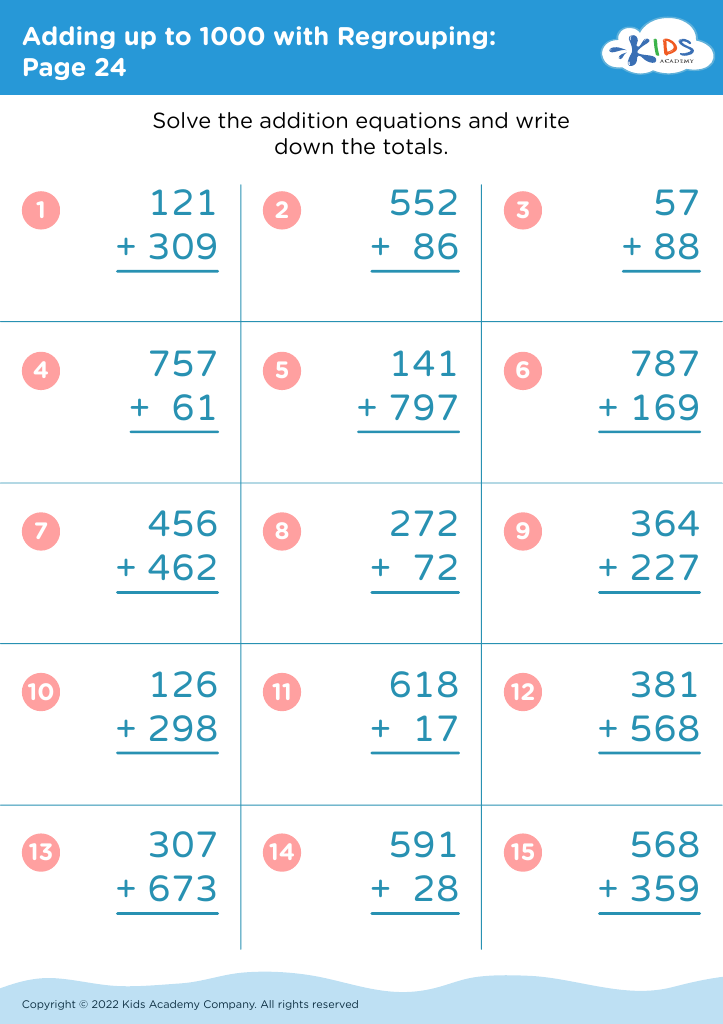
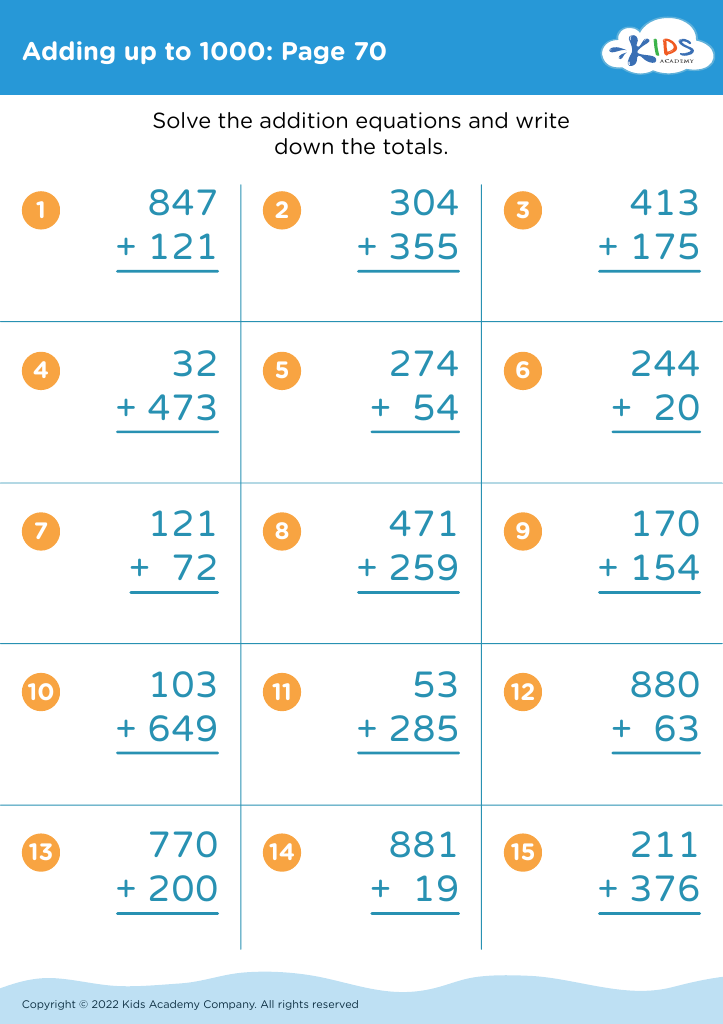
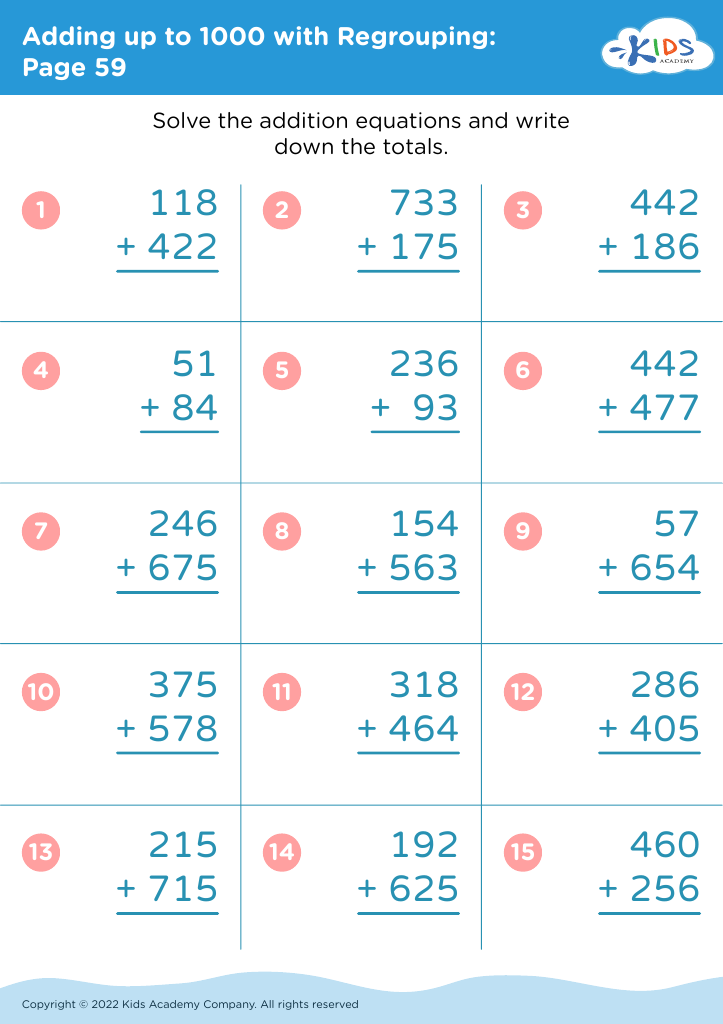
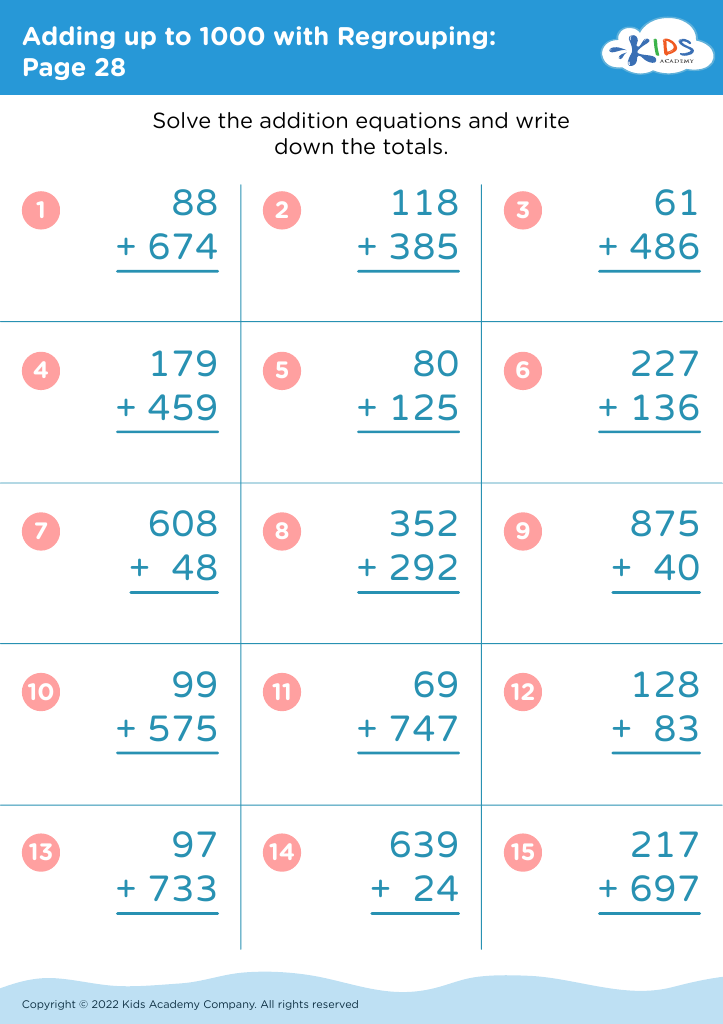
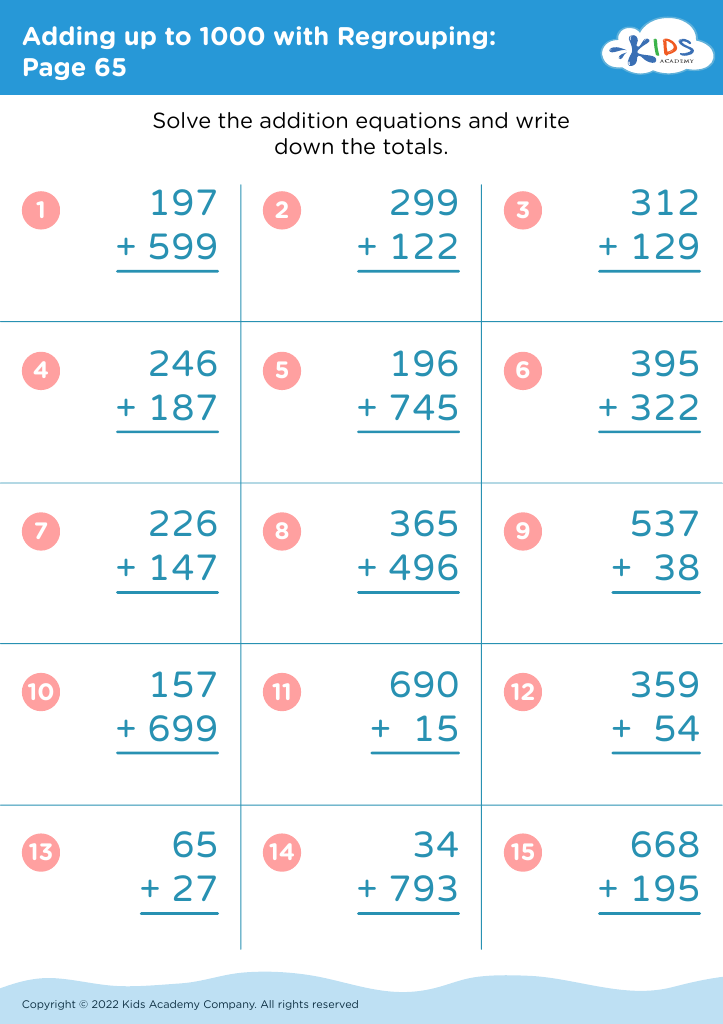
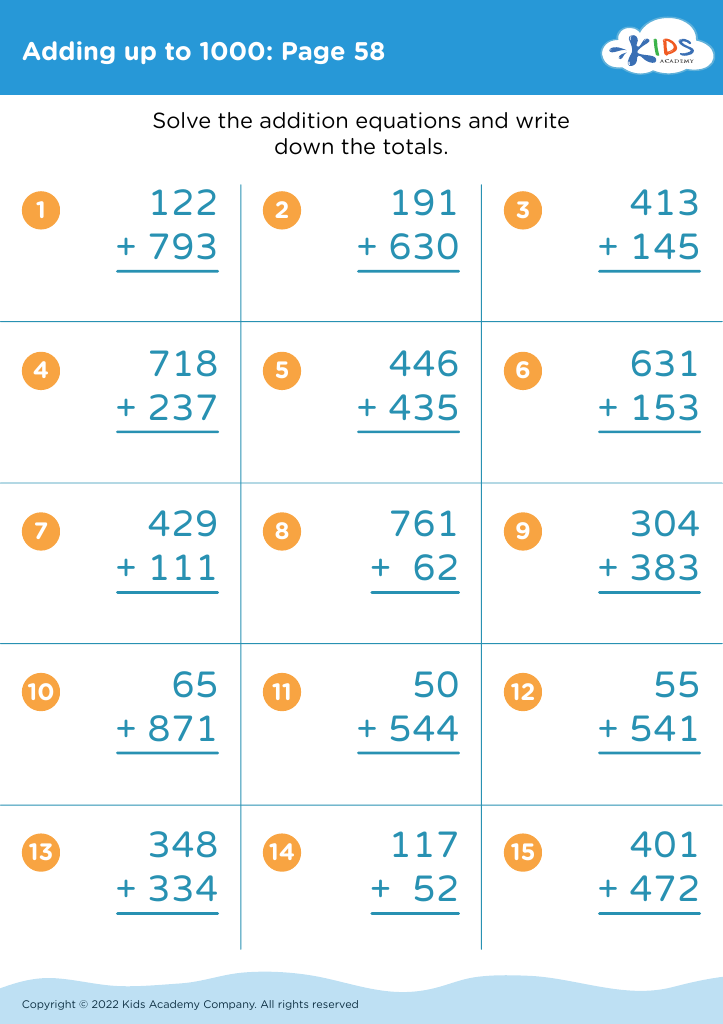
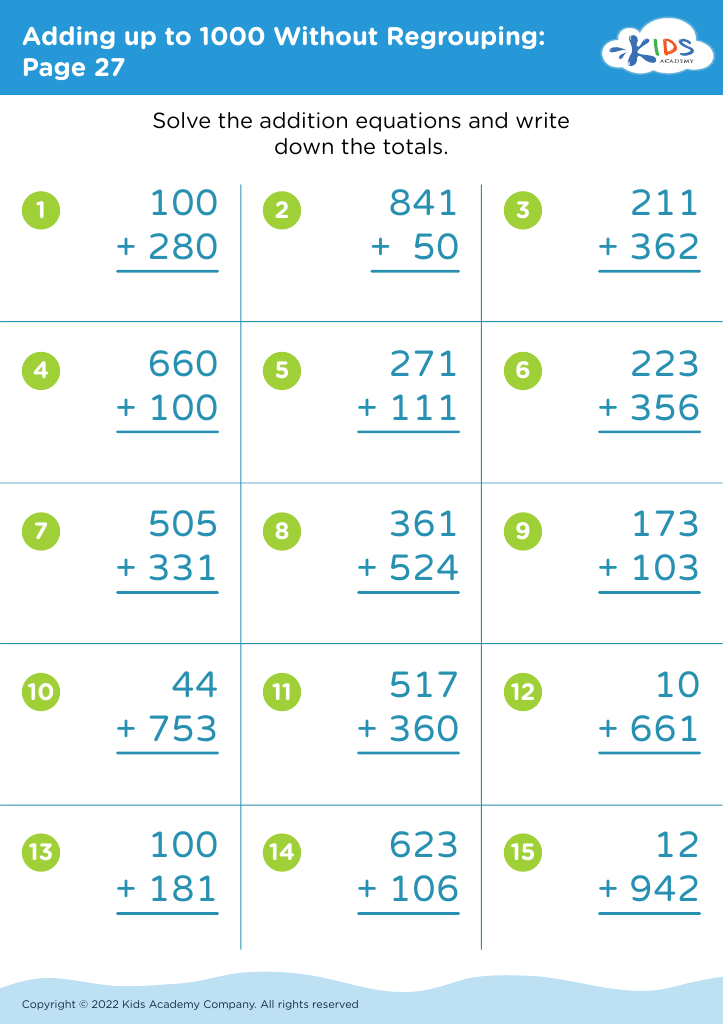
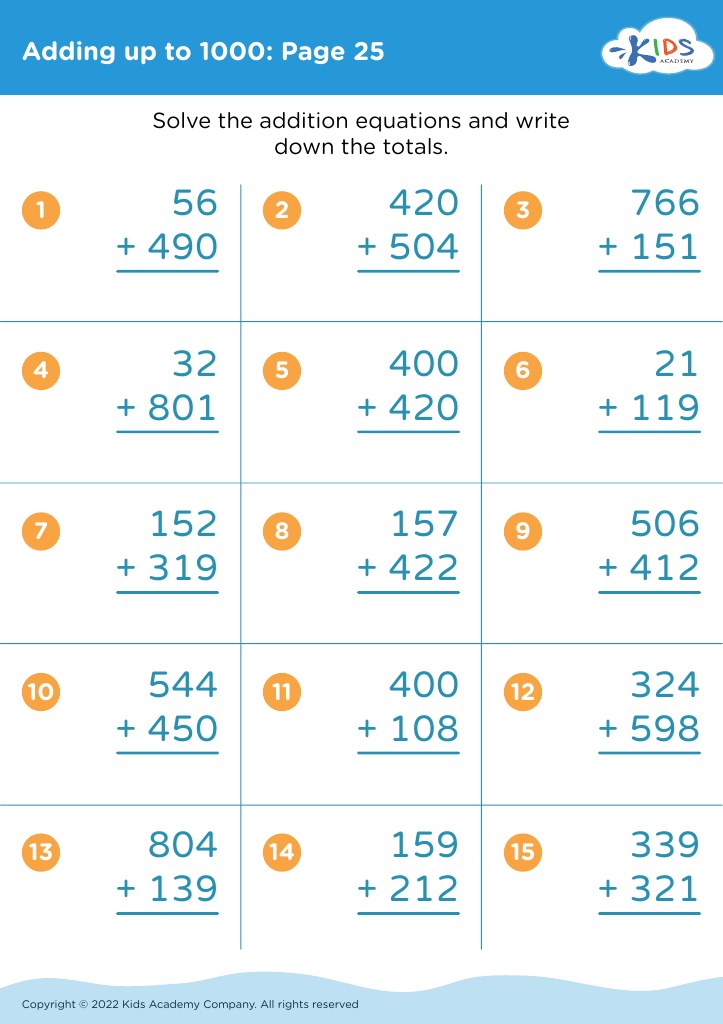
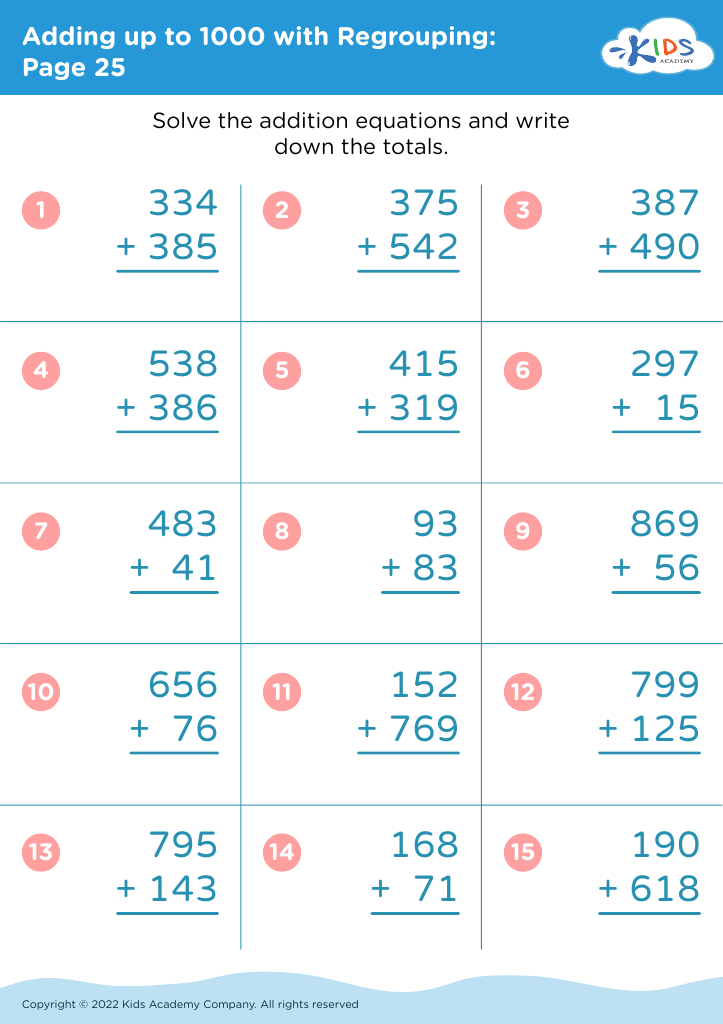
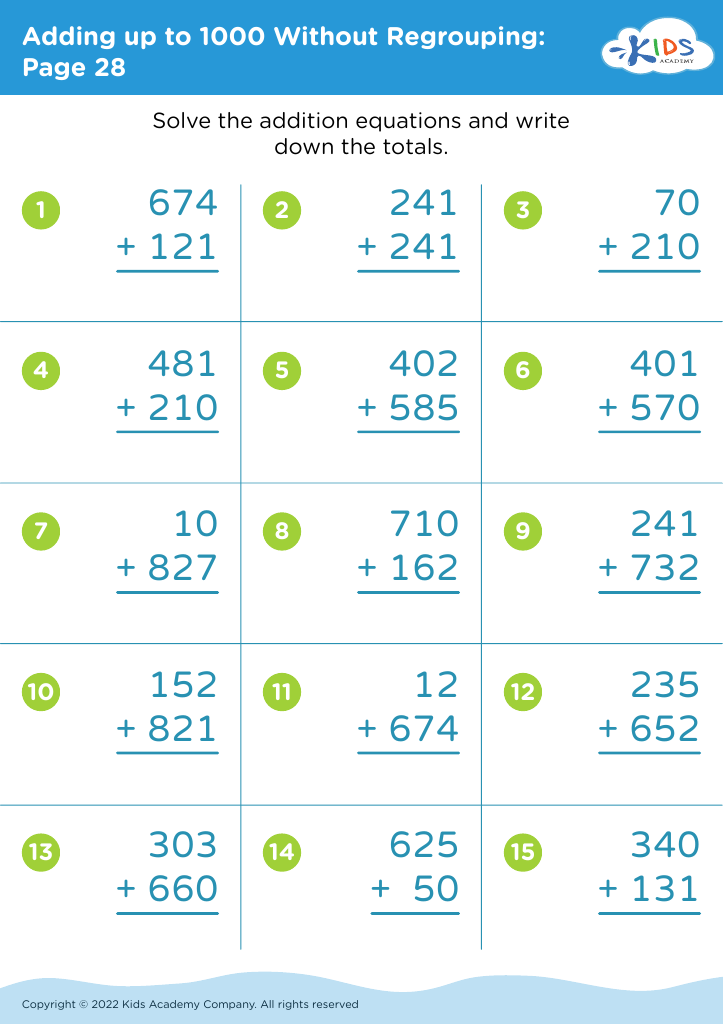
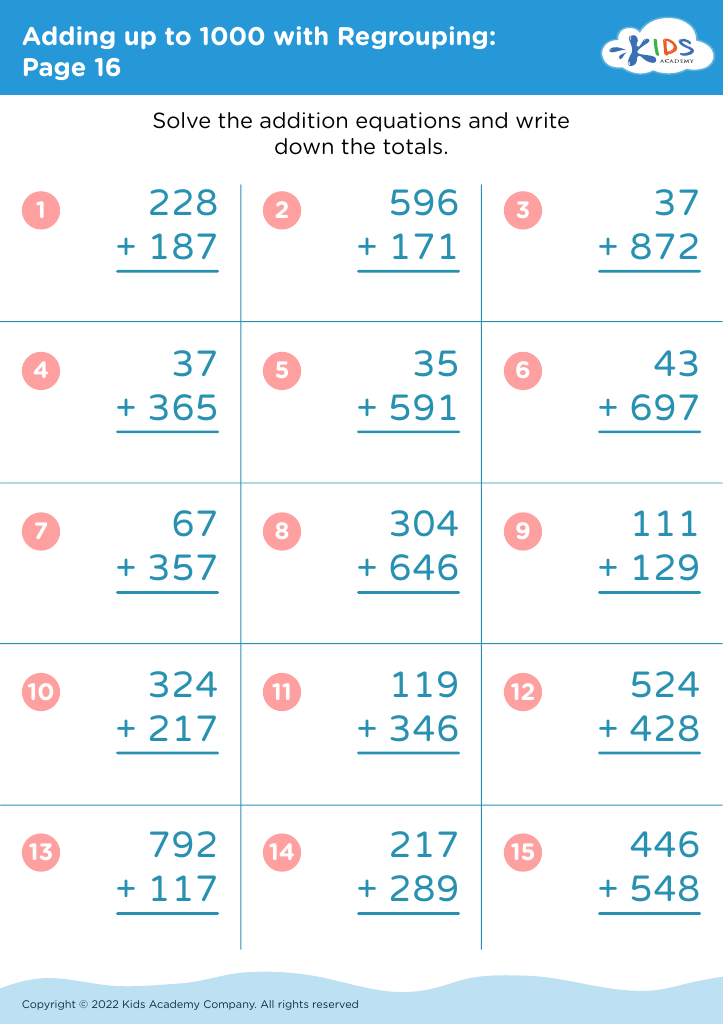
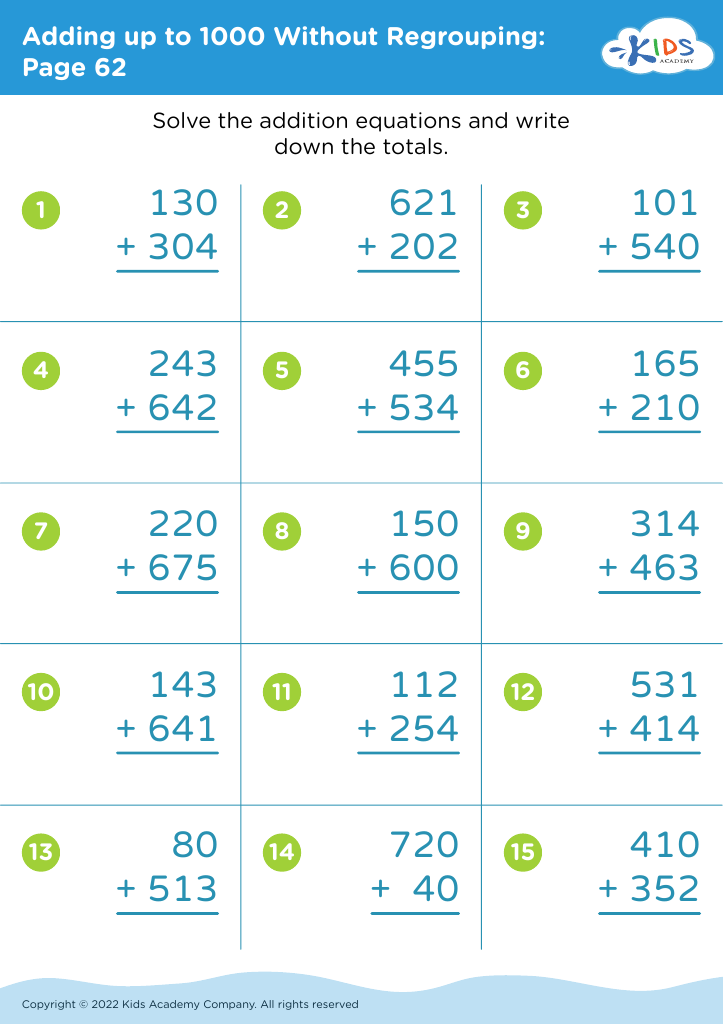
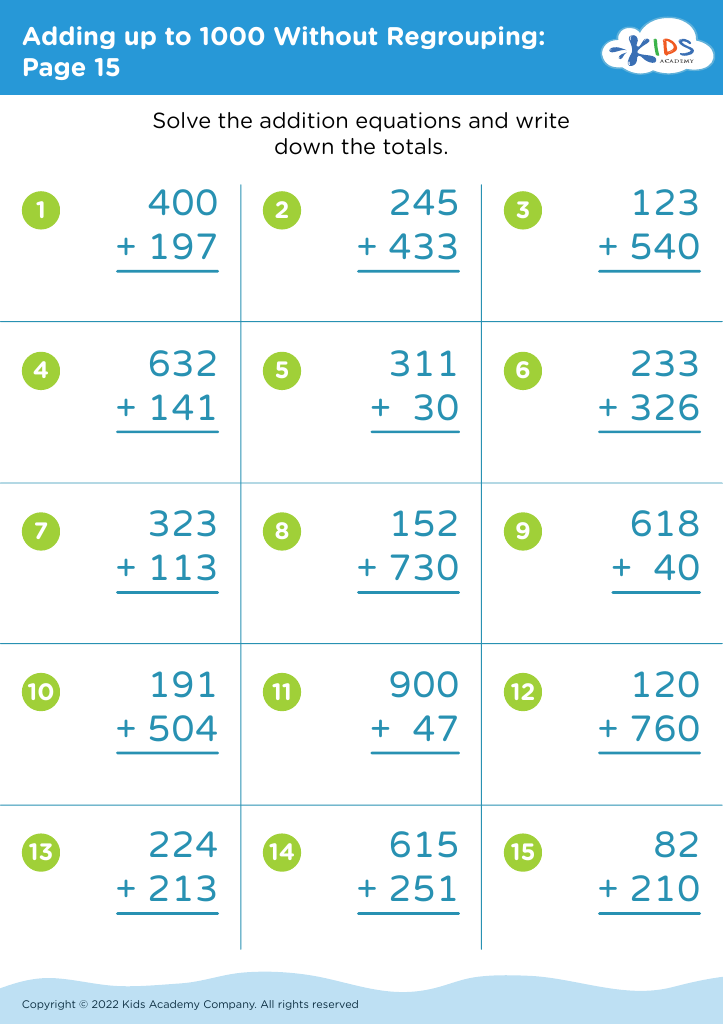
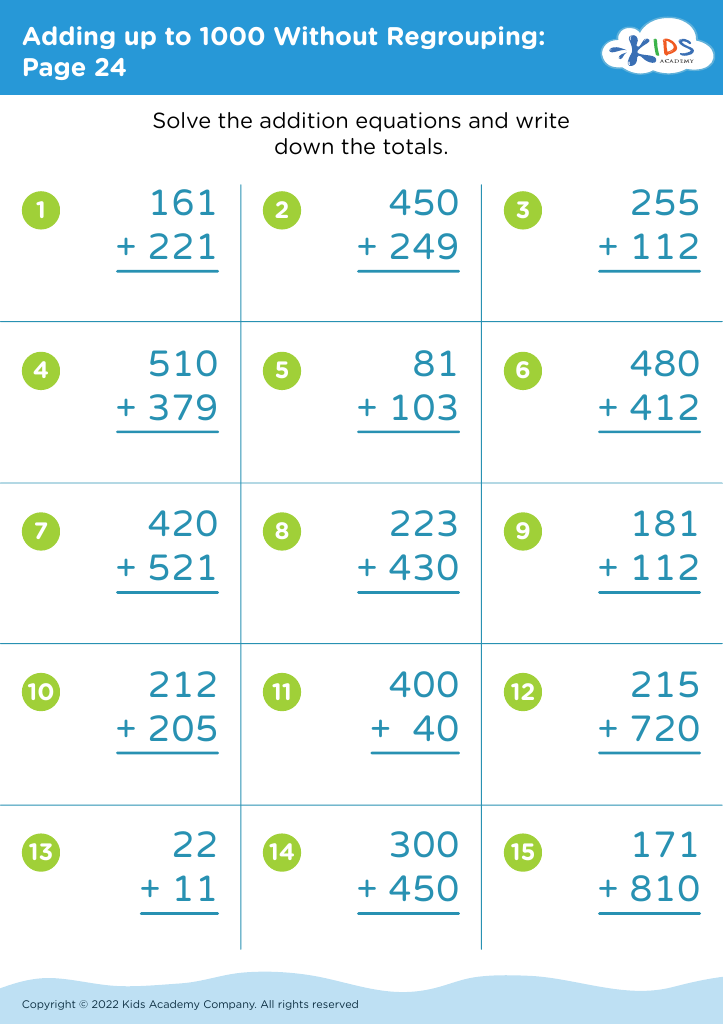




Understanding fractions is a vital component of early math education, especially for children aged 6-7. Learning about fractions lays the groundwork for critical thinking and problem-solving skills that they will use in more advanced math concepts later in their education. At this age, children begin to develop a sense of numbers and relationships between them; fractions introduce them to the idea of parts of a whole, which is foundational in math.
When teachers and parents focus on fractions, they not only help children grasp mathematical concepts but also enhance their ability to understand everyday situations—like dividing food or sharing toys—where fractions naturally occur. Engaging children in activities that involve adding fractions up to a total of 1000 can make math approachable and relevant. It encourages collaboration, communication, and discussion as they work together to solve problems.
Furthermore, improving fraction skills fosters confidence in math and can decrease anxiety about numbers. Building a solid understanding of fractions at this young age can promote better performance in math throughout their academic journey, paving the way for success in more complex concepts as they progress. It’s an investment in their academic future and overall cognitive development, making it crucial for parents and teachers.








