Improve reading skills Adding up to 50 Misc Worksheets for Ages 6-7
3 filtered results
-
From - To
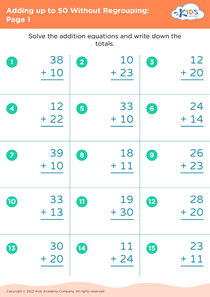
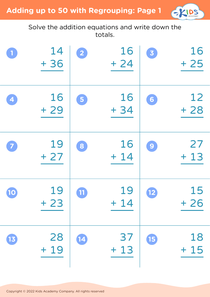
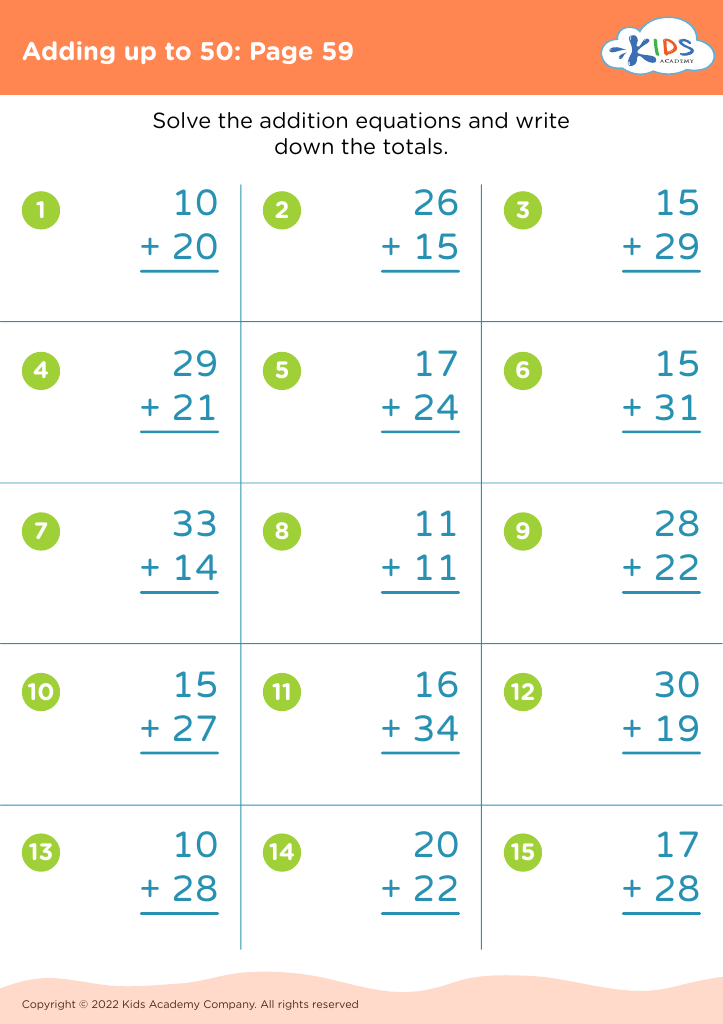
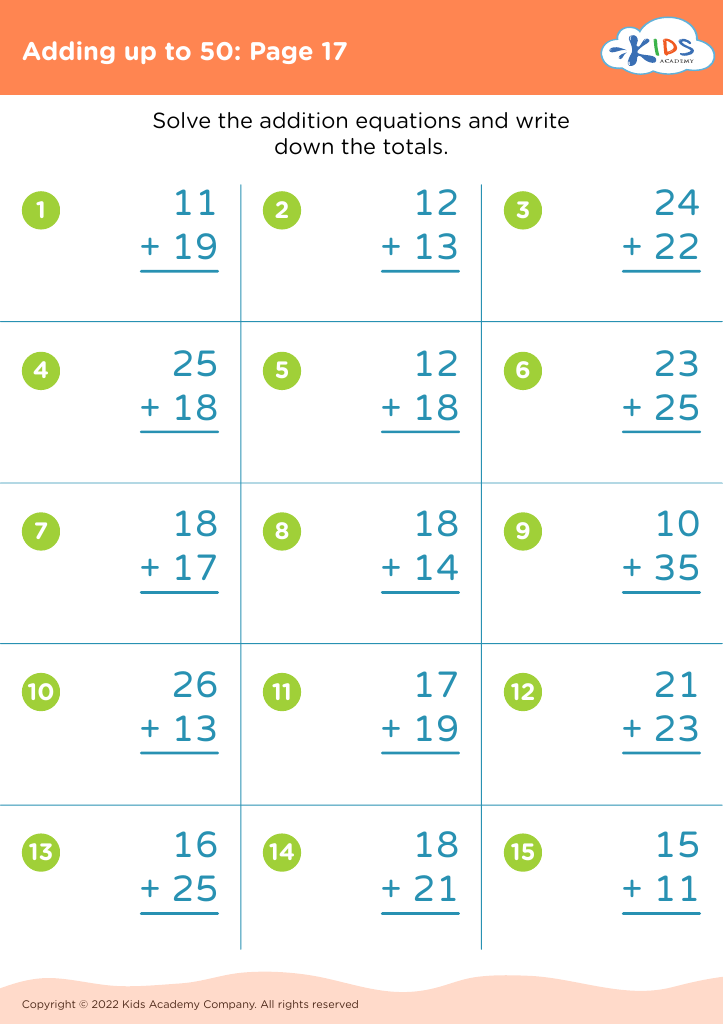
Enhance your child's reading skills with our "Adding Up to 50 Misc Worksheets," designed for ages 6-7. These engaging worksheets combine math and literacy, allowing young learners to practice reading comprehension while mastering addition up to 50. Each worksheet is thoughtfully crafted to reinforce vocabulary, improve sentence structure, and encourage critical thinking. By seamlessly integrating fun activities with essential skills, children will grow more confident in their reading abilities. Dive into the learning adventure with our colorful, interactive resources that make studying enjoyable! Perfect for homeschoolers or supplemental practice, these worksheets are a valuable addition to any young learner's toolkit.
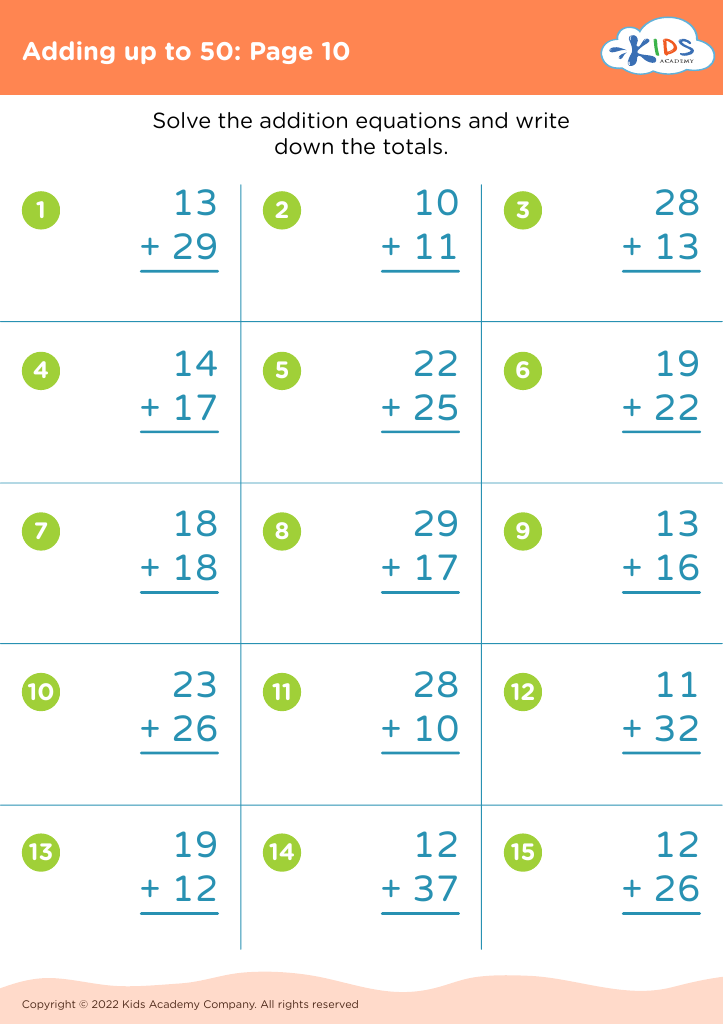


Improving reading skills in children aged 6-7 is crucial for their overall development and future success. At this age, children begin to build the foundation for literacy, which is essential not only for academic achievement but also for their ability to engage with the world around them. Proficient reading skills empower children to understand instructions, follow stories, and express themselves effectively.
Parents and teachers play a vital role in nurturing these skills. By actively involving children in reading activities, they can foster a love for books that enhances imagination and critical thinking. Engaging with diverse texts exposes kids to new vocabulary, concepts, and ideas, all of which are vital for cognitive growth.
Additionally, reading competency influences self-esteem and confidence. Children who struggle with reading may feel frustrated, leading to a disinterest in learning. With the right support and encouragement from parents and teachers, children can improve their skill sets and develop a positive attitude toward reading.
Lastly, as children develop these essential skills, they become more prepared for future academic challenges and lifelong learning, setting the stage for personal and professional success. Investing time and resources into developing reading skills is an invaluable commitment to children's future.