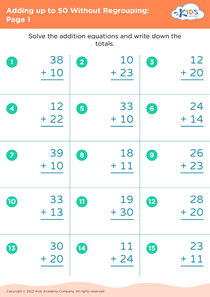
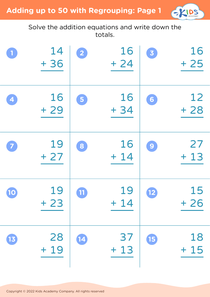
Understanding symmetry Adding up to 50 Misc Worksheets for Ages 6-7
3 filtered results
-
From - To
Explore our "Understanding Symmetry" worksheets designed for young learners aged 6-7! These fun and engaging activities integrate symmetry concepts with addition up to 50, allowing students to enhance their math skills while developing an awareness of symmetrical patterns. Perfect for classroom or home use, these worksheets encourage creativity and critical thinking. Children will enjoy colorful illustrations and interactive tasks, making math enjoyable and accessible. By focusing on understanding symmetry alongside addition, students will build a strong foundation in both concepts, paving the way for future learning. Download these worksheets today to inspire and challenge your little mathematicians!
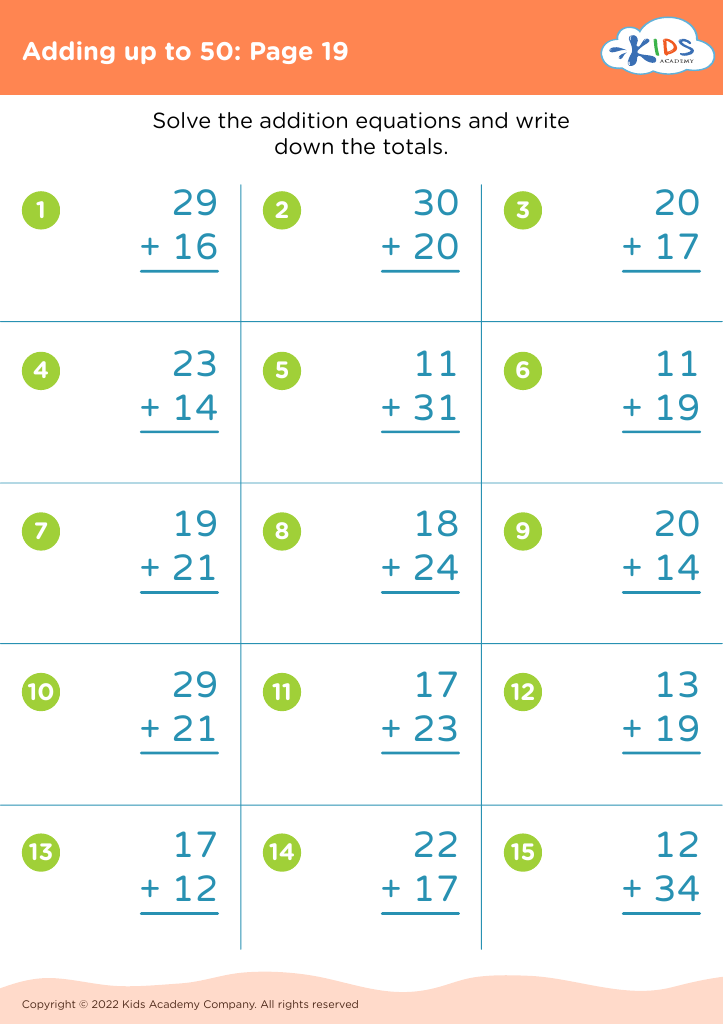
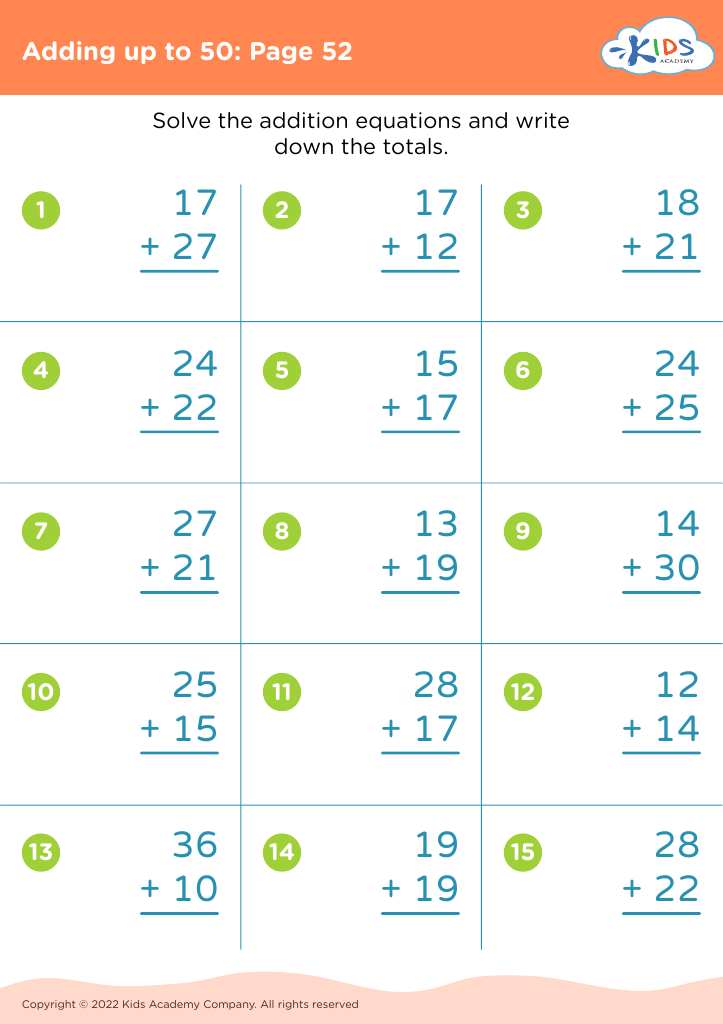
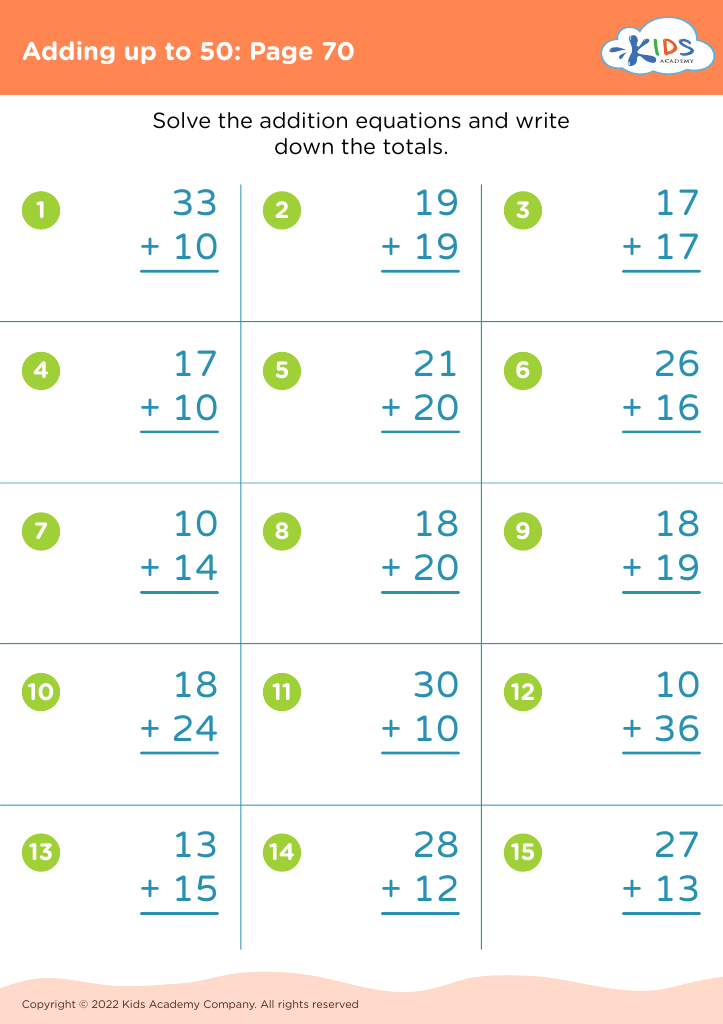


Understanding symmetry and adding up to 50 are crucial skills for children aged 6-7, and their importance extends beyond mathematics. First, symmetry helps children recognize patterns in the world, enhancing their observational skills and fostering creativity. It promotes critical thinking as they identify symmetrical shapes in nature and art, encouraging a deeper appreciation for aesthetics in their environment.
Secondly, mastering addition, especially concepts that lead to adding up to 50, builds a solid foundation for more complex arithmetic. At this age, fluency in basic addition not only prepares children for future math challenges but also bolsters their confidence. Engaging with numbers enhances cognitive development and equips children with problem-solving strategies they can apply in real-life situations.
Moreover, understanding these concepts encourages collaborative learning. When parents and teachers guide children through activities enhancing symmetry and addition, they also reinforce social skills like teamwork and communication. Ultimately, caring about these foundational skills promotes academic success and personal growth, creating a holistic learning experience. Encouraging exploration in these areas will nurture curious minds, well-rounded thinkers, and competent problem-solvers in young learners.