Filters

15 filtered results

Clear all filters
Favorites
With answer key
Interactive

15 filtered results

Difficulty Level

Grade


Welcome to our engaging "Number Recognition Adding Up to 50 Without Regrouping Worksheets" designed specifically for children ages 6 to 7! These worksheets help young learners develop their number recognition and basic addition skills by solving fun problems focused on sums that do not require regrouping. Each activity encourages students to practice their counting, strengthen their mathematical understanding, and enhance their confidence in working with numbers up to 50. Perfect for the classroom or at-home learning,our worksheets provide clear instructions and a variety of exercises to keep kids motivated and engaged in their mathematical journey. Explore, learn, and excel with us today!
Check out this FREE Trial Lesson on Adding up to 50 Without Regrouping for age 6-7!

Short and Long Vowel Sort

Favorites
With answer key
Interactive
  • 6-7
  • Number Recognition
  • Adding up to 50 Without Regrouping
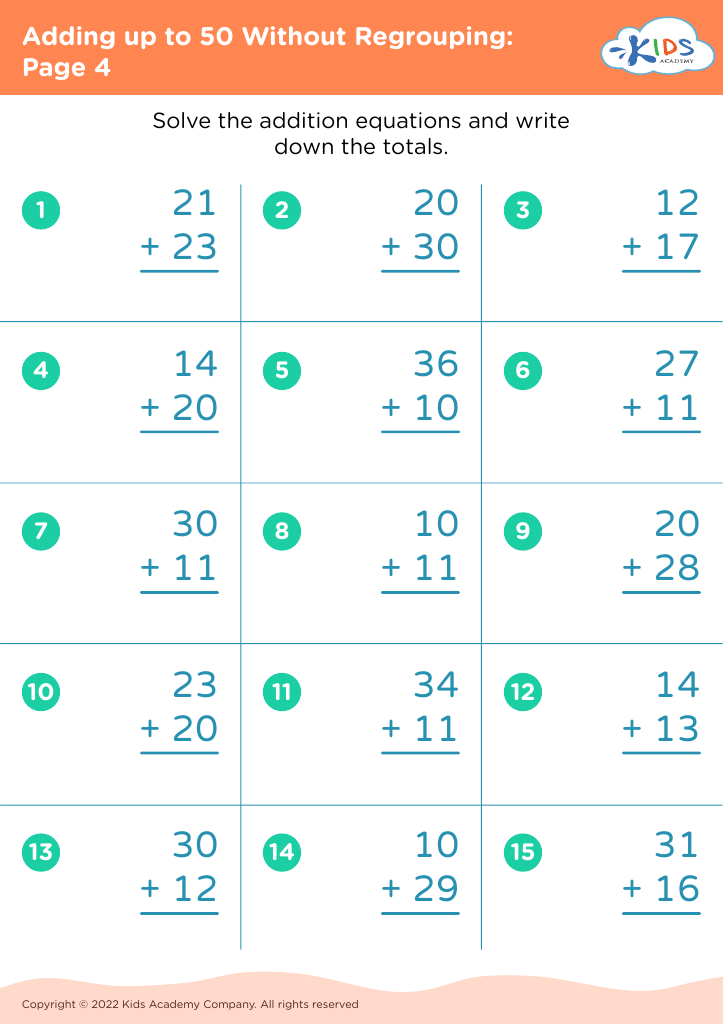
Adding up to 50 Without Regrouping: Page 4
Worksheet
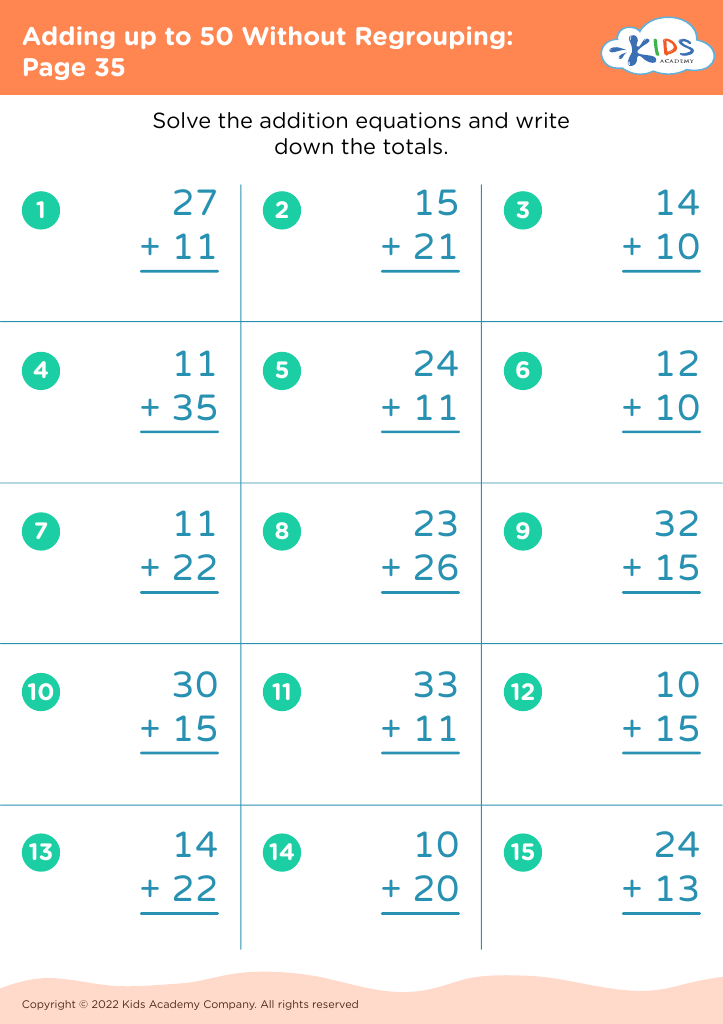
Adding up to 50 Without Regrouping: Page 35
Worksheet
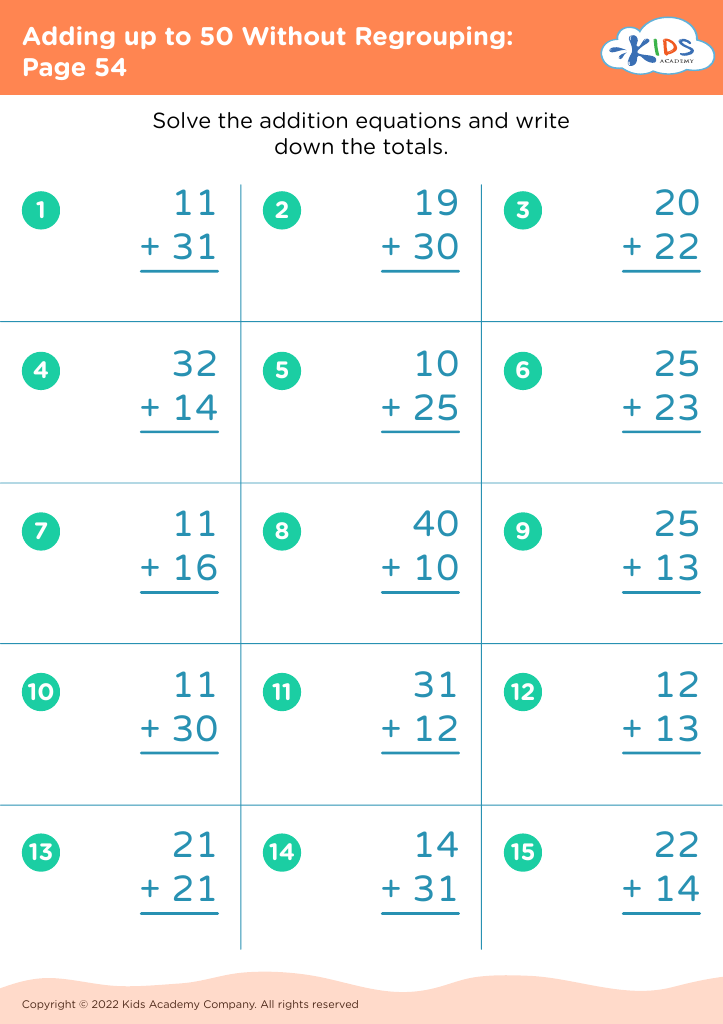
Adding up to 50 Without Regrouping: Page 54
Worksheet
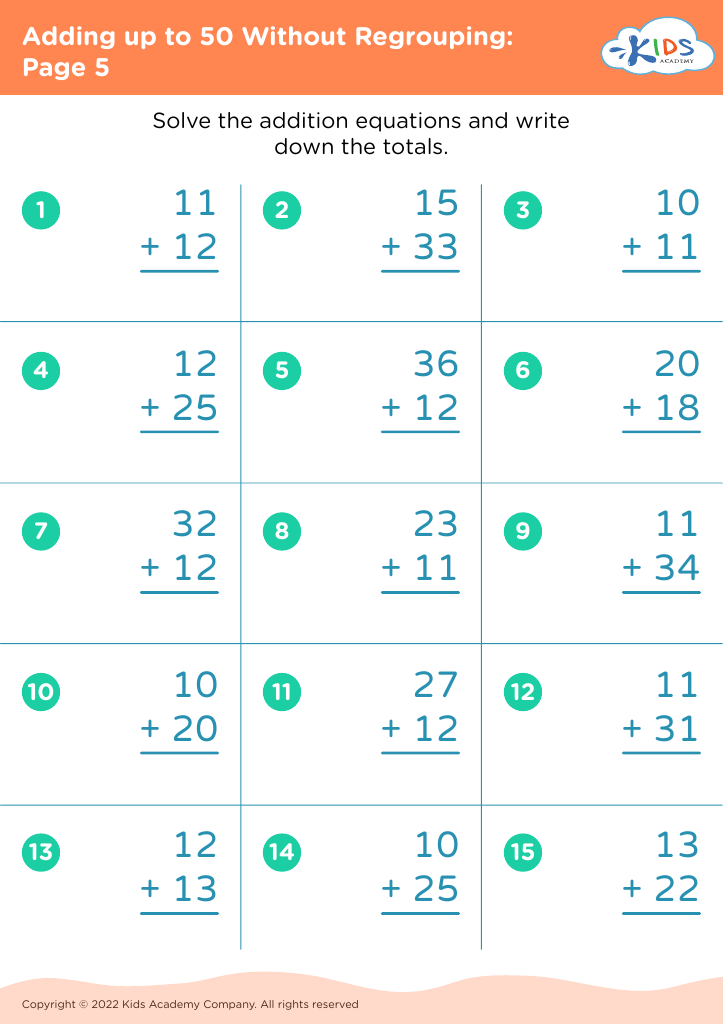
Adding up to 50 Without Regrouping: Page 5
Worksheet
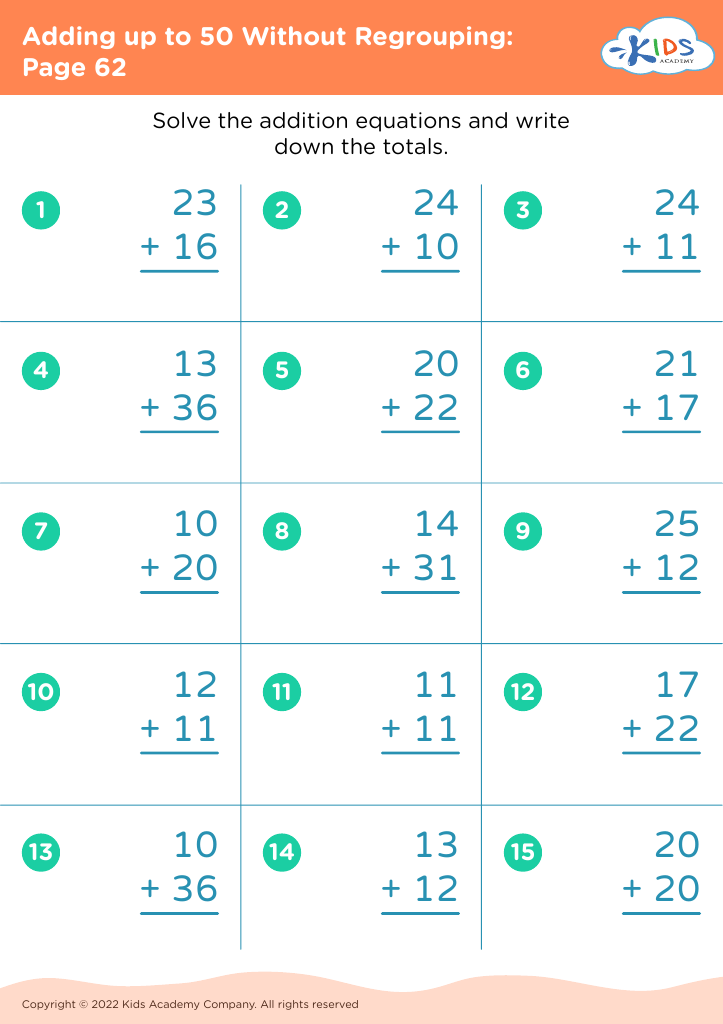
Adding up to 50 Without Regrouping: Page 62
Worksheet
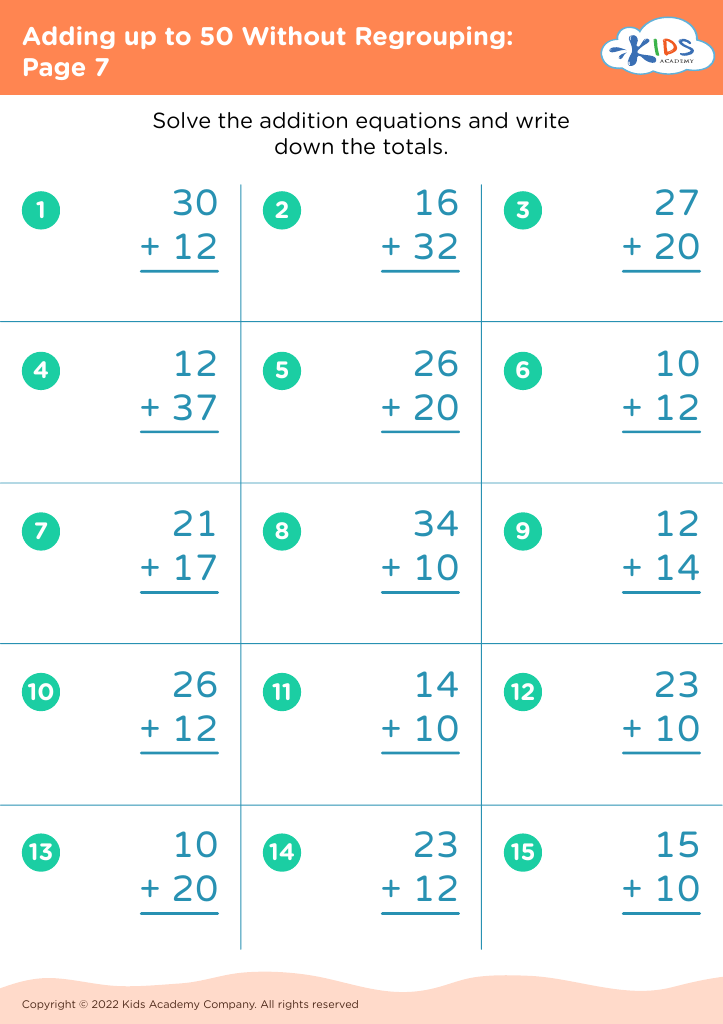
Adding up to 50 Without Regrouping: Page 7
Worksheet
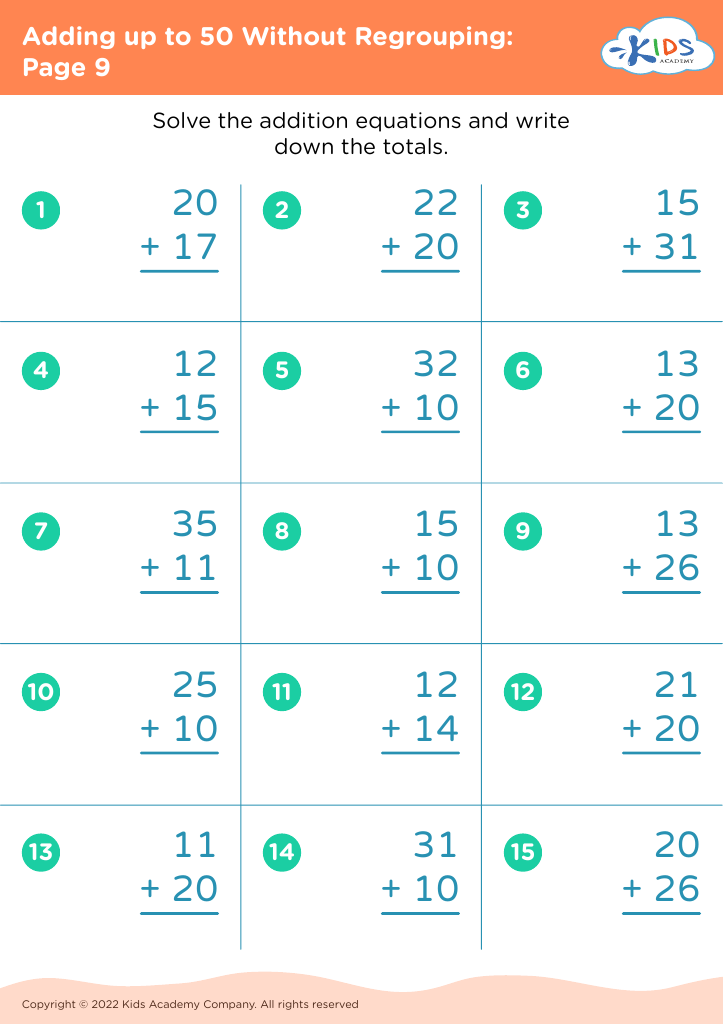
Adding up to 50 Without Regrouping: Page 9
Worksheet
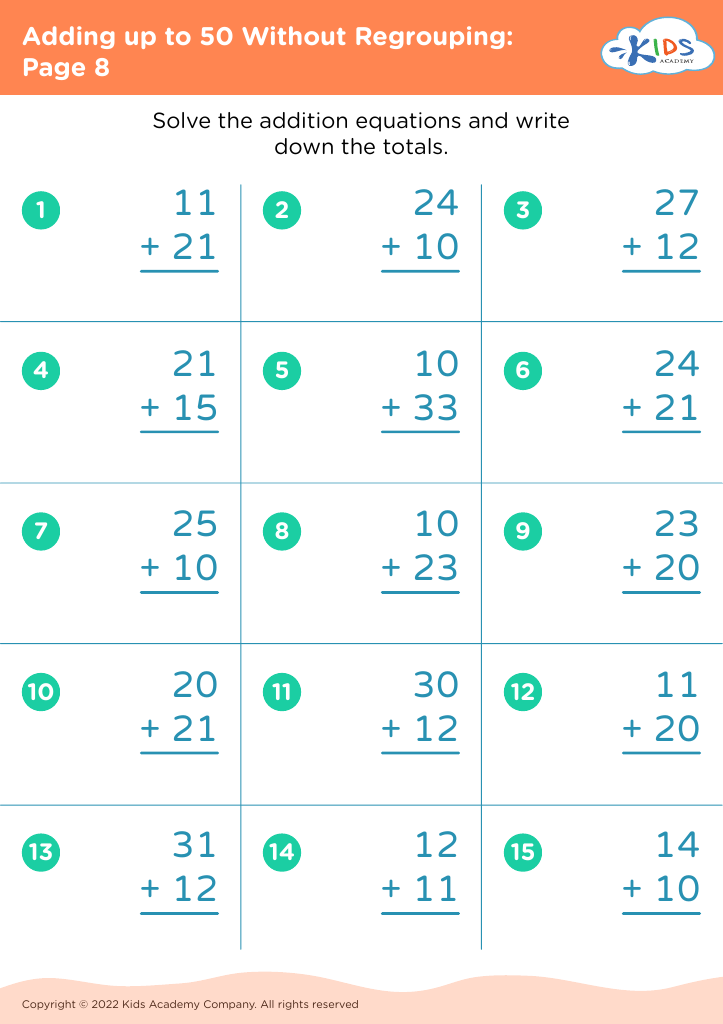
Adding up to 50 Without Regrouping: Page 8
Worksheet
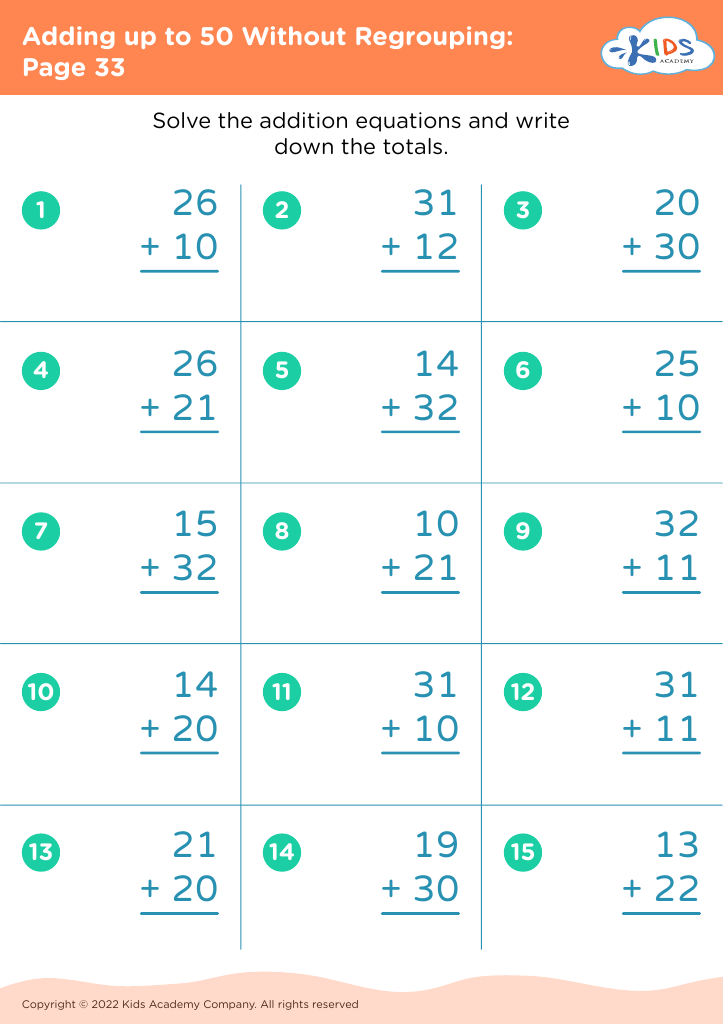
Adding up to 50 Without Regrouping: Page 33
Worksheet
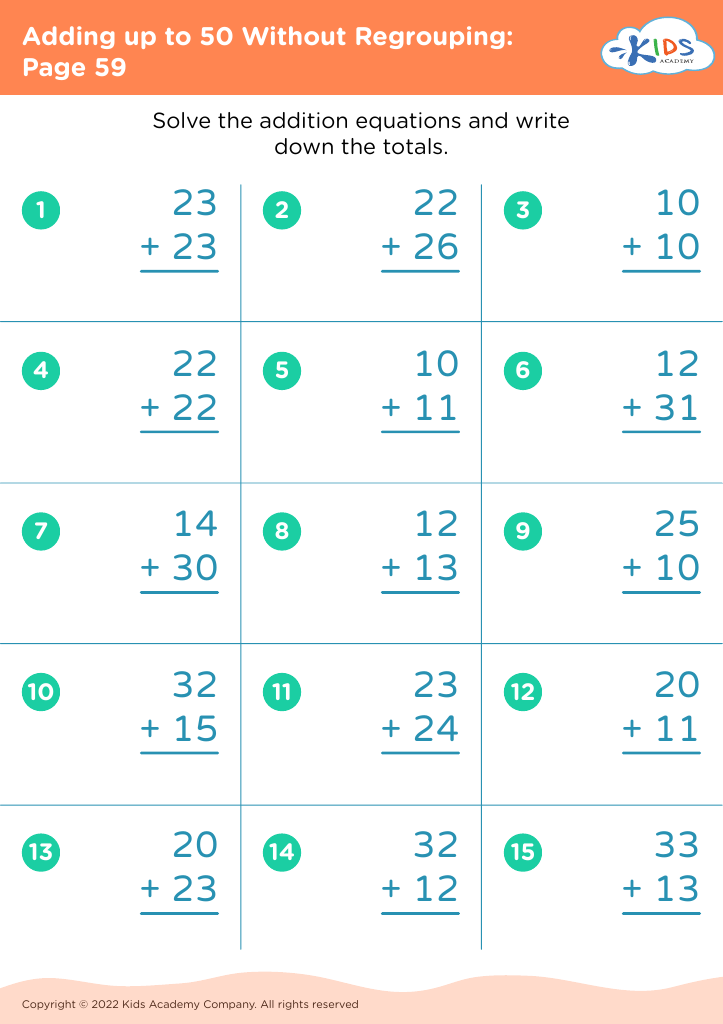
Adding up to 50 Without Regrouping: Page 59
Worksheet
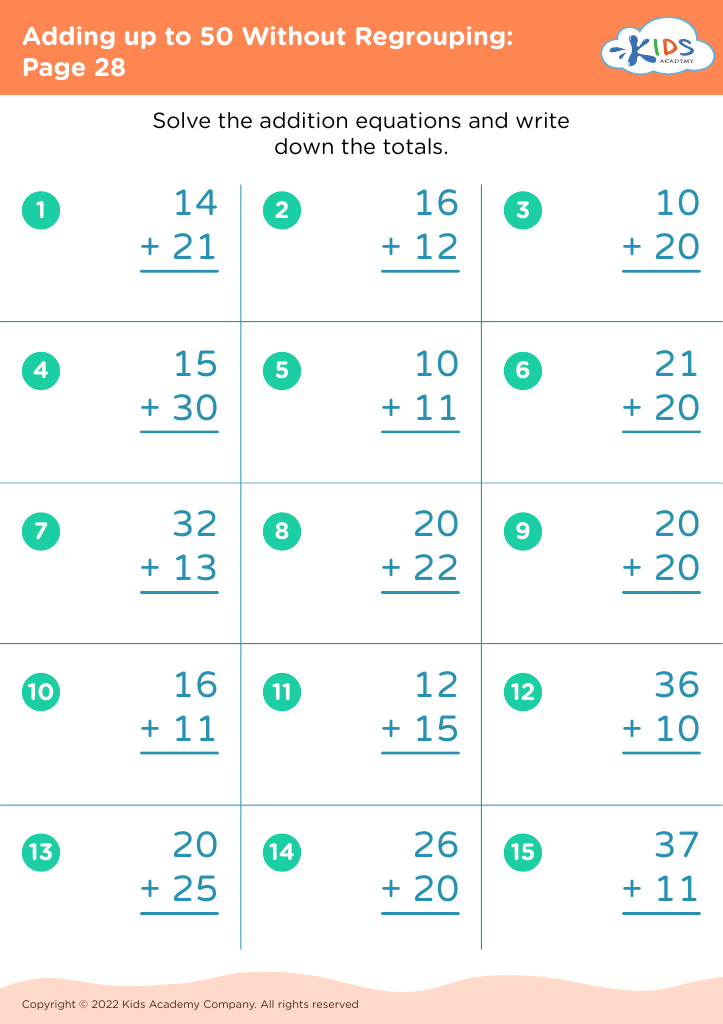
Adding up to 50 Without Regrouping: Page 28
Worksheet
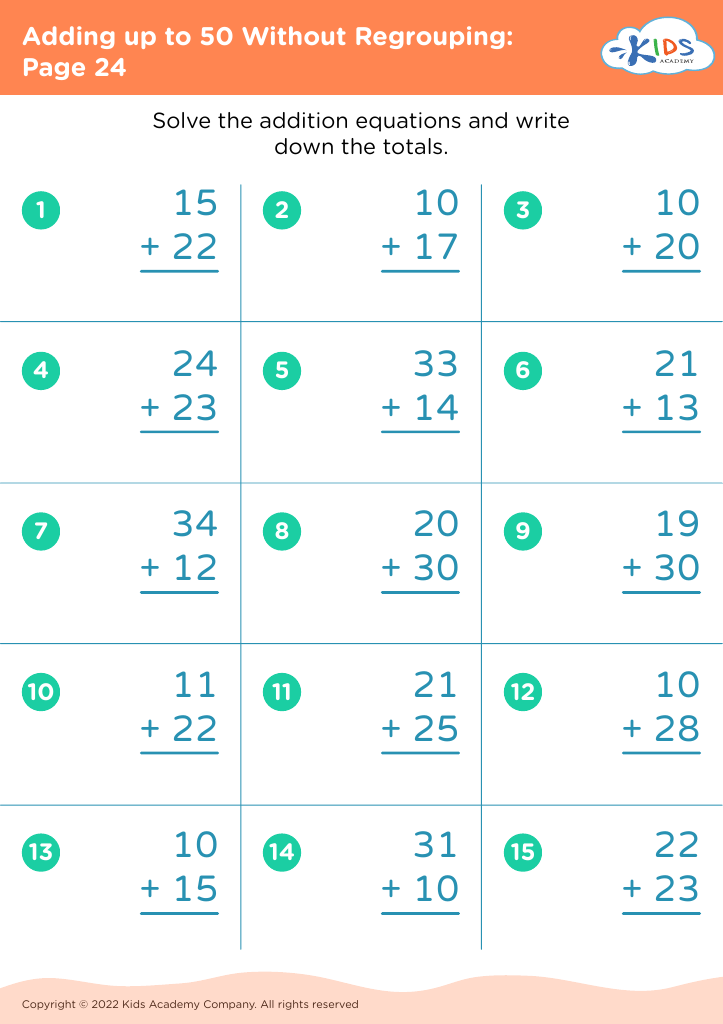
Adding up to 50 Without Regrouping: Page 24
Worksheet
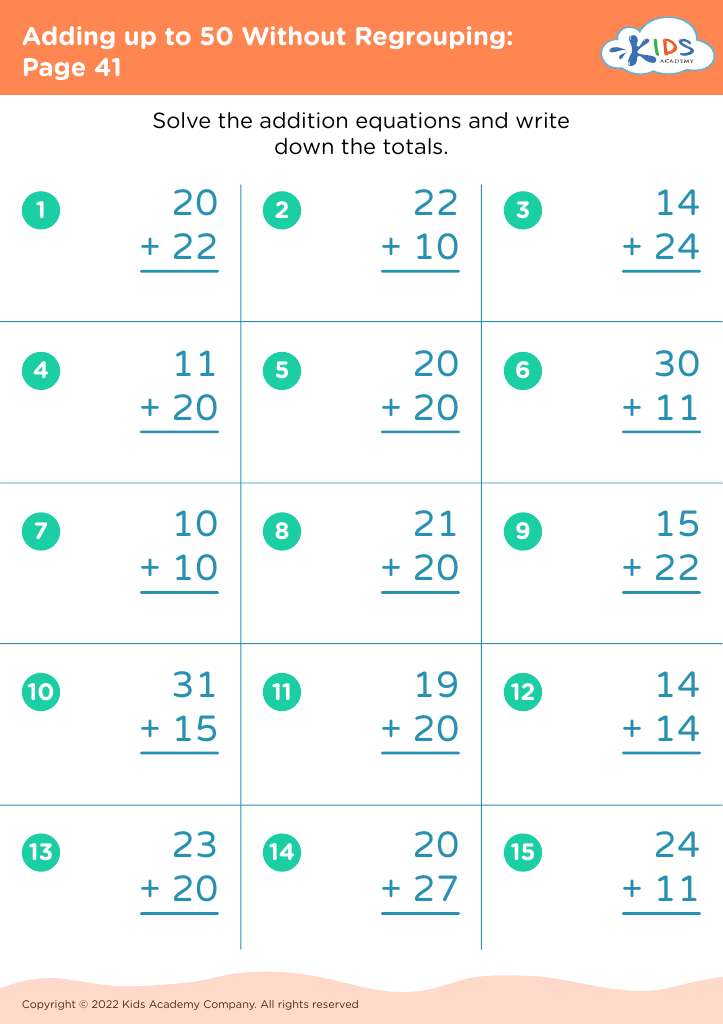
Adding up to 50 Without Regrouping: Page 41
Worksheet
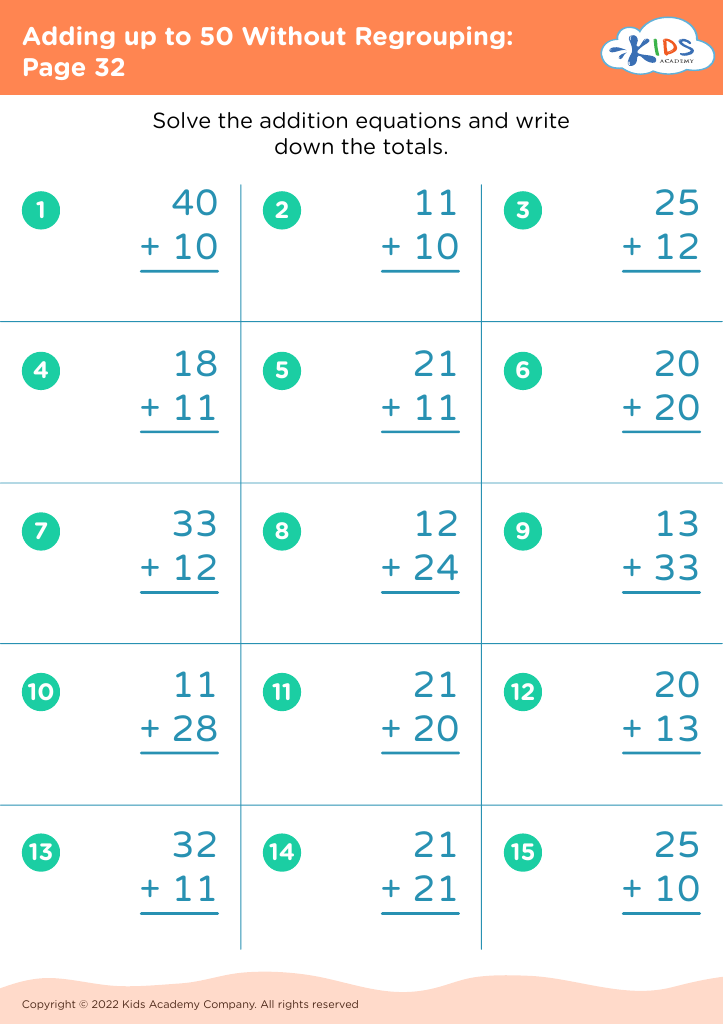
Adding up to 50 Without Regrouping: Page 32
Worksheet
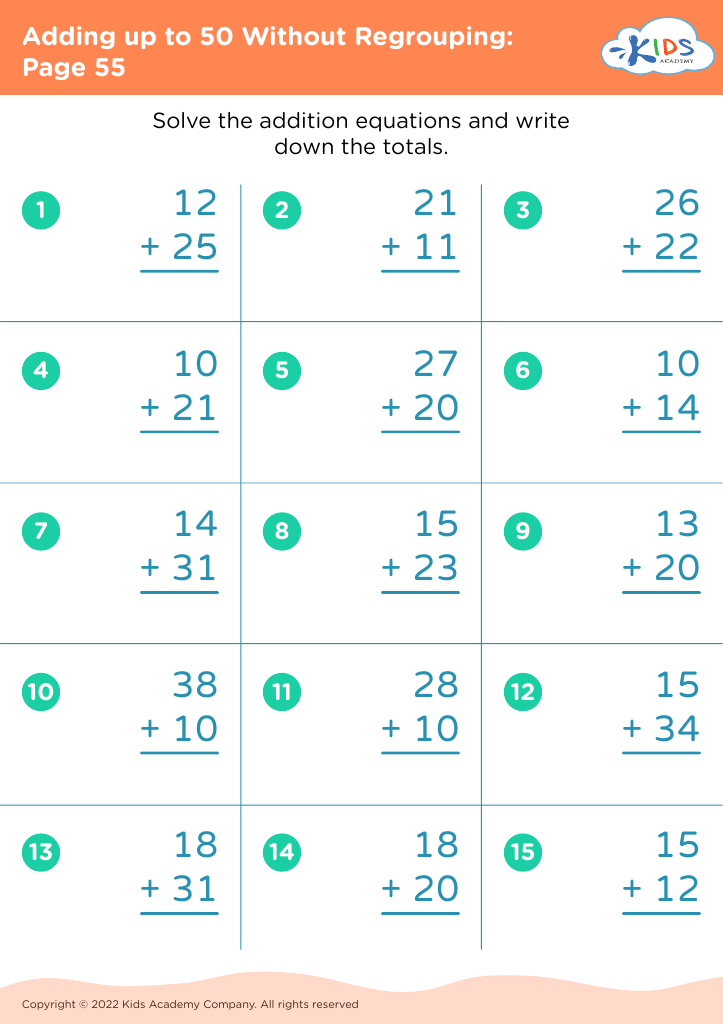
Adding up to 50 Without Regrouping: Page 55
Worksheet


Number recognition and the ability to add up to 50 without regrouping are foundational skills for children aged 6-7, forming a critical building block for their future mathematical understanding. Firstly, number recognition helps children identify, visualize, and develop a strong number sense, which contributes to their overall confidence in math. Being able to recognize numbers also aids in understanding their relationships, leading to better problem-solving skills.

Adding up to 50 without regrouping allows children to practice fundamental addition skills, which is essential in more advanced arithmetic. This skill ensures they grasp one-digit and two-digit addition in a way that builds familiarity and fluency. It assists in developing mental math, which is invaluable for everyday calculations.

Moreover, early mastery of these skills leads to long-term academic success in mathematics and related subjects. It prepares students to tackle more complex challenges in the future, such as regrouping and multi-digit addition. By fostering these skills early on, parents and teachers can help create an environment that emphasizes both competence and confidence in math, setting a positive tone for a child’s educational journey. Prioritizing this aspect of early education can significantly influence a child's attitude toward math throughout their schooling.