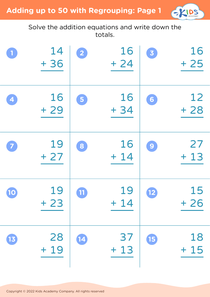
Understand fractions Adding up to 50 Without Regrouping Worksheets for Ages 6-7
4 filtered results
-
From - To
Discover our engaging "Understand Fractions Adding Up to 50 Without Regrouping" worksheets designed specifically for children aged 6-7. These worksheets provide a fun and interactive way for young learners to grasp the concept of fractions while practicing addition skills without regrouping. Each activity aims to build a strong foundation in understanding fractions through easy-to-follow instructions and vibrant visuals. Parents and educators can use these resources to enhance math skills, promote critical thinking, and encourage a passion for learning. Perfect for homework support or classroom use, these worksheets are an essential tool for any early grade educator. Start your child's math journey today!
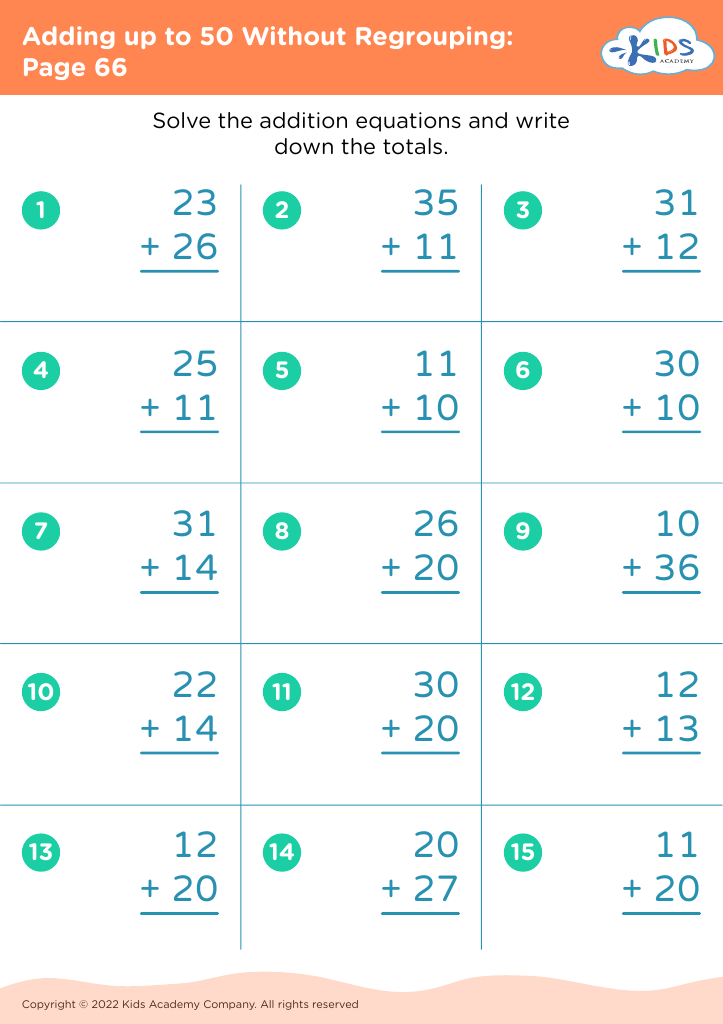
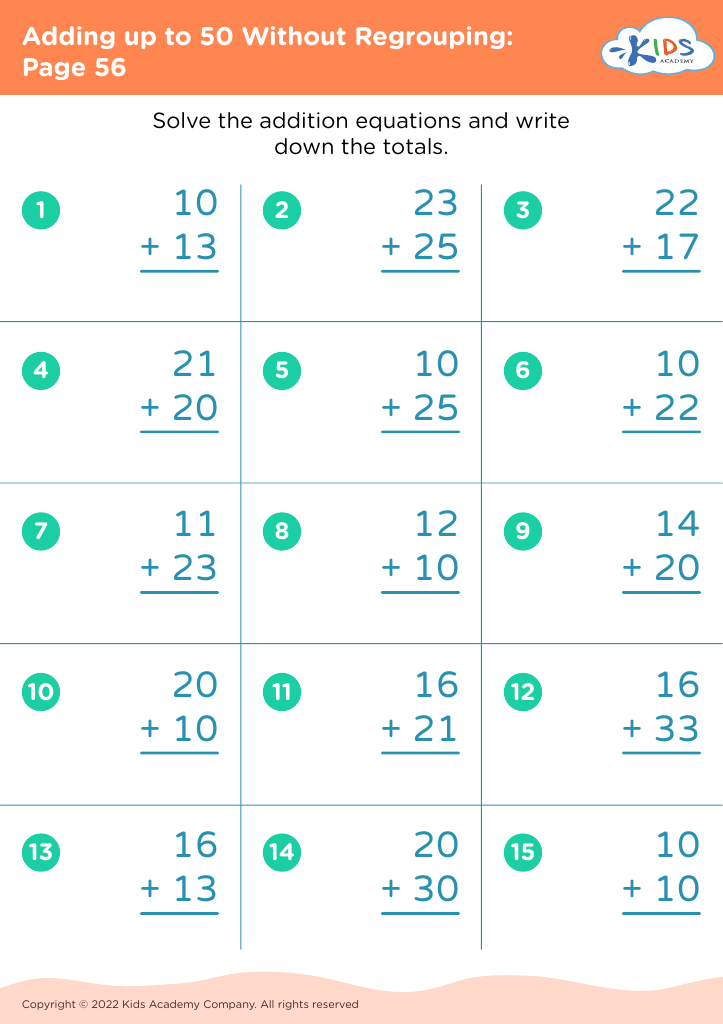
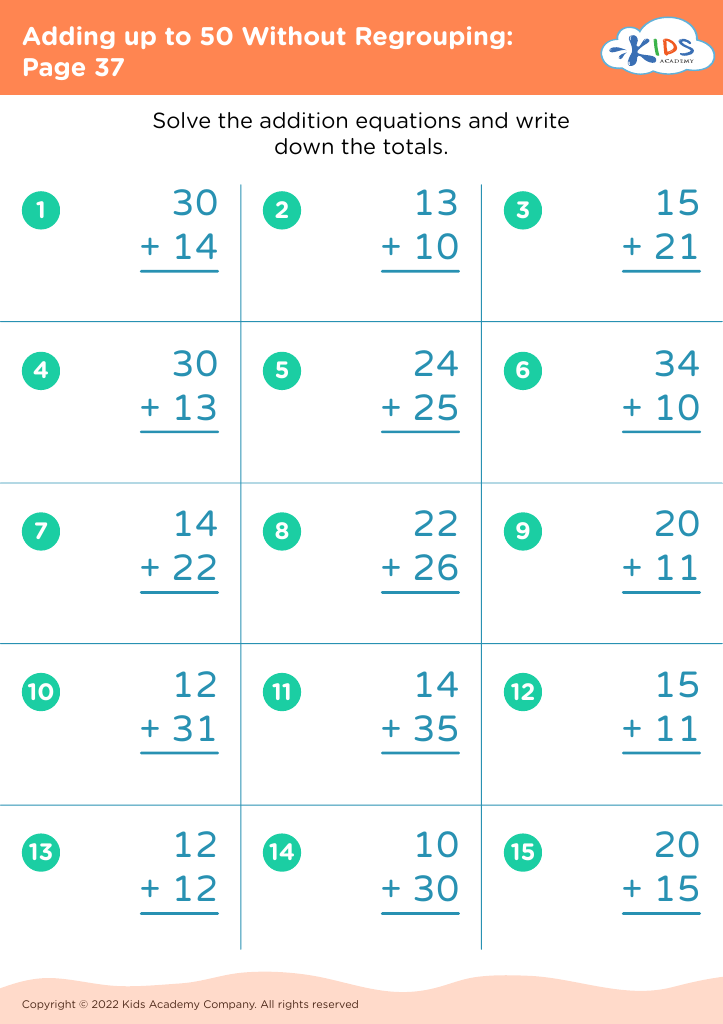
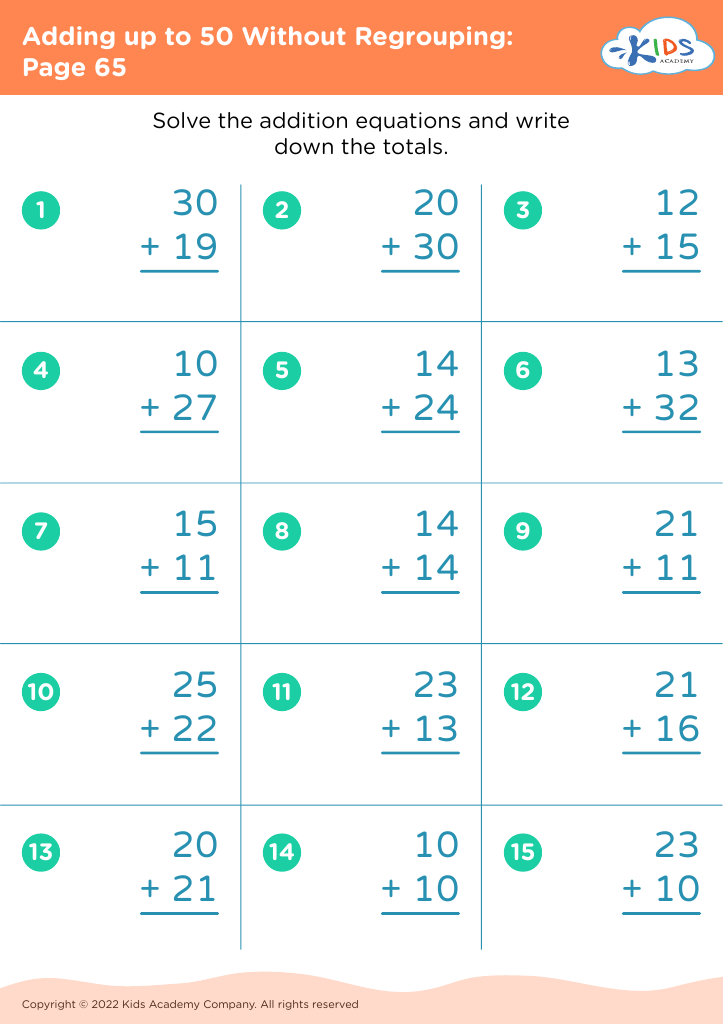


Understanding fractions and adding them up to 50 without regrouping is crucial for children ages 6-7, as it lays the foundation for their mathematical development. At this age, students are transitioning from concrete conceptualizations to abstract reasoning. Grasping fractions helps them visualize parts of a whole, an essential skill that extends beyond math and into daily life, such as sharing food, measuring ingredients, and partitioning objects.
Additionally, learning to add fractions without regrouping aids in enhancing their arithmetic skills, promoting number sense and computational fluency. As young learners engage with fractions, they develop problem-solving strategies and improve their critical thinking abilities. This knowledge also prepares them for more complex mathematical topics in later grades, such as mixed numbers and equivalent fractions.
Parents and teachers should prioritize this area of learning because a solid grasp of fractions fosters confidence in students’ overall mathematical abilities, encouraging a positive attitude toward math as they progress through school. Furthermore, when children develop these foundational skills early, they are more likely to excel in mathematics and pursue STEM (Science, Technology, Engineering, and Mathematics) opportunities in the future. Investing time in this area can significantly impact children's overall educational success and life skills.