Understanding fractions Adding up to 50 Without Regrouping Worksheets for Ages 6-7
13 filtered results
-
From - To
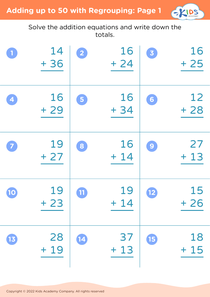
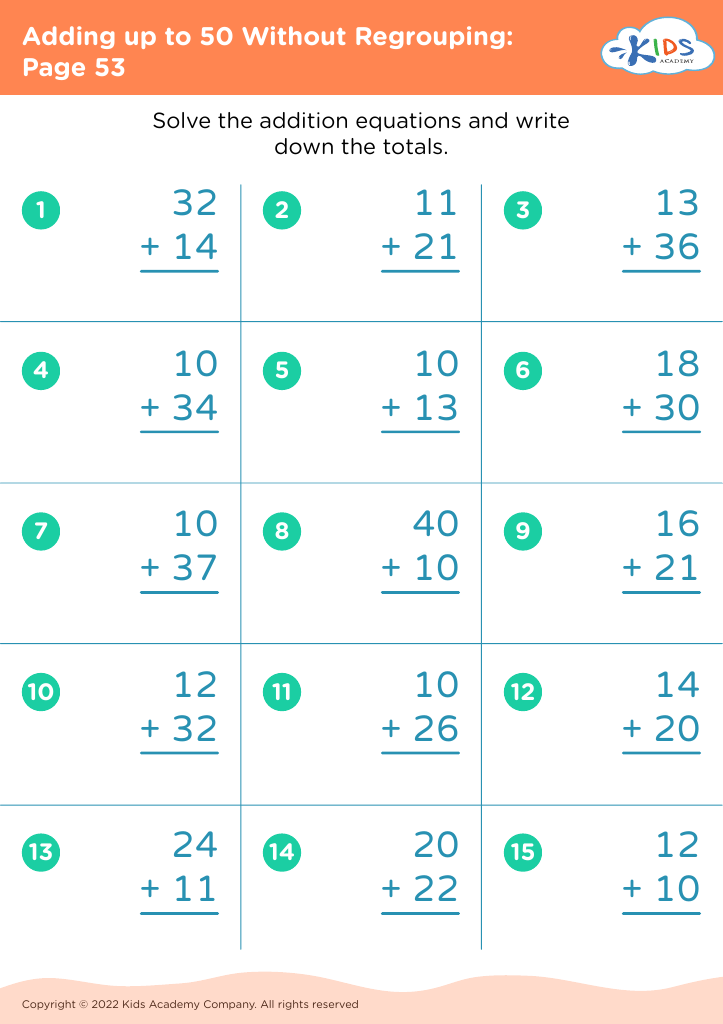
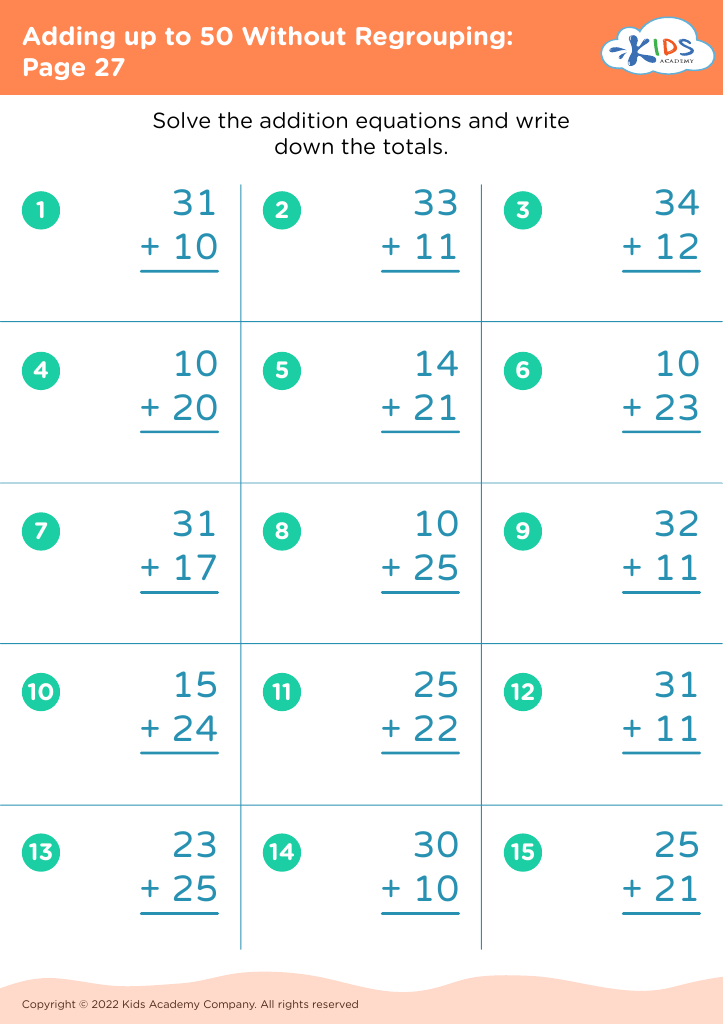
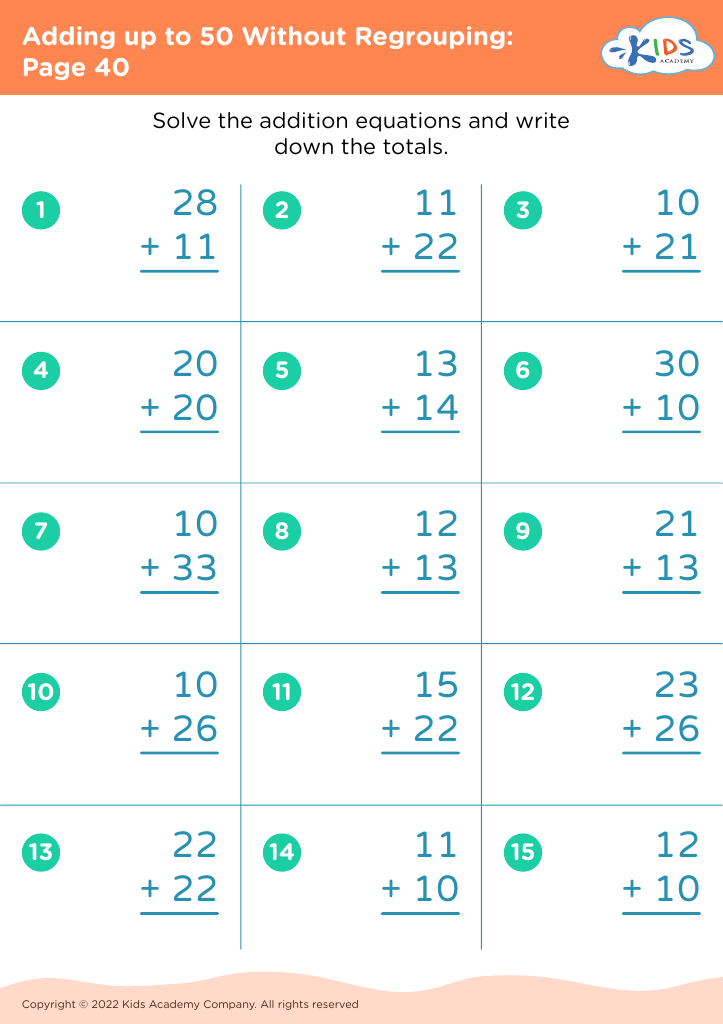
Our "Understanding Fractions Adding Up to 50 Without Regrouping Worksheets" are perfect for young learners aged 6-7. These engaging printables help children master basic fractions and addition skills in a fun and interactive way. Aligned with age-appropriate learning objectives, the worksheets never require regrouping, ensuring simplicity and fostering confidence. Kids learn to add numbers up to 50 while also identifying and understanding fractions, making math both accessible and enjoyable. Ideal for classroom activities or home practice, these worksheets lay a solid foundation for future math success. Discover the joy of learning with our specialized and skill-building resources.
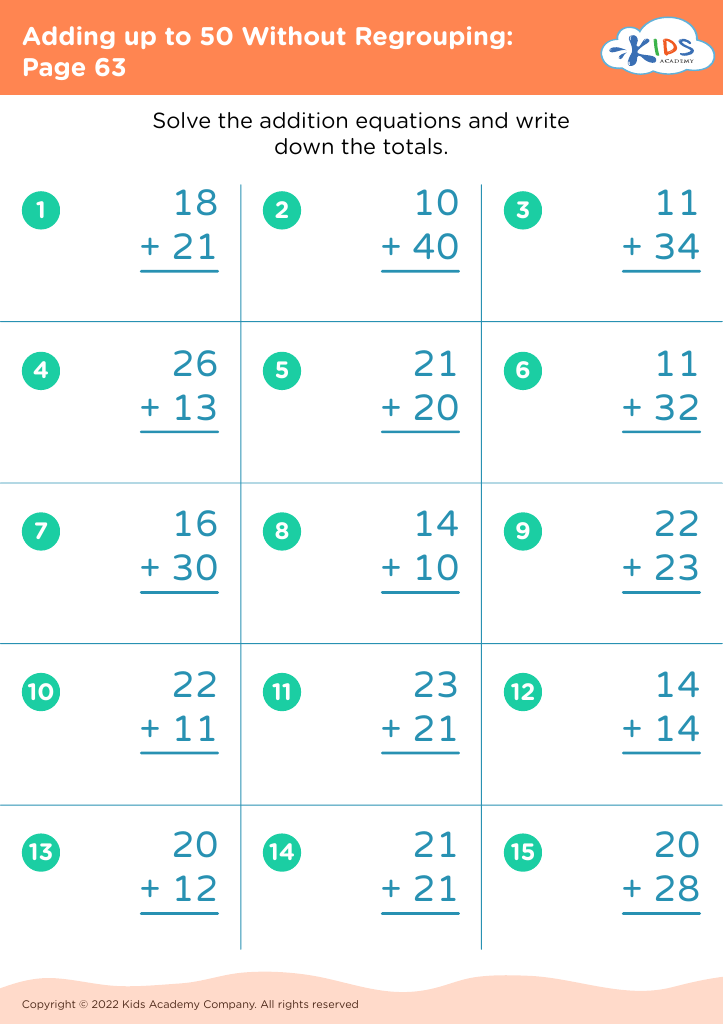
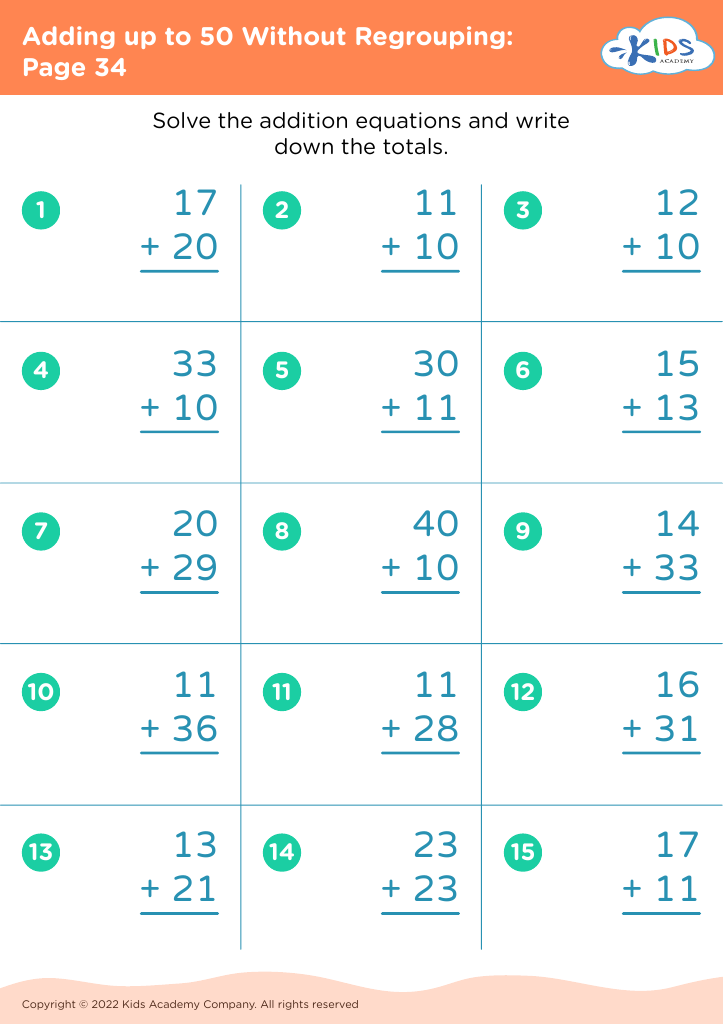
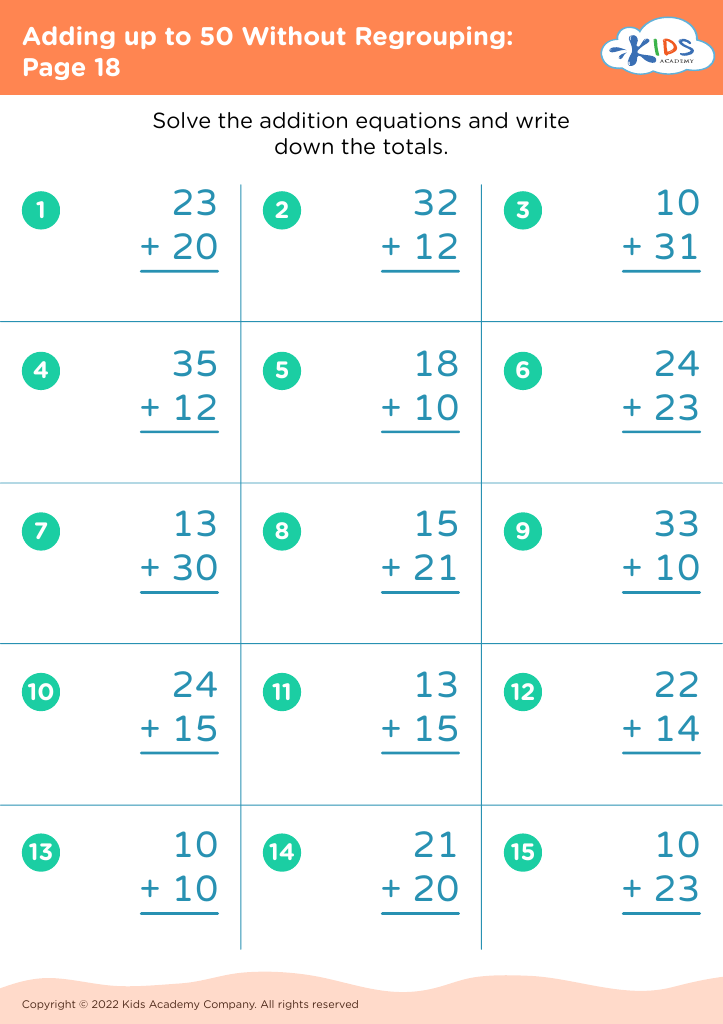
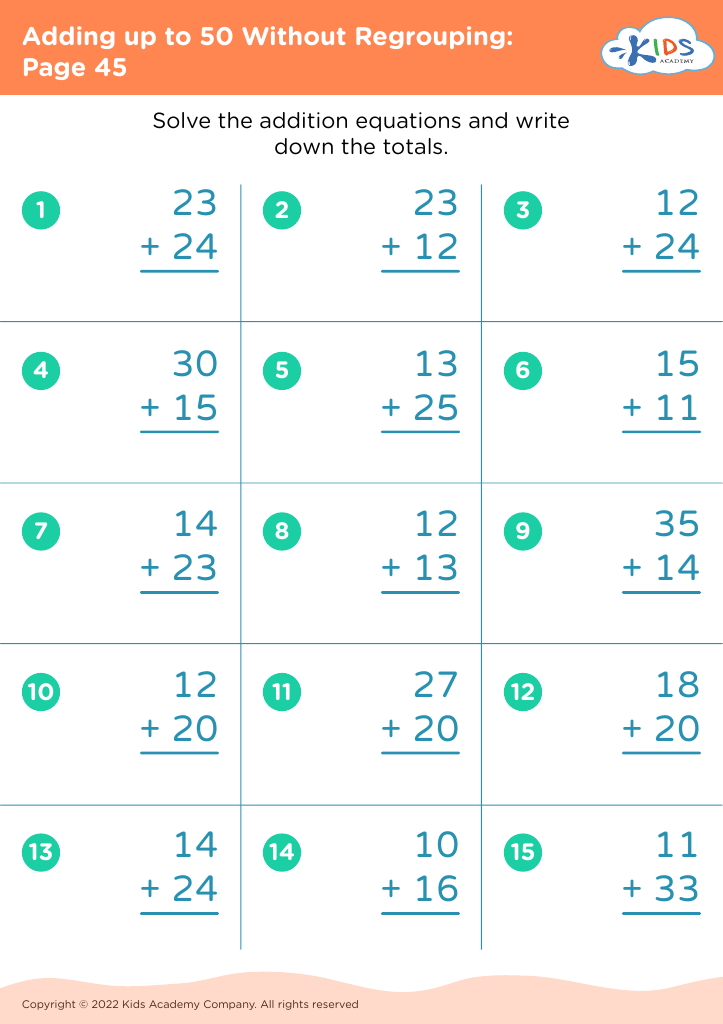
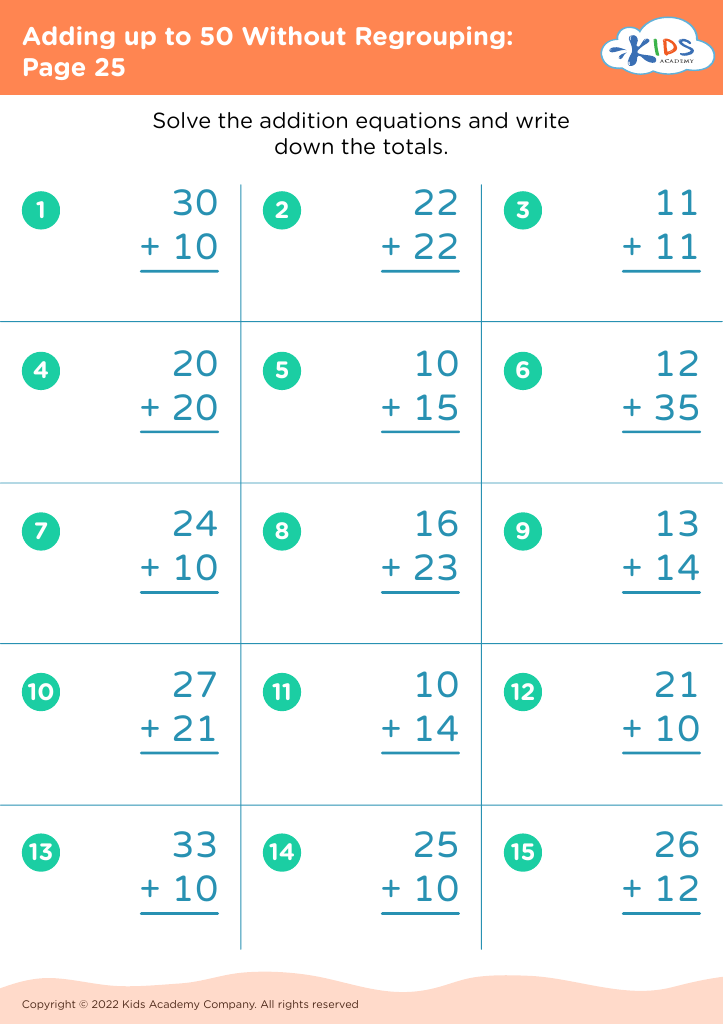
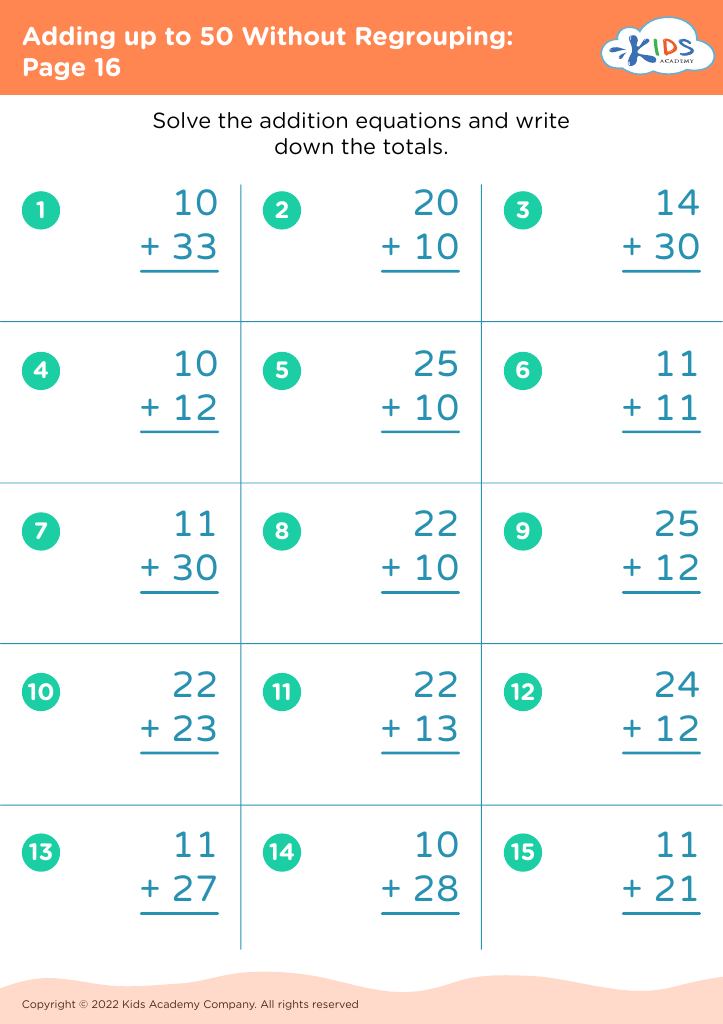
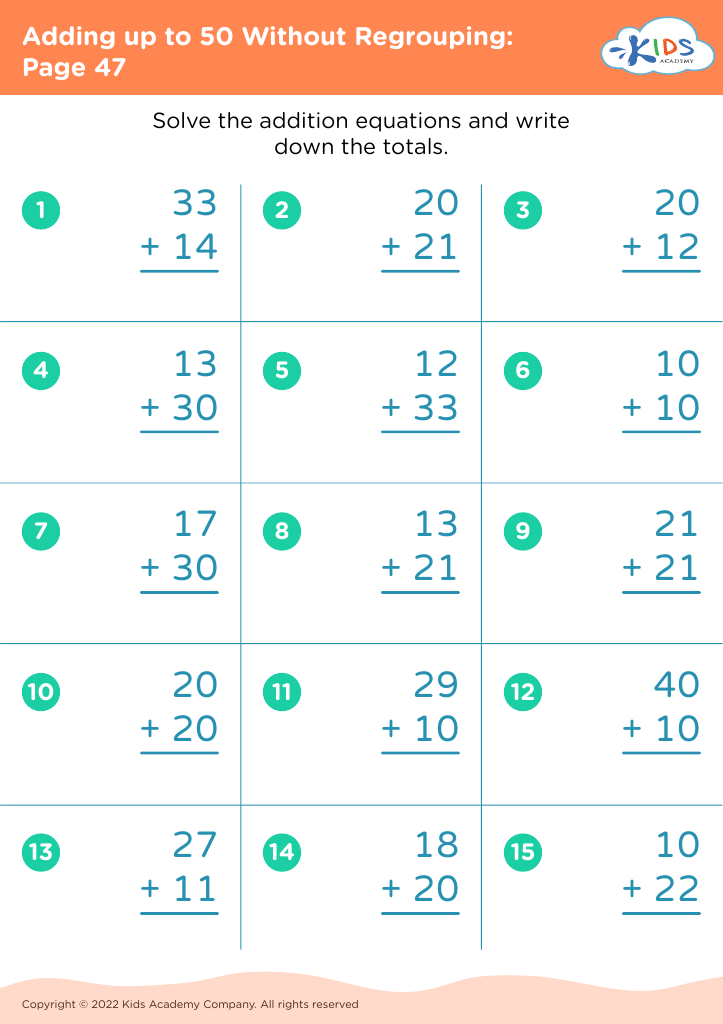
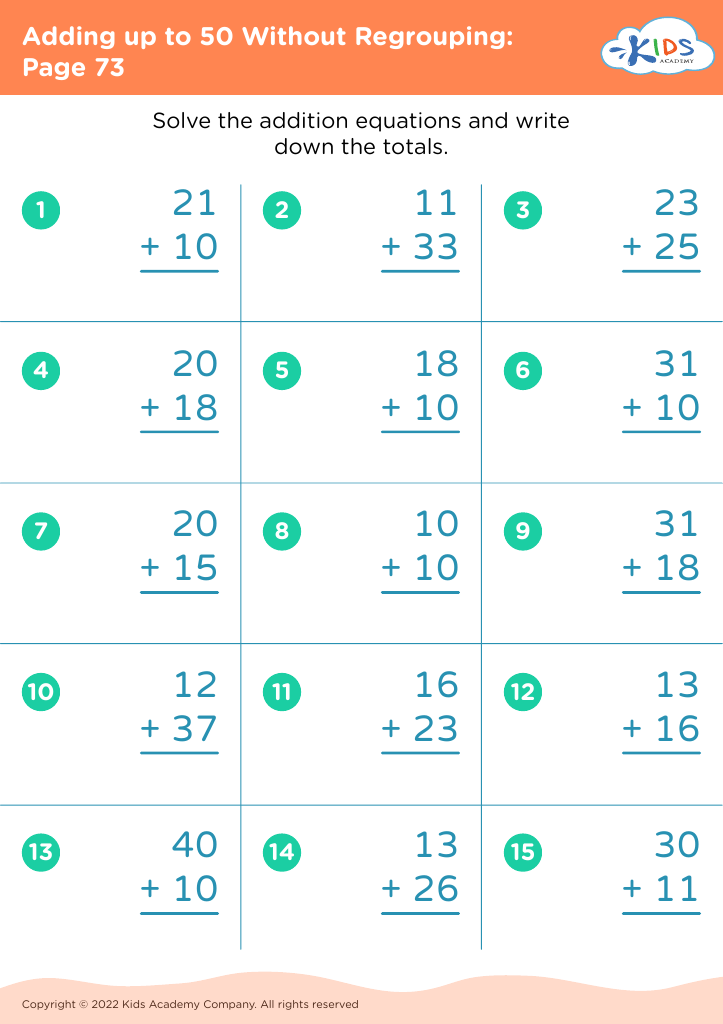
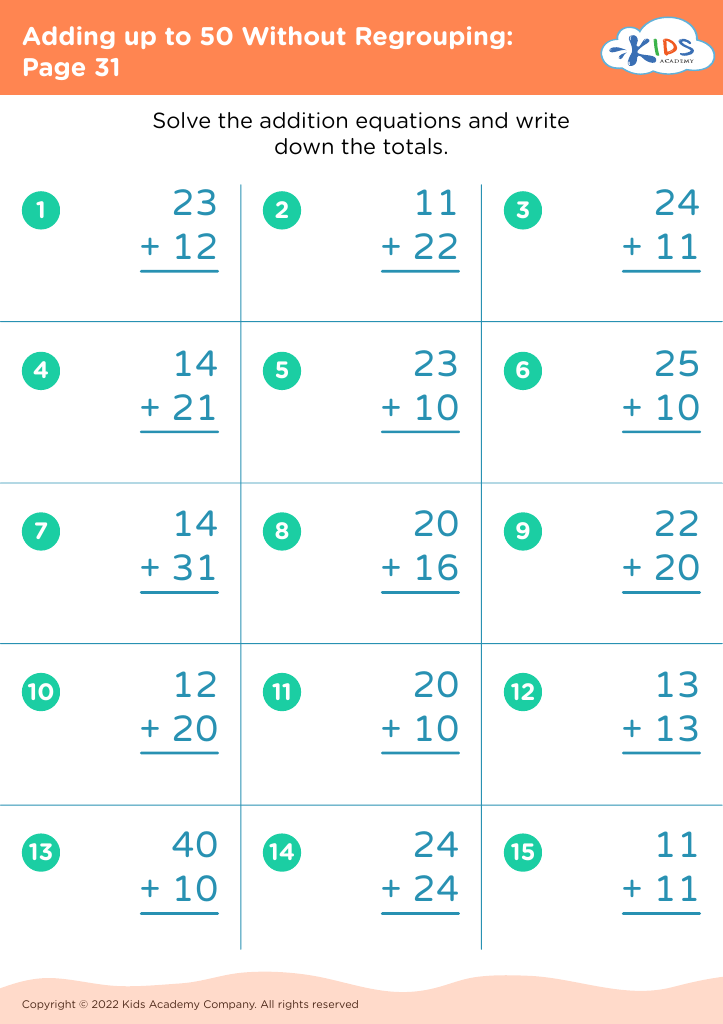
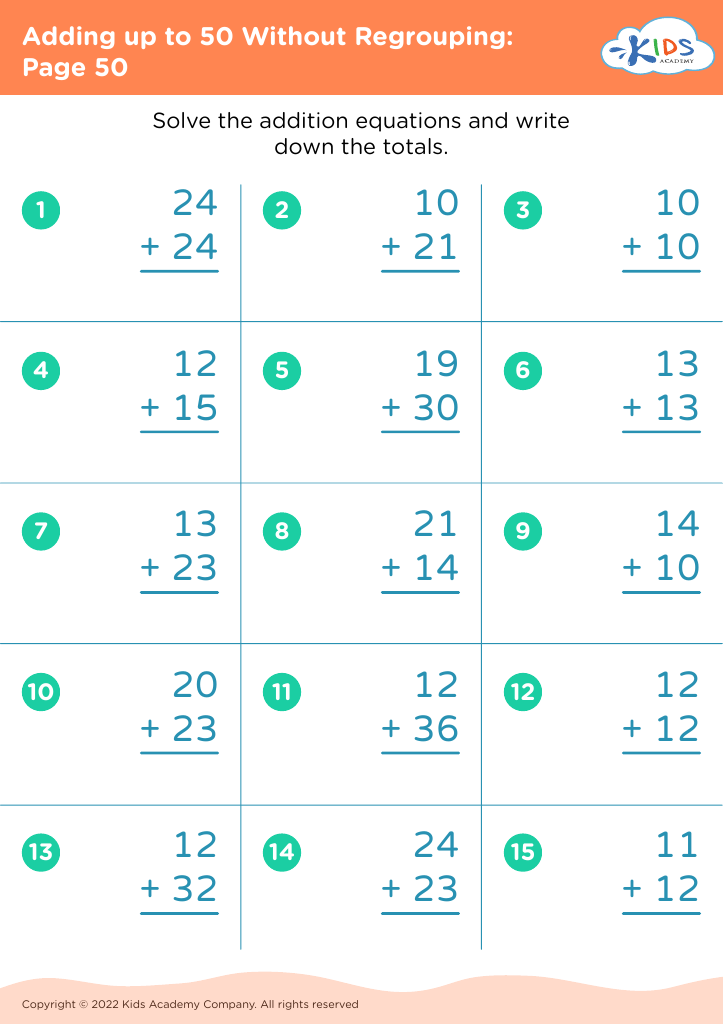


Understanding fractions and mastering addition without regrouping for ages 6-7 are crucial skills in a child's early mathematical development. At these ages, children are in the formative phase of their numerical cognition, and grasping these concepts lays groundwork for more complex math in later years.
Firstly, fractions introduce the idea that numbers can represent parts of a whole. This understanding is critical because it bridges the gap between whole numbers and more abstract mathematical concepts they will encounter later, such as decimals and percentages. Fractions help children grasp the notion of division and proportionality, essential for problem-solving in various real-life contexts.
Addition up to 50 without regrouping enhances arithmetic fluency and confidence. Mastering this skill means that children can quickly and accurately perform simple calculations, a vital competency for advanced math topics they will tackle in the future. It sets a foundation for efficient mental math and helps develop logical thinking and pattern recognition.
Both skills also build a child's confidence and positive attitude towards mathematics. Early success in these areas encourages continued interest and reduced anxiety about more challenging concepts. Educators and parents must focus on these foundational skills to ensure children have the tools they need for all future mathematical learning.