Basic addition practice Adding up to 50 Worksheets for Ages 6-7
5 filtered results
-
From - To
Our "Basic Addition Practice: Adding up to 50 Worksheets for Ages 6-7" offer engaging and effective activities designed to strengthen foundational math skills. Perfect for young learners, these worksheets help children practice and master basic addition within 50, boosting their confidence and arithmetic skills. Each worksheet includes fun, colorful exercises tailored to keep kids interested and motivated. Ideal for classrooms or home practice, our worksheets support your child's math journey, building a strong foundation for future learning. Enhance your child's mathematical abilities with our expertly designed, age-appropriate addition practice resources. Download today for fun-filled learning!
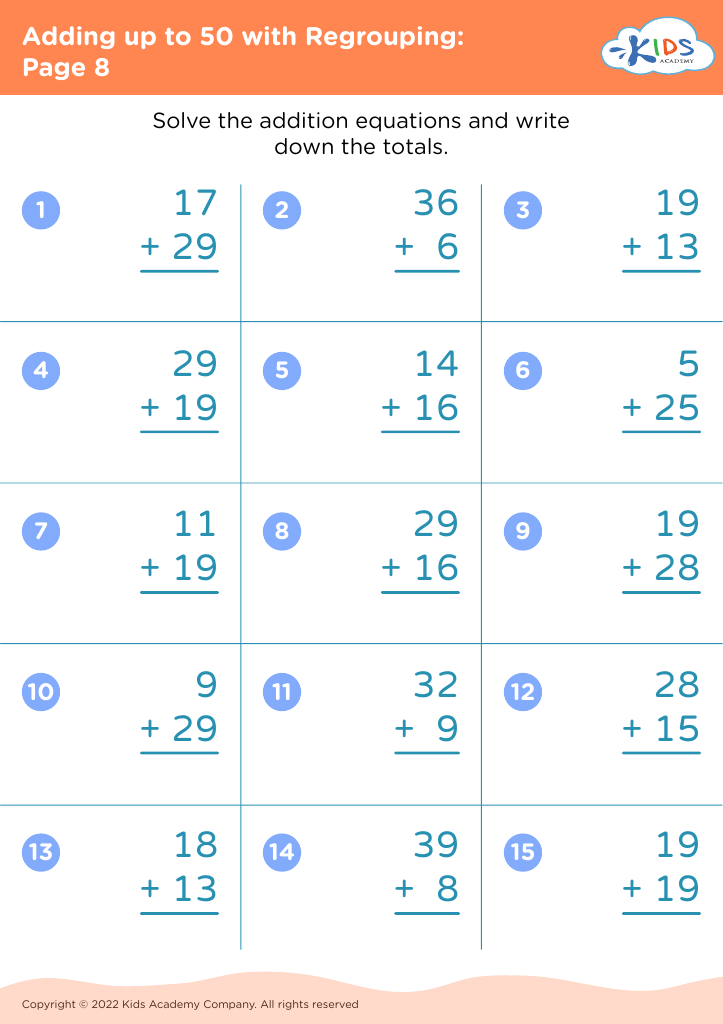
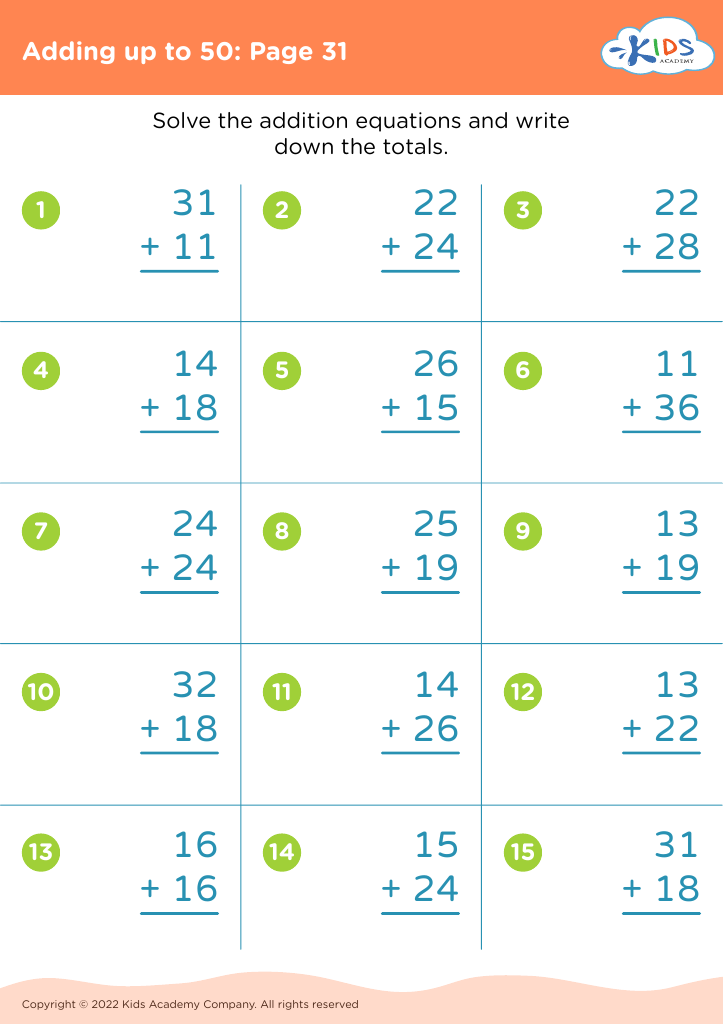
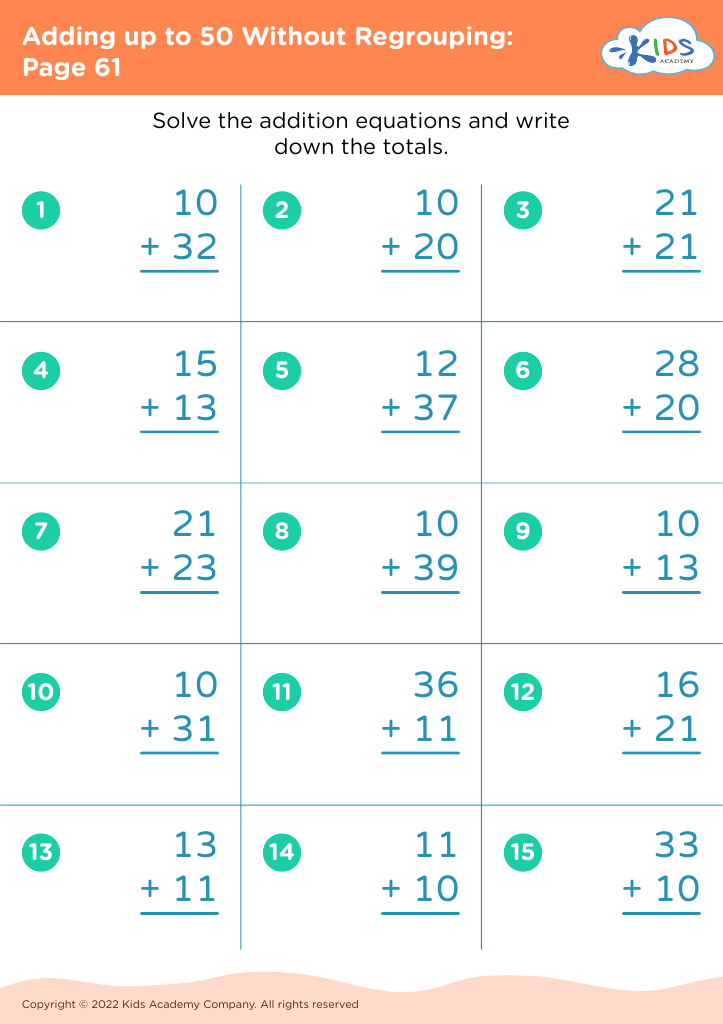
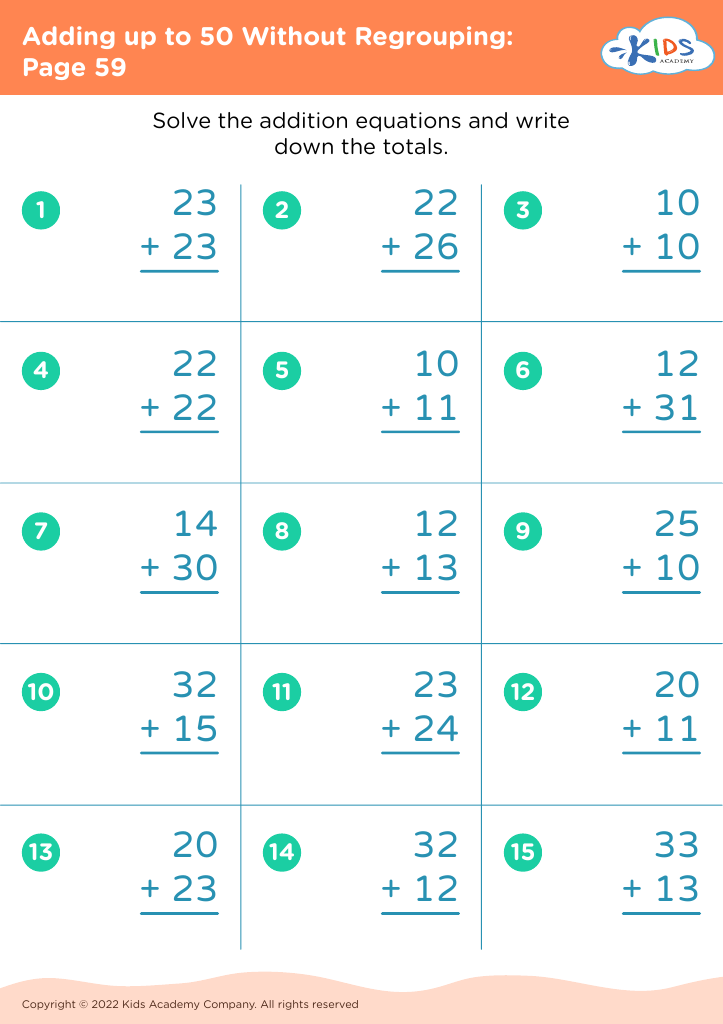
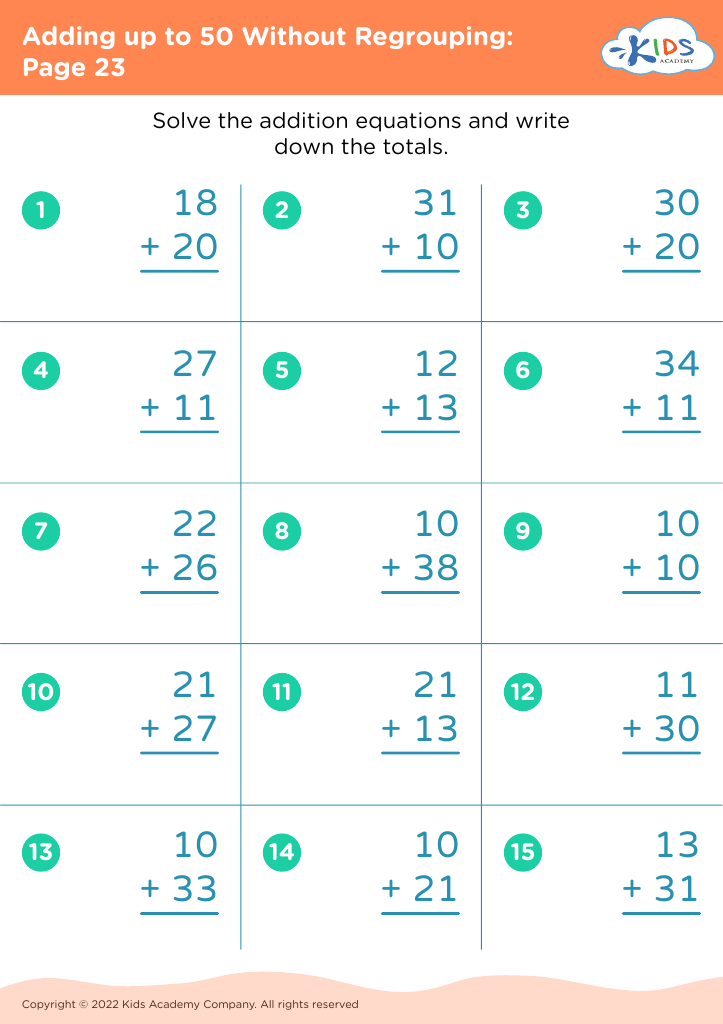




Basic addition practice, especially adding up to 50, is crucial for children aged 6-7 as it lays the foundation for their future mathematical understanding. At this age, children are developing core cognitive skills and numerical literacy, which are essential for more complex problem-solving tasks later on. By practicing basic addition, children improve their number sense, which helps them understand the relationships between numbers and increases their confidence in handling mathematical operations. This early exposure to addition also enhances their ability to visualize and manipulate numbers mentally.
Moreover, strong addition skills are intertwined with everyday activities. When children grasp basic addition, they become better equipped to handle real-world scenarios, such as counting money, measuring ingredients for a recipe, or keeping score in games. This practical application reinforces their learning and makes math more engaging.
Teachers and parents who emphasize regular practice in basic addition help foster a positive attitude toward math. Children who find success and enjoyment in math at an early age are more likely to develop a lifelong interest in the subject. This ongoing interest can lead to better academic performance not only in mathematics but also in other STEM-related fields. Therefore, just a little time spent on addition practice can go a long way in building a child's educational resilience and enthusiasm.








