Compare fractions Adding up to 50 Worksheets for Ages 6-7
3 filtered results
-
From - To
Explore our engaging "Compare Fractions Adding Up to 50 Worksheets" designed specifically for children aged 6-7! These worksheets help young learners develop essential math skills by focusing on comparing fractions in the context of sums up to 50. Packed with fun and interactive exercises, each worksheet encourages kids to visualize and understand how fractions relate to one another. Great for reinforcing classroom learning or as a home study resource, these worksheets make math both educational and enjoyable. Help your child build a strong foundation in fractions while boosting their confidence in math! Start comparing fractions today!
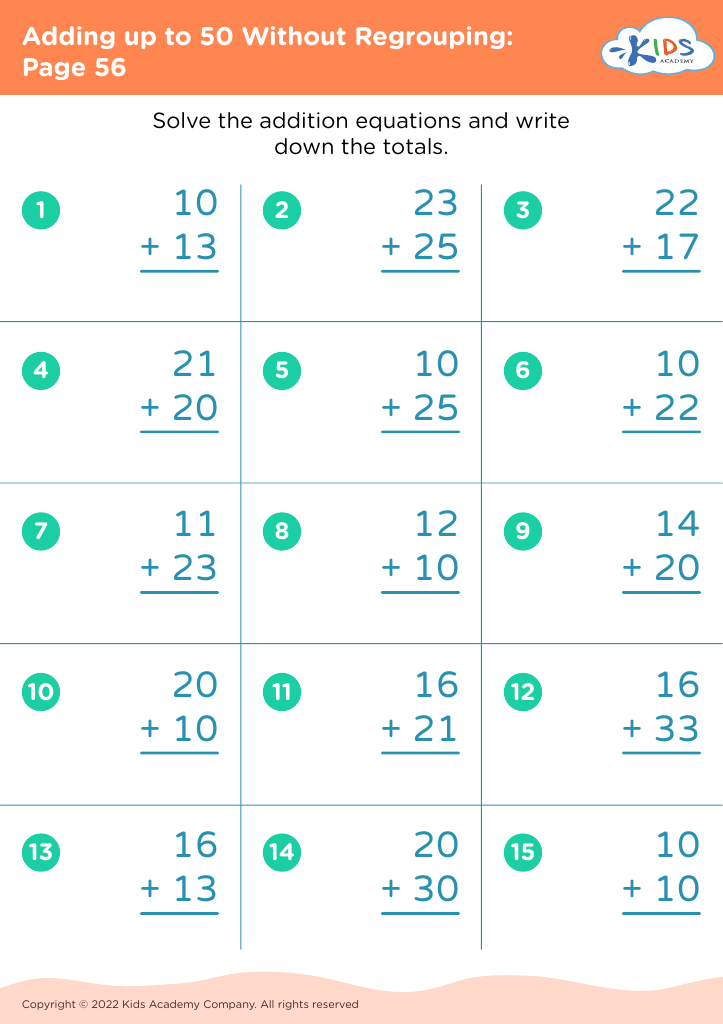
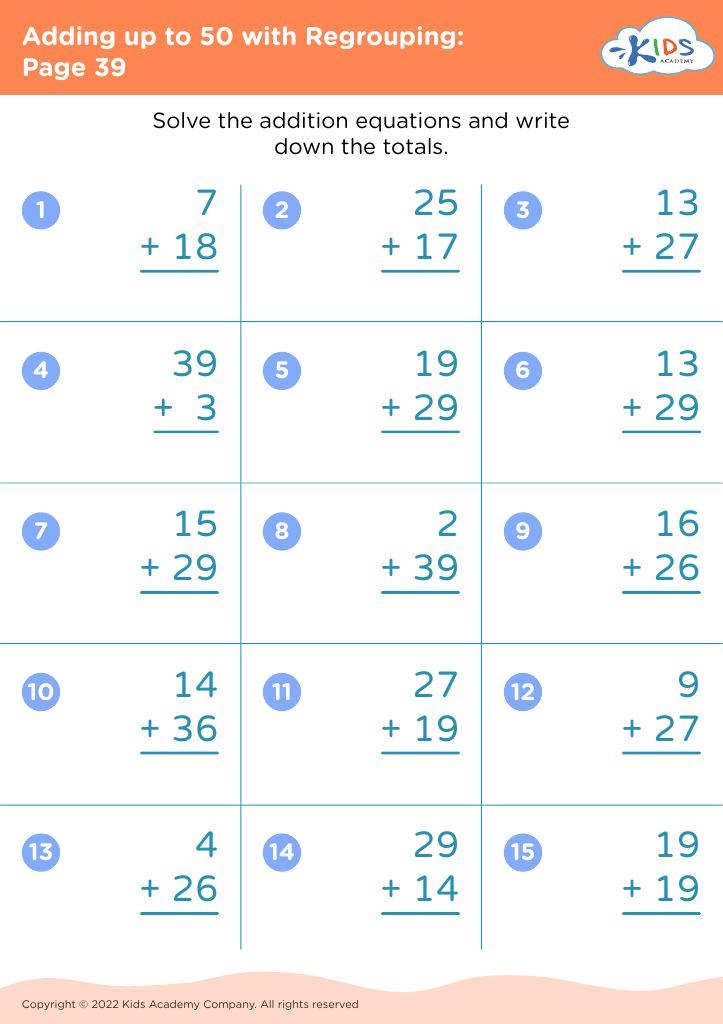
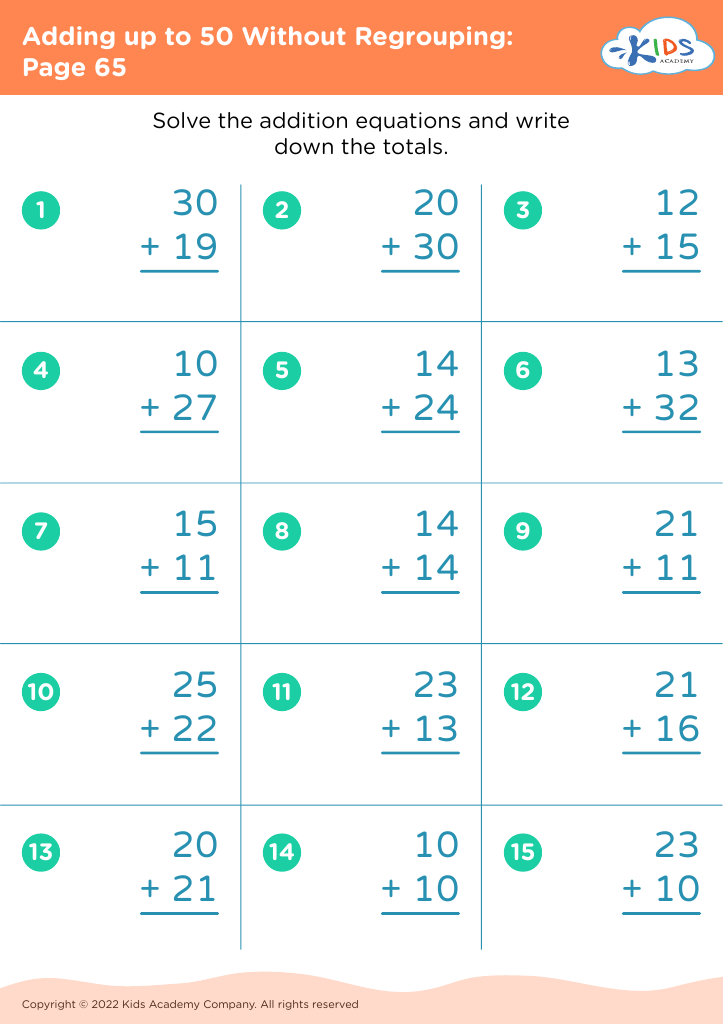




Comparing fractions is a fundamental mathematical skill that lays the groundwork for more complex concepts in later grades. For children ages 6-7, understanding how to compare fractions can significantly enhance their numerical reasoning and critical thinking abilities. When parents and teachers focus on comparing fractions that add up to 50, they not only help children understand the relationship between numbers but also instill a sense of number sense, which is vital for their overall math development.
At this age, kids are also beginning to grasp the idea of parts of a whole, and learning to compare fractions provides a practical way to visualize these parts. By engaging students in activities involving fractions that add up to 50, teachers can encourage collaboration, dialogue, and exploration among peers. This age-appropriate concept can make learning both effective and enjoyable.
Fostering strong foundational skills also promotes a positive attitude towards math, building confidence as children tackle more challenging topics in the future. Additionally, these activities can integrate real-life scenarios, showing students the relevance of math in everyday life, ultimately preparing them for academic success and informed decision-making in their daily activities.








