Comparing Fractions Adding up to 50 Worksheets for Ages 6-7 - Page 2
30 filtered results
-
From - To
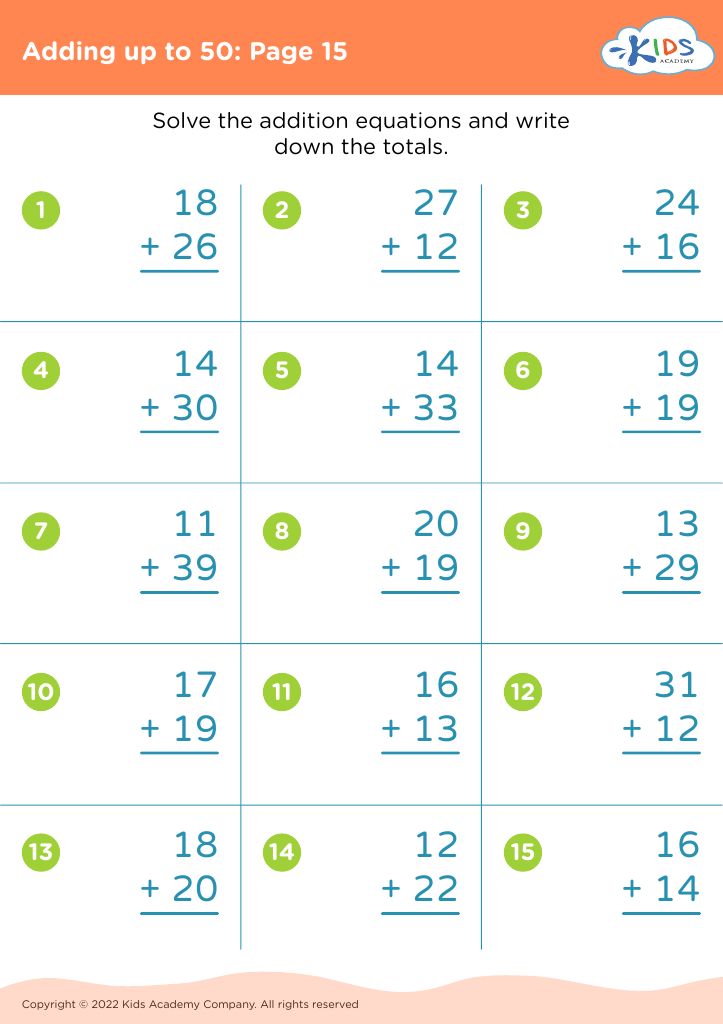
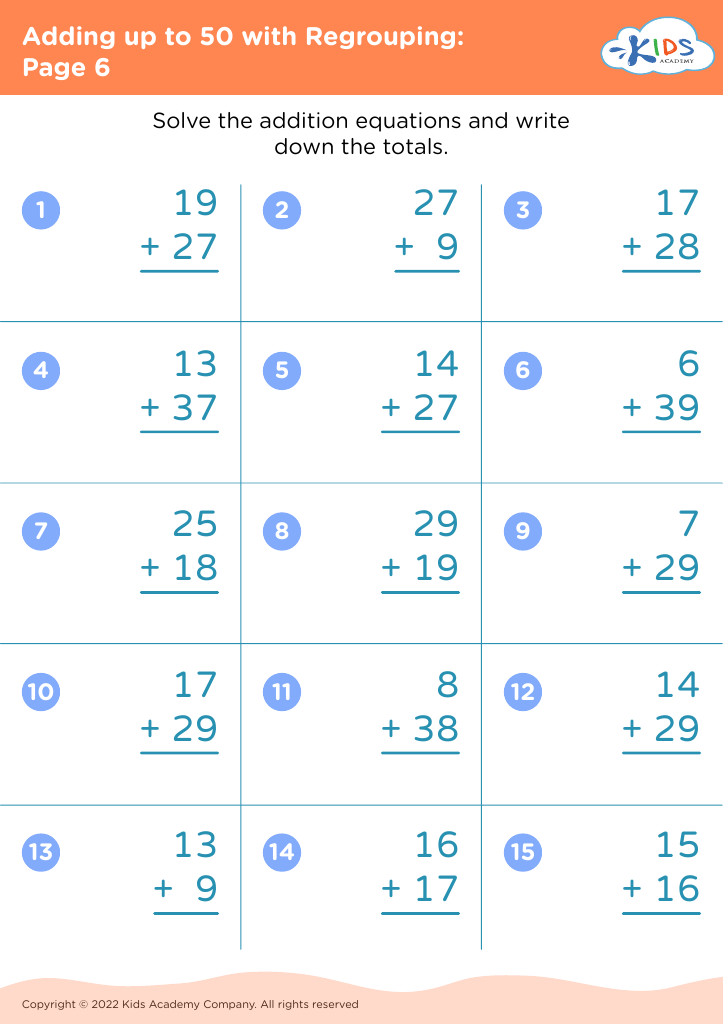
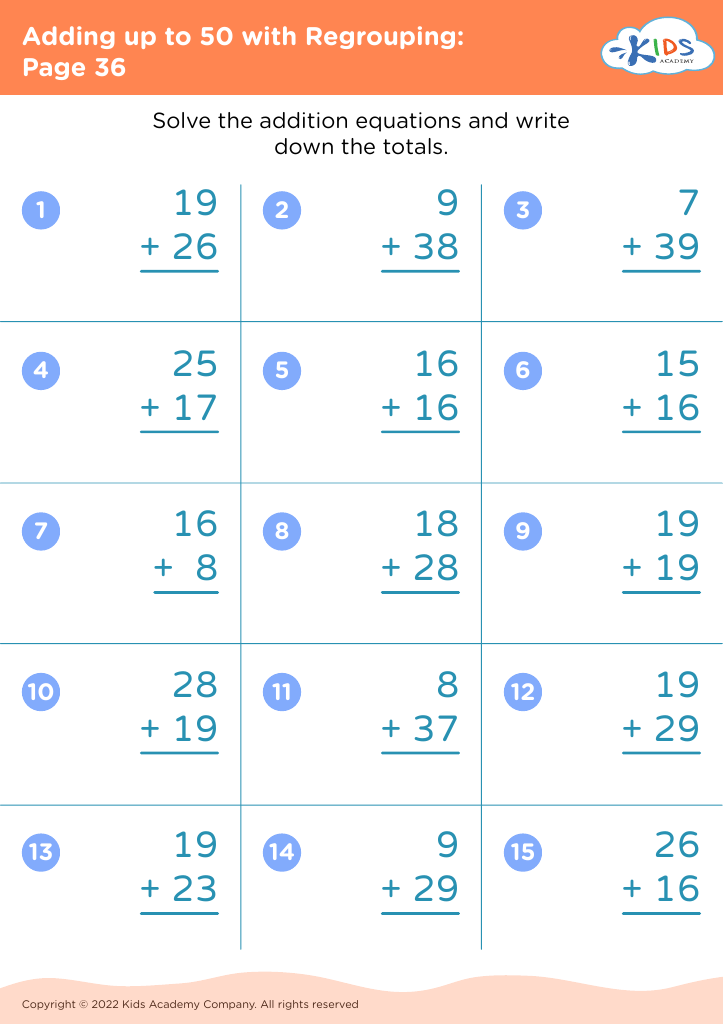
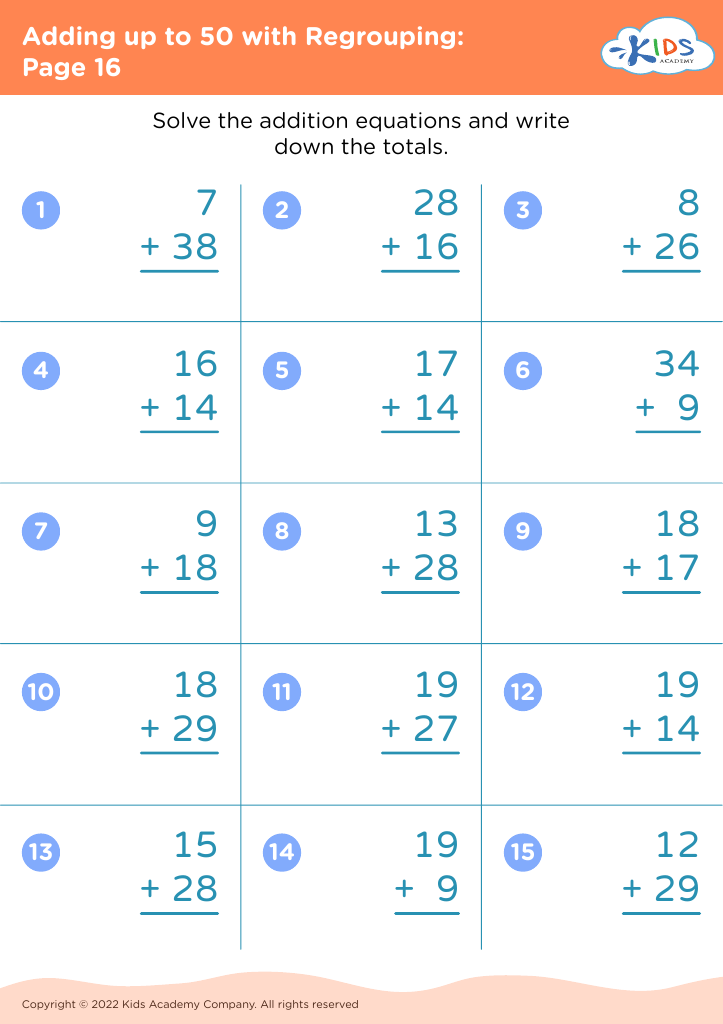
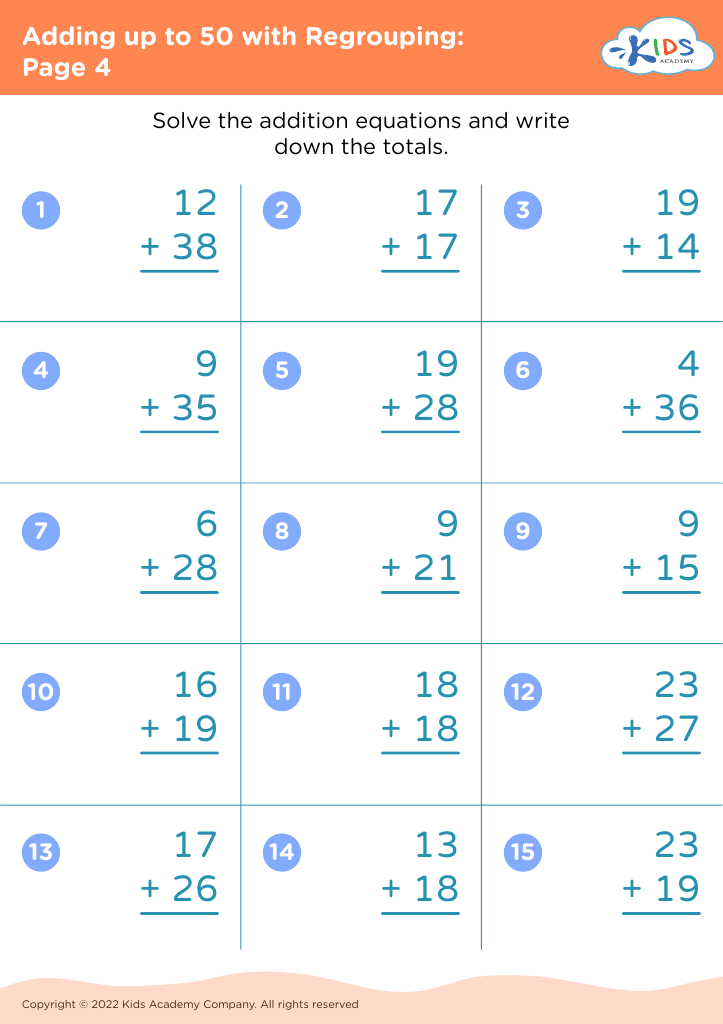
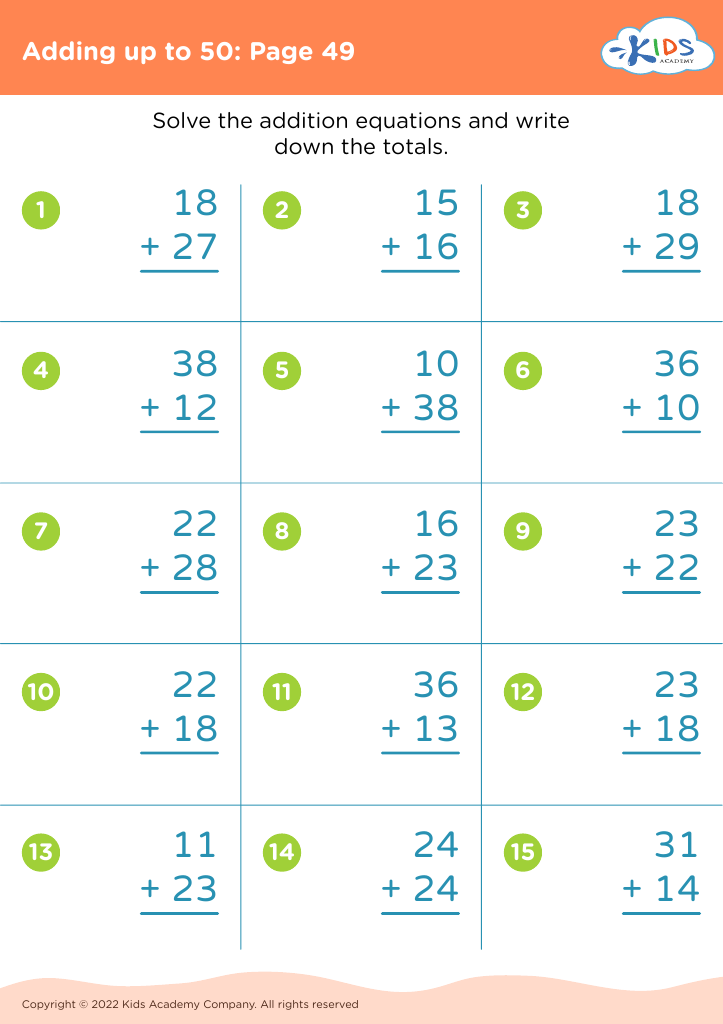




Comparing fractions is a fundamental math skill that plays a crucial role in a child's cognitive development, particularly for ages 6-7. At this developmental stage, children are beginning to grasp numerical concepts and relationships. Understanding how to compare fractions equips them with the ability to analyze and interpret quantities in meaningful ways. When activities involve comparing fractions that add up to 50, such as slicing a pizza or sharing a cake, kids learn not only about fractions but also about teamwork and equity.
Teachers and parents should recognize the significance of this skill for several reasons. Firstly, it fosters critical thinking; children learn to evaluate and reason, laying the groundwork for future mathematical concepts. Additionally, these practice sessions enhance problem-solving abilities, conveying the essence of addition and grouping to a larger whole.
Furthermore, early engagement with fractions can mitigate future learning obstacles in mathematics. Children who grasp comparing fractions are better prepared for more complex concepts in later grades, shaping a brighter academic trajectory. Lastly, filial support in learning nurtures perseverance and social interaction, enriching the child's learning journey. Consequently, both parents and teachers play a vital role in promoting an environment where children feel comfortable exploring these essential skills.








