Develop fine motor skills Adding up to 50 Worksheets for Ages 6-7
4 filtered results
-
From - To
Boost your child's fine motor skills with our "Adding Up to 50 Worksheets" designed specifically for ages 6-7! These engaging worksheets combine fun math exercises with creative activities that enhance hand-eye coordination and dexterity. Each worksheet encourages children to practice addition while using various writing and cutting skills, promoting both cognitive and physical development. As students work through colorful problems and enjoyable tasks, they build confidence in math and strengthen the muscles needed for proficient writing. Perfect for classroom or home learning, these worksheets provide a comprehensive approach to learning that makes math enjoyable and beneficial for young learners!
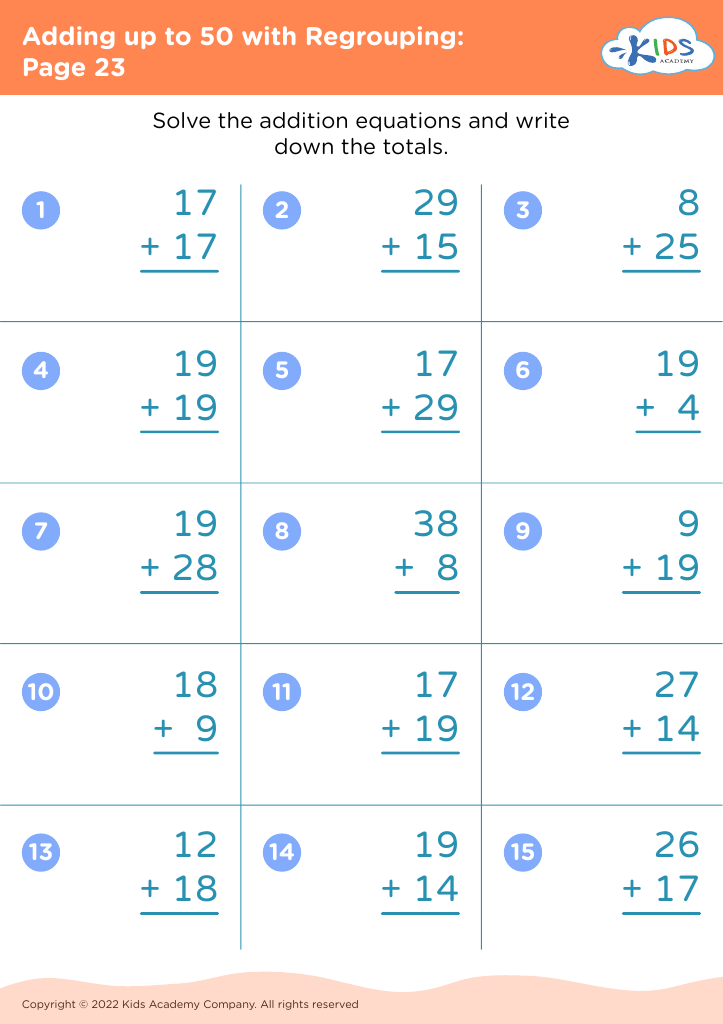
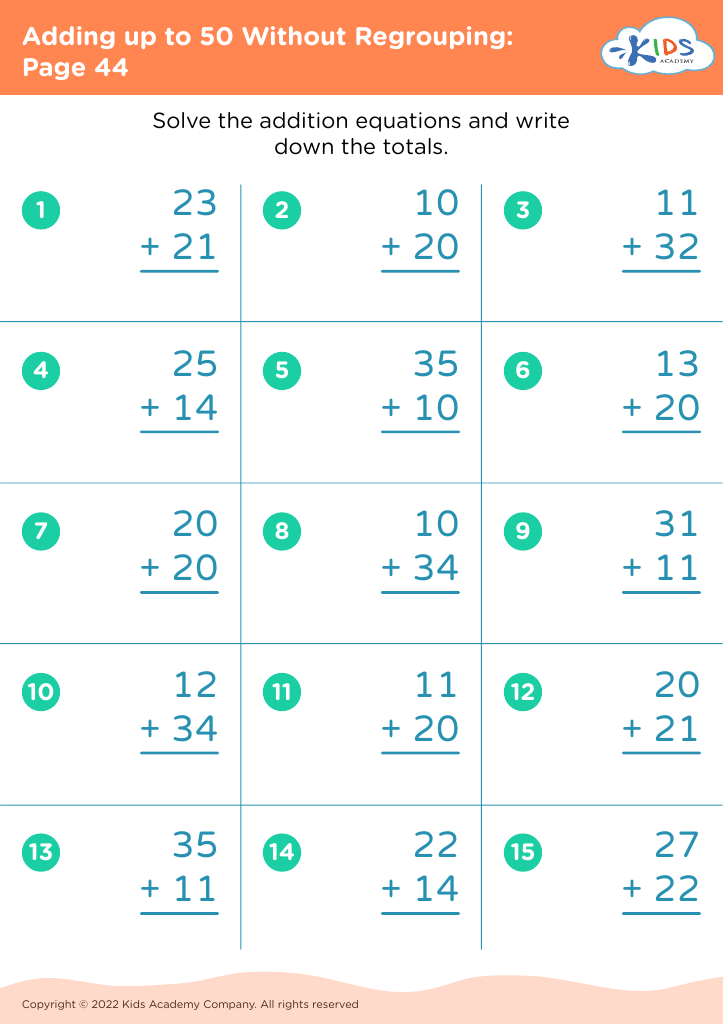
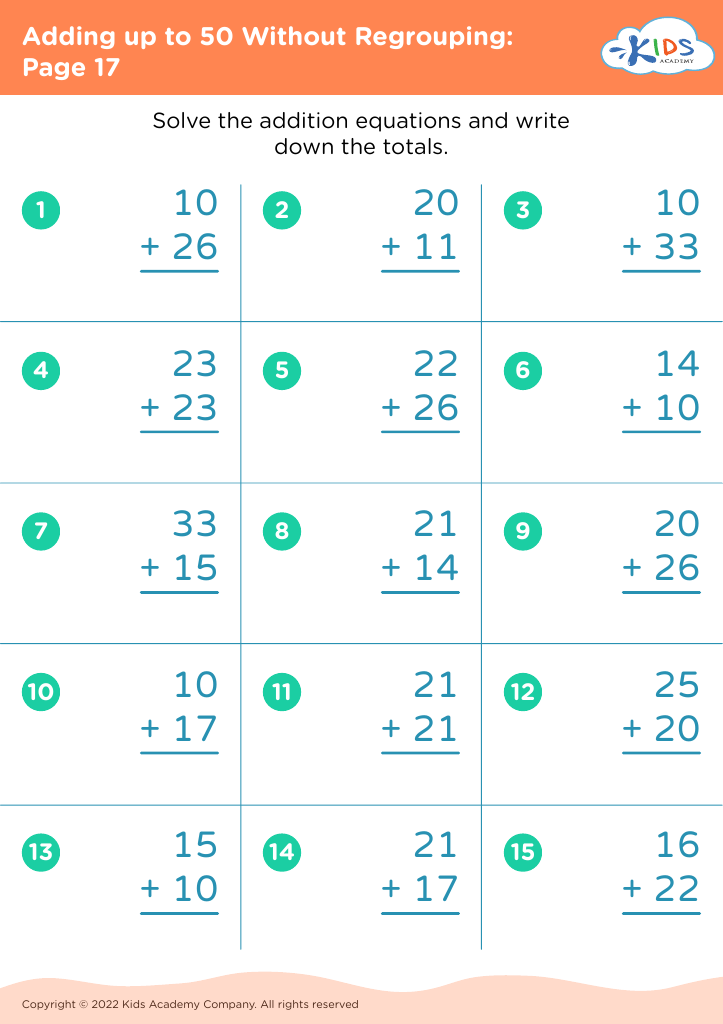
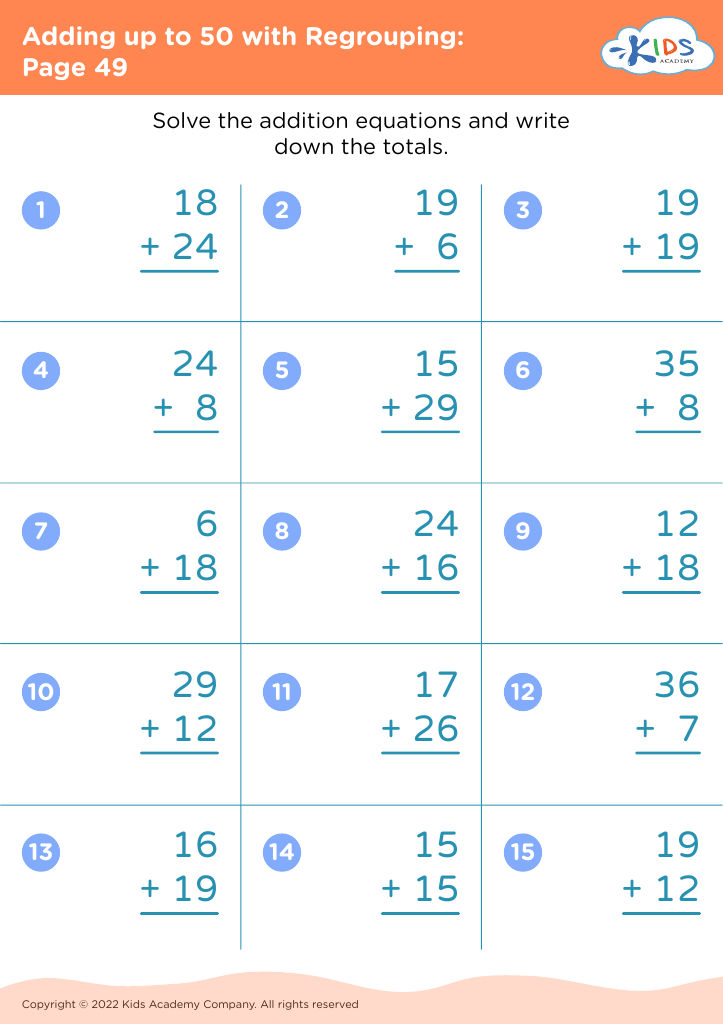




Fine motor skills are essential for children aged 6-7 as they form the foundation for numerous daily tasks and future learning. At this crucial stage, children refine their ability to control small movements, which is vital for writing, drawing, and self-care activities like buttoning shirts or tying shoelaces. Parents and teachers should care about developing these skills, particularly with activities that involve numbers like adding up to 50, because it combines physical dexterity with cognitive skills.
Engaging in exercises that promote fine motor skills can enhance children's hand-eye coordination and finger strength while reinforcing their math comprehension. For instance, using manipulatives in math games, such as counting beads or assembling puzzles, allows children to physically engage with numbers while improving their grip and dexterity.
Furthermore, these skills are linked to greater independence and confidence. When children can successfully perform tasks requiring fine motor control, they feel a sense of achievement, thereby fostering positive self-esteem. Also, enhancing these abilities early sets a solid groundwork for more complex tasks in later schooling. Overall, supporting fine motor skill development is crucial for holistic growth in young learners, influencing their academic performance and daily life skills.








