Identifying shapes Adding up to 50 Worksheets for Ages 6-7
9 filtered results
-
From - To
Unlock your child's potential with our "Identifying Shapes Adding up to 50 Worksheets," designed specifically for ages 6-7. These engaging worksheets combine shape recognition and addition skills, encouraging young learners to identify various shapes while practicing their math abilities by adding numbers to reach a total of 50. Colorful illustrations and fun exercises keep children motivated and excited to learn. Perfect for classroom use or homeschooling, these worksheets foster critical thinking, enhance numerical understanding, and boost shape identification skills. Support your child's educational journey with resources that make learning fun and effective! Download now and watch their confidence soar!
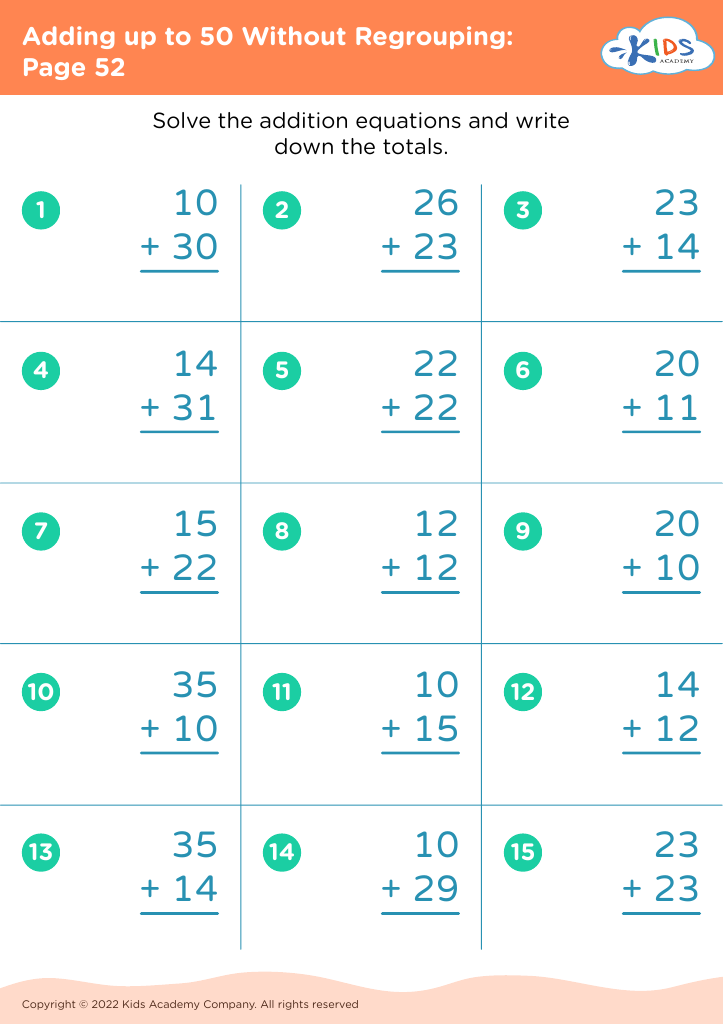
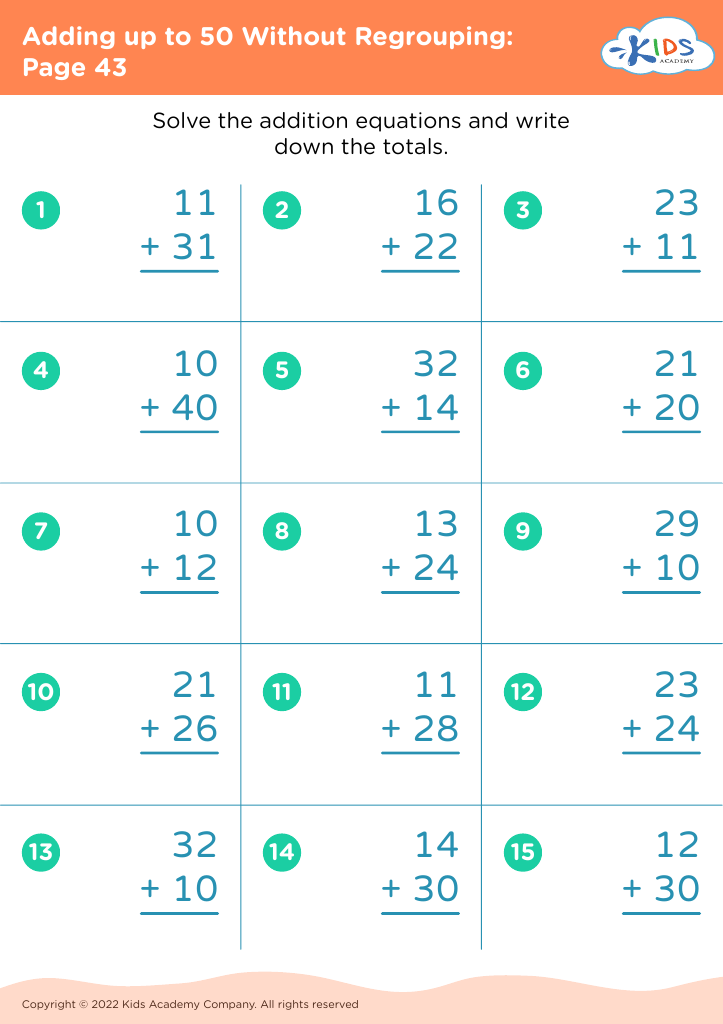
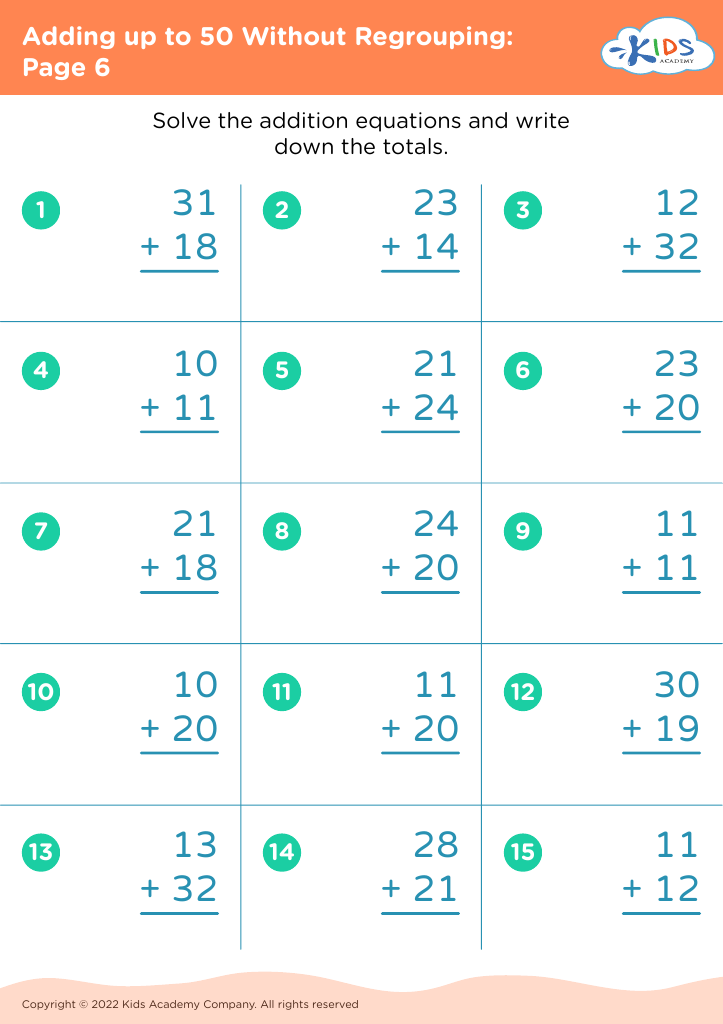
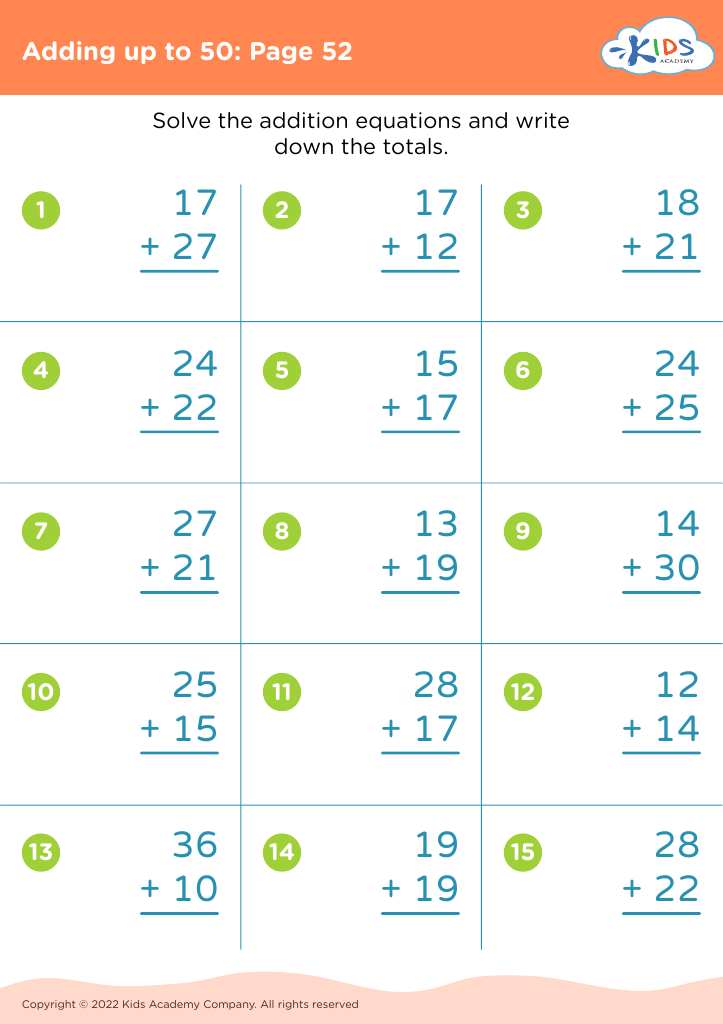
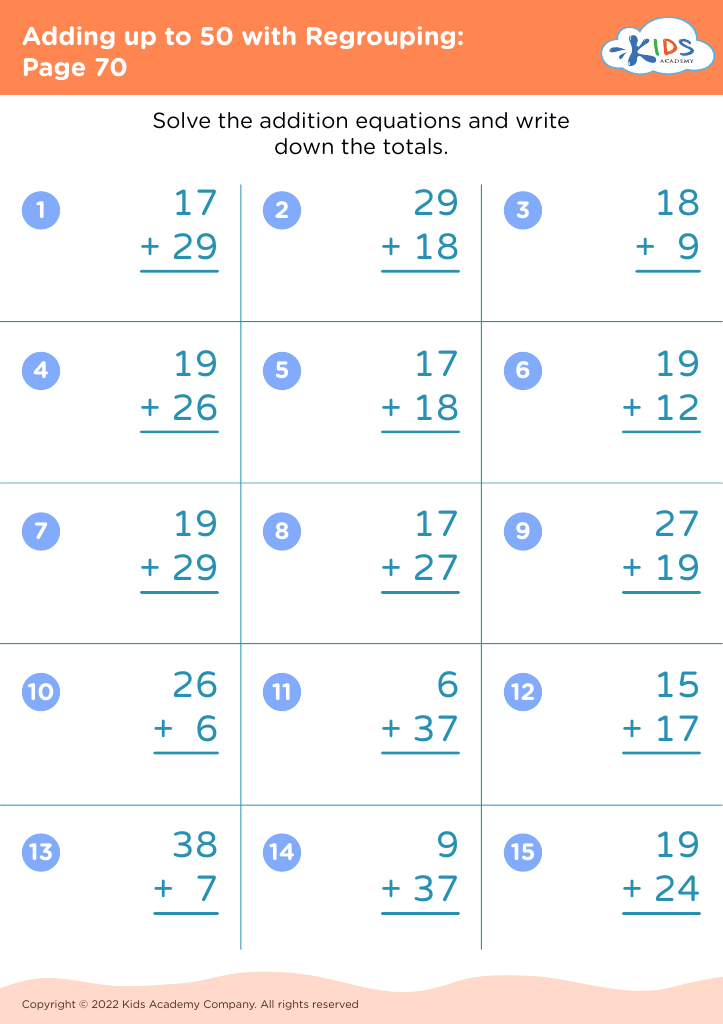
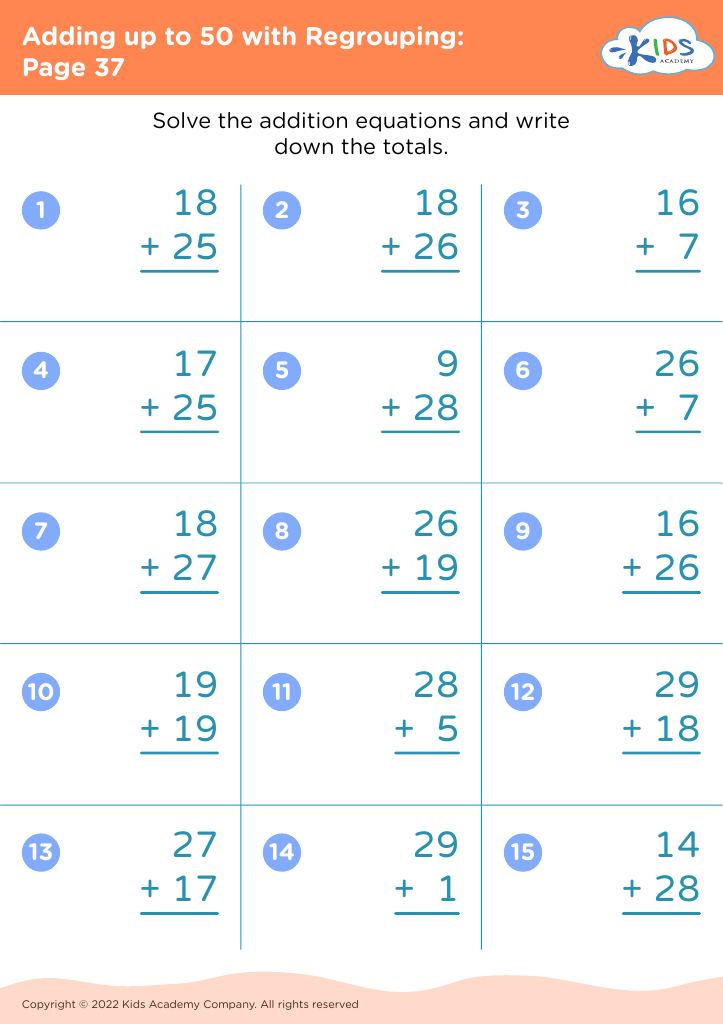
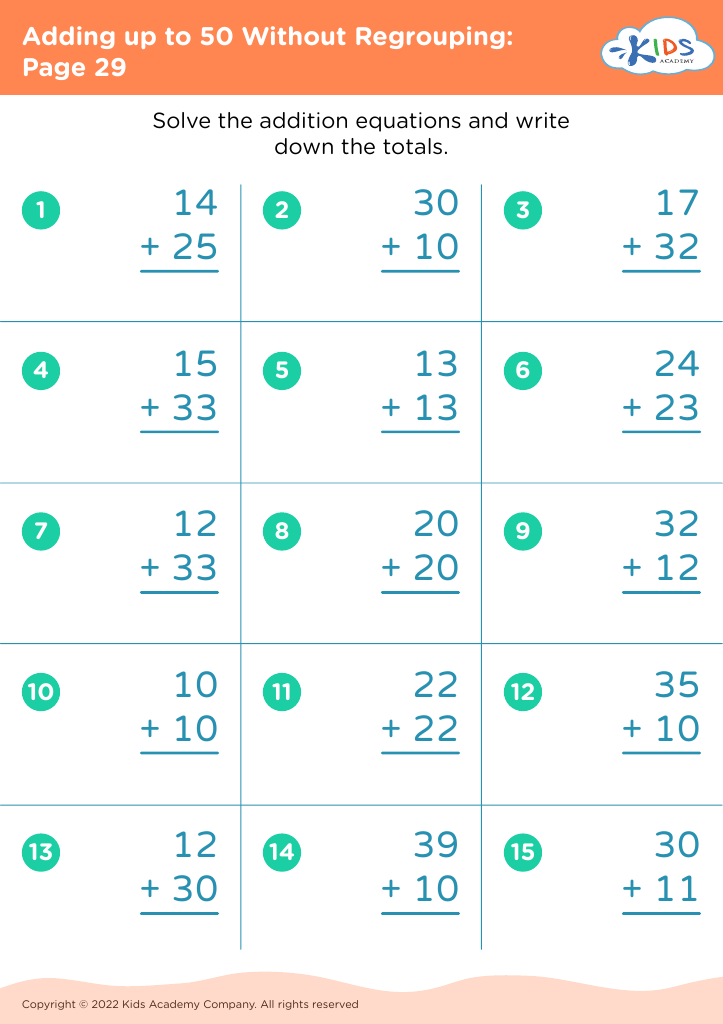
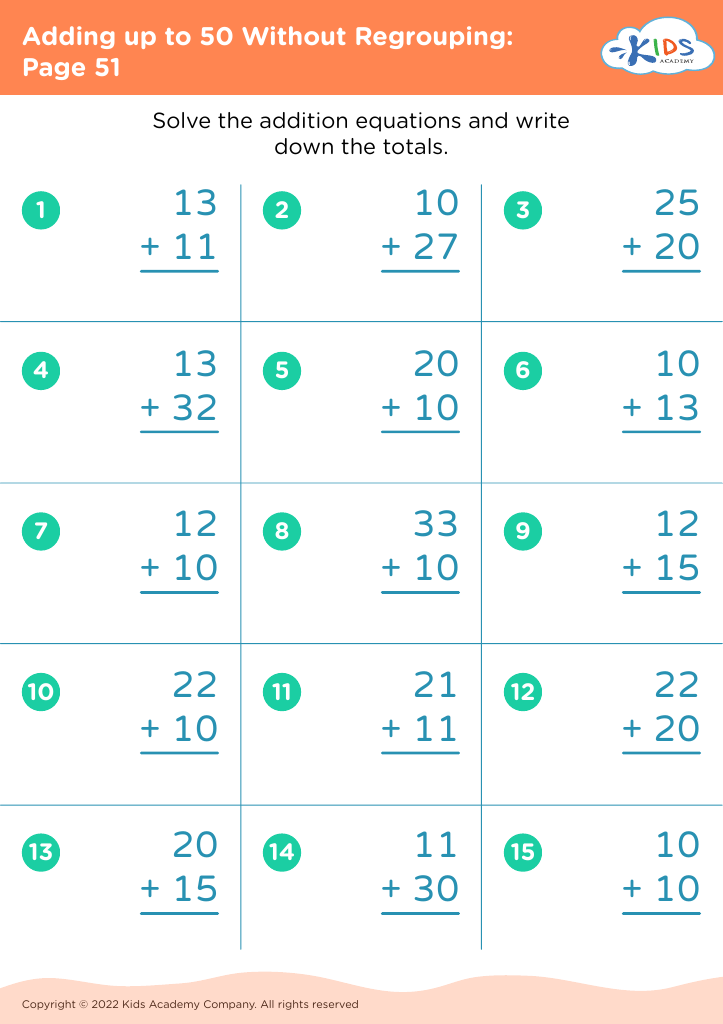
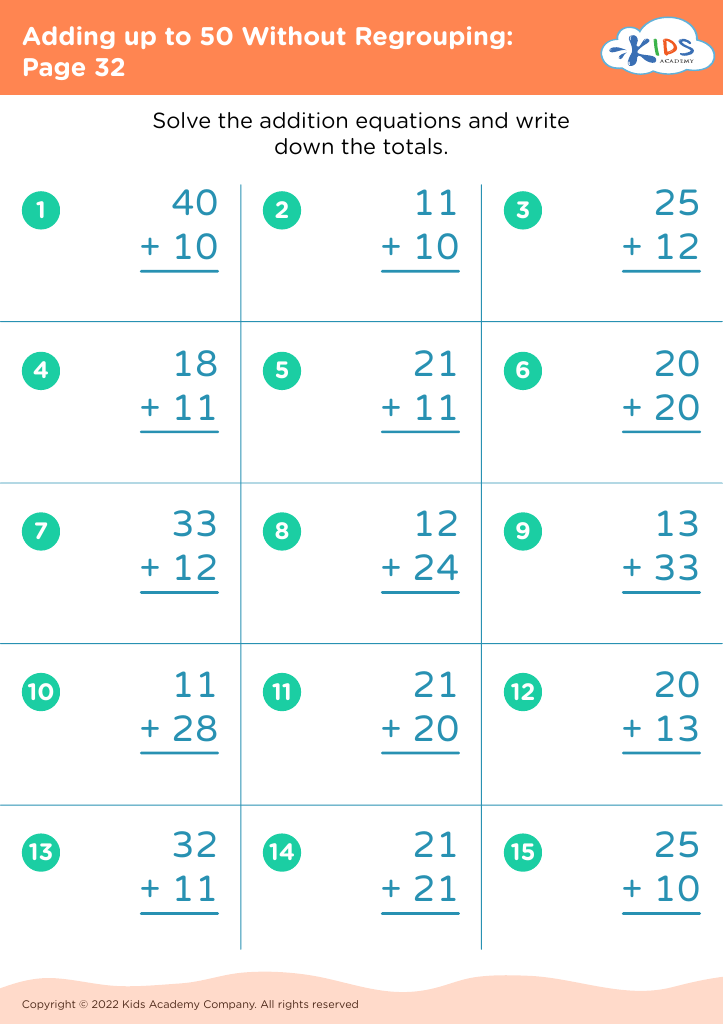




Identifying shapes and understanding basic addition are crucial skills for children aged 6-7, as they lay the foundation for future learning in mathematics and spatial awareness. At this age, children are naturally curious and capable of grasping complex concepts when presented in engaging and interactive ways.
Recognizing shapes sharpens a child's observational skills and enhances their ability to categorize and differentiate objects in their environment. This foundational knowledge is vital for subjects such as geometry and can aid in problem-solving throughout their academic journey. Additionally, distinguishing between various shapes strengthens critical thinking skills, promoting creativity and innovation as children learn to visualize and manipulate objects mentally.
Simultaneously, adding up to 50 enhances a child’s arithmetic abilities, fostering numerical fluency essential for their everyday life. Mastery in addition not only aids academic achievements but also boosts a child’s confidence in handling foundational math operations.
For parents and teachers, focusing on these skills ensures holistic development in early learners. Educators can introduce engaging activities, while parents can reinforce learning at home, paving the way for autonomous problem solvers who are equipped for higher-level mathematics and real-world applications. Recognizing the connection between shape identification and quantitative skills contributes to a well-rounded educational experience.








