Improve number recognition Adding up to 50 Worksheets for Ages 6-7
5 filtered results
-
From - To
Boost your child's number recognition and addition skills with our "Improving Number Recognition Adding Up to 50 Worksheets" designed for ages 6-7. These engaging worksheets help young learners master the basics of addition, promoting confidence and fluency with numbers up to 50. Each activity blends fun visuals with math exercises, ensuring children stay interested while practicing important skills. Perfect for classroom use or homeschooling, these resources offer an excellent way to support your child’s math journey, paving the way for future success. Download now from Kids Academy to watch your child's number proficiency soar!
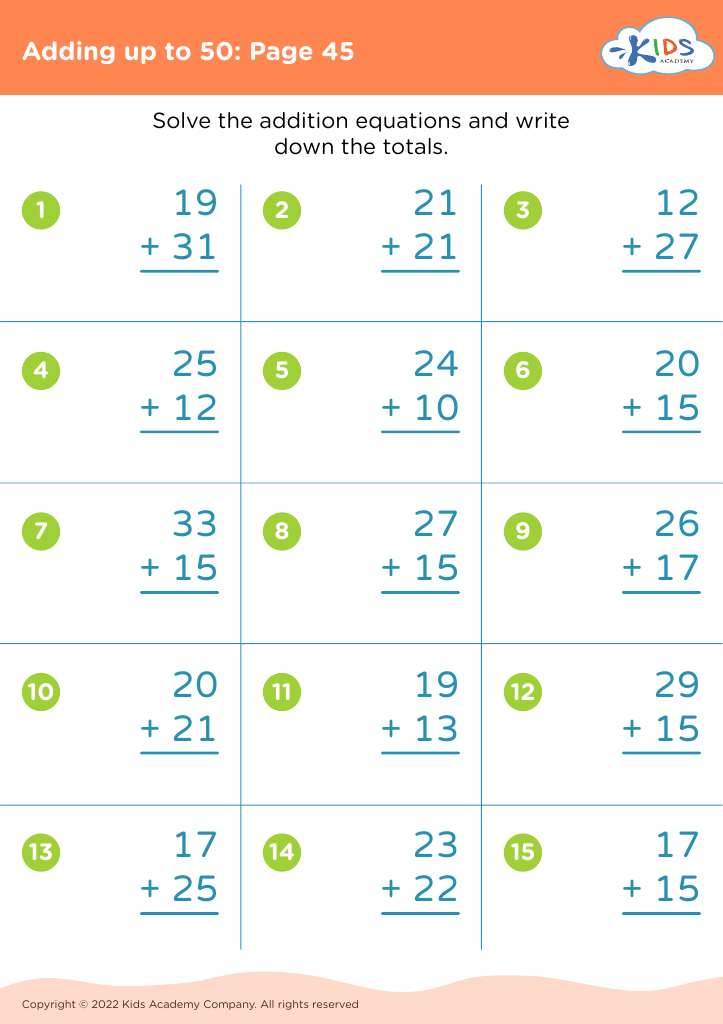
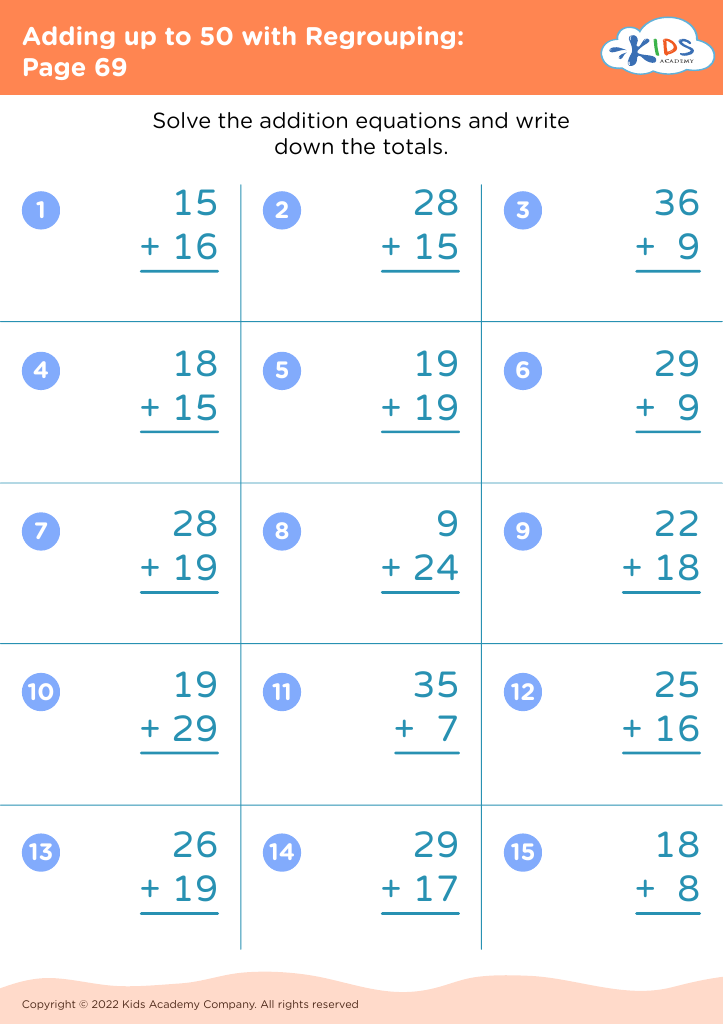
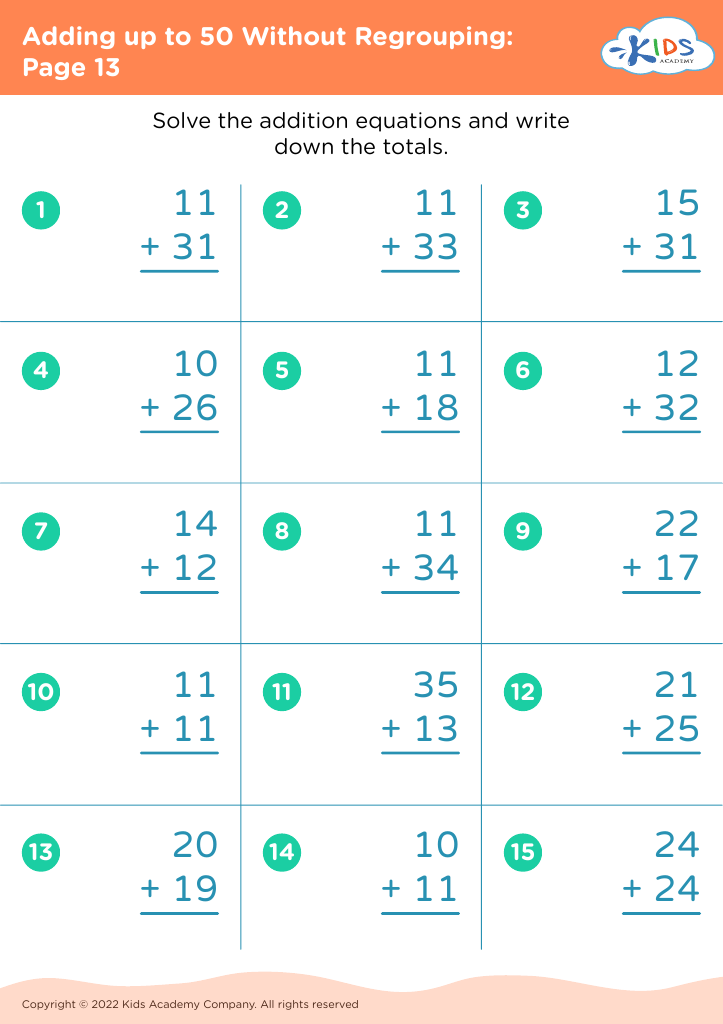
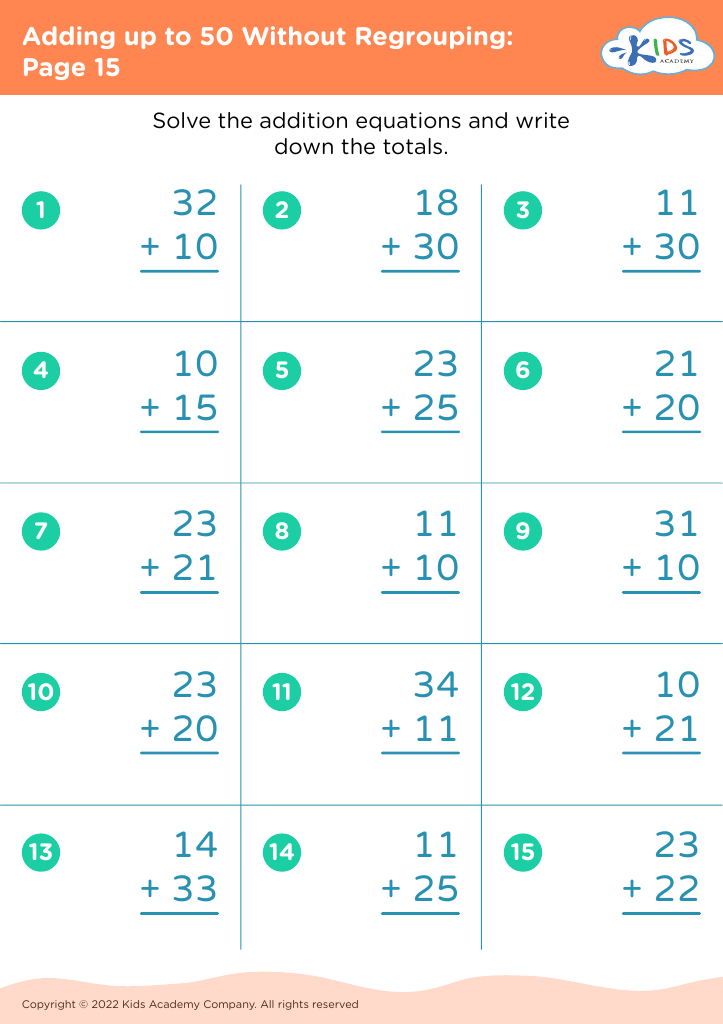
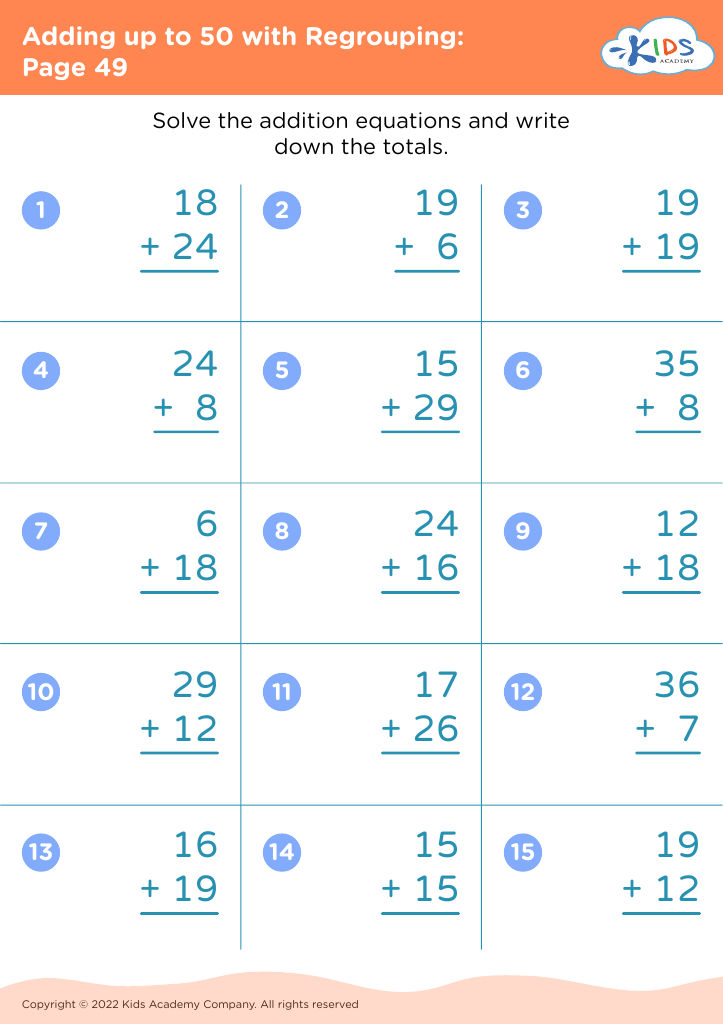




Parents and teachers should care about improving number recognition and addition skills up to 50 for ages 6-7 because these abilities form the foundation of early mathematics learning. Recognizing numbers effortlessly helps young children develop essential counting skills, which are critical for understanding more complex math concepts later on. At this age, children are transitioning from simple counting to practical arithmetic, and developing strong skills in adding numbers up to 50 is crucial for their educational progression.
Solid number recognition and basic addition are pivotal not just academically but also in daily life. For instance, understanding quantities and their differences aids kids in grasping the concept of time, handling money, and comparing values, all of which are everyday practical skills. Additionally, developing these skills early fosters a sense of achievement and confidence, which encourages a positive attitude towards learning math.
Moreover, early proficiency in these areas ensures a smoother transition to more advanced mathematical operations such as subtraction, multiplication, and division. It can also help identify any potential learning difficulties at an early stage, allowing for timely intervention. Ensuring that children master these skills provides them with the necessary tools for a strong academic foundation and lifelong numeracy.








