Logical thinking Adding up to 50 Worksheets for Ages 6-7
3 filtered results
-
From - To
Boost your child's logical thinking skills with our "Adding Up to 50 Worksheets" designed for ages 6-7! This set of engaging worksheets challenges young minds to solve addition problems creatively, enhancing their critical thinking and problem-solving abilities. Each worksheet features a variety of fun exercises that make learning math enjoyable, supporting the development of essential skills in a playful manner. Perfect for at-home learning or classroom use, these worksheets are aligned with educational standards, ensuring your child builds a solid foundation in math. Help your young learners master addition up to 50 and nurture their logical thinking skills today!
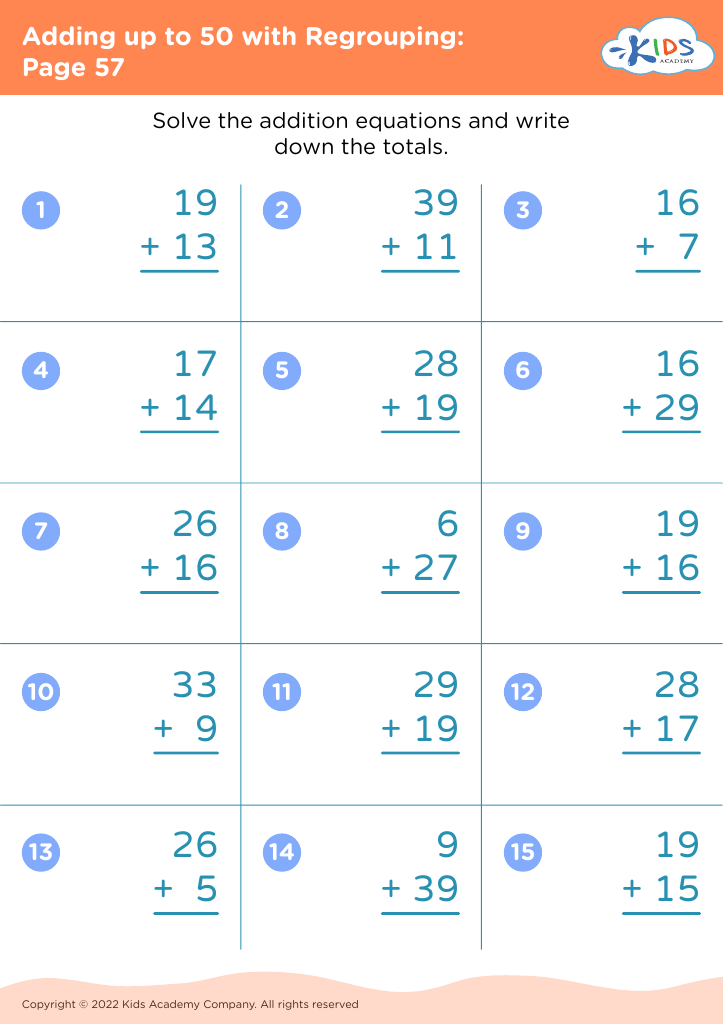
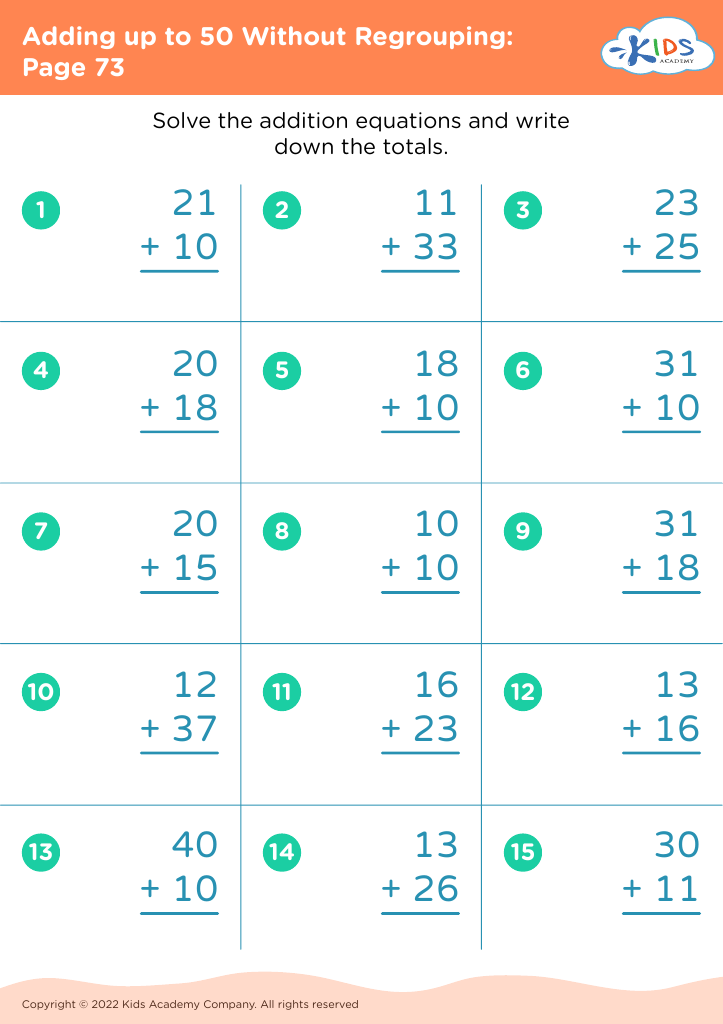
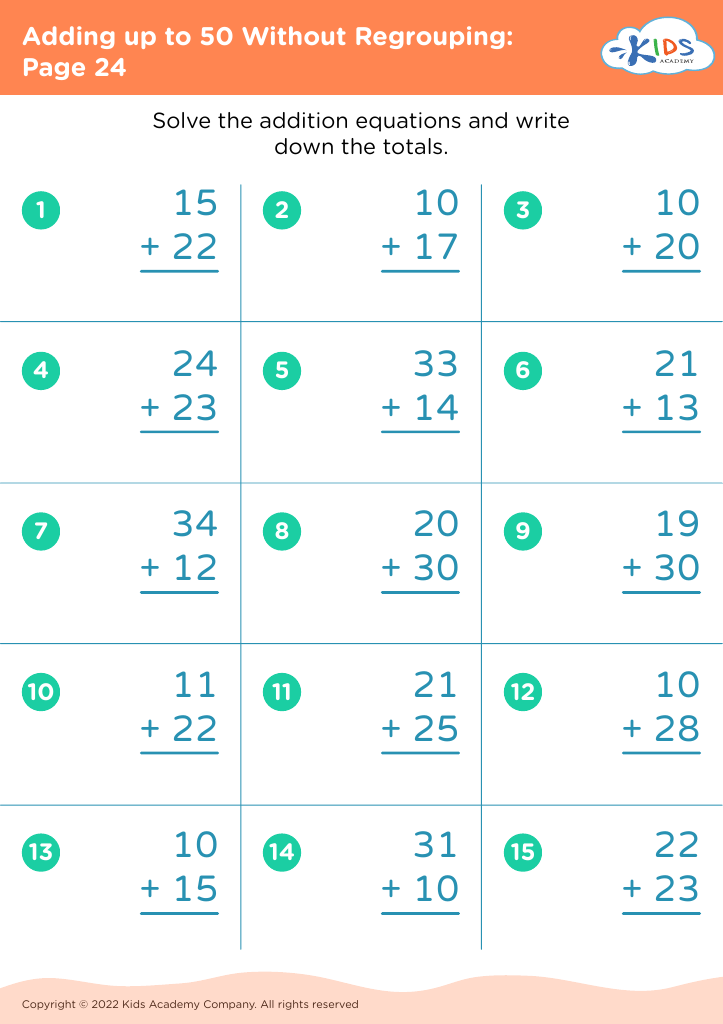




Logical thinking, especially through activities like adding numbers up to 50, is crucial for children aged 6-7 as it lays the groundwork for problem-solving and critical thinking skills. At this stage, children are developing cognitive abilities that will influence their academic success and daily life. Understanding the process of addition enhances their ability to think systematically, a skill that extends beyond math into reading comprehension, science, and social studies.
Moreover, practicing addition up to 50 fosters confidence. Mastery of basic math concepts empowers children to tackle more complex operations, mitigating math anxiety and building a positive attitude towards learning. This age group is also at a critical stage for developing these foundational skills; engaging them with fun and interactive activities, such as games or puzzles, makes learning enjoyable and effective.
For parents and teachers, nurturing logical thinking through math activities not only supports academic achievement but also encourages teamwork and communication skills when children practice together. By emphasizing these principles, adults can help shape a child’s ability to think logically and independently, preparing them for the challenges of higher education and fostering a lifelong love of learning.








