Problem Solving Adding up to 50 Worksheets for Ages 6-7
3 filtered results
-
From - To
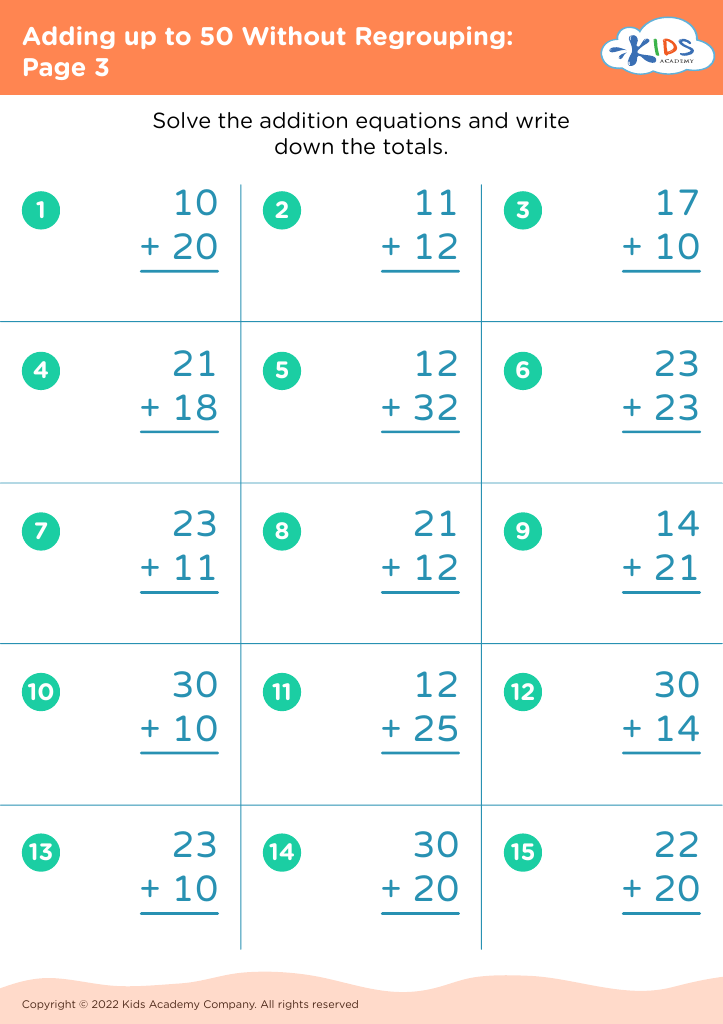
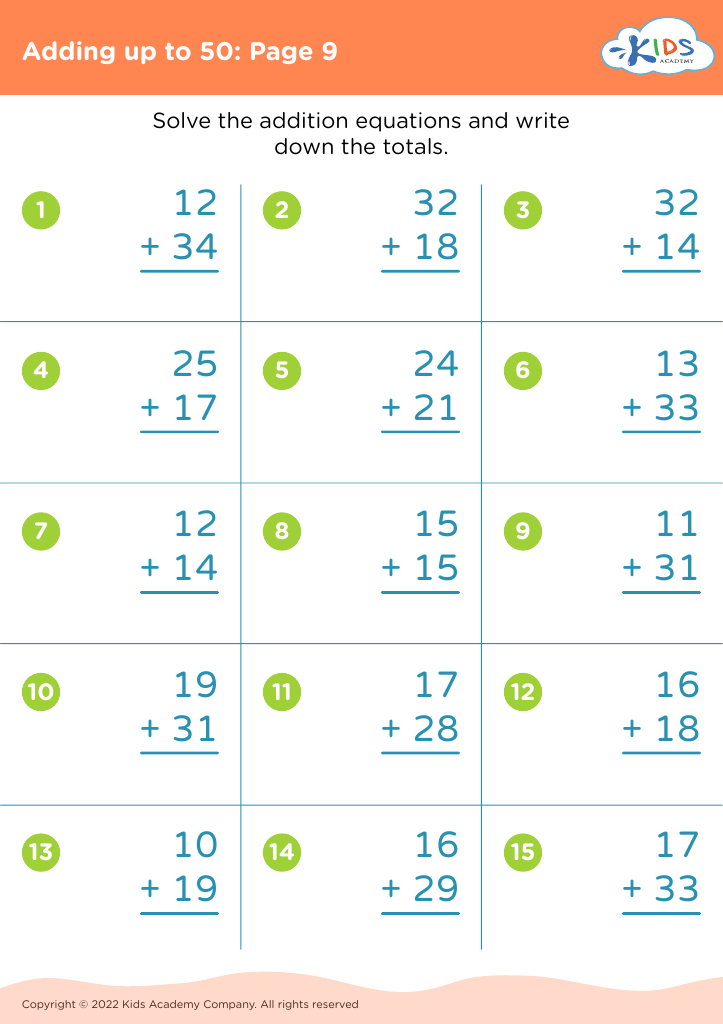
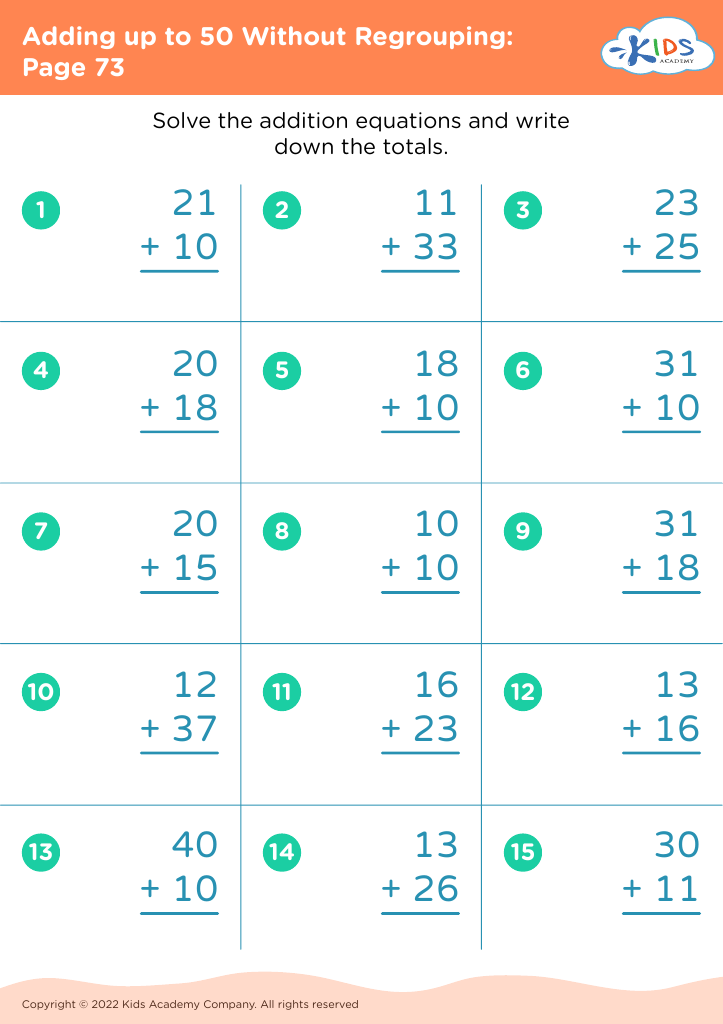
Discover our engaging "Problem Solving: Adding Up to 50 Worksheets" designed specifically for children aged 6-7. These worksheets aim to enhance critical thinking and arithmetic skills through fun and interactive exercises. Tailored to meet young learners’ developmental needs, each activity encourages students to tackle real-world scenarios, fostering their problem-solving abilities while practicing addition. With a variety of colorful illustrations and relatable contexts, kids will enjoy building their confidence in math. Ideal for home or classroom use, these worksheets provide an essential resource for teachers and parents alike, helping children master addition in an enjoyable and effective way. Start exploring today!




Problem solving involving addition up to 50 is crucial for children aged 6-7 as it lays the foundational skills for higher-level mathematics and critical thinking. At this stage, kids are developing their understanding of numbers and their relationships, which are essential for everyday tasks. Engaging with problem-solving activities encourages analytical thinking and enhances cognitive development.
When parents and teachers prioritize this skill, they provide children with tools to navigate various scenarios, from budgeting their allowance to measuring ingredients in cooking. Problem-solving fosters resilience; children learn to tackle challenges, understand the concepts of trial and error, and develop perseverance.
Furthermore, it enhances mathematical fluency, which is vital for learners as they progress in school. Children who can confidently add and solve problems are better prepared for complex operations in later grades.
Moreover, supporting problem-solving at home or in the classroom creates a collaborative learning environment, strengthening the bond between children, parents, and educators. This involvement not only helps children academically but also boosts their self-esteem and interest in learning, which can positively influence their overall educational journey.








