Recognizing equivalent fractions Adding up to 50 Worksheets for Ages 6-7
3 filtered results
-
From - To
Discover our "Recognizing Equivalent Fractions Adding up to 50 Worksheets," designed specifically for children ages 6-7. These engaging worksheets are perfect for reinforcing math skills by helping young learners understand and identify equivalent fractions while tackling simple addition problems that total 50. With colorful visuals and fun exercises, these resources make learning fractions interactive and enjoyable. Perfect for classroom or at-home practice, these worksheets support foundational math concepts and enhance critical thinking. Begin your child's journey to mathematical confidence and mastery today with our easy-to-facilitate, educational worksheets that will ensure a solid grasp of equivalent fractions!
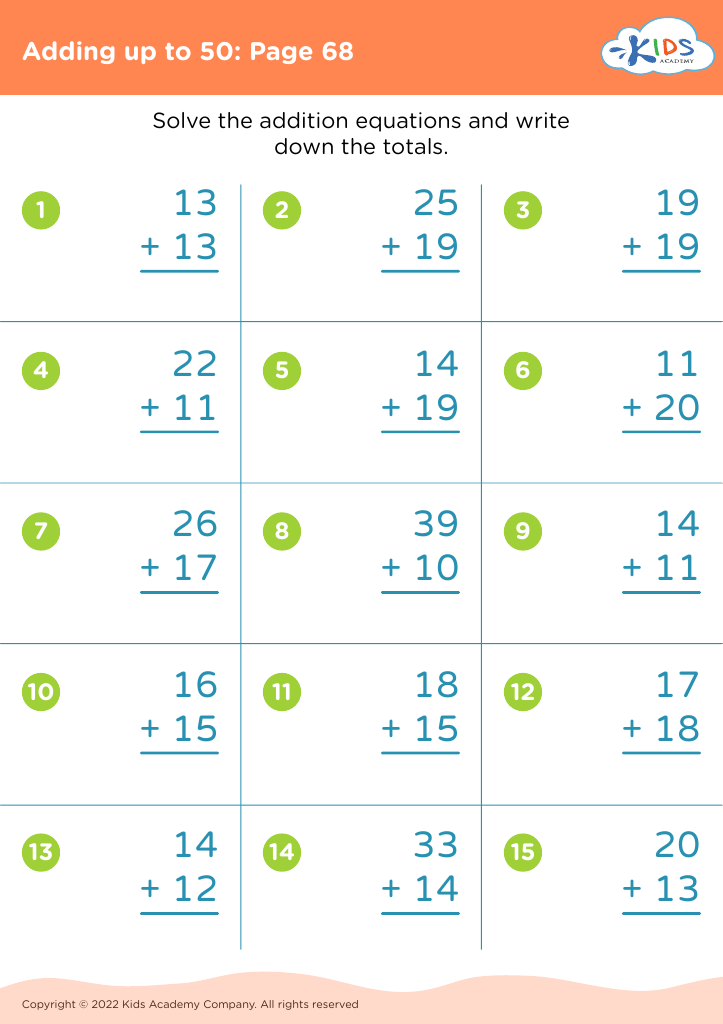
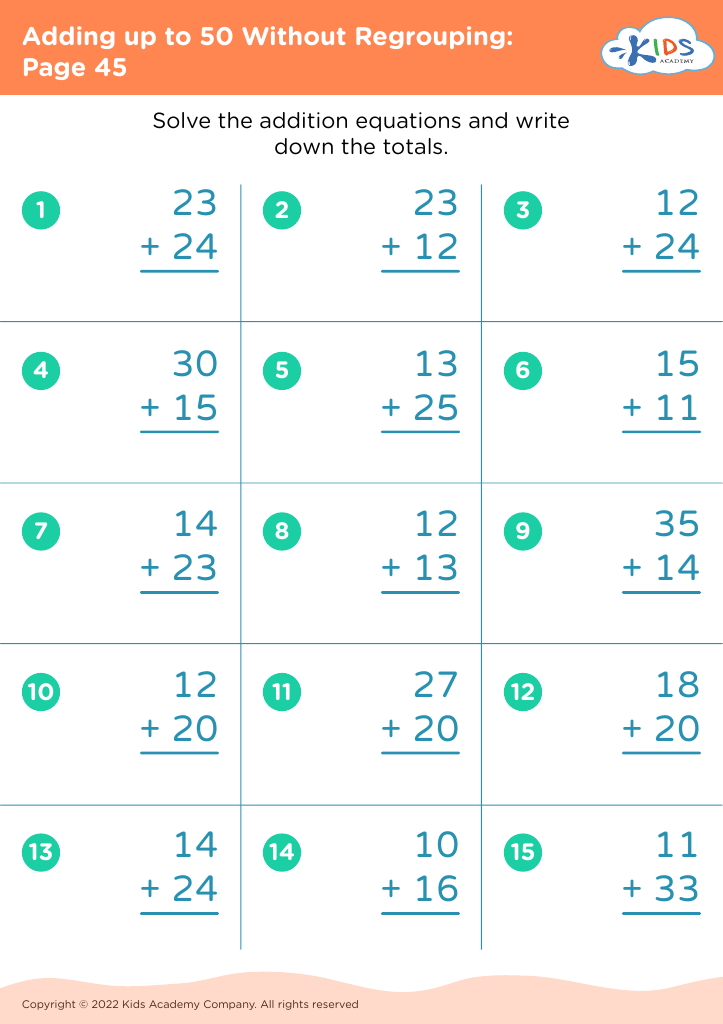
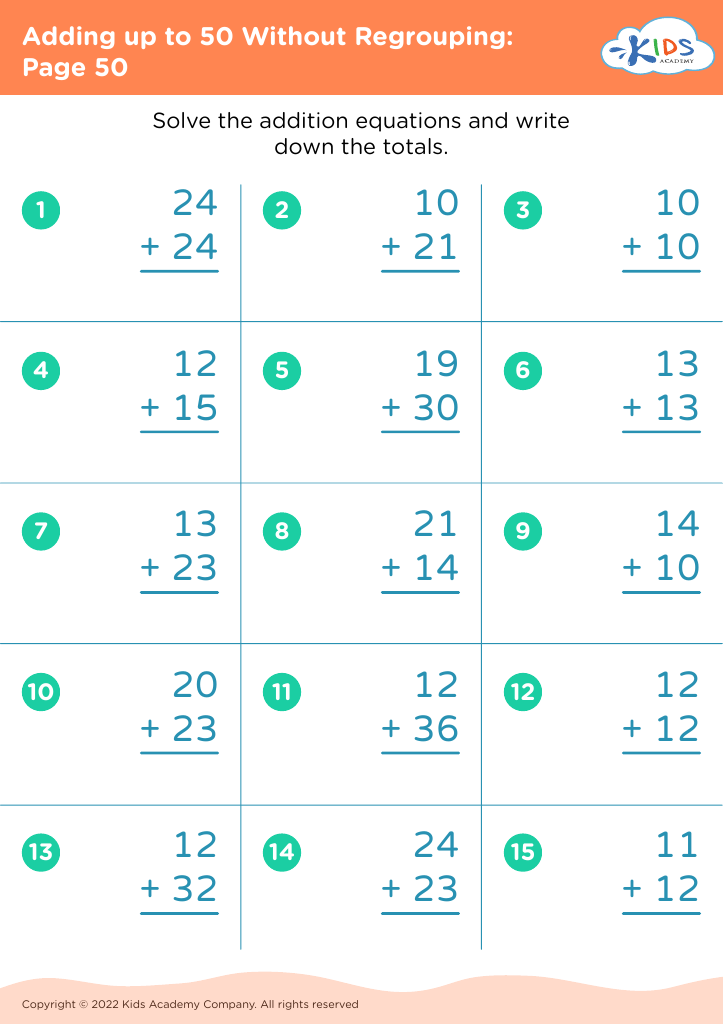




Understanding equivalent fractions and the concept of adding up to 50 is vital for children aged 6-7 because it lays the foundation for their numeracy skills. Equivalent fractions help children grasp the concept of fractions as parts of a whole, enhancing their ability to compare quantities and understand relationships between numbers. This foundational skill promotes critical thinking and problem-solving abilities, allowing children to navigate more complex mathematical concepts in the future.
When teachers and parents emphasize these concepts, they are fostering a more robust understanding of the number system. Adding up to 50 encourages children to practice simple addition and learn how to combine numbers effectively, which not only boosts their confidence in mathematics but also makes them comfortable with mental math.
Additionally, engaging with these concepts helps improve children’s reasoning skills. As they explore equivalent fractions and addition, they learn to identify patterns and strategies to solve problems. Ultimately, by ensuring a strong grasp of these early math concepts, parents and teachers can significantly enhance children's mathematical journey, preparing them for success in higher-level math and everyday life situations. Recognizing the importance of these skills is crucial for supporting children's overall academic growth and confidence.








