Shape identification Adding up to 50 Worksheets for Ages 6-7
3 filtered results
-
From - To
Discover an engaging collection of "Shape Identification Adding up to 50 Worksheets for Ages 6-7" designed to make learning fun! These worksheets expertly combine shape recognition with essential addition skills, perfect for young learners. Each page features vibrant illustrations to capture children's interest while reinforcing their ability to identify shapes and perform addition tasks up to 50. Ideal for both classroom and at-home learning, these printable resources support math skill development and shape awareness. Perfect for teachers and parents aiming to provide a solid math foundation, encouraging confidence and success in young students.
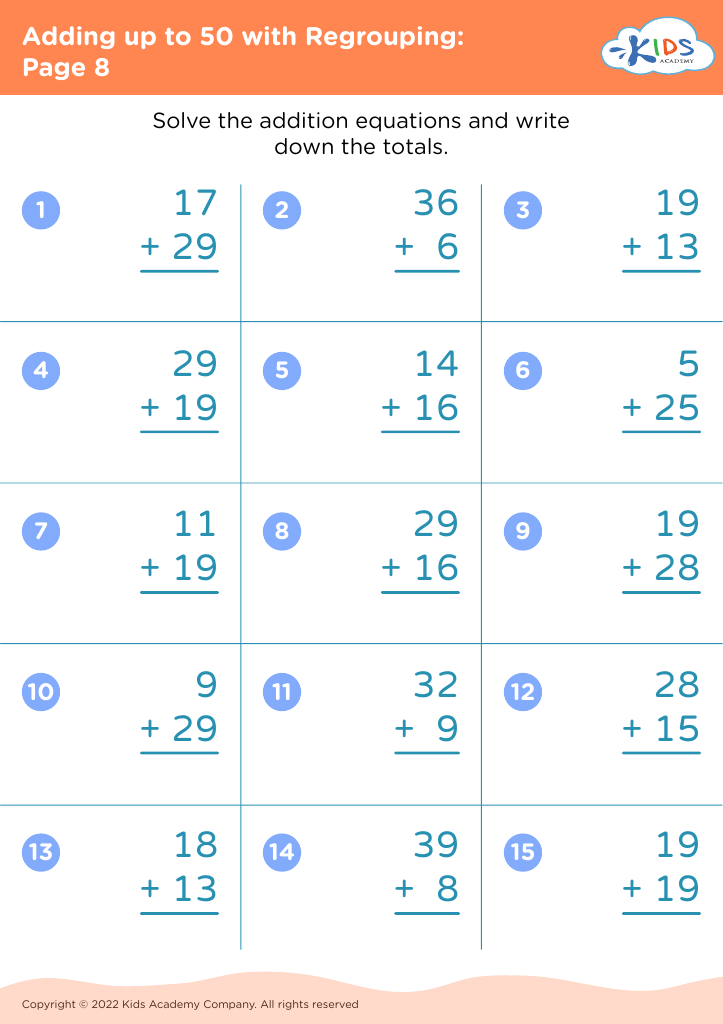
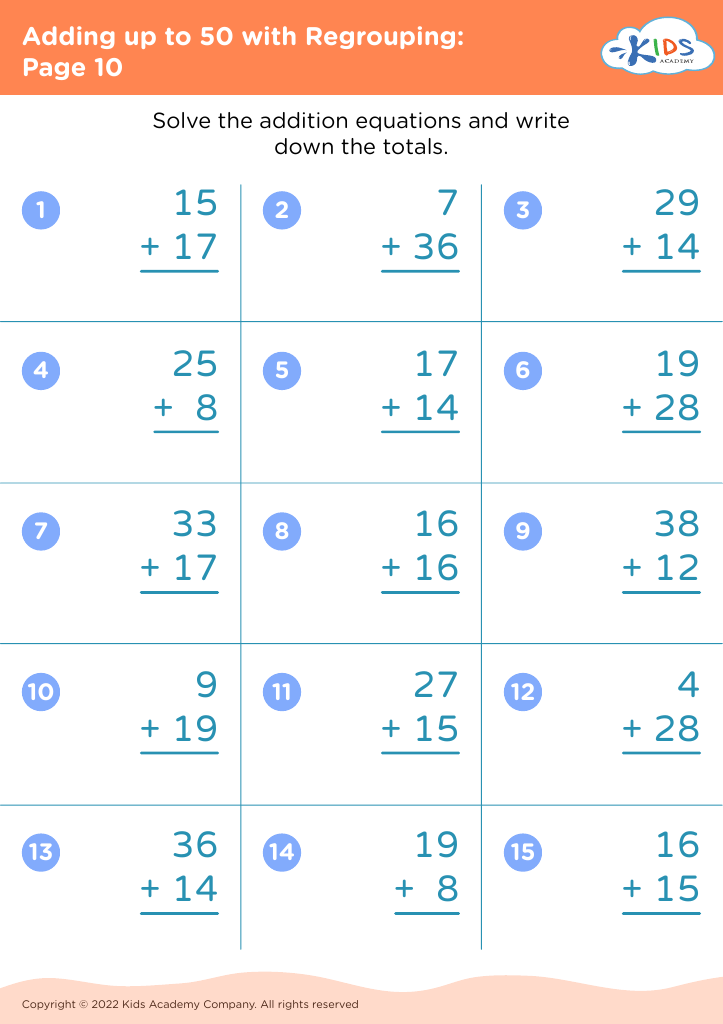
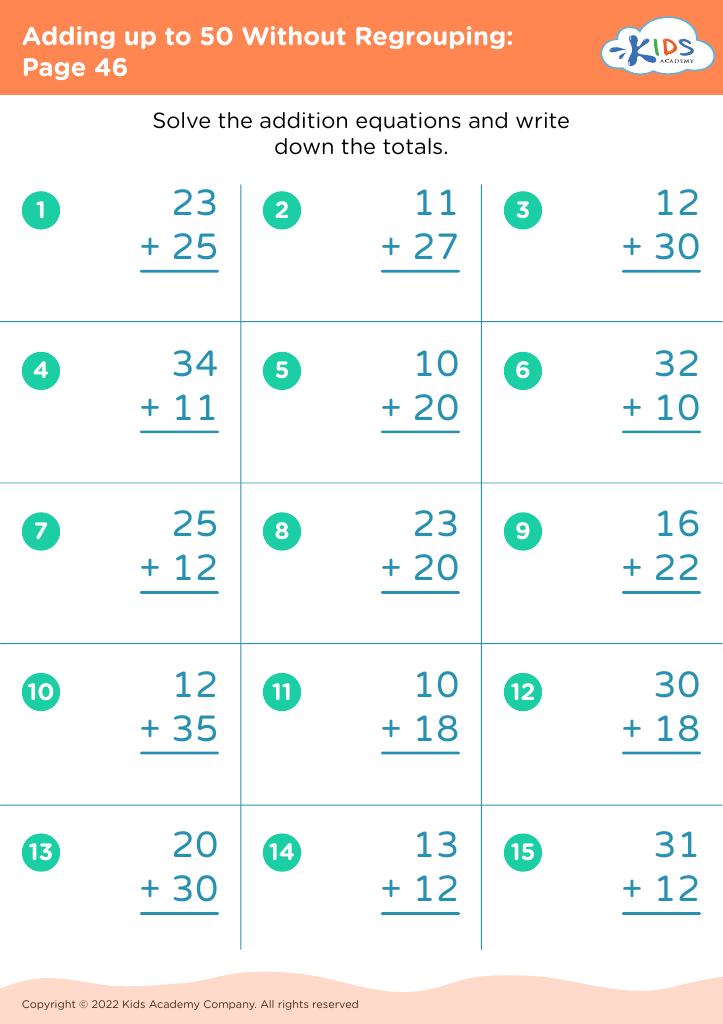




Shape identification and learning to add up to 50 are foundational math skills that set the stage for future academic success, particularly in young children aged 6-7. For parents and teachers, it’s essential to care about these skills for several reasons.
Firstly, understanding shapes helps children develop spatial awareness, which is the ability to space navigate and comprehend their relationships with the objects in their environment. Shape recognition nurtures visual-spatial intelligence, crucial for solving problems in subjects like geometry, science, and art.
Secondly, adding up to 50 enhances number sense and basic arithmetic skills. By mastering addition within this range, children cement their understanding of numerical values and relationships between numbers. These skills are critical building blocks for more complex math concepts they'll encounter later, such as multiplication and division.
Additionally, both shape identification and arithmetic enhance cognitive development, including memory, logical thinking, and pattern recognition. These abilities are not only necessary for academic subjects but also vastly beneficial for daily life.
Lastly, consistent practice in these areas fosters confidence and a positive attitude towards mathematics. By developing a solid mathematical foundation early, children are more likely to enjoy and excel in math throughout their education, opening doors to various future opportunities. Therefore, parents and teachers should prioritize these skills to support children's overall development and academic growth.








