Simplifying Fractions Adding up to 50 Worksheets for Ages 6-7
8 filtered results
-
From - To
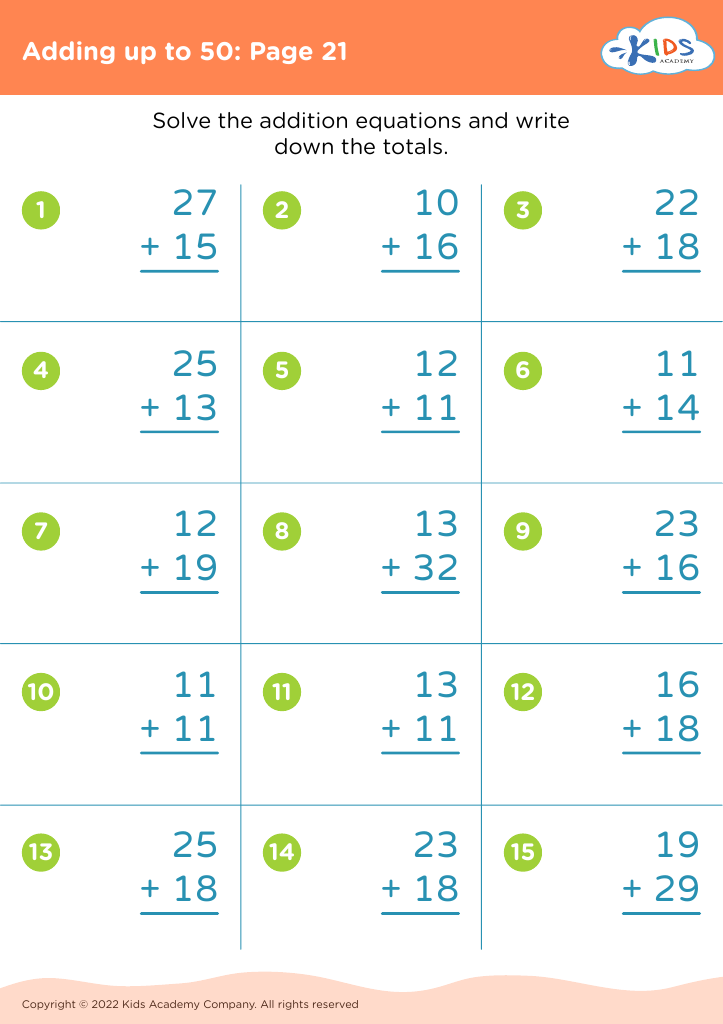
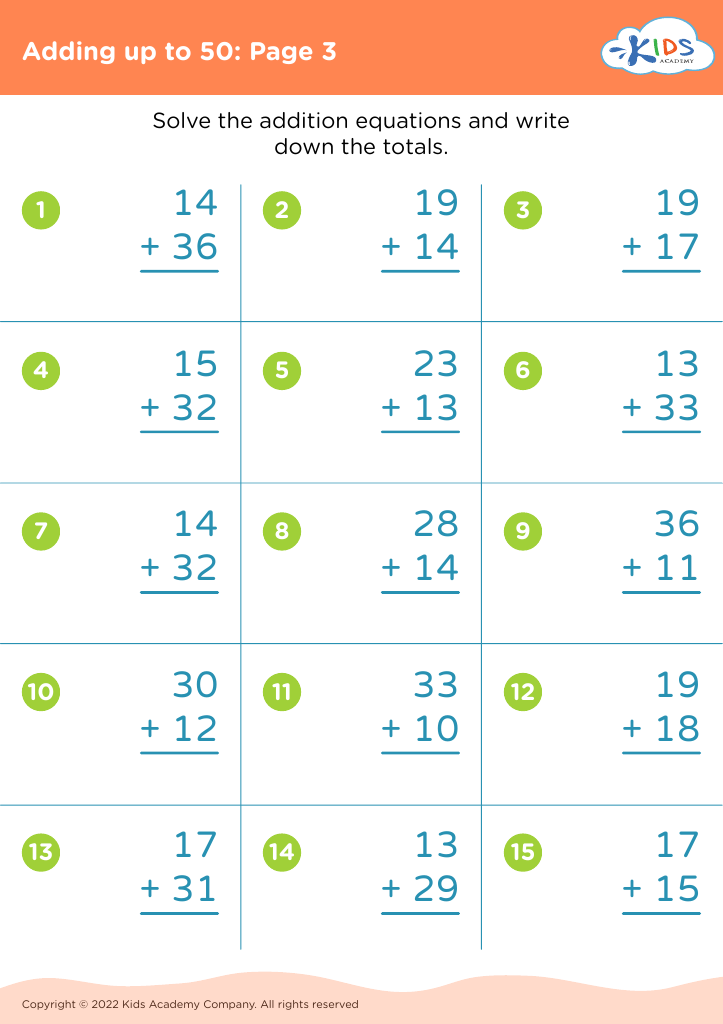
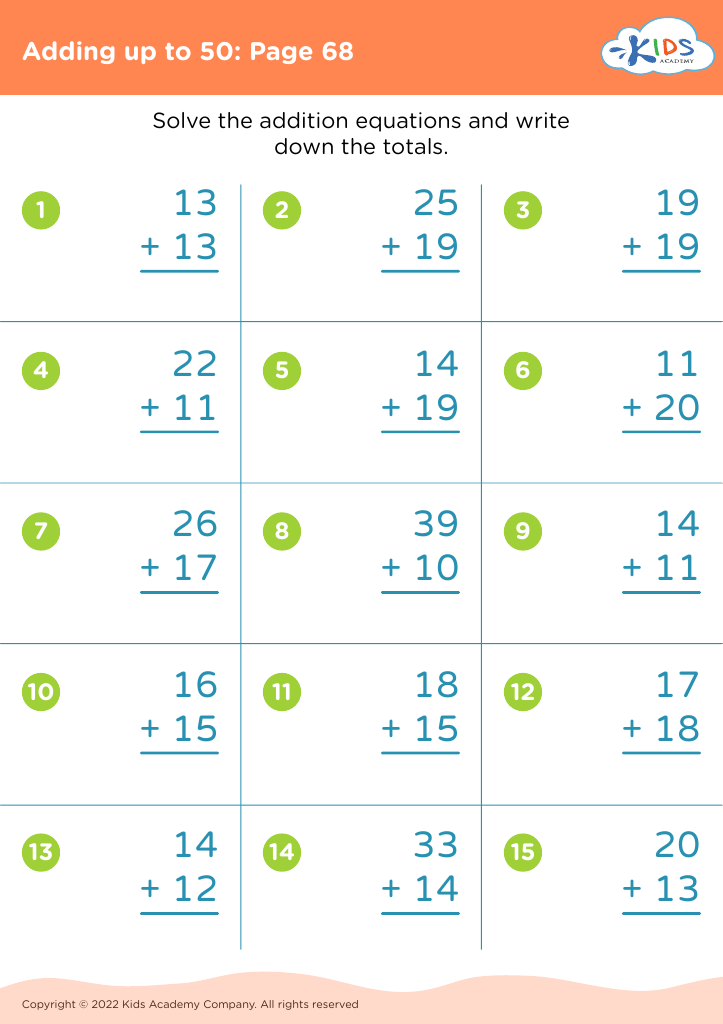
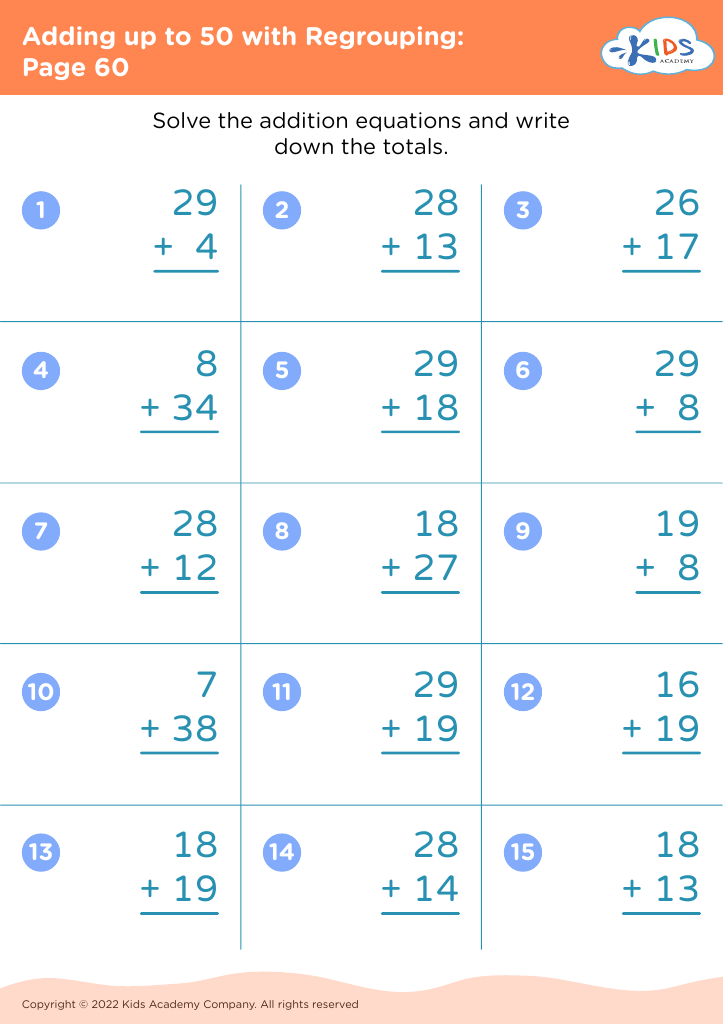
Simplify math with our "Simplifying Fractions Adding up to 50" worksheets, designed specifically for ages 6-7. Tailored to enhance foundational math skills, these engaging worksheets transform complex fraction concepts into easily digestible steps. Young learners will enjoy fun exercises and colorful visuals that bolster understanding and confidence in simplifying fractions. Our resources align with school curriculums, ensuring relevant practice that supports classroom learning. Perfect for independent practice or guided tutoring, these worksheets are a fantastic tool for both parents and teachers aiming to foster a strong mathematical foundation in their children or students.
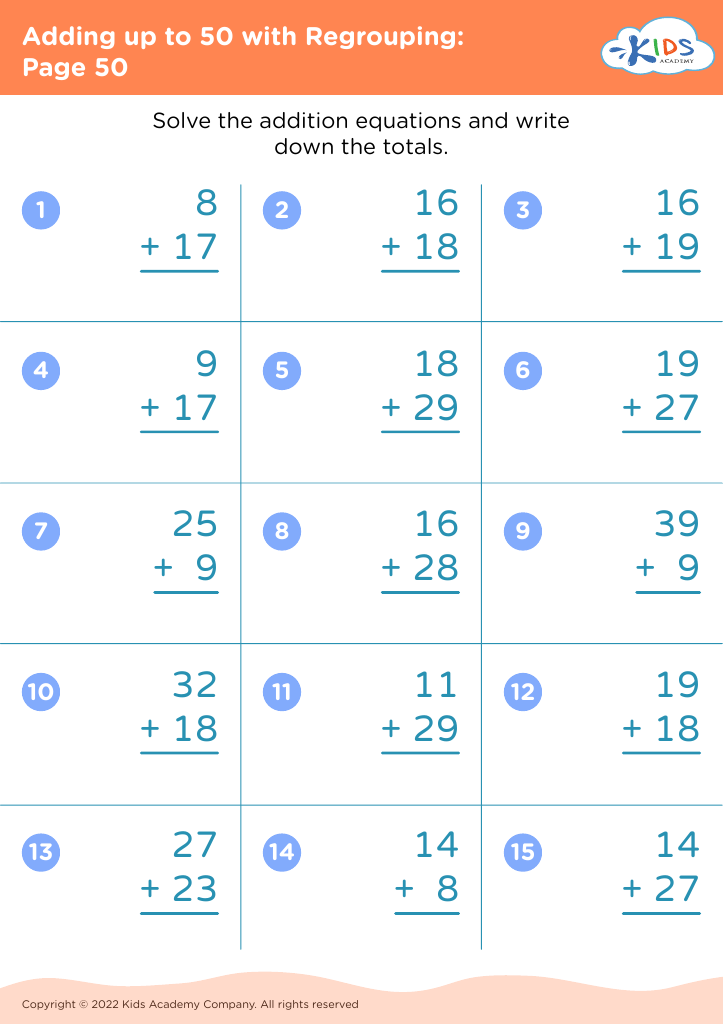
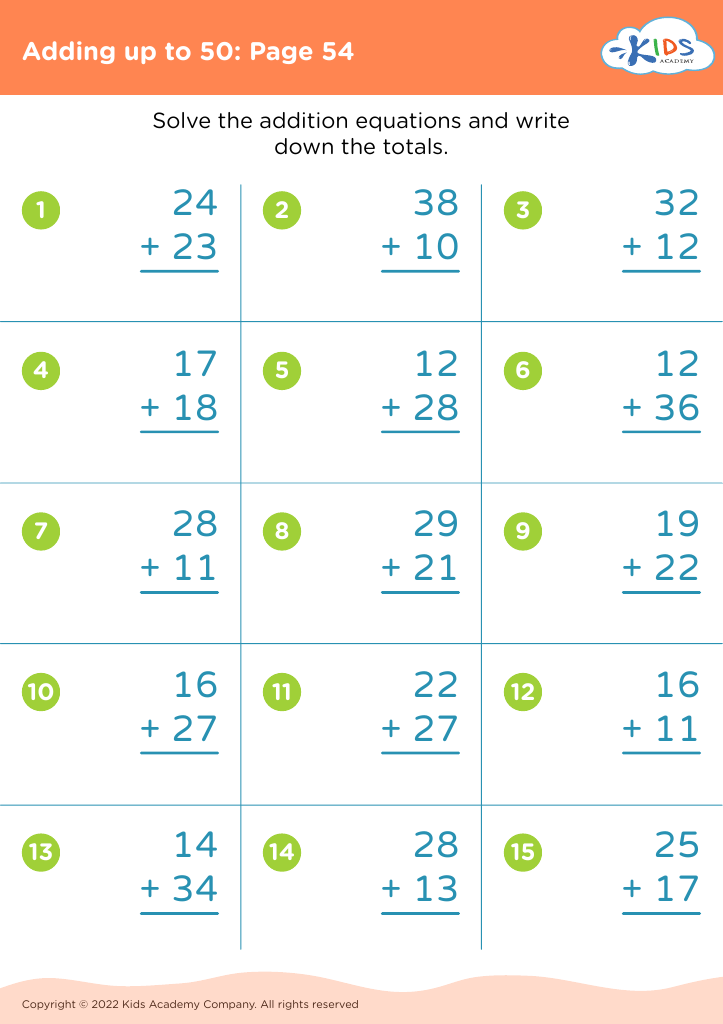
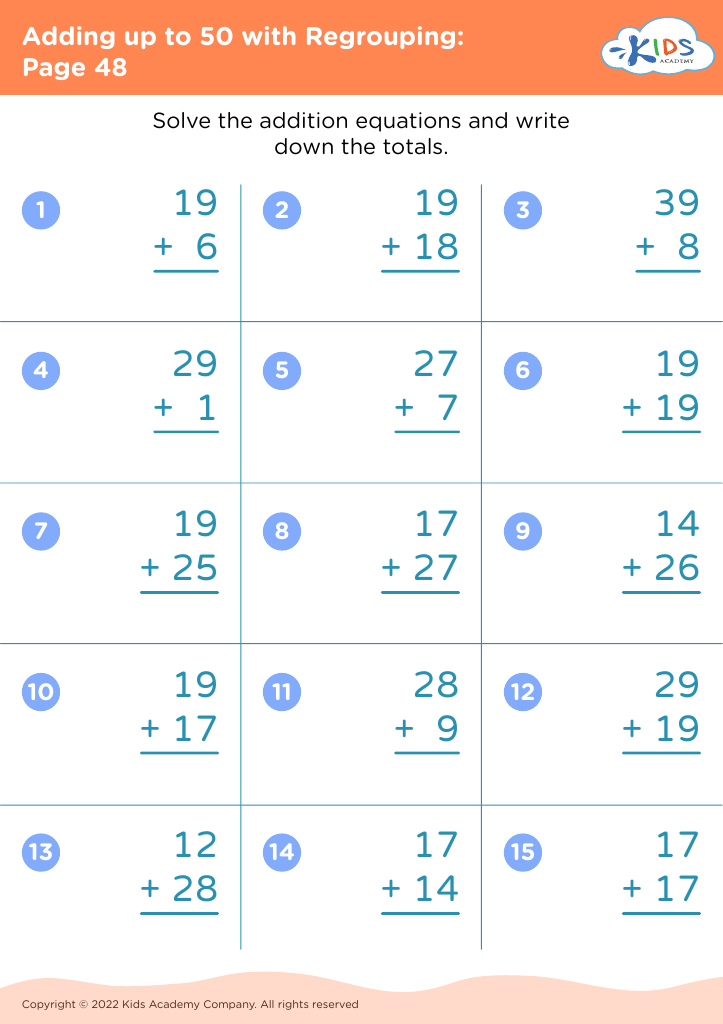
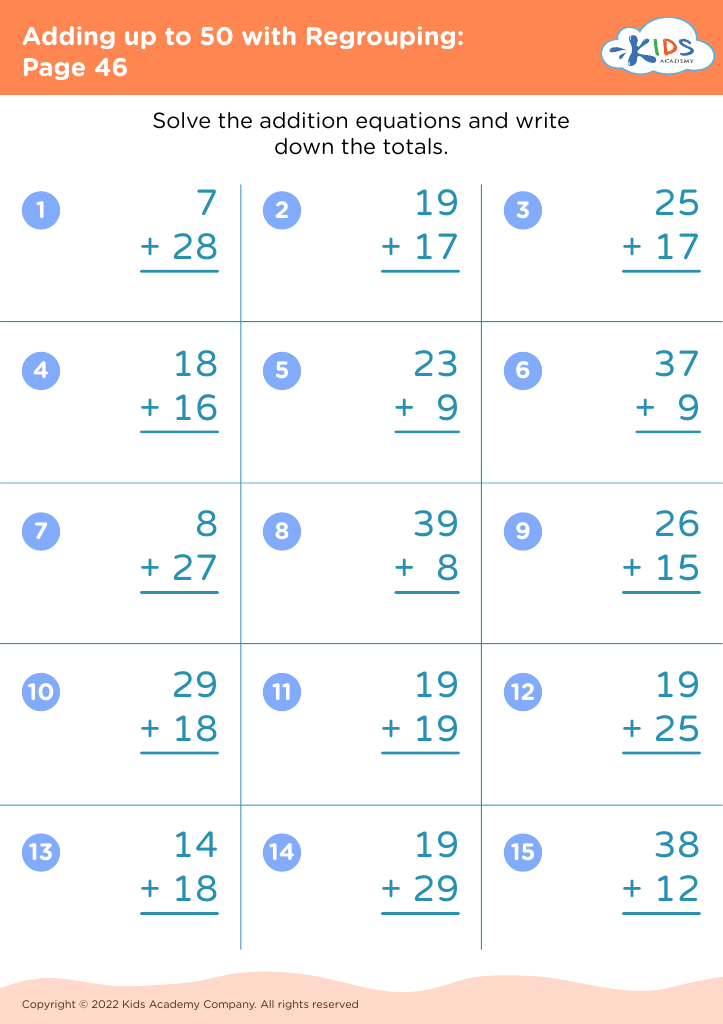




Simplifying fractions and adding fractions are fundamental math skills that set the stage for advanced mathematical understanding and problem-solving. For children aged 6-7, grasping these concepts early on is incredibly beneficial, as this is a developmental phase where their brains are highly receptive to grasping mathematical structures.
Parents and teachers should care about simplifying fractions for this age group because it builds a critical foundation in number sense and fraction fluency. Understanding simple fractions and their equivalents fosters intuitive grasps of how parts make up a whole, an essential concept in all areas of math. Additionally, by focusing on fractions that add up to smaller numbers like 50, children are provided with achievable yet challenging practice that can keep their interest and prevent frustration.
Moreover, successful mastery of these skills supports cognitive development in areas such as pattern recognition, logical reasoning, and the ability to make predictions. Through hands-on activities, visual aids, and guided practice, simplifying and adding fractions becomes engaging and accessible.
Engaging young learners with these concepts at an early age instills confidence and curiosity in math. It's an investment in their educational journey that will pay off in more advanced arithmetic, geometry, and overall analytical thinking in later grades. By prioritizing these fundamental math skills, parents and educators are equipping children with tools for lifelong learning.








