Subtraction practice Adding up to 50 Worksheets for Ages 6-7
3 filtered results
-
From - To
Discover engaging subtraction practice worksheets designed specifically for children aged 6-7, focusing on subtracting within 50. Our comprehensive collection features vibrant, easy-to-use worksheets that encourage young learners to enhance their subtraction skills through fun and interactive activities. Each worksheet includes a variety of problems, promoting critical thinking and problem-solving abilities. Perfect for classroom use or at-home learning, these resources aim to build confidence in math and foster a love for learning. Help your child unlock the secrets of subtraction and set a solid foundation for future math success with our thoughtfully crafted worksheets! Get started today for an enriching educational experience!
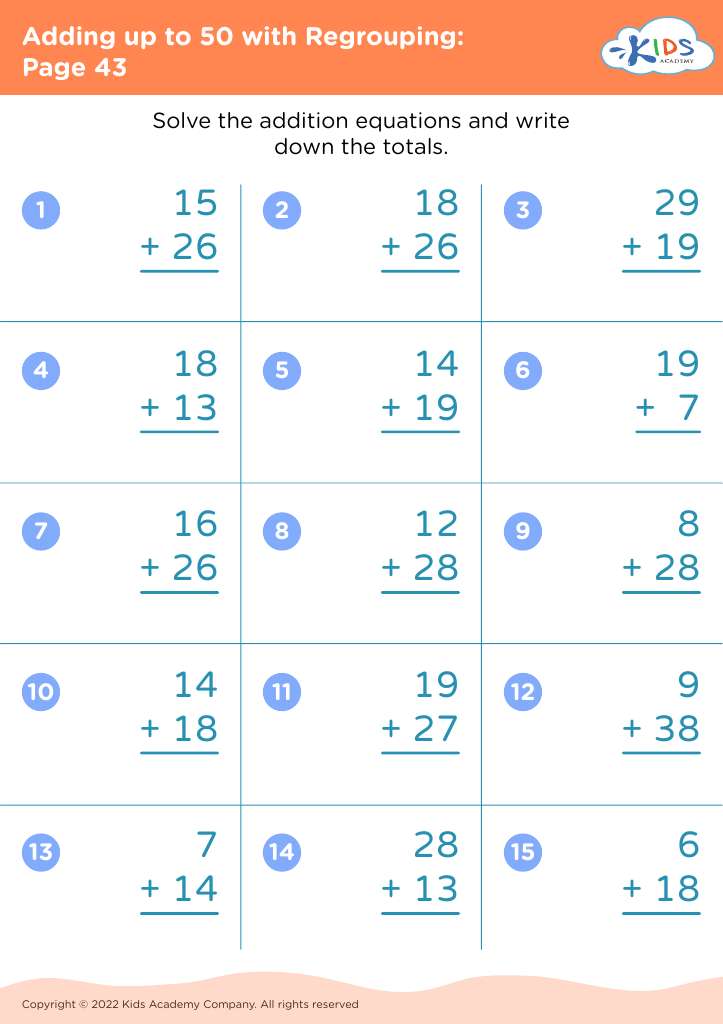
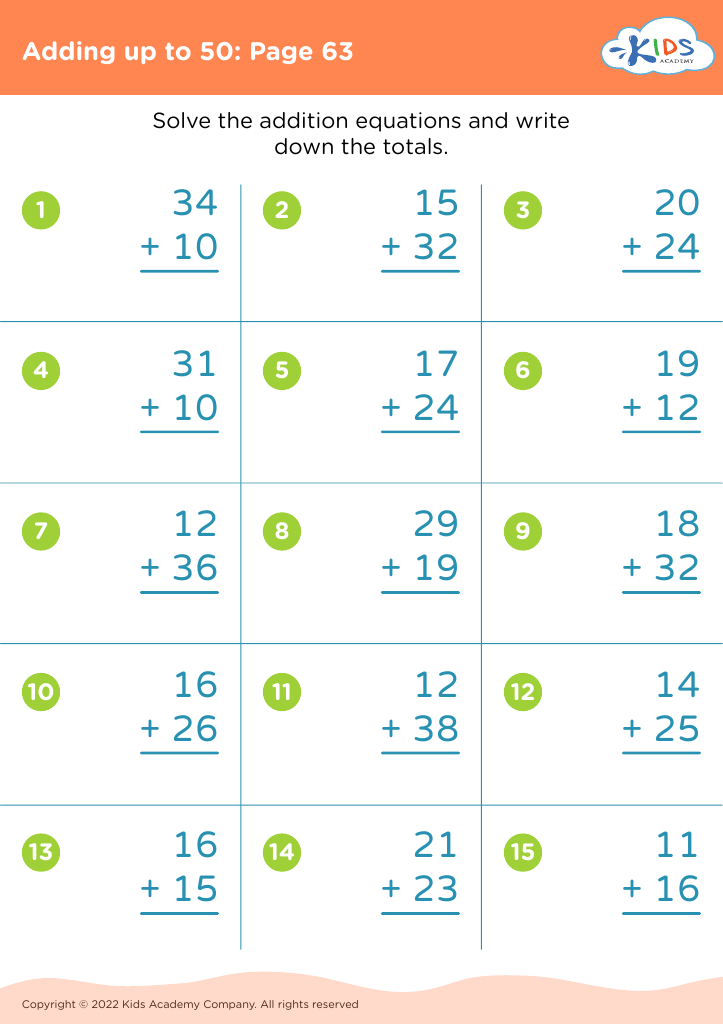
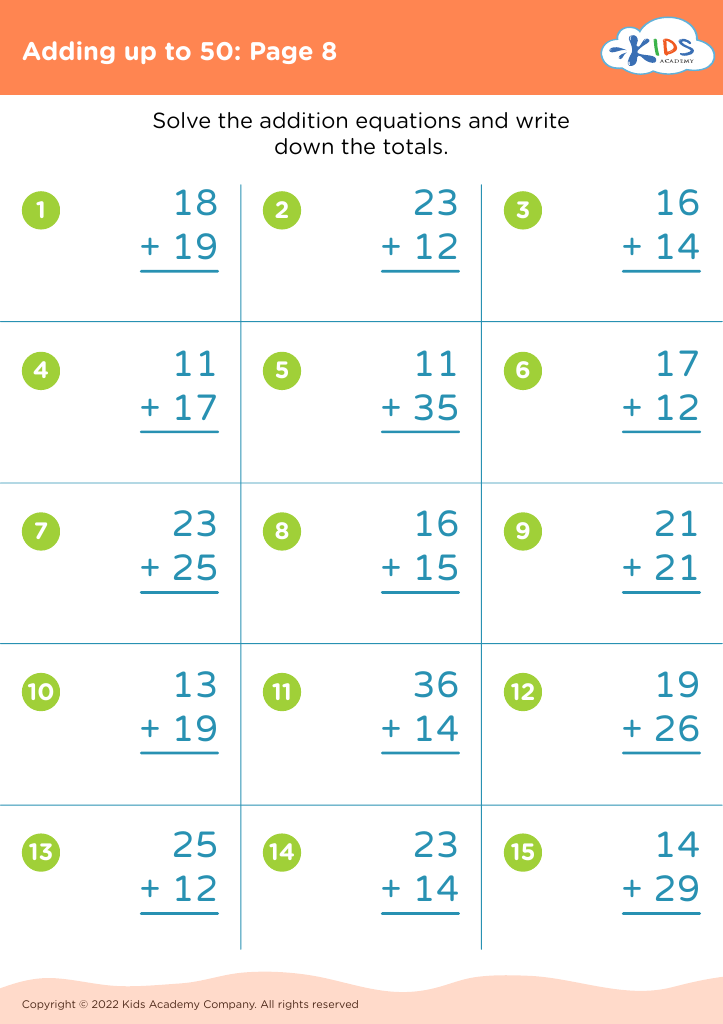




Subtraction practice with numbers adding up to 50 is crucial for children aged 6-7, as this foundational skill greatly impacts their overall mathematical development. At this age, children are transitioning from simple arithmetic to more complex problem-solving. Mastering subtraction not only enhances their ability to perform calculations accurately but also builds their confidence in math.
Moreover, understanding subtraction at this level helps children grasp the concept of related operations, such as addition and eventually, concepts like multiplication and division. These skills form the basis of more advanced mathematical reasoning. Parents and teachers who emphasize subtraction practices can also foster critical thinking, as students must learn to approach problems with different strategies rather than relying solely on rote memorization.
Additionally, proficiency in subtraction aids in real-life situations, such as managing money, measuring distances, or understanding scores in games. When children see the practical applications of subtraction, it enhances their engagement and motivation. Therefore, dedicating time to practice subtraction up to 50 not only solidifies their numerical skills but also prepares them for future academic challenges and helps them develop a positive attitude toward mathematics.








