Vocabulary expansion Adding up to 50 Worksheets for Ages 6-7
3 filtered results
-
From - To
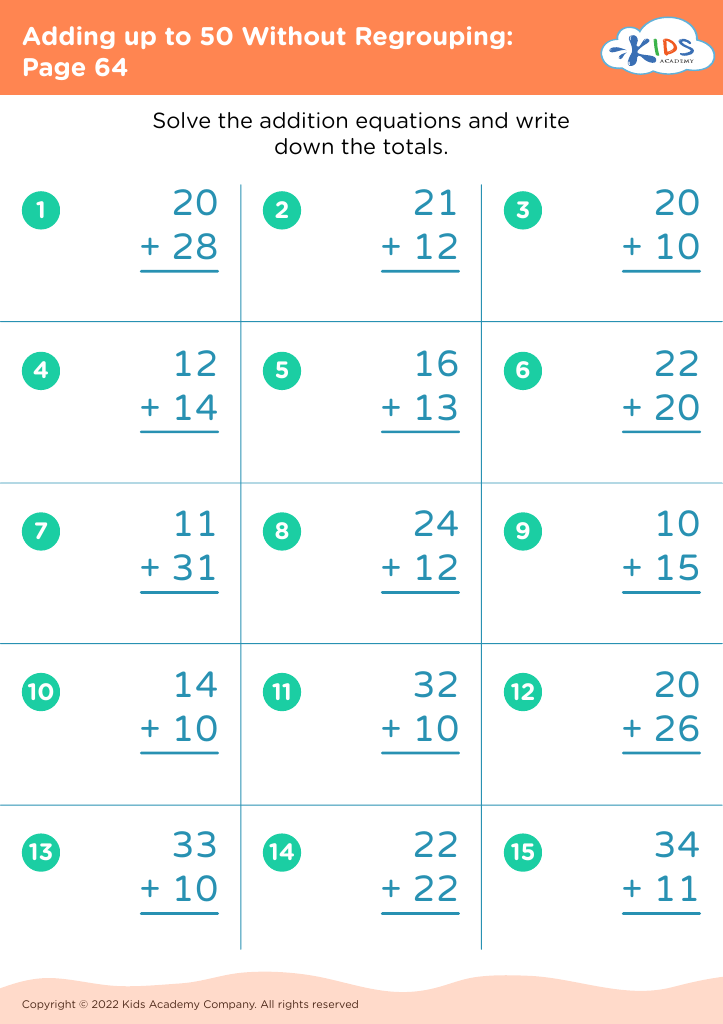
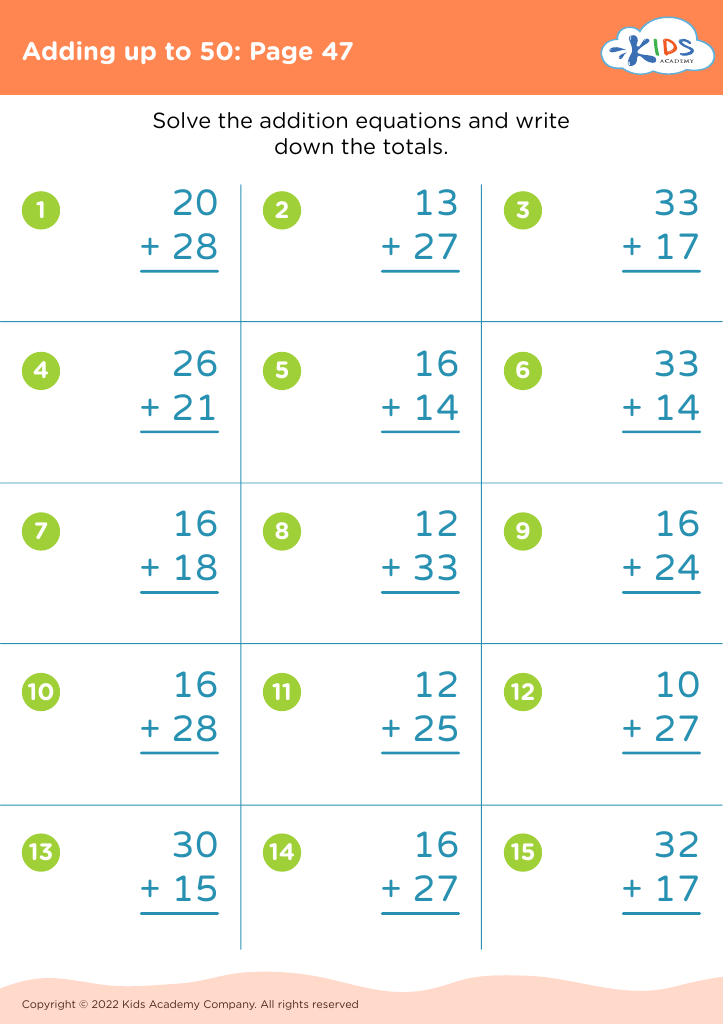
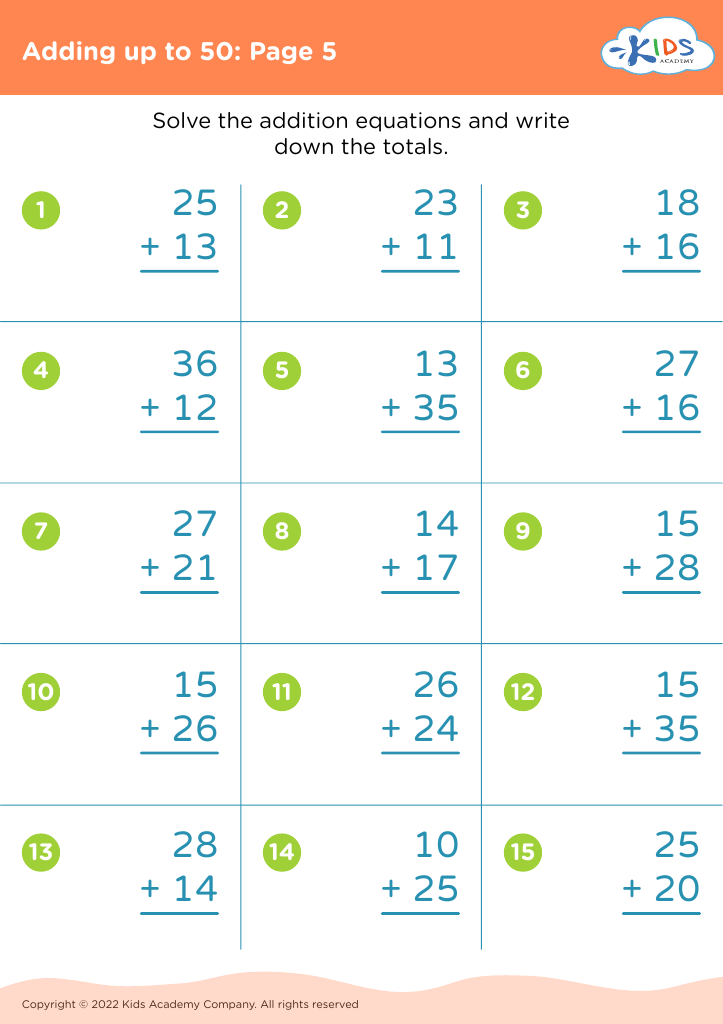
Unlock the joy of learning with our "Vocabulary Expansion Adding up to 50 Worksheets for Ages 6-7." Specifically designed for young learners, these engaging worksheets combine math and vocabulary exercises to enhance numerical skills and language development simultaneously. Your child will practice addition problems up to 50 while encountering grade-appropriate vocabulary terms, fostering both math proficiency and a broader linguistic foundation. Ideal for both classroom use and at-home practice, these worksheets make learning interactive and fun, ensuring your child builds crucial skills with confidence. Visit us to jumpstart your child’s educational journey today!




Vocabulary expansion for children aged 6-7 is incredibly important as it lays the foundation for future learning, reading comprehension, and effective communication. At this age, children's brains are highly receptive to new information and words. Expanding their vocabulary helps improve their ability to comprehend texts, express themselves clearly, and engage more deeply in classroom activities.
When children have a wide range of words at their disposal, they can better understand what they read, enhancing their learning across all subjects. This serves as a crucial stepping stone to academic success. Moreover, a rich vocabulary allows children to express their thoughts, feelings, and ideas more precisely, leading to improved social interactions and self-confidence.
Parents and teachers play pivotal roles in this developmental stage. Offering a variety of vocabulary-rich activities—such as reading books, playing word games, and encouraging conversations at home and in the classroom—can significantly boost a child's word bank. Integrating new words gradually, up to around 50 new terms, keeps the process manageable and engaging for young learners.
Investing time and effort into vocabulary expansion not only yields immediate educational benefits but also sets the stage for lifelong literacy and effective communication skills. Therefore, it's essential for parents and teachers to prioritize and nurture this critical aspect of early childhood education.








