
Drawing skills Addition & Subtraction Worksheets for Ages 6-7
6 filtered results
Difficulty Level
Grade
Age
-
From - To
Subject
Activity
Standards
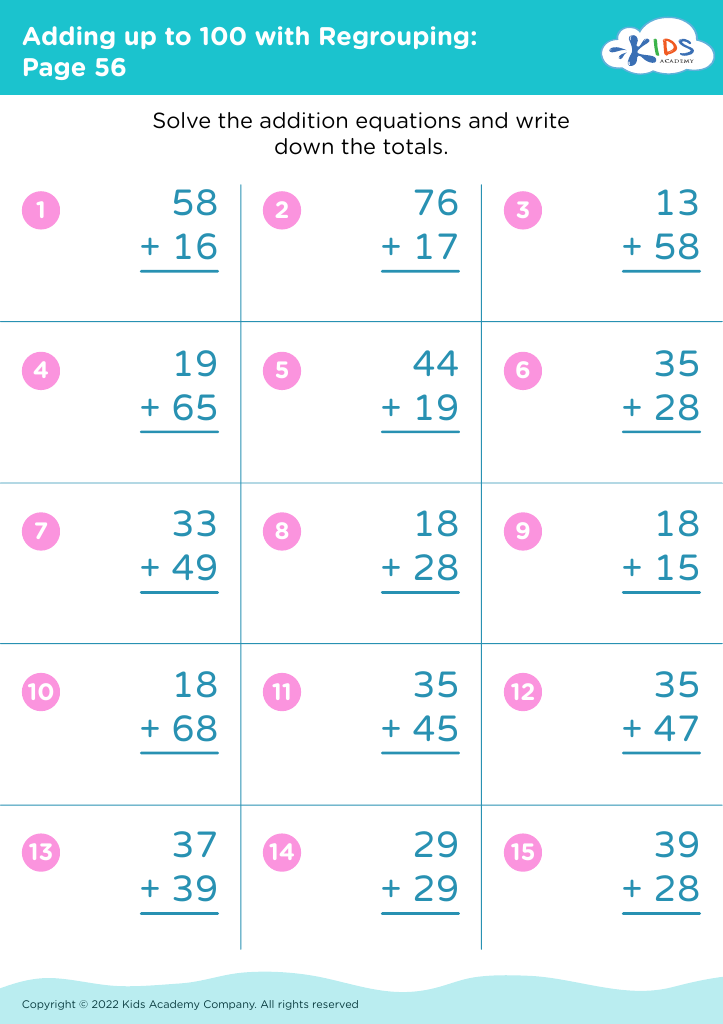
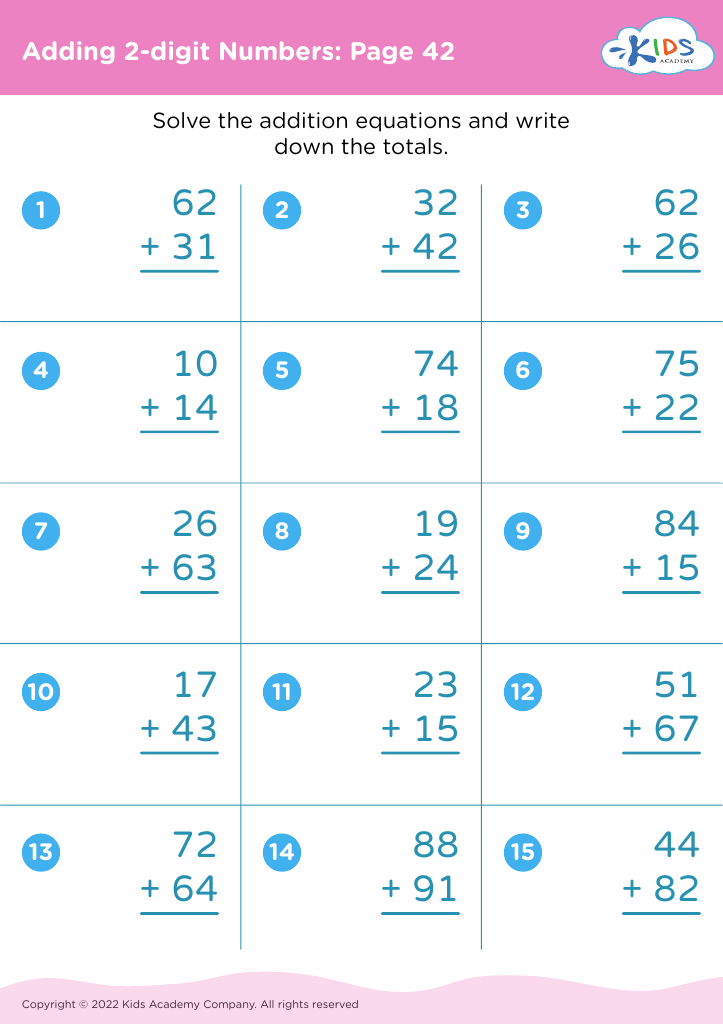
Enhance your child's math skills with our engaging Drawing Skills Addition & Subtraction Worksheets, designed specifically for ages 6-7. These interactive worksheets combine arithmetic practice with fun drawing activities, helping children visualize mathematical concepts while fostering creativity. Each worksheet includes colorful, playful illustrations and engaging prompts that make learning addition and subtraction enjoyable. By integrating drawing with math practice, kids can improve their problem-solving abilities and develop fine motor skills. Perfect for at-home learning or classroom activities, our worksheets provide an effective tool for reinforcing math concepts in a creative way, ensuring young learners stay motivated and excited about learning.
Favorites
With answer key
Interactive
Join Kids Academy for Free
Who is primarily going to use this learning content?








Parents and teachers should prioritize drawing skills in addition to subtraction for children aged 6-7 because these skills play a crucial role in cognitive and emotional development. At this age, children are at a key stage of learning where they begin to understand mathematical concepts more deeply. Integrating drawing with addition and subtraction fosters creativity, enhances problem-solving skills, and reinforces understanding through visual representation.
Drawing helps children visualize mathematical problems, making abstract concepts more concrete. When children draw objects to represent quantities, they can link their drawings to numbers, aiding comprehension and memory retention. This connection between visual learning and math concepts supports various learning styles and can make challenging topics more engaging and accessible.
Moreover, drawing encourages fine motor skill development, as children practice holding pencils and creating shapes and lines. This coordination is essential for future writing and academic tasks.
Emphasizing drawing in learning also builds self-expression and confidence. Children gain a sense of achievement when they represent their understanding visually, which can lead to a more positive attitude towards math and learning in general. Ultimately, fostering drawing skills alongside arithmetic improves overall educational outcomes and emotional wellbeing in young learners.








